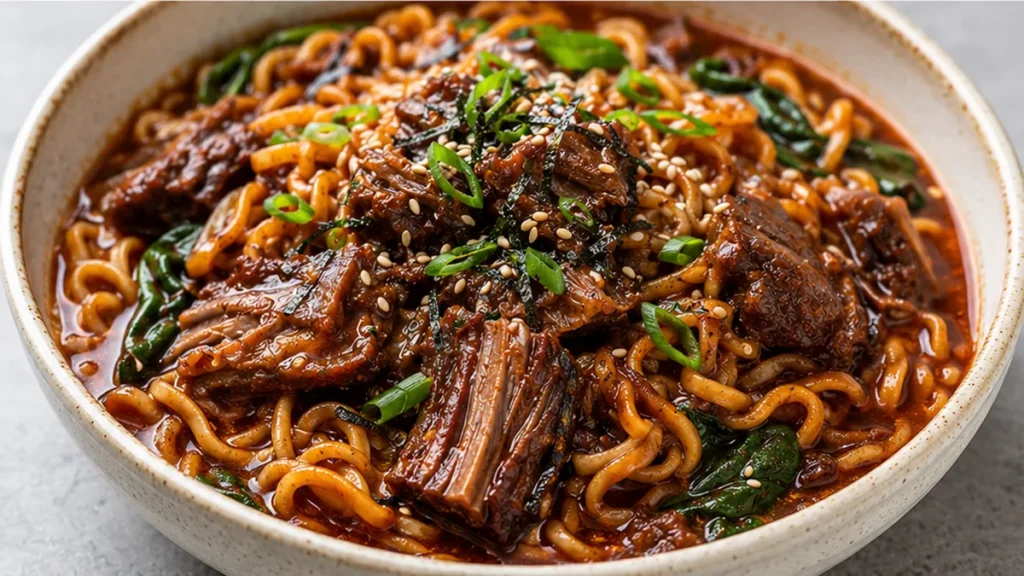
This Instant Pot Spicy Short Rib Soup is the ultimate comfort food recipe for anyone craving rich, savory flavors and incredibly tender meat. Adapted for the convenience of a pressure cooker, this dish transforms simple ingredients into a deeply satisfying meal. Perfect for a cozy evening or a special weekend dinner, this short rib soup delivers restaurant-quality taste with minimal fuss. Get ready to impress with this flavorful and heartwarming noodle soup.
Key takeaways
- Slow braising is key to tender short ribs.
- Proper searing builds flavor depth.
- Adjust broth consistency and noodle texture for best results.
- Substitutions can be made while maintaining a hearty dish.
Fall-Apart Short Rib Noodles: Pure Comfort!
Ingredients
- 1 pound short ribs (meat removed from bone, fat trimmed, cut into smallish chunks)
- 1 tablespoon gochujang sauce
- 1 tablespoon tomato paste
- 1 tablespoon minced fresh ginger
- 6 cloves garlic, crushed/minced
- 1 shallot, thinly sliced
- 4-6 cups beef broth
- 10-16 ounces dry ramen noodles or any other stir-fry noodles (I use 2-3 individual serving size packages)
- spinach (optional)
- scallions, sesame seeds, and/or sesame oil on top
Instructions
- Set Instant Pot to the sauté mode. Sprinkle short ribs generously with salt; sauté without disturbing them until browned on the outside.
- Add gochujang, tomato paste, ginger, garlic, and shallots to the Instant Pot with the short ribs and sauté for 1-2 minutes until fragrant.
- Pour in the beef broth. Secure the lid and cook on high pressure for 30 minutes. The meat should be extremely tender.
- Release pressure. Set Instant Pot to sauté mode again. Add the ramen noodles and cook until softened, about 3-5 minutes. Taste broth and season with salt, pepper, or rice vinegar if desired.
- (Optional) Sauté fresh spinach in a separate small pan until just wilted.
- Ladle the noodle soup into bowls. Top with the tender short ribs, cooked noodles, sautéed spinach (if using), chopped scallions, sesame seeds, and a drizzle of sesame oil.
Notes
The technique that makes it
The magic behind these fall-apart short rib noodles lies in the slow braising of the beef. Short ribs, a cut rich in connective tissue and collagen, require low and slow cooking to break down. This process transforms tough muscle fibers into tender, succulent meat that literally falls apart with a fork. We achieve this by first searing the short rib pieces to develop a rich, caramelized crust through the Maillard reaction. This searing not only adds depth of flavor but also creates a foundation for the braising liquid. The combination of beef broth, gochujang, and tomato paste creates a savory, slightly spicy, and umami-rich braising liquid. Gochujang, a Korean fermented chili paste, adds a complex sweet and savory heat, while tomato paste contributes acidity and depth. Simmering the seared short ribs in this liquid, covered, for an extended period (typically 2-3 hours, or until fork-tender) allows the connective tissues to break down into gelatin. This gelatin not only tenderizes the meat but also enriches the braising liquid, creating a luscious sauce that coats the noodles beautifully. The final step of adding the noodles to this flavorful broth allows them to absorb all the deliciousness, making them an integral part of the comfort experience.
Troubleshooting
- Short ribs are tough: The braising time was insufficient. Return the short ribs to the pot, ensure the liquid level is adequate (add more broth if needed), cover, and continue to simmer on low heat until fork-tender. This can take another hour or more.
- Broth is too thin: After braising, remove the short ribs and skim off excess fat. You can then simmer the broth uncovered for 10-15 minutes to reduce and thicken it. Alternatively, create a slurry with 1 tablespoon of cornstarch mixed with 2 tablespoons of cold water and whisk it into the simmering broth until thickened.
- Noodles are mushy: The noodles were likely overcooked. Cook noodles separately according to package directions, aiming for al dente, and add them to the hot broth just before serving. Do not let them sit in the hot broth for too long.
- Flavor is bland: Ensure you adequately seared the short ribs and sautéed the aromatics (ginger, garlic, shallot). Taste the broth before serving and adjust seasoning with salt, pepper, or a splash of soy sauce if needed.
Substitutions
- Short Ribs: Beef chuck roast, cut into similar-sized chunks, can be substituted. It will also become tender with slow braising, though it may not have quite the same richness as short ribs.
- Gochujang: If gochujang is unavailable, you can substitute with a combination of 1 tablespoon of sriracha and 1 teaspoon of miso paste for a similar sweet and spicy, fermented flavor profile.
- Beef Broth: A good quality chicken broth or a rich vegetable broth can be used if beef broth is not preferred or available. The flavor profile will be lighter.
- Ramen Noodles: Udon noodles, soba noodles, or even thick spaghetti can be used. Adjust cooking times according to package directions. The texture will vary, but the dish will remain hearty.
Pro tips
- For extra spice, add more gochujang or a pinch of red pepper flakes.
- Ensure short ribs are cut into manageable chunks for even cooking.
- Don’t skip browning the meat; it adds significant depth of flavor to the broth.
- Taste and adjust seasoning at the end; a splash of rice vinegar can brighten the flavors.
Enjoy this deeply flavorful and comforting short rib noodle soup. It’s a perfect recipe for a chilly evening or any time you need a warm hug in a bowl.
More from blog →
Frequently asked questions
How do I know when short ribs are fall-apart tender?
Short ribs are fall-apart tender when a fork easily pierces the meat and it shreds with little resistance. The connective tissues should have broken down completely, resulting in a rich, gelatinous texture. This usually takes 2-3 hours of braising at a low temperature. Check periodically after the 2-hour mark.
Can I make short rib noodles ahead of time?
Yes, this dish is excellent for making ahead. Braise the short ribs and prepare the sauce a day or two in advance. Store the braised meat and sauce separately in the refrigerator. Reheat gently on the stovetop before serving over freshly cooked noodles. This allows flavors to meld.
What can I substitute for beef short ribs?
If beef short ribs are unavailable, you can substitute pork shoulder or lamb shoulder. These cuts also have enough fat and connective tissue to become tender with slow braising. Adjust cooking time as needed, as pork and lamb may cook slightly faster or slower than beef.
How should I store leftover short rib noodles?
Store any leftover short rib noodles in an airtight container in the refrigerator for up to 3 days. It’s best to store the noodles and the short rib mixture separately to prevent the noodles from becoming mushy. Reheat both components gently before combining and serving.