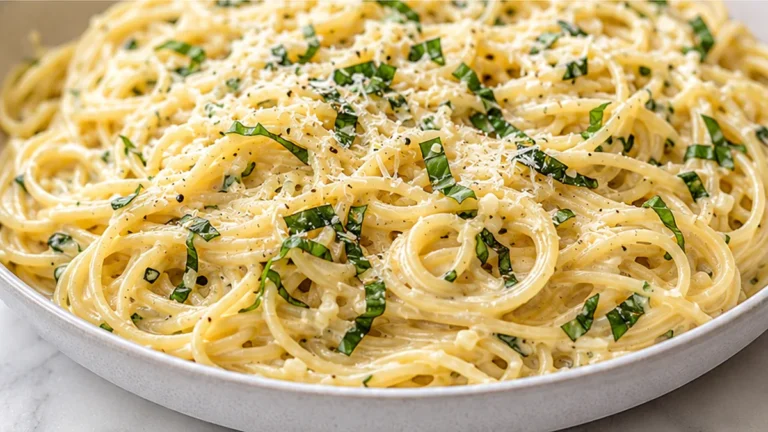
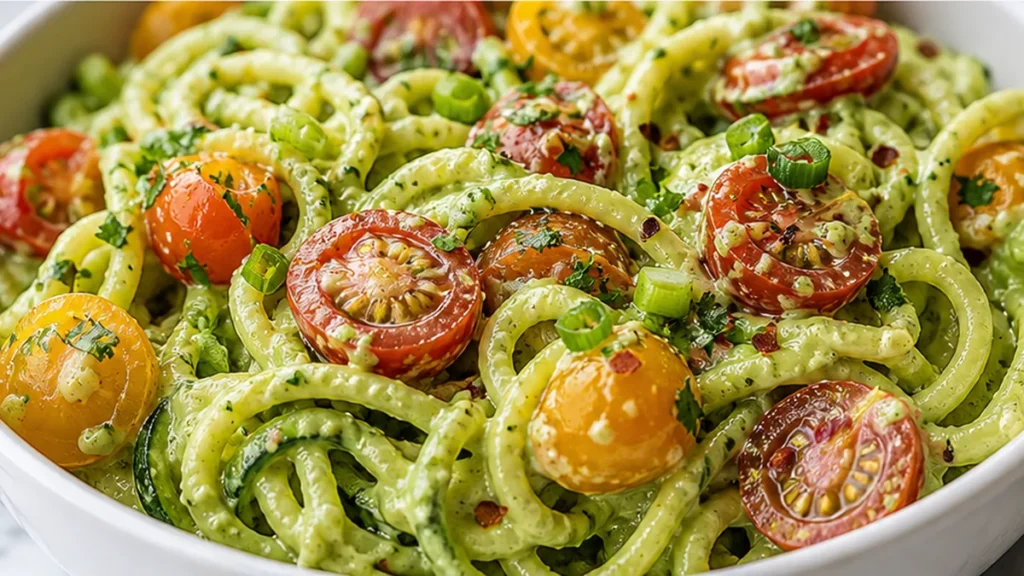
This avocado pasta recipe is a delightful and healthy way to enjoy a quick meal. It features a creamy, bright sauce made from fresh avocado, paired with bursting cherry tomatoes and tender zucchini noodles. Perfect for a weeknight dinner or a light lunch, this dish proves that healthy eating can be incredibly delicious. The combination of creamy avocado, sweet burst tomatoes, and fresh herbs creates a unique flavor profile that is both satisfying and light. It’s a fantastic alternative to traditional cream sauces, offering healthy fats and a boost of nutrients.
Key takeaways
- Use ripe avocados for maximum creaminess.
- Emulsify the sauce with warm ingredients for a smooth texture.
- Adjust sauce consistency with pasta water or olive oil.
- Incorporate fresh herbs and optional Parmesan for balanced flavor.
Creamy Avocado Pasta with Tomatoes
Ingredients
- 3 cups cherry tomatoes (mixed yellow and red)
- 2 medium zucchini, spiralized
- 4 ounces whole wheat spaghetti
- 1 ripe avocado
- 1/4 cup olive oil
- 1/2 teaspoon salt
- 1/2 cup fresh flat-leaf parsley, chopped
- 3-4 green onions, green parts only
- 1 large garlic clove
- Grated Parmesan cheese for topping (optional)
Instructions
- Pulse avocado, olive oil, salt, parsley, green onions, and garlic in a blender or food processor for 30 seconds until smooth. Set aside.
- Cook whole wheat spaghetti according to package directions for 8-10 minutes. Drain and set aside.
- Heat cherry tomatoes in a large skillet over medium-high heat with 1 teaspoon of olive oil for 3-4 minutes until skins split. Remove from heat.
- Add the zucchini noodles to the same skillet and toss for 1-2 minutes until tender-crisp.
- Add the cooked spaghetti and the prepared avocado sauce to the skillet. Toss for 1 minute until everything is well combined and coated.
- Season with additional salt if needed. Top with the reserved burst tomatoes and Parmesan cheese (if using). Serve immediately.
Notes
The technique that makes it
The success of this creamy avocado pasta hinges on the emulsification of the avocado and olive oil to create a smooth, luxurious sauce that coats the zucchini noodles and spaghetti. The key is to blend these ingredients while they are still slightly warm from the cooked pasta and tomatoes. The residual heat helps to break down the avocado’s structure, allowing it to meld seamlessly with the olive oil. Adding the garlic and lemon juice (if using, though not listed, it’s a common addition for brightness) at this stage also helps to distribute their flavors evenly. Avoid over-blending, which can sometimes lead to a gummy texture. The goal is a creamy, pourable consistency. The cherry tomatoes, halved and lightly cooked, add bursts of sweetness and acidity, contrasting with the richness of the avocado sauce. The fresh herbs and green onions are added at the end to preserve their bright, fresh flavor and color, providing a fresh counterpoint to the creamy sauce.
Troubleshooting
- Sauce is too thick: Add a tablespoon or two of the reserved pasta cooking water or a little more olive oil and blend again until the desired consistency is reached. The starch from the pasta water helps to emulsify and thin the sauce.
- Avocado is not creamy enough: Ensure you are using a ripe avocado. Underripe avocados will result in a less creamy, sometimes stringy sauce. If the sauce still lacks creaminess, a small splash of non-dairy milk or a bit more olive oil can help achieve the desired texture.
- Sauce is bland: The flavor profile relies on fresh ingredients. Ensure your salt is adequately distributed. Consider adding a squeeze of fresh lemon or lime juice for brightness, or a pinch of red pepper flakes for a subtle heat. Taste and adjust seasoning before serving.
- Zucchini noodles are watery: Spiralize zucchini just before cooking. Lightly salt the spiralized zucchini and let it sit in a colander for 10-15 minutes to draw out excess moisture, then pat dry. Avoid overcooking the zucchini noodles; they should be al dente.
Substitutions
- Whole wheat spaghetti: Regular spaghetti, linguine, or even gluten-free pasta can be used. The cooking time may vary slightly. For a lighter option, omit the spaghetti entirely and serve the avocado sauce over spiralized zucchini noodles only.
- Cherry tomatoes: Sun-dried tomatoes (rehydrated if dry) can offer a more concentrated, intense tomato flavor. Roasted bell peppers, pureed into the sauce, would add sweetness and a different color profile.
- Flat-leaf parsley: Fresh basil or cilantro can be substituted for parsley, offering distinct herbal notes. If using basil, add it towards the very end of blending to preserve its delicate flavor.
- Green onions: Finely minced shallots or chives can be used as a substitute for green onions, providing a milder onion flavor.
Pro tips
- For an extra creamy sauce, ensure your avocado is perfectly ripe.
- Adjust salt and lemon juice to your personal taste.
- If you don’t have zucchini noodles, regular pasta works wonderfully too.
- Garnish with extra parsley or a drizzle of chili oil for a kick.
Enjoy this fresh and healthy avocado pasta for a quick, delicious meal that’s worth making. It’s a versatile recipe that can be adapted to your favorite ingredients.
More from Healthy Pasta Recipes →
Read also on TastyBend: Ground Turkey Nutrition Facts: Complete Scientific Analysis.
Frequently asked questions
How to make avocado pasta creamy without cream?
The creaminess comes from ripe avocados. Blend them until completely smooth with a little pasta water, lemon juice, and garlic. This creates a rich, velvety sauce that coats the pasta beautifully. Ensure your avocados are soft and ready for mashing to achieve the best texture.
Can you make avocado pasta ahead of time?
Avocado pasta is best served immediately as the avocado can brown over time. If you must prepare it in advance, store the sauce separately from the pasta. Gently reheat the sauce and toss with freshly cooked pasta just before serving to maintain its bright color and fresh taste.
How to store leftover creamy avocado pasta?
Store any leftovers in an airtight container in the refrigerator for up to 1-2 days. The avocado may oxidize and turn brown, but it will still be safe to eat. To refresh, you can stir in a little fresh lemon juice or a splash of water before gently reheating.
What can I add to avocado pasta for extra flavor?
Enhance your avocado pasta with grilled chicken, shrimp, or crumbled bacon for added protein and flavor. Toasted pine nuts or chopped walnuts offer a delightful crunch. A sprinkle of red pepper flakes adds a subtle heat, while fresh basil or parsley brightens the dish with herbaceous notes.