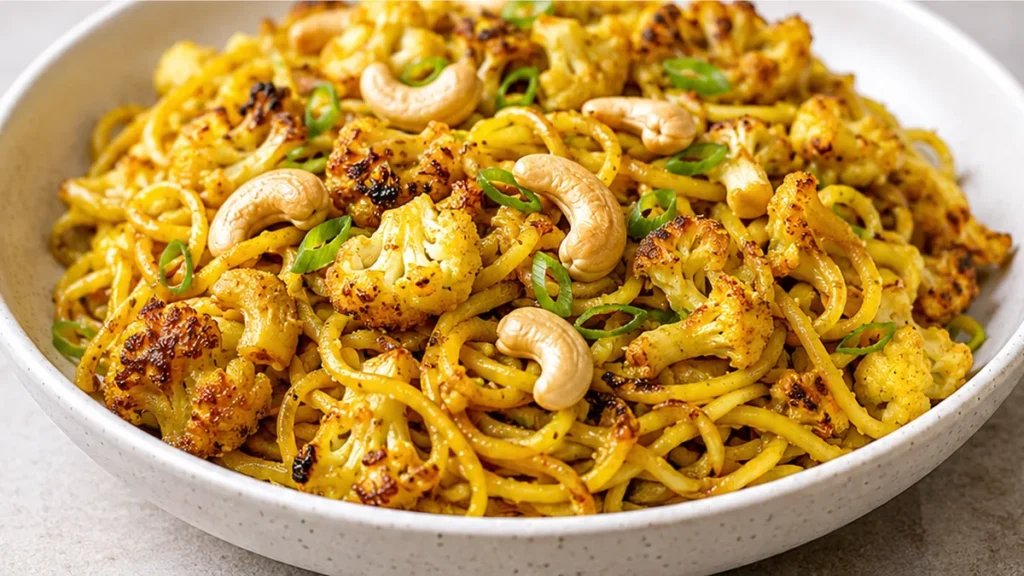
The secret to truly crispy cauliflower is roasting it at a high temperature, allowing the florets to caramelize and develop deep flavor. This turmeric cauliflower noodles recipe offers a delicious and healthy way to enjoy vegetables, combining the earthy spice of turmeric with the savory notes of garlic noodles. This dish is perfect for those seeking a plant-forward meal that doesn’t compromise on taste or texture. The combination of tender-crisp cauliflower and silky noodles makes for a satisfying dinner that’s surprisingly easy to prepare.
Key takeaways
- Manage moisture by ensuring cauliflower is dry before cooking.
- Cook in batches over high heat to achieve a crispy, seared texture.
- Use fresh spices generously for optimal flavor development.
- Add soy sauce and cashews at the end to maintain crispiness.
Crispy Turmeric Cauliflower Noodles: New Obsession!
Ingredients
- 1 large head of cauliflower, cut into florets
- 3 tablespoons sesame oil or extra virgin olive oil
- 1 teaspoon ground turmeric
- 1 teaspoon ground ginger
- 1-2 teaspoons black pepper
- 1/2 teaspoon paprika
- 1/2 teaspoon crushed red pepper flakes
- 2 medium shallots, sliced or chopped
- 1/2 cup raw cashews
- 1 tablespoon low sodium soy sauce
Instructions
- Preheat oven to 425° F. On a baking sheet, combine the cauliflower, the olive oil, turmeric, ginger, black pepper, paprika, and a pinch of chili flakes and salt. Toss well to evenly coat. Transfer to the oven and roast for 20 minutes, or until tender.
- Remove the cauliflower from oven, add the shallots and cashews. Drizzle over the soy sauce, toss to combine and evenly coat everything. Roast another 10 minutes, until charred.
- Meanwhile, cook rice noodles according to packaged directions.
- Heat a medium skillet over medium heat. Add the butter, garlic, and a pinch of red pepper flakes, if desired. Cook until the garlic begins to caramelize and turn light golden brown, 1 to 2 minutes. Stir in the coconut milk, cooking 3-5 minutes, until warmed through. Remove from the heat and toss the noodles with the sauce.
- To serve, divide the noodles among bowls and top with roasted cauliflower. Finish with a squeeze of lime juice and top with basil or cilantro. Enjoy!
Notes
The Technique That Makes It Crispy
The key to achieving crispy cauliflower noodles lies in managing moisture and maximizing surface area for browning. Cauliflower, like many vegetables, contains a significant amount of water. When cut into florets and then processed into noodles, this water is released. Overcrowding the pan or using insufficient heat will cause the cauliflower to steam rather than sear, resulting in a soggy texture. The initial step of cutting the cauliflower into uniform florets and then processing them into rice-like pieces is crucial for even cooking. Using a food processor to pulse the cauliflower until it resembles rice or couscous is the preferred method for achieving the right texture and surface area. Ensure the cauliflower is dry before cooking; patting it down with paper towels after processing can help. High heat is essential for the Maillard reaction, which is responsible for browning and developing complex flavors. Searing the cauliflower in batches, if necessary, prevents overcrowding the pan and allows each piece to come into direct contact with the hot surface, promoting crispiness. The sesame oil or olive oil helps conduct heat efficiently and adds a layer of flavor. The spices, particularly turmeric, ginger, and black pepper, not only add taste but also contribute to the visual appeal and can enhance browning. The final addition of cashews and soy sauce towards the end of cooking adds richness and umami without adding excess moisture that would compromise the crispiness.
Troubleshooting
- Problem: Soggy Cauliflower Noodles
Fix: Ensure cauliflower is dry before cooking. Cook in batches to avoid overcrowding the pan, allowing for better heat circulation and searing. Use medium-high to high heat throughout the cooking process. - Problem: Bland Flavor
Fix: Don’t skimp on the spices. Ensure the turmeric, ginger, black pepper, paprika, and red pepper flakes are fresh and measured accurately. Add the soy sauce at the end for a final flavor boost. - Problem: Uneven Cooking
Fix: Process the cauliflower into uniform, rice-like pieces. If using florets, ensure they are cut to a similar size. Stir frequently during cooking to promote even browning. - Problem: Sticking to the Pan
Fix: Use an adequate amount of oil and ensure the pan is sufficiently hot before adding the cauliflower. Non-stick pans can be helpful, but proper heat and oil are paramount.
Substitutions
- Cauliflower: Broccoli florets can be used, but expect a slightly different flavor profile and potentially a greener hue. The cooking time might need slight adjustment.
- Sesame Oil: Avocado oil or a neutral vegetable oil can be substituted for sesame oil. Extra virgin olive oil is also a good option, offering a fruitier note.
- Shallots: Yellow or red onion, finely chopped, can replace shallots. The flavor will be slightly sharper and more pungent.
- Raw Cashews: Sliced almonds or pine nuts can be used for a similar crunchy texture, though the flavor will differ.
Pro tips
- For extra crispiness, ensure the cauliflower is spread in a single layer on the baking sheet to prevent steaming. Overcrowding will make it soggy.
- If you find your sauce breaking or becoming too thin, whisk in a tablespoon of the starchy noodle water. Forgetting the noodle water leaves the sauce too loose, but a quick addition fixes it.
- Store leftover cauliflower and noodles separately in airtight containers in the refrigerator for up to 3 days. Reheat the cauliflower in an oven at 350°F (175°C) for 10 minutes to restore crispness, and gently warm noodles in a skillet.
This Crispy Turmeric Cauliflower and Garlic Noodles recipe is a testament to how flavorful and satisfying plant-based meals can be. Experiment with different herbs or a squeeze of orange juice for a fresh twist. Enjoy your culinary creation!
Frequently asked questions
How do I get the cauliflower to be truly crispy?
Achieving crispiness requires managing moisture. Ensure the cauliflower is dry after processing. Cook in batches over medium-high to high heat without overcrowding the pan. This allows the cauliflower to sear and brown rather than steam, developing a desirable crispy texture.
Can I make this ahead of time?
While the flavors meld well, cauliflower noodles are best enjoyed immediately after cooking for optimal crispiness. Reheating can lead to a softer, less crisp texture. If you must reheat, do so gently in a dry pan over medium heat.
What if I don’t have a food processor?
You can finely chop the cauliflower by hand or use a sharp knife to create very small florets that resemble rice. Alternatively, a box grater can be used, but be cautious to avoid over-processing into mush. The key is small, uniform pieces.
Can I add other vegetables?
Yes, you can add other quick-cooking vegetables like bell peppers, snap peas, or spinach. Add them during the last few minutes of cooking to ensure they don’t become overcooked and soggy, maintaining the crisp texture of the cauliflower.
More from Healthy Pasta Recipes →