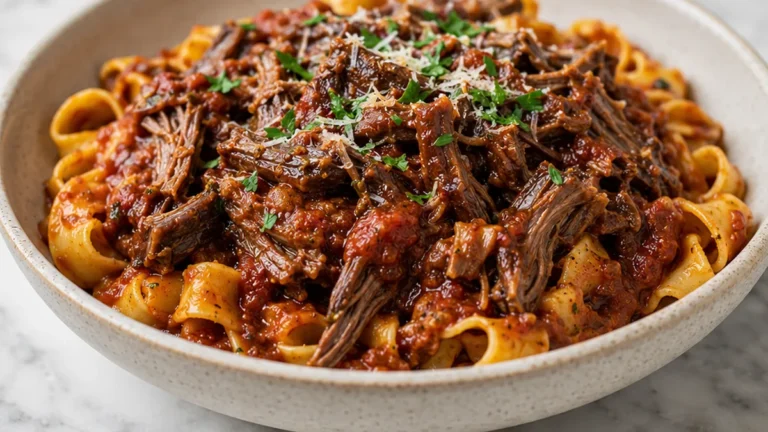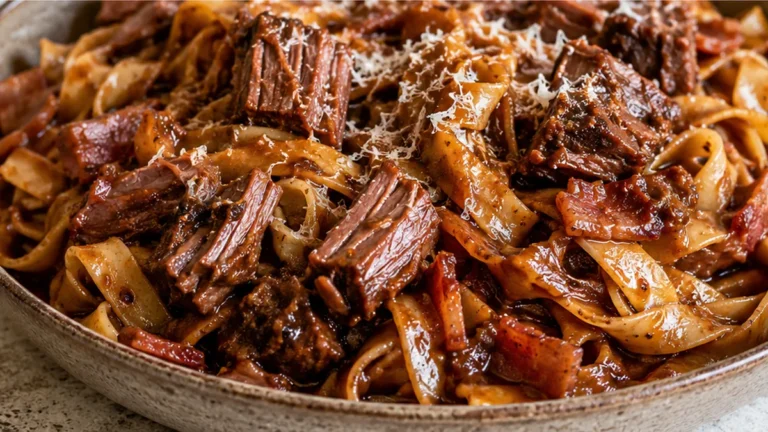
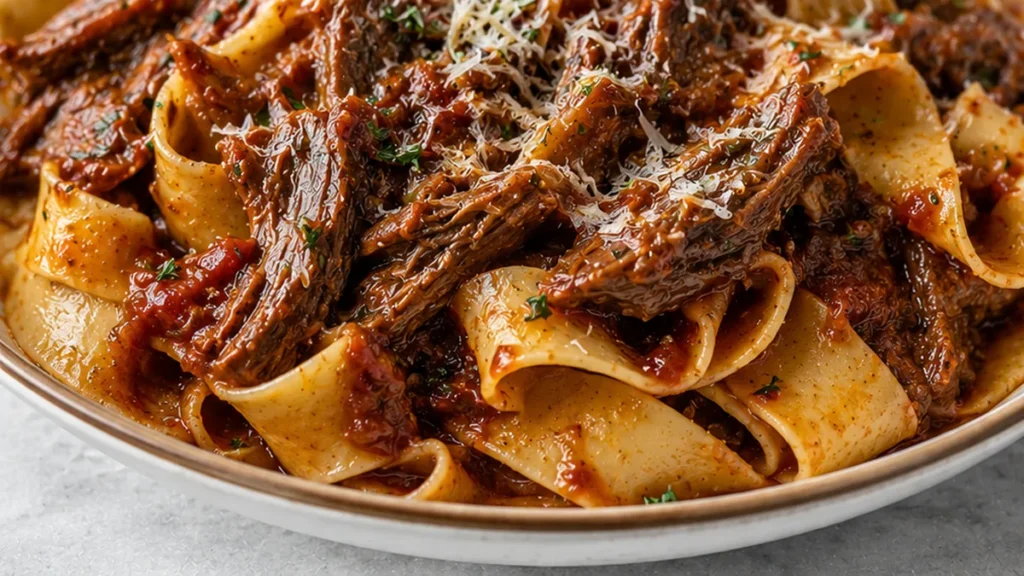
This beef ragu recipe for the slow cooker delivers unparalleled tenderness and rich flavor with minimal effort. Perfect for busy weeknights, it transforms simple ingredients into a hearty, comforting meal that the whole family will love. Forget spending hours at the stove; let your slow cooker do the work. Our slow cooker beef ragu uses flank steak, which becomes incredibly succulent after hours of slow cooking. Combined with aromatic garlic, crushed tomatoes, fresh herbs, and a touch of beef broth, it creates a deeply savory sauce that clings perfectly to pappardelle pasta. This dish is a testament to the trick to slow cooking.
Key takeaways
- Slow cooking breaks down connective tissues in flank steak for tenderness.
- Proper browning of the beef is key for developing deep flavor.
- Adjust cooking time and liquid for desired consistency.
- Choose well-marbled beef cuts for an even richer ragu.
Rich & Hearty Beef Ragu Slow Cooker Magic!
Ingredients
- 1 teaspoon olive oil
- 6 garlic cloves, smashed slightly
- 1 1/2 pounds flank steak, cut against the grain into 4 pieces
- salt and pepper
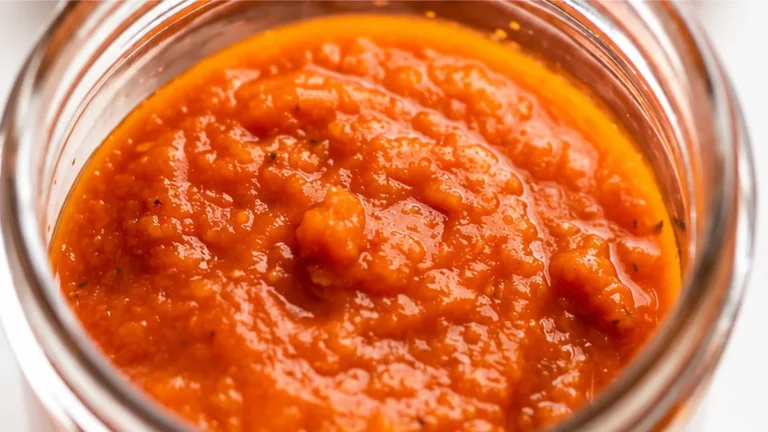
- 1 (28 ounce) can crushed tomatoes
- 1/4 cup reduced sodium beef broth
- 1 carrot, chopped
- 2 bay leaves
- 2 sprigs fresh thyme
- 16 ounces pappardelle pasta
Instructions
- Heat olive oil in a small skillet over medium-high heat. Add garlic and cook until golden, about 2 minutes.
- Season flank steak with salt and pepper. Place in a 5-6 quart slow cooker. Add crushed tomatoes, beef broth, cooked garlic, chopped carrot, bay leaves, and thyme.
- Cover and cook on high for 6 hours or low for 8-10 hours. Remove herbs, then shred beef with two forks directly in the pot.
- Cook pappardelle pasta according to package directions. Drain and return to the pot. Add the shredded beef ragu and stir over high heat for 1 minute until combined.
- Divide the pasta and ragu among bowls. Serve hot.
Notes
The technique that makes it
The magic behind this slow cooker beef ragu lies in the extended, low-and-slow cooking process. Flank steak, while flavorful, can become tough if cooked quickly. However, the slow cooker’s moist, gentle heat breaks down the tough connective tissues (collagen) in the meat over several hours. This collagen transforms into gelatin, which enriches the sauce, adds body, and makes the beef incredibly tender and shreddable. The initial searing of the beef, though not explicitly listed in the ingredients for the slow cooker itself, is a crucial foundational step that would typically be done before adding to the slow cooker. Searing the flank steak in olive oil creates the Maillard reaction, developing deep, savory flavors and a desirable brown crust on the meat. This browning is essential for building complexity in the ragu. The crushed tomatoes provide the acidic base, while the beef broth adds depth. The mirepoix elements (carrot, garlic) and aromatics (bay leaves, thyme) infuse the sauce with their essential oils and flavors throughout the long cooking time, creating a rich, layered taste profile that develops beautifully.
Troubleshooting
- Failure: Beef is tough and stringy.
- Fix: This usually indicates insufficient cooking time. Continue to cook on low for another 1-2 hours, or until the beef shreds easily with a fork. Ensure the slow cooker is on a low setting, not high.
- Failure: Sauce is too thin.
- Fix: Remove the lid for the last 30-60 minutes of cooking to allow some liquid to evaporate. Alternatively, you can thicken the sauce by creating a slurry of 1 tablespoon cornstarch mixed with 2 tablespoons cold water, then stirring it into the simmering ragu until thickened.
- Failure: Ragu lacks depth of flavor.
- Fix: Ensure the beef was properly browned before slow cooking. Taste and adjust seasoning with salt and pepper before serving. A splash of Worcestershire sauce or a pinch of red pepper flakes can also add complexity.
- Failure: Pappardelle is mushy.
- Fix: Cook the pappardelle al dente according to package directions, slightly undercooking it. Drain well and toss with the hot ragu just before serving. Avoid overcooking the pasta.
Substitutions
- Beef Cut: Instead of flank steak, you can use chuck roast or beef short ribs. These cuts have more marbling and connective tissue, which will yield an even richer, more tender ragu after slow cooking.
- Tomatoes: If crushed tomatoes are unavailable, whole peeled tomatoes (crushed by hand) or diced tomatoes can be used. The texture will be slightly chunkier, but the flavor will be similar. Tomato paste (2-3 tablespoons) can also be added for a more concentrated tomato flavor.
- Broth: Low-sodium chicken broth or even water can be used in place of beef broth, although beef broth will contribute more to the overall savory depth of the ragu.
- Herbs: Fresh thyme can be substituted with 1 teaspoon of dried thyme. If bay leaves are not on hand, a pinch of dried oregano or marjoram can offer a complementary herbaceous note.
Pro tips
- Use good quality crushed tomatoes for the best flavor base.
- Don’t skip smashing the garlic; it infuses flavor without being overpowering.
- Discard bay leaves and thyme sprigs before shredding the beef.
- For extra richness, add a splash of red wine with the beef broth.
Enjoy this deeply flavorful and satisfying beef ragu. It’s a perfect make-ahead meal for any occasion.
More from Pasta Sauces →
Frequently asked questions
Can I make beef ragu ahead of time?
Absolutely! Beef ragu is fantastic for making ahead. In fact, the flavors meld and deepen overnight. Cool it completely, then store it in an airtight container in the refrigerator for up to 3-4 days. Reheat gently on the stovetop or in the oven.
What can I serve with beef ragu?
This hearty ragu pairs perfectly with traditional pasta like tagliatelle, pappardelle, or fettuccine. For a lighter option, serve it over polenta, mashed potatoes, or even zucchini noodles. A crusty bread for dipping is also a must!
How do I store leftover beef ragu?
Leftover beef ragu stores beautifully. Allow it to cool completely, then transfer it to an airtight container. It will keep well in the refrigerator for up to 4 days. For longer storage, freeze portions in freezer-safe containers for up to 3 months.
Can I substitute the beef in this ragu?
Yes, you can substitute the beef. For a similar richness, try using a mix of pork and veal. For a lighter version, ground turkey or chicken can be used, though the flavor profile will be different. Ensure you brown the substitute meat well.