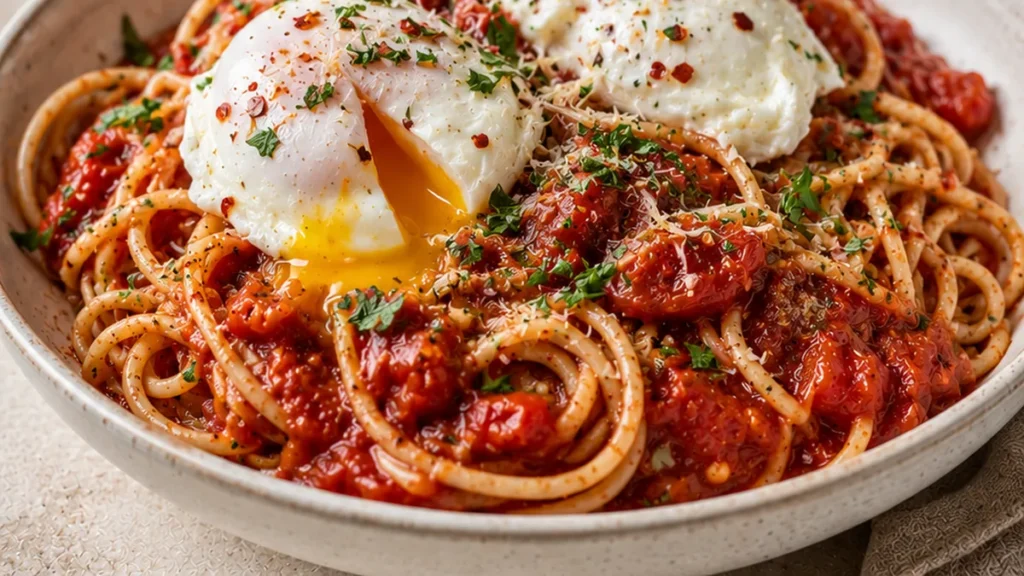
This Spaghetti Marinara with poached eggs is a comforting and elegant dish that transforms a simple pasta night into a gourmet experience. Combining the rich flavors of a slow-simmered marinara with perfectly cooked whole wheat spaghetti and crowned with a velvety poached egg, this recipe is surprisingly easy to prepare. What makes this Spaghetti Marinara work is its deceptive simplicity. The fire-roasted tomatoes provide a deep, smoky base, enhanced by aromatic garlic, red wine, and classic Italian herbs. The addition of a perfectly poached egg adds a luxurious creaminess that beautifully coats the pasta and sauce, making every bite an indulgence. It’s a meal designed to impress with minimal fuss.
Key takeaways
- The key to this spaghetti marinara is the use of fire-roasted tomatoes for depth and the gentle poaching of eggs to create a rich, emulsified sauce.
- Ensure garlic is sautéed without burning and pasta is cooked al dente.
- Adjust simmering time for sauce consistency and poaching time for desired egg yolk runniness.
The ULTIMATE Spaghetti Marinara with Poached Eggs
Ingredients
- 2 tablespoons olive oil
- 3 garlic cloves, minced
- 2 (14 ounce) cans fire roasted diced tomatoes, undrained
- 2 cups chicken broth
- 1/2 cup red wine
- 1 teaspoon salt
- 1 teaspoon dried basil
- 1 teaspoon dried oregano
- 8 ounces uncooked whole wheat spaghetti
- 4 eggs
Instructions
- Heat the olive oil in a deep pot over medium heat. Add the minced garlic and stir frequently for a minute – don’t let it burn or brown. Add the fire roasted diced tomatoes, chicken broth, red wine, salt, dried basil, and dried oregano. Bring to a simmer and let it cook for at least 15 minutes while you prepare the spaghetti.
- Bring a large pot of water to a boil for the spaghetti. Cook the whole wheat spaghetti according to package directions until al dente. Drain the spaghetti and toss with a little olive oil to prevent sticking. Set aside.
- While the spaghetti is cooking, carefully transfer the simmering marinara sauce to a blender. Blend until you achieve your desired smoothness. Return the pureed sauce to the pot.
- Add the cooked whole wheat spaghetti to the pot with the marinara sauce. Toss gently to coat the pasta evenly. Cover the pot to keep the spaghetti warm while you prepare the eggs.
- To poach the eggs, bring another pot of water to a rolling boil. Place a few metal rims (like from mason jars) in the bottom of the pot. Turn the heat off.
- Crack each egg into a small bowl. Carefully pour each egg into one of the metal rims in the hot water. Repeat for all four eggs. Cover the pot and let the eggs poach for 4-5 minutes (4 minutes for very soft yolks, 5 minutes for soft yolks).
- Carefully remove the poached eggs from the water using a slotted spatula. Tilt each egg slightly over the pot to drain any excess water. Gently place one poached egg on top of each serving of spaghetti marinara.
Notes
The technique that makes it
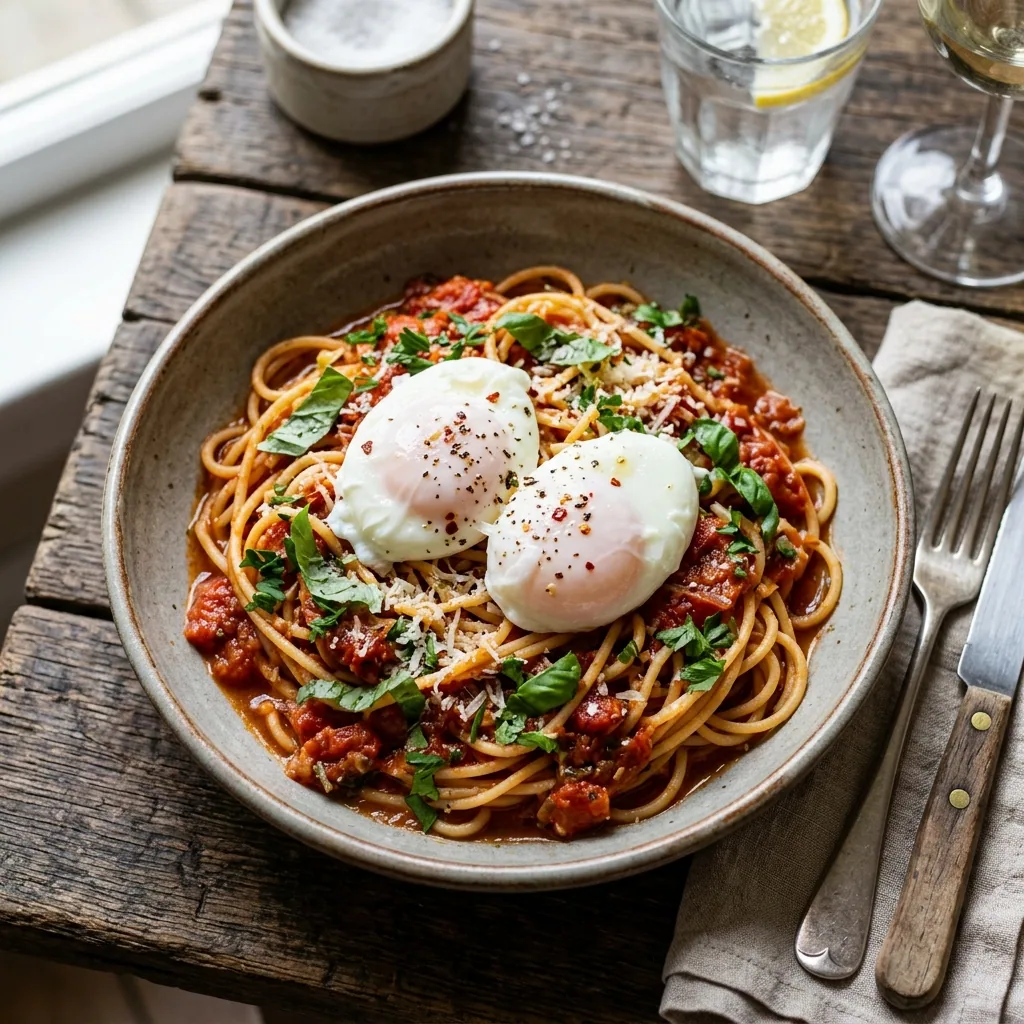
The foundation of a truly exceptional spaghetti marinara lies in the careful development of its sauce. This recipe leverages the natural sweetness and smoky depth of fire-roasted diced tomatoes. Unlike fresh tomatoes, which require significant simmering to break down and concentrate their flavor, fire-roasted varieties already possess a more intense, slightly charred taste. The initial sauté of minced garlic in olive oil is crucial for infusing the oil with aromatic compounds without burning the delicate garlic. This infused oil then forms the flavor base for the tomatoes.
The addition of chicken broth and red wine serves multiple purposes. The broth adds a savory undertone and liquid for simmering, while the red wine contributes acidity and complexity, helping to balance the sweetness of the tomatoes and deepen the overall flavor profile. Simmering the sauce, even with canned tomatoes, is essential to allow the flavors to meld and the sauce to thicken slightly. The dried basil and oregano rehydrate and release their essential oils during this simmering process, contributing their characteristic herbaceous notes.
The spaghetti itself is cooked separately to al dente perfection, ensuring it retains a pleasant bite. It’s then tossed with the marinara sauce, allowing the pasta to absorb some of the sauce’s flavor. The crowning glory is the poached egg. Poaching eggs gently cooks the whites until just set while leaving the yolk lusciously runny. When the yolk is broken, it acts as a natural emulsifier and sauce enricher, coating the spaghetti in a rich, velvety texture that improves the simple marinara to an ultimate dish.
Troubleshooting
- Sauce is too thin: Simmer the sauce uncovered for an additional 10-15 minutes, allowing excess liquid to evaporate and the sauce to thicken naturally. Alternatively, you can create a slurry of 1 teaspoon cornstarch mixed with 1 tablespoon cold water and stir it into the simmering sauce until thickened.
- Garlic is burnt: Burnt garlic imparts a bitter flavor. If you notice this early, discard the batch and start again, ensuring the heat is kept to medium-low when sautéing the garlic and that it cooks until fragrant, not browned.
- Eggs are overcooked: Overcooked poached eggs will have a rubbery white and a solid yolk. To avoid this, ensure your water is at a gentle simmer (not a rolling boil) and use fresh eggs, which hold their shape better. Cook for 3-4 minutes until the whites are set but the yolk is still liquid.
- Spaghetti is mushy: Overcooked pasta loses its texture. Cook the spaghetti according to package directions, but start testing for doneness a minute or two before the suggested time. It should be tender with a slight resistance in the center (al dente).
Substitutions
- Fire roasted diced tomatoes: Regular diced tomatoes can be used, but consider adding a pinch of smoked paprika to the sauce during simmering to mimic the smoky flavor. The result will be a less intense, less smoky marinara.
- Chicken broth: Vegetable broth or even water can be substituted. Using water will result in a less rich sauce, while vegetable broth will add a different, but still pleasant, vegetal depth.
- Red wine: A splash of balsamic vinegar or an equal amount of extra red wine vinegar can provide the necessary acidity, though it will alter the flavor profile slightly, making it tarter.
- Whole wheat spaghetti: Regular semolina spaghetti or even other pasta shapes like penne or rigatoni can be used. The cooking time will vary, and the texture will be different, but the sauce will still be delicious.
Pro tips
- Use fire-roasted diced tomatoes for an extra layer of smoky depth.
- Don’t overcook the garlic; it can turn bitter quickly.
- For the poached eggs, ensure the water is hot but not violently boiling when you add them.
- Adjust poaching time for your preferred yolk consistency – runny is best!
This Spaghetti Marinara with poached eggs offers a delightful twist on a classic. Enjoy this comforting and visually appealing meal that’s perfect for any occasion.
More from Pasta Sauces →
Frequently asked questions
Can I make spaghetti marinara ahead of time?
Yes, the marinara sauce can be made up to 3 days in advance and stored in an airtight container in the refrigerator. Reheat gently on the stovetop before serving. The poached eggs are best made fresh just before serving to ensure a perfect runny yolk.
What’s the best way to poach an egg for spaghetti?
Use the freshest eggs possible. Bring water to a gentle simmer, not a rolling boil. Add a splash of vinegar to the water. Crack eggs into small ramekins first, then gently slide them into the simmering water. Cook for 3-4 minutes until whites are set and yolks are still runny.
Can I substitute the poached eggs with something else?
Absolutely. If you prefer not to poach eggs, a fried egg with a runny yolk is a fantastic alternative. You could also top the marinara with burrata cheese for a creamy element, or simply omit the egg for a classic marinara experience.
How do I know when the spaghetti is perfectly cooked?
Spaghetti should be cooked al dente, meaning it has a slight bite to it. Taste a strand towards the end of the cooking time. It should be tender but still firm in the center. Avoid overcooking, as it will become mushy and less appealing.