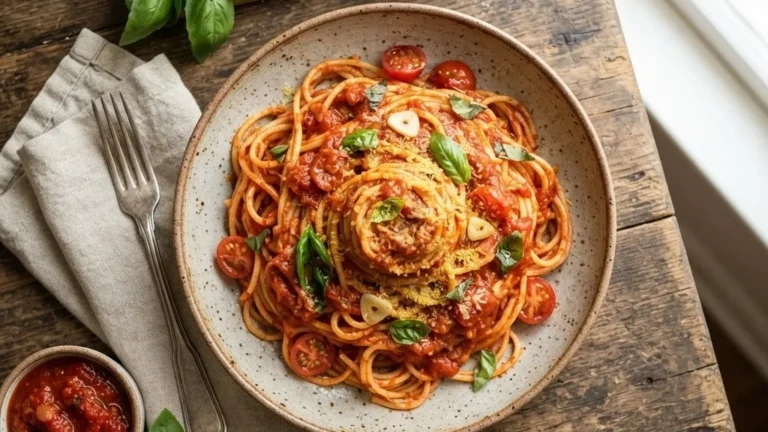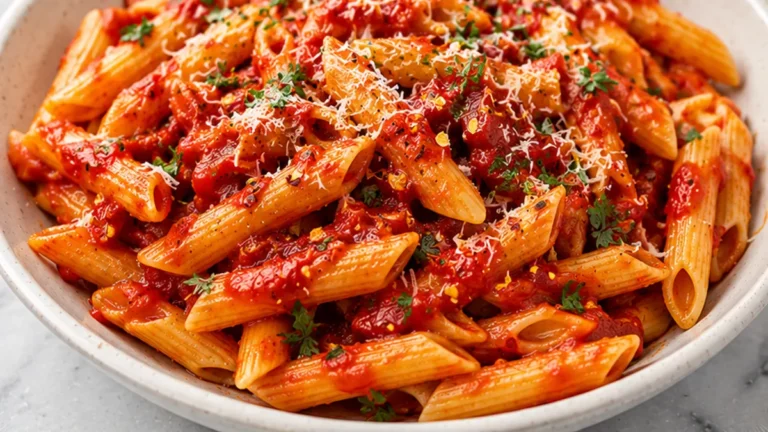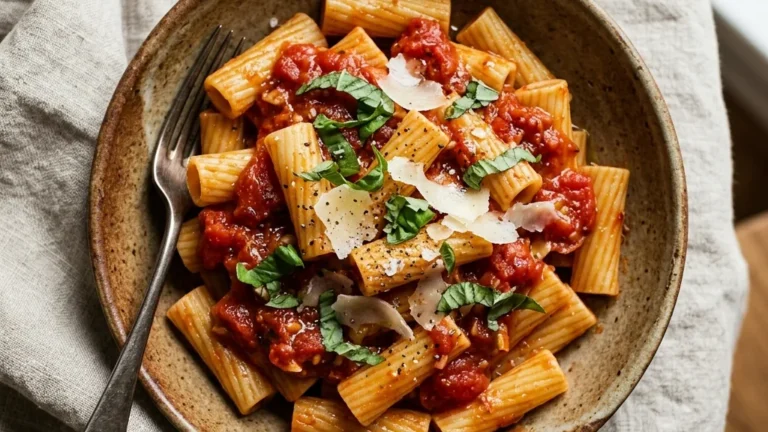
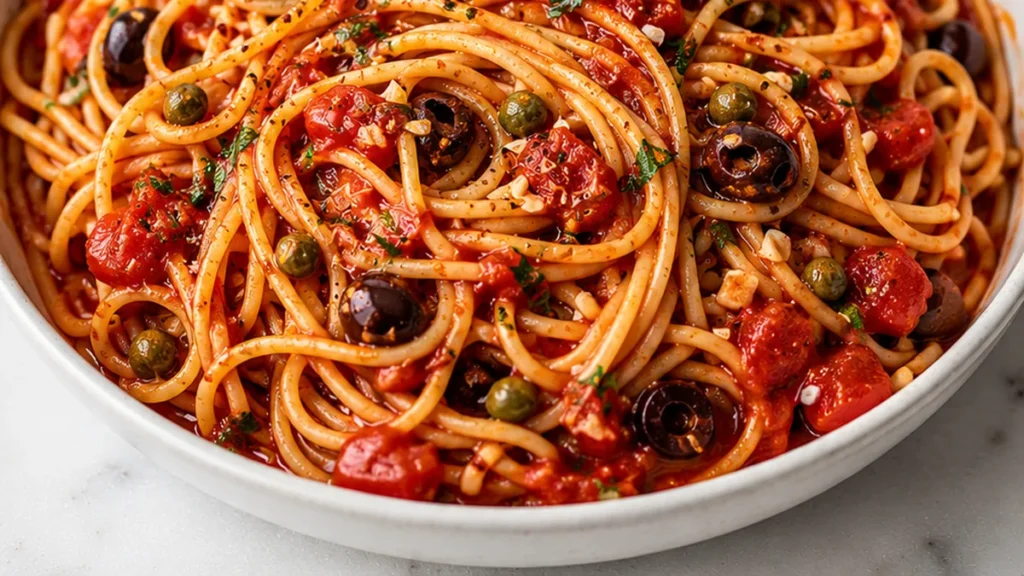
This Roasted Tomato Puttanesca recipe improves a classic Italian dish with a deeply flavorful, roasted tomato base. Unlike traditional versions, roasting the cherry tomatoes concentrates their natural sweetness and adds a complex depth that simmers into a rich, textured sauce. It’s designed for busy cooks seeking an impressive yet straightforward weeknight meal that satisfies with every bite. Perfect for anyone who loves bright, savory flavors, this tomato puttanesca is a testament to how simple ingredients can create extraordinary taste. It’s a dish that feels both rustic and refined, bringing a touch of Italian trattoria to your table with minimal fuss.
Key takeaways
- Sautéing fresh tomatoes and mushrooms until caramelized builds a rich flavor base.
- Combine fresh and canned tomatoes for balanced flavor and texture.
- Simmer uncovered to thicken the sauce and concentrate flavors.
- Cook pasta al dente for optimal texture.
Rich Tomato Puttanesca: Your New Fave Pasta!
Ingredients
- 12 ounces cherry or grape tomatoes
- 8 ounces fresh white button mushrooms, washed and quartered
- half an onion, roughly chopped
- 1 tablespoon olive oil
- 1/2 teaspoon salt
- 1 pound spaghetti
- 1 14-ounce can diced tomatoes
- 2 cloves garlic
- 1/2 teaspoon salt
- 1/2 cup pitted olives
Instructions
- Preheat oven to 425°F (220°C). On a baking sheet, combine tomatoes, mushrooms, and chopped onion. Drizzle with 1 tbsp olive oil and sprinkle with 1/2 tsp salt. Roast for 20 minutes, until veggies are tender and slightly browned.
- Meanwhile, cook spaghetti according to package directions until al dente. Reserve 1/2 to 1 cup of the pasta water before draining. Toss drained pasta with a little butter or olive oil to prevent sticking.
- Transfer the roasted vegetables to a food processor. Add the canned diced tomatoes, garlic cloves, another 1/2 tsp salt, pitted olives, 1 tbsp olive oil, and a squeeze of lemon juice. Pulse until a textured sauce forms. Taste and adjust seasoning.
- Return the drained pasta to its pot. Add the textured sauce to the pasta. Toss to combine. Stir in butter. Add reserved pasta water, a little at a time, until the sauce is very saucy and coats the pasta beautifully. Serve immediately with fresh basil or Parmesan, if desired.
Notes
The technique that makes it
What makes a truly rich tomato puttanesca work is coaxing maximum flavor from the tomatoes and aromatics. We start by sautéing the fresh cherry or grape tomatoes and quartered white button mushrooms with half a roughly chopped onion in olive oil. This initial sauté is crucial. The heat breaks down the cell walls of the tomatoes, releasing their juices and concentrating their natural sugars. The mushrooms, when browned, add an earthy depth and umami that complements the tomato’s sweetness. Don’t overcrowd the pan; allow the vegetables to caramelize slightly, which builds a foundational layer of flavor. After the fresh ingredients have softened and begun to brown, we introduce the canned diced tomatoes. This combination of fresh and canned tomatoes provides both bright, fresh notes and a deeper, cooked tomato essence. The garlic is added later in the sautéing process to prevent burning, which can impart a bitter taste. Simmering this mixture allows the flavors to meld and the sauce to thicken naturally, creating that desired richness without needing heavy cream or excessive oil. The salt is added in stages to properly season each component as it cooks.
Troubleshooting
- Sauce is too watery: If your sauce lacks thickness, allow it to simmer uncovered for an additional 10-15 minutes. This evaporates excess liquid, concentrating the flavors and thickening the sauce.
- Sauce is too acidic or bland: A pinch of sugar can balance excessive acidity. For blandness, ensure adequate salt has been added, or consider a splash of balsamic vinegar or a pinch of red pepper flakes for complexity.
- Garlic is burnt: Burnt garlic creates a bitter taste. To fix this, you can try making a new batch of sautéed garlic and adding it to the existing sauce, or if the bitterness is mild, a touch of sweetness from honey or sugar might help mask it.
- Pasta is mushy: Cook the spaghetti until it is al dente (firm to the bite). Overcooked pasta will become mushy and absorb too much sauce, losing its texture.
Substitutions
- Fresh Tomatoes: If fresh cherry or grape tomatoes are unavailable, you can substitute with an additional 14-ounce can of crushed tomatoes, adding them with the diced tomatoes. The sauce will be less bright but still flavorful.
- White Button Mushrooms: Cremini (baby bella) mushrooms offer a slightly richer flavor. Shiitake mushrooms can provide a more intense umami, but use them sparingly as their flavor is potent.
- Olives: Kalamata olives offer a fruitier, more robust flavor. Green olives can be used, but they tend to be saltier and less complex in taste.
- Spaghetti: Linguine or fettuccine are excellent substitutes for spaghetti, offering a similar surface area for the sauce to cling to. Whole wheat pasta can be used for a healthier option, though cooking times may vary.
Pro tips
- Use ripe, flavorful cherry or grape tomatoes for the best sweetness.
- Don’t skip roasting the vegetables; it’s key to the sauce’s depth.
- Adjust the amount of pasta water to achieve your desired sauce consistency.
- A squeeze of lemon juice at the end brightens all the flavors.
Explore this delicious roasted tomato puttanesca and discover a new favorite pasta dish. Enjoy the rich, savory flavors!
More from Pasta Sauces →
Frequently asked questions
What makes puttanesca sauce rich?
The richness in this tomato puttanesca comes from a slow simmer, allowing the tomatoes to break down and concentrate their flavor. Adding a good quality olive oil at the end also contributes to a luxurious mouthfeel. The anchovies, while not making it ‘rich’ in fat, add a deep umami that rounds out the sauce.
Can I make this puttanesca sauce ahead of time?
Absolutely. This puttanesca sauce can be made up to 3 days in advance. Store it in an airtight container in the refrigerator. Reheat gently on the stovetop, adding a splash of pasta water or a little more olive oil if it seems too thick. It often tastes even better the next day.
What pasta is best for puttanesca?
While spaghetti is traditional, any long pasta like linguine or bucatini works wonderfully. The sauce clings well to these shapes. You could also use short, ridged pasta like penne or rigatoni to catch the chunky bits of olives and capers. Ensure pasta is cooked al dente for the best texture.
What can I substitute for anchovies in puttanesca?
If you dislike anchovies or can’t find them, you can substitute with a teaspoon of Worcestershire sauce or a tablespoon of miso paste. These ingredients provide a similar umami depth. You won’t get the exact traditional flavor, but it will still result in a delicious, savory sauce.