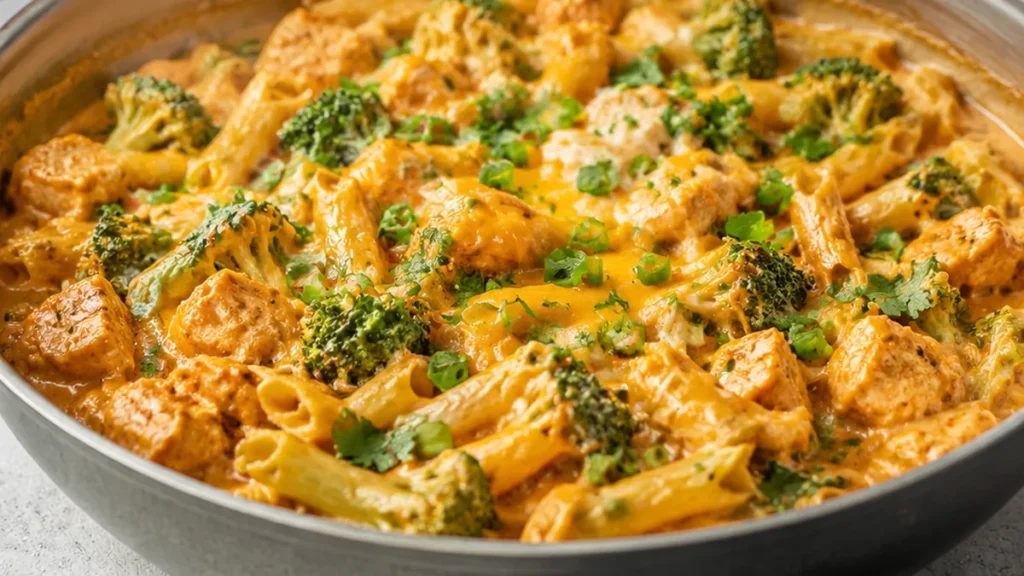
This buffalo chicken pasta recipe is a quick and easy weeknight dinner solution. Combining tender chicken with a creamy, spicy sauce and perfectly cooked pasta, this one-pot dish is simple to prepare.
Key takeaways
- Achieve a creamy sauce by allowing pasta starches to emulsify with liquids and fats.
- Control heat carefully when adding dairy and cheese to prevent separation.
- Ensure adequate liquid for pasta hydration and sauce formation; adjust as needed.
- Uniform chicken pieces and gentle stirring prevent overcooking and ensure even texture.
One-Pot Buffalo Chicken Pasta Helper
Ingredients
- 2 tablespoons extra virgin olive oil
- 2-3 chicken breast or thighs, cubed
- 1 medium yellow onion, chopped
- kosher salt and black pepper
- 1 teaspoon chili powder
- 1 teaspoon paprika
- 1 teaspoon garlic powder
- 1 pound short cut pasta
- 2 cups chopped broccoli florets
- 1 1/2 cups milk (use what you drink)
- 1/2 cup water
- 1/4 cup ketchup
- 2 tablespoons sliced jalape os
- 1/4 cup salsa
- 2 tablespoons hot sauce
- 2 tablespoons unsalted butter
- 2 cups shredded cheddar cheese
- 1/4 cup chopped green onions
- 2 tablespoons fresh cilantro, chopped
Instructions
- In a large pot set over medium-high heat, add the olive oil, onion, and chicken. Season with salt and pepper. Cook until lightly seared all over, about 10 minutes. Stir in the chili powder, paprika, and garlic powder, cook for another minute.
- Add the pasta and broccoli. Mix gently, then pour over 1/2 cup water and the milk. Add the ketchup and stir to combine. Season with salt.
- Bring to a gentle boil over medium-high heat. Simmer for 5 minutes until the pasta is al dente, stirring often. Stir in the jalape
- Stir in 1 1/2 cups shredded cheddar cheese. Cook another few minutes until very creamy. Remove from the heat, top with 1/2 cup shredded cheddar cheese.
- Divide the pasta among bowls and top with green onions and cilantro.
Notes
The Technique That Makes It: One-Pot Pasta Emulsification and Hydration
This one-pot buffalo chicken pasta relies on a few key culinary principles to transform simple ingredients into a creamy, cohesive dish. The primary technique at play is the creation of an emulsion, where the fat from the butter and cheese, along with the starches released from the pasta as it cooks, combine with the liquid ingredients (milk, water, ketchup, salsa, hot sauce) to form a smooth, thickened sauce. The initial sautéing of the chicken and onions builds a flavor base through the Maillard reaction, adding depth. As the pasta cooks directly in the liquid, it releases starches that act as a natural thickener. Crucially, the ratio of liquid to pasta is designed to hydrate the pasta fully while also providing enough volume to create the sauce. Adding the milk and cheese at the end, off the direct high heat, prevents the dairy from curdling and allows the cheese to melt smoothly into the sauce, completing the emulsion. Stirring frequently during the final stages ensures even cooking and prevents sticking.
Troubleshooting
- Problem: Sauce is too thin. Fix: If the sauce remains too thin after the pasta is cooked, increase the heat slightly and stir continuously for a few more minutes to allow more liquid to evaporate and starches to thicken. You can also stir in an additional tablespoon or two of cheese or a small knob of butter to help emulsify and thicken.
- Problem: Pasta is undercooked or gummy. Fix: Undercooked pasta means it hasn’t absorbed enough liquid. Add a splash more water or milk (1/4 cup at a time) and continue cooking, stirring, until al dente. Gummy pasta often results from over-stirring or cooking at too high a heat, which can break down the starches excessively. Ensure you are stirring gently and maintaining a simmer rather than a rolling boil.
- Problem: Sauce is greasy or separated. Fix: This typically happens if the cheese is added over too high heat, causing the fat to separate. Reduce the heat to low or remove the pot from the heat entirely before stirring in the cheese. Stir gently until the cheese is melted and incorporated.
- Problem: Chicken is dry. Fix: Ensure the chicken is cut into uniform, bite-sized pieces to cook evenly. Don’t overcook the chicken initially; it will finish cooking in the pasta liquid. If it seems dry, consider using chicken thighs, which are more forgiving and stay moist.
Substitutions
- Chicken: Boneless, skinless chicken thighs can be used instead of breasts for a richer, more moist result. The cooking time might need a slight adjustment.
- Pasta Shape: Any short pasta shape that holds sauce well, such as penne, rotini, or farfalle, will work. Cooking times may vary slightly depending on the pasta shape and brand.
- Milk: Unsweetened non-dairy milk alternatives like almond or soy milk can be used, though they may result in a slightly less creamy sauce.
- Cheese: A blend of cheddar and Monterey Jack, or even a spicy pepper jack, can be used for a different flavor profile. Ensure the cheese is shredded from a block for optimal melting.
Pro tips
- Make sure the chicken reaches an internal temperature of 165°F (74°C) to ensure it’s fully cooked and safe to eat. Use a meat thermometer for accuracy.
- For a richer sauce, you can add 1/4 cup of cream cheese along with the shredded cheese in step 4. This will make the buffalo chicken pasta extra decadent.
- To store leftovers, refrigerate in an airtight container for up to 3 days. Reheat gently on the stovetop with a splash of milk to restore creaminess, or microwave until warmed through.
This one-pot buffalo chicken pasta is a guaranteed crowd-pleaser that simplifies dinner without compromising on flavor. Give it a try and customize it to your spice preference for a truly fantastic meal!
Frequently asked questions
Can I make this recipe spicier?
Yes, to increase the spice level, add more hot sauce, use a spicier salsa, or incorporate a pinch of cayenne pepper along with the other spices. You could also add extra sliced jalapeños for more heat and flavor.
What if I don’t have broccoli?
You can substitute other quick-cooking vegetables like frozen peas, chopped bell peppers, or spinach. Add spinach in the last few minutes of cooking, while peppers or peas can be added with the broccoli florets.
How do I store leftovers?
Leftovers can be stored in an airtight container in the refrigerator for up to 3 days. Reheat gently on the stovetop with a splash of milk or water to restore creaminess, or in the microwave.
Can I use pre-shredded cheese?
While pre-shredded cheese is convenient, it often contains anti-caking agents that can hinder smooth melting. For the creamiest sauce, it’s best to shred your cheddar cheese from a block yourself.
More from Chicken Pasta Recipes →