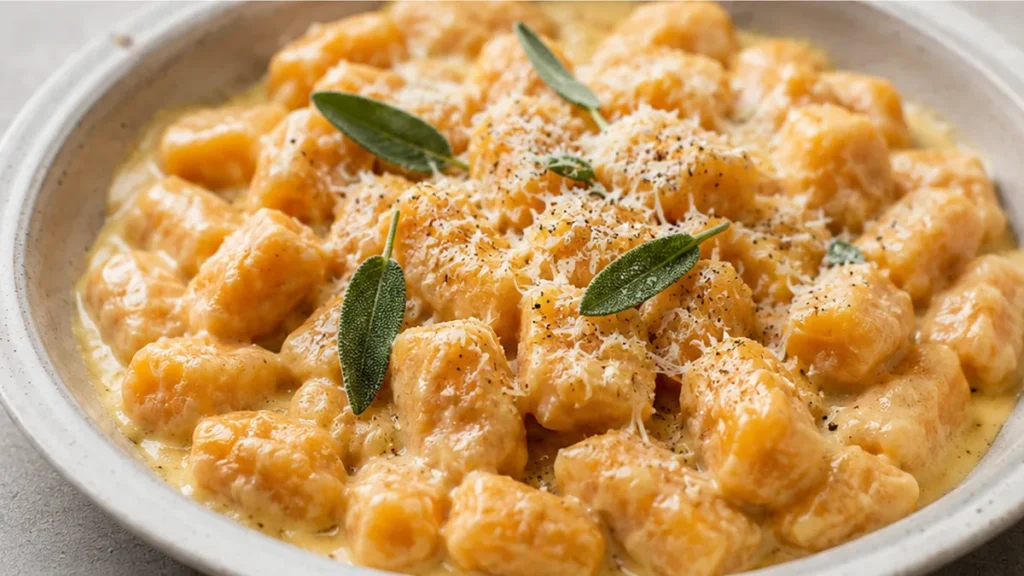
The secret to truly tender sweet potato gnocchi lies in the texture of your mashed sweet potatoes; they need to be smooth and dry, not watery, to achieve the perfect pillowy bite. This sweet potato gnocchi recipe guides you through making homemade gnocchi from scratch, culminating in a luxurious rosemary parmesan cream sauce. This dish is ideal for those looking to expand their pasta-making skills or simply enjoy a comforting, hearty meal with a touch of elegance. When the sweet potato mash is just right, the dough comes together effortlessly, making the entire process enjoyable.
Key takeaways
- Bake or roast sweet potatoes to minimize moisture content.
- Use whole milk ricotta for a thicker, less watery dough.
- Mix flour gently until just combined to avoid tough gnocchi.
- Sear boiled gnocchi in butter to develop flavor and texture.
Creamy Sweet Potato Gnocchi Recipe
Ingredients
- 2 medium sweet potatoes (about 2 cups once mashed)
- 1/2 cup whole milk ricotta
- 1 large egg
- 2-3 cups all-purpose flour
- 1 teaspoon kosher salt
- 4 tablespoons (1/4 cup) butter
- 1 tablespoon chopped fresh rosemary
- 1 cup heavy cream
- 1/3 cup fresh grated parmesan, plus more for serving
- pinch fresh grated nutmeg
Instructions
- Preheat your oven to 400 degrees F. Bake sweet potatoes for 45 minutes or until soft. Cool, then mash or puree.
- In a large bowl, mix mashed sweet potatoes, ricotta, egg, salt, and flour until just combined. Add more flour if needed until a sticky dough forms.
- On a floured counter, roll dough into 1-inch thick ropes and cut into bite-size pieces. Place gnocchi on a floured baking sheet.
- To make the sauce: Heat butter in a large skillet over medium-high heat until browned (3-5 minutes). Stir in rosemary, then slowly pour in cream. Whisk in parmesan, nutmeg, and season with salt and pepper. Simmer for 3-5 minutes until smooth.
- Boil gnocchi in salted water for 3-4 minutes until they float. Remove with a slotted spoon and add directly to the sauce, tossing gently to combine. Enjoy!
Notes
The Technique That Makes It: Achieving the Perfect Gnocchi Dough
The success of these sweet potato gnocchi hinges on managing the moisture content of the sweet potato and the development of gluten. Sweet potatoes, especially when baked or roasted, can release a significant amount of steam and water. Overly wet potato will lead to a gummy, sticky dough that requires excessive flour, resulting in dense, heavy gnocchi. To combat this, it’s crucial to cook the sweet potatoes in a way that minimizes added moisture, such as baking or roasting them until tender, then allowing them to cool and dry slightly before mashing. The ricotta cheese also contributes moisture, so using a whole milk, thicker ricotta is preferable to a watery, skim version. When incorporating the flour, mix just until a cohesive dough forms. Overmixing develops too much gluten, which, combined with the potato starch, can make the gnocchi tough and chewy rather than tender and pillowy. The goal is a dough that is soft and slightly tacky, but manageable, allowing for a delicate texture.
Troubleshooting
- Gnocchi are too dense or tough: This is likely due to overmixing the dough after adding the flour, which develops too much gluten, or using too much flour to compensate for a wet potato. Try to mix the flour in gently and only until combined, and ensure your sweet potatoes are as dry as possible before mashing.
- Gnocchi are falling apart during cooking: The dough might be too wet, lacking enough structure. Ensure you’ve used a thick ricotta and the sweet potato was well-drained. You might need to add a tablespoon or two more flour to the dough if it feels excessively sticky, but do so sparingly.
- Gnocchi are gummy or sticky: This indicates too much moisture in the dough, either from the sweet potato or the ricotta. Make sure to bake or roast your sweet potatoes and let them cool, and use a full-fat, drained ricotta.
- Sauce isn’t coating the gnocchi well: The gnocchi might be releasing too much starch or are not properly seared. Ensure you are not overcrowding the pan when searing the gnocchi after boiling, and that the butter and rosemary mixture is hot enough to create a slight crust.
Substitutions
- Ricotta: Mashed, drained firm tofu or a thick, plain Greek yogurt can be used instead of ricotta. The texture might be slightly different, potentially a bit denser or tangier, but will still yield good results.
- Sweet Potatoes: Regular potatoes (like Russets or Yukon Golds) can be substituted, but the flavor profile will change significantly, losing the inherent sweetness. Ensure they are cooked and mashed thoroughly.
- Butter: Olive oil or a plant-based butter alternative can be used for the sauce. This will alter the richness and flavor, with olive oil providing a fruitier note.
- Rosemary: Fresh sage or thyme are excellent alternatives. They offer a similar aromatic quality that complements the sweet potato and cream sauce beautifully.
Pro tips
- Use baked sweet potatoes, not boiled, to prevent excess moisture which can make the gnocchi dough too sticky and heavy.
- For a richer rosemary flavor, infuse the chopped rosemary in the warm butter for an extra minute before adding the cream.
- To ensure a silky-smooth sauce, add the grated Parmesan off the heat, stirring until fully melted and combined.
- Leftover cooked gnocchi can be stored in an airtight container in the fridge for up to 3 days. Reheat gently on the stovetop with a splash of milk or water.
This sweet potato gnocchi recipe offers a delightful culinary experience, combining rustic charm with sophisticated flavors. Experiment with different herbs like sage or thyme in the cream sauce for a unique twist. Share your delicious creations!
Frequently asked questions
How do I prevent my sweet potato gnocchi from being too wet?
Bake or roast your sweet potatoes until tender, then let them cool completely. This allows excess moisture to evaporate. Mash them thoroughly and ensure your ricotta is thick and well-drained before incorporating into the dough.
Can I make the gnocchi dough ahead of time?
Yes, you can prepare the gnocchi dough and refrigerate it for up to 24 hours. Shape the gnocchi, place them on a lightly floured baking sheet, cover, and chill. They may need a few extra minutes to cook if chilled.
What happens if I use too much flour?
Using too much flour will result in dense, heavy, and tough gnocchi. Aim for a dough that is soft and slightly sticky but manageable. Add flour gradually until the dough just comes together, rather than adding a large amount at once.
How do I get a nice sear on my gnocchi?
After boiling, gently pan-fry the gnocchi in hot butter until golden brown on all sides. Don’t overcrowd the pan, as this will steam them instead of searing. A good sear adds a delightful crispy texture and enhances flavor.
More from Pasta Shapes Guide →