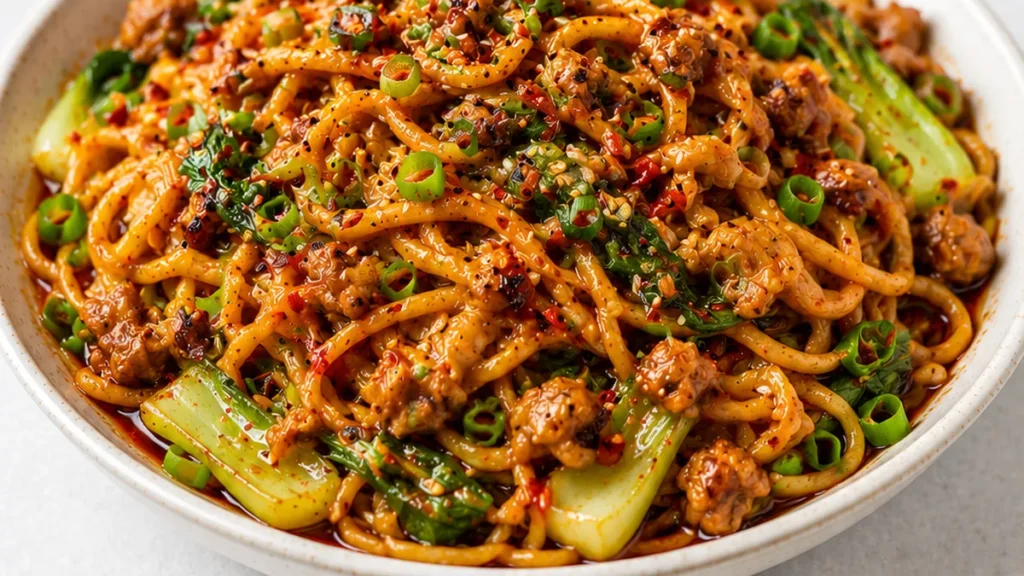
Szechuan noodles offer a spicy, umami-rich flavor profile perfect for home cooking. This recipe provides an authentic taste, achievable in under 30 minutes for a convenient meal.
Key takeaways
- Infuse oil with aromatics over low heat for flavor, not browning.
- Cook noodles al dente to prevent mushiness when sauced.
- Emulsify the sauce and oil by tossing vigorously with hot noodles.
- Adjust chili flakes and paste to control spice level.
Spicy Szechuan Noodles: Better Than Takeout!
Ingredients
- 1/3 cup peanut oil
- 6 cloves garlic, thinly sliced or smashed
- 1-2 teaspoon crushed red pepper flakes
- 1 inch fresh ginger, grated
- 2 tablespoons raw sesame seeds
- 8 ounces Chinese egg noodles
- 1/2 cup low sodium soy sauce
- 1/4 cup rice vinegar
- 2 tablespoons honey
- 1-2 tablespoons chili paste (sambal oelek)
Instructions
- To make the chili oil. Heat a large skillet over medium heat. Add the peanut oil, garlic, ginger, and chili flakes. Cook, stirring occasionally until the garlic is fragrant, 5 minutes. Stir in the sesame seeds, cook 30 seconds to 1 minute more. Remove from the heat and very carefully transfer the oil to a heat proof bowl or glass jar.
- Meanwhile, cook the eggs noodles according to package directions.
- Combine the soy sauce, vinegar, honey, chili paste, and 1/3 cup water in a bowl.
- Place the skillet over medium high heat. Add the chicken. Season with black pepper and brown all over, breaking it up as it cooks, about 5 minutes. Add the red and green onions, and cook another 2-3 minutes. Slowly pour in the soy sauce mixture and add the bok choy. Bring the mixture to a simmer and cook until the sauce coats the chicken, about 3-5 minutes.
- Stir in the noodles and 2 tablespoons chili oil. Remove from the heat. Serve the noodles warm, topped with additional chili oil and green onions. Enjoy!
Notes
– Don’t overcook the noodles; they should be al dente as they will continue to cook slightly when tossed with the hot sauce. This ensures a pleasant chewiness.
– Storage: Leftover Szechuan noodles can be stored in an airtight container in the refrigerator for up to 3 days. Reheat gently in a skillet with a splash of water or broth to loosen the sauce and prevent drying. Nutrition information is an estimate, calculated automatically. Values vary with brands, substitutions and portion sizes.
The Technique for Authentic Szechuan Flavor
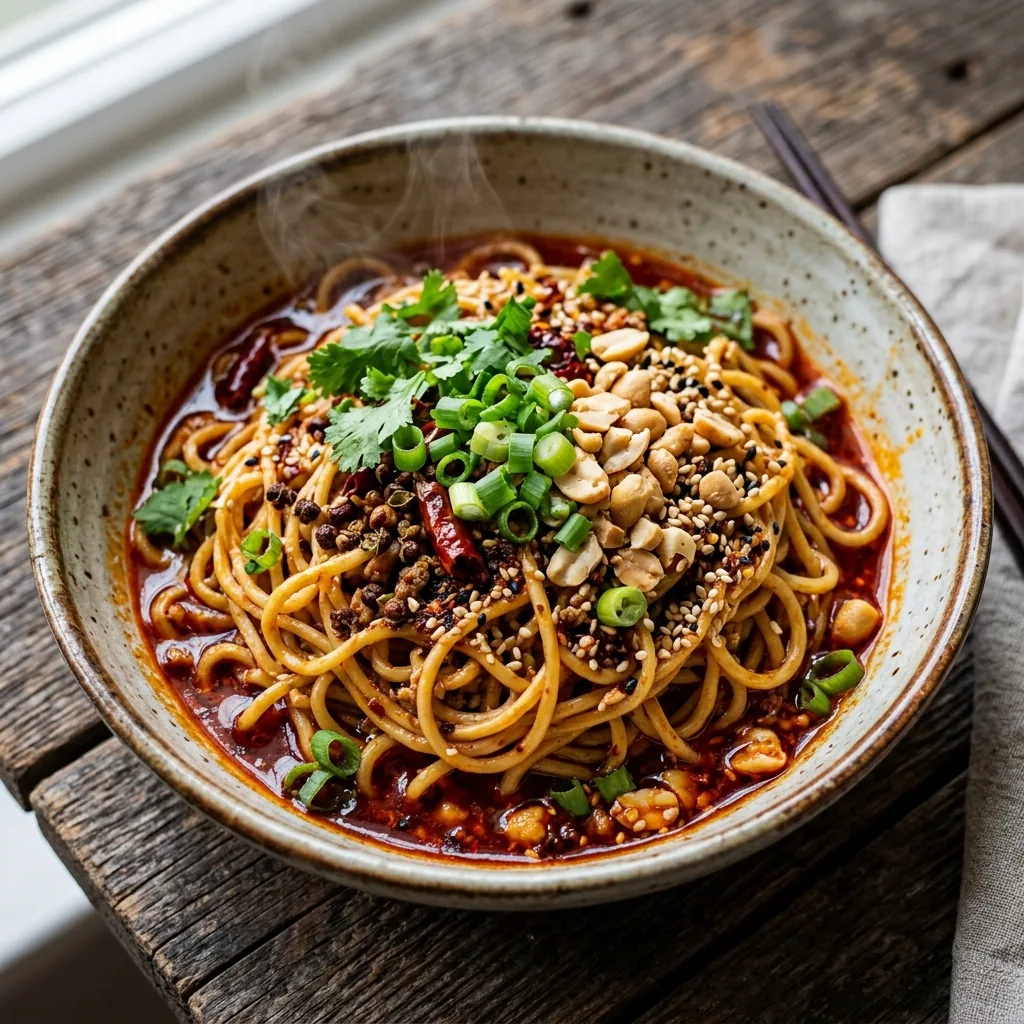
What makes these Szechuan noodles work is building a complex, emulsified sauce and infusing the oil with aromatics. We start by gently heating the peanut oil with garlic, ginger, and red pepper flakes. This isn’t about frying the garlic to crispness, but rather slowly extracting their pungent flavors and heat into the oil. This process, known as aromatic infusion, is crucial. If the oil is too hot, the garlic will burn, leading to a bitter taste that overpowers the dish. The goal is a fragrant, slightly spicy oil that forms the flavor base.
Next, we create the sauce. Combining soy sauce, rice vinegar, honey, and chili paste creates a balance of salty, sour, sweet, and spicy. The honey not only adds sweetness but also helps to thicken the sauce slightly when it heats up. The chili paste, like sambal oelek, provides a more nuanced chili flavor and heat compared to just flakes. When this sauce is combined with the infused oil and tossed with properly cooked noodles, the heat from the noodles helps to emulsify the oil and sauce mixture, creating a cohesive coating rather than a separated layer of oil and liquid. Cooking the Chinese egg noodles to al dente is also key; they need to have enough structure to hold the sauce without becoming mushy.
Troubleshooting
- Problem: Sauce is too oily and separated. Fix: Ensure the sauce is heated through with the noodles. Tossing vigorously while the noodles are still hot helps emulsify the oil and sauce. You can also add a tablespoon of hot noodle cooking water to help bind the sauce.
- Problem: Noodles are mushy. Fix: Cook the noodles according to package directions, but err on the side of slightly undercooking them (al dente). They will finish cooking when tossed with the hot sauce. Avoid overcrowding the pot when boiling noodles.
- Problem: Flavor is flat or one-dimensional. Fix: Ensure you’ve allowed the aromatics (garlic, ginger, chili flakes) to infuse the oil properly over low heat. Taste and adjust the sauce before tossing with noodles – you might need a touch more vinegar for brightness or honey for balance.
- Problem: Too spicy or not spicy enough. Fix: Adjust the amount of crushed red pepper flakes and chili paste. For less heat, use fewer flakes and a milder chili paste. For more heat, increase both or use a hotter chili paste.
Substitutions
- Noodles: If Chinese egg noodles are unavailable, spaghetti or linguine can be used. The texture will be slightly different, but the flavor profile will remain intact.
- Peanut Oil: Canola oil or a neutral vegetable oil can substitute for peanut oil. The nutty flavor of peanut oil is characteristic, but a neutral oil will still allow the other aromatics to shine.
- Honey: Maple syrup or agave nectar can replace honey. The sweetness will be similar, though the flavor notes might vary slightly.
- Rice Vinegar: Apple cider vinegar or white wine vinegar can be used. Rice vinegar offers a milder, slightly sweeter acidity, so adjust the quantity slightly if using a sharper vinegar.
Pro tips
- For the chili oil, ensure your oil isn’t smoking hot when adding the aromatics; a medium heat ensures they infuse properly without burning. I once overheated the oil, and the garlic turned bitter almost instantly – keep a close eye on it!
- Don’t overcook the noodles; they should be al dente as they will continue to cook slightly when tossed with the hot sauce. This ensures a pleasant chewiness.
- Storage: Leftover Szechuan noodles can be stored in an airtight container in the refrigerator for up to 3 days. Reheat gently in a skillet with a splash of water or broth to loosen the sauce and prevent drying.
This Szechuan noodle recipe offers a delicious journey into authentic flavors, perfect for any occasion. Experiment with different vegetables or protein, and savor every spicy, savory bite!
Frequently asked questions
Can I make the sauce ahead of time?
Yes, you can prepare the sauce mixture (soy sauce, vinegar, honey, chili paste) in advance and store it in the refrigerator. However, the infused oil should be made fresh just before tossing with the noodles to ensure the aromatics are fresh and the oil hasn’t become rancid.
What kind of chili paste is best?
Sambal oelek is recommended for its straightforward chili flavor and moderate heat. Other chili pastes like gochujang (Korean) or sriracha (Thai-style) can be used, but they will impart different flavor profiles and sweetness levels, altering the authentic Szechuan taste.
How can I make this dish vegetarian or vegan?
This recipe is easily made vegan by ensuring your honey substitute is plant-based (like agave or maple syrup). If using Chinese egg noodles, switch to a vegan noodle option like wheat noodles or ramen noodles. The rest of the ingredients are typically vegan.
My sauce seems too thick, what can I do?
If the sauce becomes too thick after tossing with the noodles, you can thin it out slightly by adding a tablespoon or two of hot water (or reserved noodle cooking water). Stir well until the desired consistency is reached. This will also help maintain the sauce’s flavor.
More from Easy Pasta Recipes →