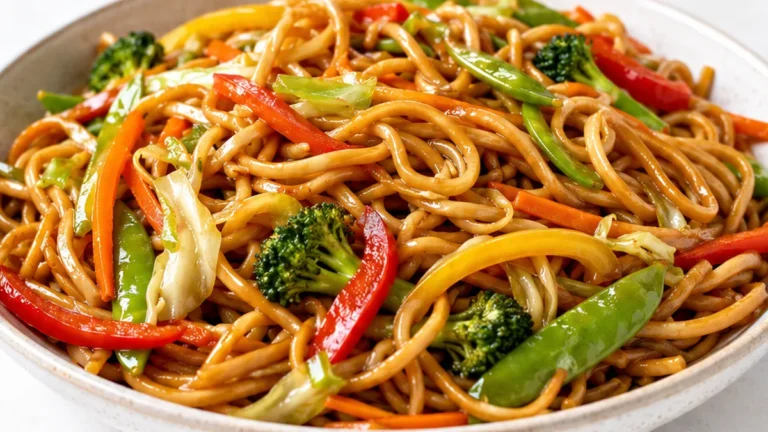
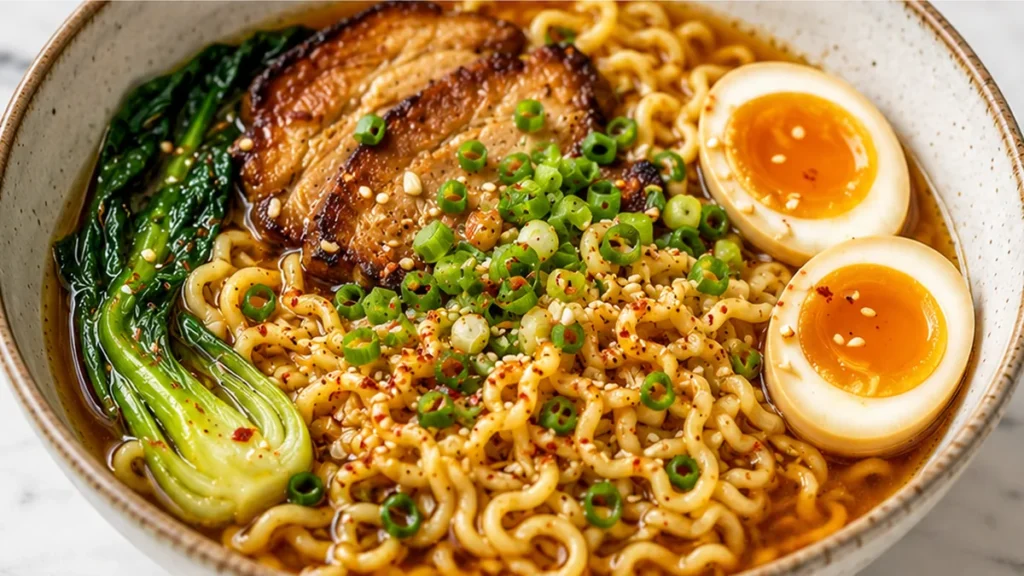
This homemade ramen recipe is a fantastic way to bring a restaurant-quality dish into your kitchen with minimal effort. It focuses on creating a deeply flavorful broth quickly, making it perfect for busy weeknights or when a craving strikes. Our approach simplifies the ramen-making process without sacrificing taste, incorporating aromatics and fresh ingredients for a truly satisfying bowl of homemade ramen.
Key takeaways
- Improve instant ramen by blooming aromatics and infusing broth with shiitake mushrooms.
- Cook noodles separately to maintain optimal texture.
- Adjust vegetables based on desired tenderness and cook time.
- Customize with alternative broths, mushrooms, vegetables, or aromatics.
Quick Homemade Ramen You NEED to Try!
Ingredients
- 1 tablespoon sesame oil
- 3 teaspoons grated ginger
- 4 teaspoons grated garlic
- 4 cups broth (I used chicken, but vegetable would also work)
- 4 cups water
- 1 ounce dried shiitake mushrooms
- 2 packages instant ramen (noodles only!)
- 1/2 cup chopped scallions or chives
- 2 cups chopped kale (or spinach)
- 1 cup shredded carrots (or another vegetable like bok choy)
Instructions
- Heat the sesame oil in a large skillet over medium low heat. Add the garlic and ginger; stir fry for 2 minutes or until soft and fragrant.
- Add the broth and the water. Bring to a simmer; add the mushrooms and simmer for 10 minutes or until the mushrooms have softened and the broth is flavorful.
- Add the instant noodles to the hot liquid and simmer for an additional 5 minutes or until the noodles have softened. Add the scallions and stir to combine.
- Remove from heat, stir in the kale and carrots. Season with chili oil, hot sauce, sesame oil, and/or soy sauce and salt to taste.
Notes
The technique that makes it
The key to elevating instant ramen into a truly satisfying homemade ramen lies in building a flavorful broth base and properly incorporating the aromatics and vegetables. Unlike simply boiling the instant noodle packet, this recipe focuses on creating a richer, more complex soup. We start by sautéing ginger and garlic in sesame oil. This process, known as blooming, releases their volatile aromatic compounds, intensifying their flavor and fragrance. This is a crucial step that adds depth beyond the standard ramen seasoning packet.
The broth and water combination provides a liquid base, while the dried shiitake mushrooms are a powerhouse of umami. Rehydrating them in the simmering liquid not only softens them for consumption but also infuses the broth with their deep, earthy, and savory notes. This mushroom-infused liquid is far superior to plain water or broth alone.
Finally, the timing of adding the vegetables is important. The kale (or spinach) is added towards the end to wilt slightly, retaining some of its texture and nutrients. Shredded carrots add a touch of sweetness and crunch. The instant ramen noodles are cooked separately according to package directions to prevent them from becoming mushy and absorbing too much liquid from the broth, which can dilute the flavor and alter the noodle’s texture. This method ensures each component contributes its best to the final bowl of homemade ramen.
Troubleshooting
- Broth lacks depth: Ensure you are blooming the ginger and garlic sufficiently until fragrant before adding liquids. Using a good quality broth and allowing the shiitake mushrooms to fully rehydrate and infuse the liquid for at least 5-10 minutes will also enhance flavor.
- Noodles are mushy: Cook the instant ramen noodles separately in plain boiling water according to package directions, then drain them before adding to the hot broth. Avoid overcooking.
- Vegetables are too tough or too wilted: Add heartier vegetables like carrots earlier in the simmering process, while leafy greens like kale or spinach should be added only in the last 1-2 minutes of cooking to achieve the desired tenderness.
- Ramen is too salty: If using a salty broth or seasoning packet, taste the broth before adding any additional salt. You can also dilute a too-salty broth with a little extra water or unsalted broth.
Substitutions
- Broth: While chicken or vegetable broth are recommended, a good quality beef broth can also be used for a richer, meatier flavor profile. For a vegetarian or vegan option, ensure you use vegetable broth and omit any meat-based garnishes.
- Mushrooms: If shiitake mushrooms are unavailable, dried porcini mushrooms can offer a similar depth of umami, though with a slightly different earthy flavor. Fresh mushrooms can be used, but they will not impart as much concentrated flavor to the broth.
- Vegetables: Feel free to swap kale or spinach for other quick-cooking greens like baby bok choy, napa cabbage, or even thinly sliced Swiss chard. For added texture, consider adding thinly sliced bell peppers or snap peas.
- Aromatics: While ginger and garlic are classic, a small amount of finely minced shallot can be used in place of some of the garlic for a milder, sweeter onion flavor.
Pro tips
- For an extra savory broth, use a good quality chicken or vegetable stock.
- Don’t overcook the noodles; they should be tender but still have a slight bite.
- Customize your ramen with your favorite toppings like a soft-boiled egg, nori, or corn.
Enjoy this quick and delicious homemade ramen, a versatile dish perfect for a comforting meal any day of the week. Experiment with toppings to make it your own!
More from blog →
Frequently asked questions
How to make ramen broth from scratch quickly?
For a quick broth, simmer chicken or vegetable stock with aromatics like ginger, garlic, and scallions for about 15-20 minutes. Add soy sauce, miso paste, or a dash of fish sauce for depth. You can also use store-bought ramen broth concentrate and dilute it with hot water for an even faster option.
What are the best noodles for homemade ramen?
Fresh ramen noodles are ideal if available, offering the best texture. If not, dried ramen noodles work well; cook them according to package directions until al dente. Avoid overcooking, as they will continue to soften in the hot broth. Soba or udon noodles can be used as substitutes in a pinch.
Can I make ramen ahead of time?
You can prepare the broth and toppings in advance. Store the broth in an airtight container in the refrigerator for up to 3 days. Chop vegetables and cook proteins ahead of time and store them separately. Assemble the ramen just before serving to prevent noodles from getting soggy.
What toppings can I add to quick ramen?
Classic toppings include a soft-boiled egg (ajitsuke tamago), sliced green onions, nori (seaweed), and some protein like sliced pork belly or chicken. Other quick options are corn, bean sprouts, spinach, or a sprinkle of chili oil for a spicy kick. Add them just before serving.