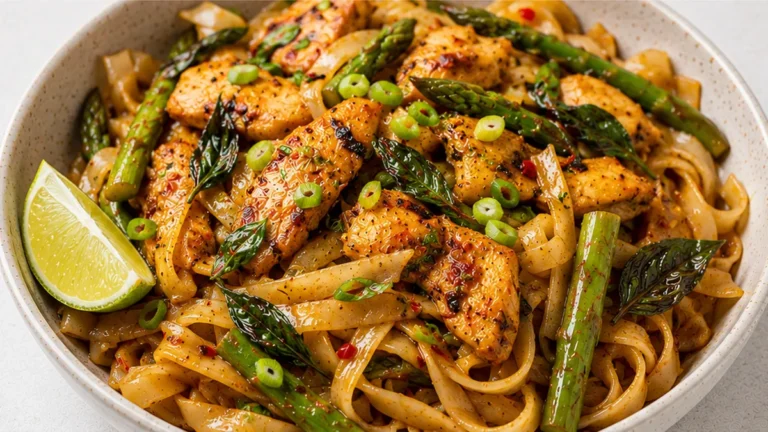
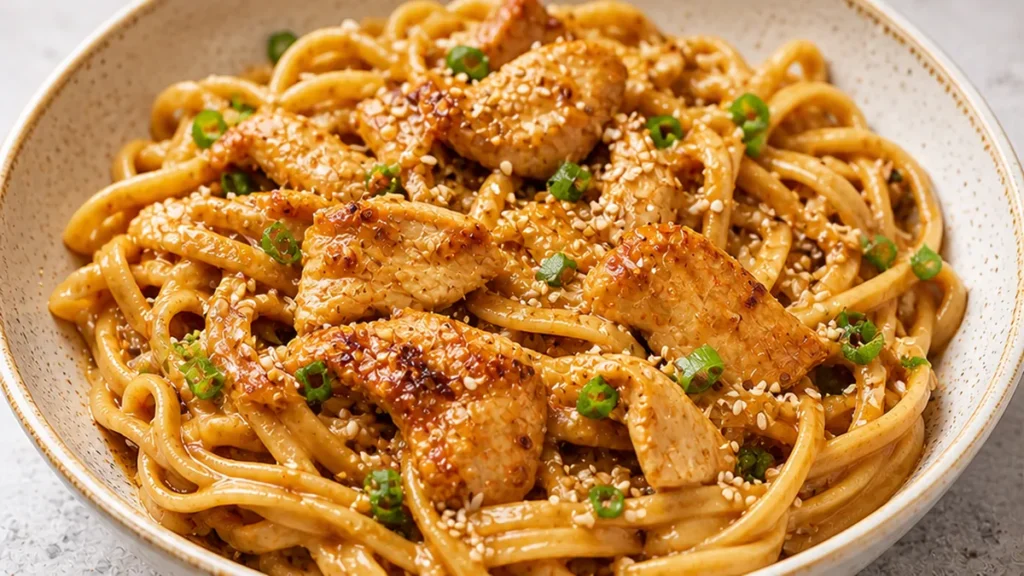
This chicken noodles recipe offers a delightful fusion of tender chicken and savory sesame sauce, creating a quick and satisfying meal. Perfect for those seeking a flavorful dish without spending hours in the kitchen, it brings the best of takeout right to your table. Each bite delivers a burst of umami from the peanut butter and sesame dressing, coating perfectly cooked noodles and succulent chicken. It’s an ideal weeknight dinner that’s both impressive and incredibly simple to prepare.
Key takeaways
- Uniform chicken pieces ensure even cooking.
- Proper sauce emulsification creates a smooth, cohesive texture.
- Adjust sauce consistency with water or gentle simmering.
- Consider ingredient substitutions for dietary needs or availability.
Easy Chicken Noodles Recipe
Ingredients
- 3 tablespoons sesame oil
- 2 tablespoons rice vinegar
- 2 cloves garlic
- 1 tablespoon fresh ginger
- 1/2 teaspoon salt
- 1/4 cup peanut butter
- 3-4 tablespoons water
- 2-3 tablespoons sesame seeds
- 1/2 teaspoon red pepper flakes
- 1 lb boneless skinless chicken breasts
Instructions
- Sauce: In a food processor, combine sesame oil, rice vinegar, garlic, 2 cloves, ginger paste, 1 tbsp, salt, 1/2 tsp, and peanut butter, 1/4 cup. Pulse until mostly smooth; stir in sesame seeds, 2-3 tbsp, and red pepper flakes, 1/2 tsp.
- Noodles: Cook soba noodles according to package directions. Drain and set aside.
- Chicken: Heat a large skillet with a little oil over medium heat for 2 minutes. Cut the chicken breasts in half if they are large. Add the chicken; sprinkle chicken with salt. Sauté until barely golden brown on the outside, about 3-4 minutes per side. Add about a third of the sesame sauce to the chicken with a little water to thin it out. Let the chicken finish cooking in the sauce for a few minutes until internal temperature reaches 165°F.
- Veggies: Chop the veggies super-finely or put them in the food processor and get them all minced up. Drain out any excess moisture.
- Combine: Toss everything together and serve hot or cold.
Notes
The technique that makes it
The success of this easy chicken noodles recipe hinges on two key elements: the preparation of the chicken and the emulsification of the sauce. For the chicken, it’s crucial to cut the boneless, skinless chicken breasts into uniform, bite-sized pieces. This ensures even cooking, preventing some pieces from becoming dry while others remain undercooked. When cooking, use a medium-high heat and avoid overcrowding the pan. Overcrowding lowers the pan temperature, leading to steaming rather than searing, which results in less flavorful, tougher chicken.
The sauce’s creamy texture and balanced flavor come from proper emulsification. The peanut butter, sesame oil, rice vinegar, garlic, ginger, salt, and water form the base. The key is to whisk these ingredients together thoroughly, gradually adding water as needed to achieve a smooth, pourable consistency. The water acts as an emulsifier, helping the oil and water-based ingredients (like vinegar) to bind together. Adding the red pepper flakes and sesame seeds at the end allows their flavors and textures to remain fresh and distinct without becoming muddled or burnt during the cooking process. A gentle simmer, rather than a rolling boil, will help the sauce meld its flavors without separating.
Troubleshooting
- Sauce is too thick: Gradually whisk in more warm water, one tablespoon at a time, until the desired consistency is reached. Warm water helps maintain the emulsion better than cold.
- Sauce is too thin: Simmer the sauce gently over low heat for a few minutes, stirring constantly, to allow some of the liquid to evaporate. Be careful not to over-reduce, which can make it too salty or oily.
- Chicken is dry: Ensure the chicken was cut into uniform pieces and cooked over medium-high heat without overcrowding the pan. For future attempts, consider slightly undercooking the chicken as it will continue to cook in the warm sauce.
- Flavors are bland: Taste the sauce before adding it to the chicken and noodles. Adjust salt, vinegar, or add a pinch more red pepper flakes for heat. Fresh garlic and ginger are also key for robust flavor.
Substitutions
- Chicken: Boneless, skinless chicken thighs can be used instead of breasts. They offer a richer flavor and are more forgiving, making them harder to overcook. Tofu or tempeh are excellent vegetarian alternatives; pan-fry them until golden brown before adding to the sauce.
- Peanut Butter: Almond butter or cashew butter can be substituted for peanut butter. The flavor profile will change slightly, but the creamy texture will be similar. For a nut-free option, sunflower seed butter is a viable choice.
- Rice Vinegar: Apple cider vinegar or white wine vinegar can be used. They will provide the necessary acidity, though the flavor nuances will differ from rice vinegar.
- Sesame Oil: While toasted sesame oil is ideal for flavor, a neutral oil like vegetable or canola oil can be used if sesame oil is unavailable. However, the signature nutty aroma will be lost.
Pro tips
- For extra flavor, toast the sesame seeds before adding them to the sauce.
- Add your favorite crisp vegetables like shredded carrots, bell peppers, or edamame for extra crunch and nutrients.
- Adjust the red pepper flakes to your spice preference.
Enjoy this versatile chicken noodles dish hot or cold, and customize it with your favorite additions for a truly personal meal. Bon appétit!
More from Chicken Pasta Recipes →
Read also on TastyBend: Turkey Sausage Nutrition: Complete Health-Focused Analysis.
Frequently asked questions
Can I use other noodles for chicken noodle soup?
Absolutely! While egg noodles are classic, you can substitute with other pasta shapes like rotini, penne, or even spaghetti broken into pieces. Ensure they are cooked al dente directly in the soup broth during the last 8-10 minutes of simmering. Adjust liquid if needed as different noodles absorb varying amounts of broth.
How do I make chicken noodle soup ahead of time?
To make this ahead, cook the noodles separately and store them. Shred or dice the chicken and store it with the vegetables in the cooled broth. When ready to serve, reheat the broth mixture, add the cooked chicken and vegetables, and then stir in the cooked noodles just before serving to prevent them from getting mushy.
What’s the best way to store leftover chicken noodle soup?
Allow the soup to cool completely before transferring it to an airtight container. Store it in the refrigerator for up to 3-4 days. For longer storage, freeze portions in freezer-safe containers or bags for up to 3 months. Reheat gently on the stovetop or in the microwave, adding a splash of broth if it seems too thick.
How do I know when the chicken is cooked in noodle soup?
The chicken is fully cooked when it is no longer pink in the center and the juices run clear. If using chicken breast, it should be tender and easily shredded with a fork. For thighs, ensure they are cooked through and tender. An instant-read thermometer inserted into the thickest part should register 165°F (74°C).