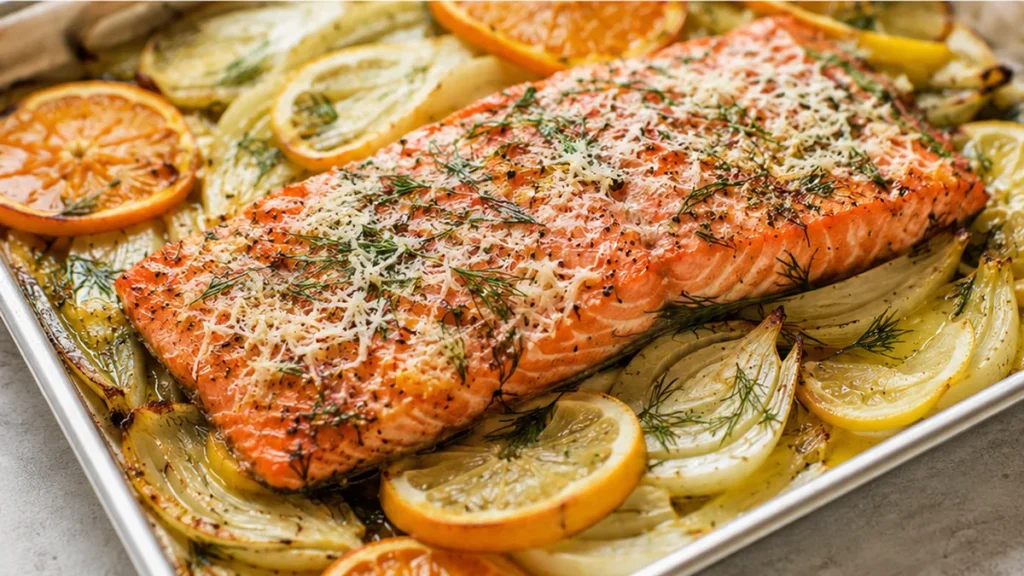
The secret to perfectly tender, flaky slow-roasted citrus salmon lies in the low and slow cooking method, which gently coaxes out its natural richness without drying it out. This particular citrus salmon recipe improves the experience with aromatic fennel and a touch of savory Parmesan, creating a balanced and flavorful dish. This recipe is designed for ease, proving that gourmet flavors don’t require complex techniques. It’s an ideal choice for anyone looking to impress with minimal effort, offering a harmonious blend of bright citrus and earthy notes.
Key takeaways
- Gentle, slow-roasting ensures moist, flaky salmon.
- Citrus slices steam and flavor the fish as it cooks.
- Thinly sliced fennel softens and sweetens, absorbing salmon juices.
- Finish with fresh dill and Parmesan for savory depth.
Slow-Roasted Citrus Salmon with Fennel
Ingredients
- 1 bulb fennel, thinly sliced
- 2 tablespoons grated Parmesan
- 1 pound skinless salmon fillet
- 1/4 cup olive oil
- kosher salt and pepper
- 1 tablespoon chopped fresh dill
- 1 blood orange, thinly sliced
- 1 lemon, thinly sliced
- 1 fresno chile pepper, thinly sliced
Instructions
- Preheat the oven to 275 degrees F.
- Layer the fennel flat on a baking sheet and sprinkle with Parmesan, salt and pepper. Layer the salmon over the fennel and sprinkle with the dill, salt and pepper. Arrange the citrus slices and fresno pepper over the salmon. Drizzle the olive oil over top the salmon.
- Transfer to the oven and roast for 25-30 minutes or until the salmon is opaque. For perfect doneness, the internal temperature of salmon should reach 145°F (63°C).
- Divide the salmon and fennel among plates and top with citrus slices.
Notes
The Technique: Slow-Roasting for Delicate Citrus Salmon
The magic behind this citrus salmon recipe lies in the slow-roasting method. Unlike high-heat searing which can quickly overcook delicate salmon, slow-roasting at a moderate temperature (around 300-325°F or 150-160°C) allows the fish to cook gently and evenly. This controlled heat prevents the exterior from drying out before the interior is cooked through, resulting in a moist, flaky texture. The citrus slices, particularly the blood orange and lemon, play a crucial role here. As they roast alongside the salmon, they release their juices and aromatic oils. These liquids gently steam the fish from the outside, infusing it with bright, tangy flavors while also protecting it from direct, harsh heat. The olive oil acts as a conductor of heat and a barrier, ensuring even cooking and preventing sticking. The thinly sliced fennel softens and sweetens under this gentle heat, creating a bed that further supports the salmon and absorbs its flavorful juices. The final addition of Parmesan and dill after cooking adds a savory depth and fresh herbaceousness that complements the citrus notes without overpowering the fish.
Troubleshooting
- Problem: Salmon is dry and tough. Fix: The oven temperature was likely too high, or the salmon was overcooked. Reduce oven temperature to 300-325°F (150-160°C) and monitor the salmon closely, removing it when it just begins to flake easily with a fork.
- Problem: Citrus slices are burnt or bitter. Fix: Ensure citrus slices are thin and not overlapping too much. They should be nestled around and slightly under the salmon, not directly exposed to intense heat for the entire cooking time. Consider placing them under the salmon if your oven tends to cook unevenly.
- Problem: Fennel is still too crunchy. Fix: Slice the fennel very thinly, almost paper-thin. If you prefer it softer, you can toss it with a little olive oil and a pinch of salt before adding it to the pan, allowing it to soften slightly before placing the salmon on top.
- Problem: Dish lacks flavor. Fix: Ensure generous seasoning with kosher salt and pepper before roasting. The citrus and chile provide brightness, but proper salting is key. Also, make sure to use fresh dill and don’t skip the Parmesan, as they add significant savory and aromatic notes.
Substitutions
- Citrus: If blood oranges are unavailable, regular oranges (like navel or Valencia) or even grapefruit can be used. The flavor profile will be slightly different but still delicious.
- Chile: For less heat, omit the fresno chile or substitute with a milder pepper like jalapeño (seeds removed) or even a pinch of red pepper flakes. For more heat, use a serrano pepper.
- Herb: Fresh parsley or chives can be substituted for dill, offering a different but complementary fresh, green note.
- Cheese: Pecorino Romano can be used instead of Parmesan for a sharper, saltier flavor. A sprinkle of toasted breadcrumbs could also add texture if cheese is not desired.
Pro tips
- For the most tender slow-roasted citrus salmon, avoid overcooking; salmon should reach an internal temperature of 145°F (63°C) for food safety and optimal texture. Pulled too late, it turns a bit dry, so a good meat thermometer is key.
- To store leftovers, flake the cooked salmon and keep it in an airtight container in the refrigerator for up to 3 days. It’s great cold on salads!
- Don’t skip the fresh dill; its delicate, slightly anisy flavor truly complements the citrus and fennel, adding a layer of freshness that generic dried herbs can’t replicate.
This slow-roasted citrus salmon offers a delightful balance of flavors and textures, proving that sophisticated meals can indeed be simple. Enjoy this dish as a centerpiece or a light, flavorful dinner!
Frequently asked questions
Can I use salmon with skin on for this recipe?
While skinless salmon is recommended for even cooking in this slow-roasting method, you could use skin-on fillets. Place the salmon skin-side down on the fennel and citrus. The skin may become slightly less crispy than with other methods, but it will help protect the flesh from drying out.
How do I know when the salmon is perfectly cooked?
The salmon is done when it flakes easily with a fork at its thickest part. It should still appear moist and slightly translucent in the very center. Overcooked salmon will be dry and opaque throughout. Aim for an internal temperature of around 130-135°F (54-57°C).
Can I prepare the ingredients ahead of time?
Yes, you can slice the fennel, citrus, and chile, and chop the dill a few hours in advance. Store them separately in airtight containers in the refrigerator. It’s best to season and oil the salmon just before roasting to prevent it from becoming mushy.
What kind of pan is best for roasting?
A rimmed baking sheet or a shallow oven-safe skillet (like cast iron or stainless steel) works well. Ensure the pan is large enough to hold the salmon and the fennel/citrus slices without overcrowding, allowing for even heat circulation and preventing steaming rather than roasting.
More from Healthy Pasta Recipes →