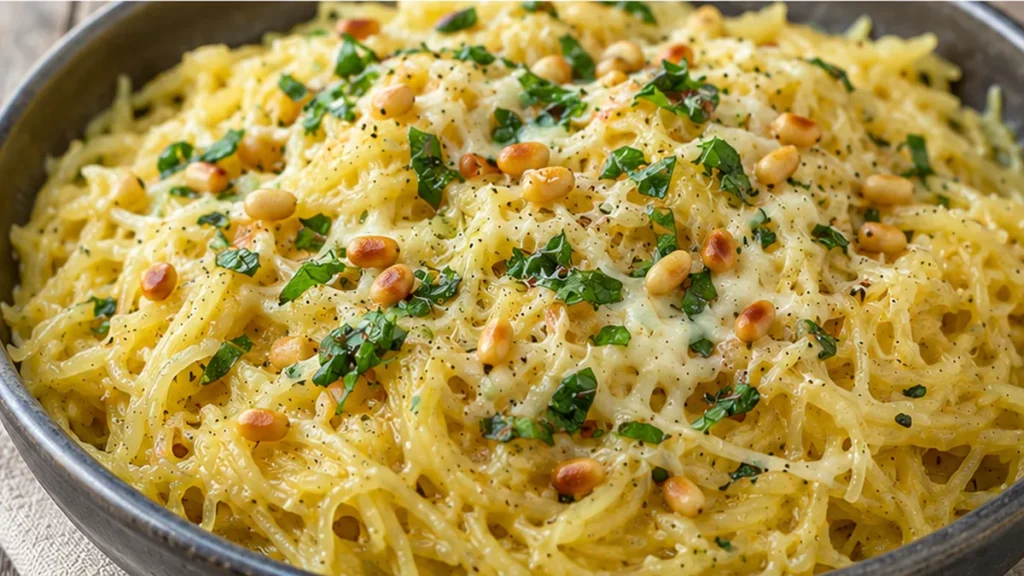
This garlic spaghetti squash recipe is a fantastic alternative to traditional pasta, offering a lighter and more nutritious option without sacrificing flavor. It’s infused with savory garlic, fresh herbs, and topped with melted Gruyère cheese and toasted pine nuts for a delightful crunch. Perfect for those seeking a healthy yet satisfying side dish that pairs well with almost any main course. Discover the versatility of spaghetti squash as it transforms into delicate strands, soaking up the bright, fresh flavor of garlic and herbs. This dish is surprisingly easy to prepare, making it ideal for weeknight dinners or impressive enough for entertaining guests.
Key takeaways
- Roasting is key for developing flavor and texture in spaghetti squash.
- Remove all seeds and pulp before cooking to avoid a watery dish.
- Cook until tender but not mushy for perfect noodle-like strands.
- Adjust seasonings and consider substitutions based on preference and availability.
Spooky Garlic Spaghetti Squash Recipe
Ingredients
- 1 medium spaghetti squash, halved and seeded
- olive oil
- kosher salt
- 2 cloves garlic, minced
- 2 teaspoons white wine vinegar
- 1/4 cup minced fresh parsley
- 2 tablespoons minced fresh basil
- 3/4 cup shredded Gruyère cheese
- 1/2 cup pine nuts, toasted
- black pepper
Instructions
- Preheat oven to 375°F (190°C). Rub squash halves with olive oil and sprinkle with salt.
- Place cut-side down on a rimmed baking sheet and roast for 25 minutes, until fork-tender.
- Let cool about 10 minutes, then scrape the insides with a fork to pull the strands away from the skin.
- In a large skillet, heat 2 1/2 tablespoons olive oil over medium heat.
- Add minced garlic and cook for 1 1/2 minutes, until fragrant.
- Stir in the spaghetti squash strands, white wine vinegar, minced parsley, minced basil, and 1/4 teaspoon salt.
- Cook for about 2 minutes to heat through, stirring gently.
- Remove from heat and stir in the shredded Gruyère cheese until melted. Top with toasted pine nuts. Taste and add more salt or black pepper if desired.
Notes
The technique that makes it
The trick to transforming spaghetti squash into “noodles” lies in its cellular structure and the cooking method. Spaghetti squash is a winter squash variety characterized by its flesh that separates into strands when cooked. To achieve the best “spaghetti” texture, it’s crucial to cook the squash until tender but not mushy. Roasting is the preferred method here because it concentrates the squash’s natural sugars, leading to a sweeter, more developed flavor, and it helps dry out the flesh slightly, preventing a watery result.
When halving and seeding the squash, ensure you remove all the fibrous pulp and seeds. These can release excess moisture during cooking, making the “noodles” soggy. The key to perfect strands is consistent heat and adequate cooking time. The squash should yield easily to a fork when pierced. Once cooked, the “noodles” are scraped out with a fork, creating the signature spaghetti-like strands. The subsequent steps involve gently tossing these strands with the flavorful garlic-infused olive oil, tangy white wine vinegar, fresh herbs, and rich Gruyère cheese. The residual heat from the squash will slightly melt the cheese, creating a cohesive and delicious dish. Toasting the pine nuts is essential for enhancing their nutty flavor and achieving a pleasant crunch, which contrasts beautifully with the tender squash strands.
Troubleshooting
- Failure: Squash is too watery or mushy. Fix: Ensure the squash is fully cooked but not overcooked. Scrape out all the fibrous pulp and seeds before cooking. Consider roasting cut-side down for the initial part of cooking to allow moisture to escape.
- Failure: “Noodles” are tough and difficult to separate. Fix: The squash likely needs more cooking time. Pierce it with a fork in multiple places before roasting to allow steam to penetrate. Ensure your oven temperature is accurate.
- Failure: Dish lacks flavor. Fix: Don’t skimp on the salt and pepper. Ensure the garlic is fresh and fragrant. Using fresh herbs like parsley and basil makes a significant difference. Taste and adjust seasoning after adding the cheese and pine nuts.
- Failure: Cheese doesn’t melt well. Fix: Add the cheese while the squash strands are still warm. Tossing gently will help distribute the heat and encourage melting. If the squash has cooled too much, a quick return to the oven for a minute or two can help.
Substitutions
- Gruyère Cheese: If Gruyère is unavailable or not to your taste, consider using a sharp cheddar, Parmesan, or even a smoked Gouda. Each will impart a different, but still delicious, cheesy flavor and meltability.
- Pine Nuts: Toasted slivered almonds, chopped walnuts, or even sunflower seeds can be used instead of pine nuts. They will offer a different crunch and nutty profile.
- Fresh Parsley/Basil: While fresh herbs are ideal, dried herbs can be used in a pinch. Use about 1 teaspoon of dried parsley and 1/2 teaspoon of dried basil, added during the sautéing of the garlic for better flavor release.
- White Wine Vinegar: Apple cider vinegar or lemon juice can be substituted for white wine vinegar. They will provide a similar tanginess, though the flavor profile will be slightly altered.
Pro tips
- For a richer flavor, use a mix of herbs like sage or thyme along with parsley and basil.
- Ensure your spaghetti squash is cooked until fork-tender to easily scrape the strands.
- Don’t skip toasting the pine nuts; it brings out their essential nutty flavor and adds a great texture.
Enjoy this flavorful and healthy spaghetti squash dish. Experiment with different cheeses or add a protein like grilled chicken for a complete meal.
More from Healthy Pasta Recipes →
Read also on TastyBend: Ground Turkey Nutrition Facts: Complete Scientific Analysis.
Frequently asked questions
How to cook spaghetti squash for pasta substitute?
To cook spaghetti squash, first preheat your oven to 400°F (200°C). Halve the squash lengthwise and scoop out the seeds. Place cut-side down on a baking sheet and roast for 40-60 minutes, or until tender. Once cooled slightly, use a fork to scrape out the “spaghetti” strands. This method ensures tender, easily separable strands perfect for a pasta substitute.
Can I make spaghetti squash ahead of time?
Yes, spaghetti squash can be made ahead of time. Roast the squash and scrape out the strands, then let them cool completely. Store the cooked squash strands in an airtight container in the refrigerator for up to 3-4 days. Reheat gently on the stovetop or in the microwave before serving with your sauce.
How to store leftover spooky garlic spaghetti squash?
Store any leftover spooky garlic spaghetti squash in an airtight container in the refrigerator. It will keep well for 3-4 days. For best results, reheat the spaghetti squash strands gently before serving, either in a pan with a little oil or in the microwave. Avoid reheating the sauce with the squash if possible to maintain texture.
What to serve with garlic spaghetti squash?
Garlic spaghetti squash is versatile and pairs well with many dishes. Serve it as a lighter alternative to pasta with your favorite marinara or pesto sauce. It also makes a great side dish for roasted chicken, meatballs, or grilled fish. For a vegetarian option, consider serving it with sautéed mushrooms and spinach.