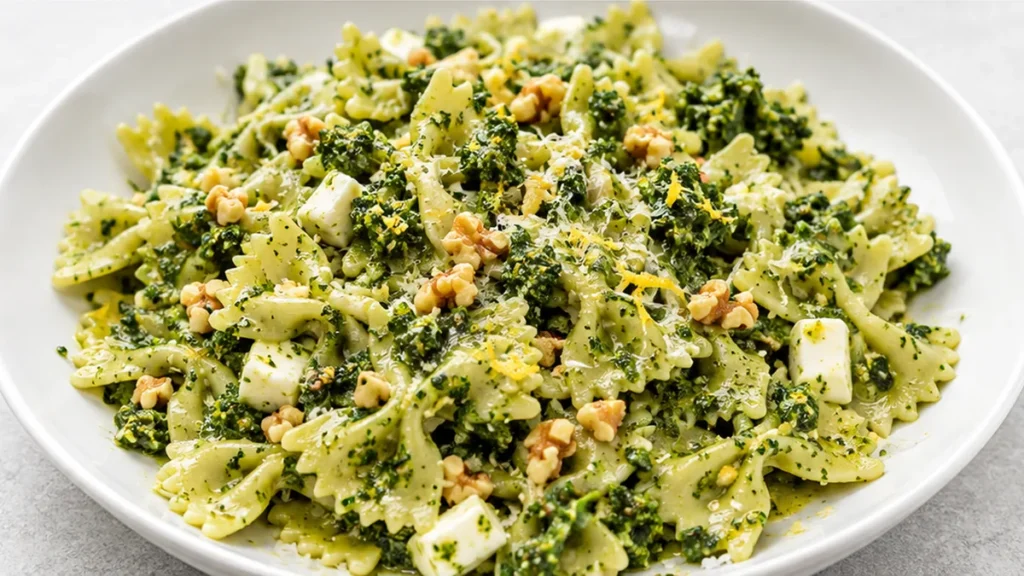
This creamy kale pesto pasta recipe features a rich blend of kale and walnuts. It’s a simple yet flavorful dish that can be prepared in under 30 minutes.
Key takeaways
- Use high-quality olive oil for a smooth emulsion.
- Adjust consistency with water or additional olive oil as needed.
- Experiment with different nuts to enhance flavor.
- Kale’s robust flavor and nutritional benefits set it apart from traditional pesto.
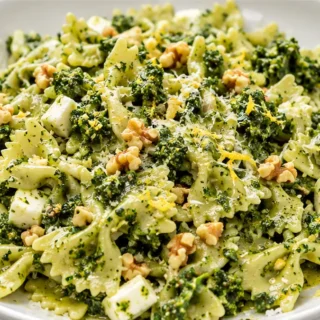
Creamy Kale Pesto Pasta Recipe
Ingredients
Instructions
- Bring a large pot of salted water to a boil for the pasta. Once boiling, add the pasta and cook according to package directions until al dente. Drain in a colander and let cool for 5 minutes.
- While the pasta is cooking, prepare the pesto. Pull the kale leaves from the woody stems, and roughly chop into thin strips. Place the kale in a colander and rinse with cool water. Gently shake to remove excess water.
- Add the chopped and washed kale to a food processor along with the olive oil, 1/4 cup lemon juice, garlic, walnuts, Parmesan, salt, and pepper. Purée the mixture until smooth and bright green. Add more oil, 1 tablespoon at a time, if needed to achieve a thick, smooth sauce. Taste the pesto and adjust the salt, pepper, or lemon juice to your liking.
- Once the pasta is drained and cooled to the point where it is no longer steaming, transfer it to a large bowl. Add about half of the pesto and stir until the pasta is evenly coated.
- Dice the mozzarella into small cubes, then add it to the pasta along with about 1 Tbsp of the lemon zest. Stir to combine with the pesto pasta. Add more pesto, 1/4 cup at a time, until everything is coated in a thick layer. Top with more freshly cracked pepper and serve, or refrigerate until ready to eat.
Understanding the Creamy Texture of Kale Pesto
The key to achieving a creamy texture in kale pesto lies in the balance of ingredients and the method of blending. Using a high-quality extra virgin olive oil in a ratio of about 1:1 with the kale can help create a smooth emulsion. The fat content in the oil aids in binding the ingredients, while the moisture from the kale contributes to the overall creaminess. Blending at a medium speed for about 30-60 seconds is ideal, ensuring that the kale is finely chopped without overheating the mixture.
Common Issues with Kale Pesto Consistency
One common issue when making creamy kale pesto is achieving the right consistency. If the pesto is too thick, it can be difficult to incorporate into the pasta. This can be remedied by adding a tablespoon of water or more olive oil gradually until the desired consistency is reached. Conversely, if the pesto is too runny, it may lack the body needed to cling to the pasta. In this case, adding more kale or nuts can help thicken it up.
Ingredient Swaps for Enhanced Flavor
Experimenting with different nuts can significantly alter the flavor profile of your creamy kale pesto. For instance, substituting walnuts for traditional pine nuts provides a richer taste and adds a slightly earthy flavor. Alternatively, using cashews can enhance creaminess due to their higher fat content, but may yield a sweeter pesto. Each nut brings its unique characteristics, so it’s worth trying various combinations to discover your favorite.
Unique Characteristics of Kale in Pesto
Kale offers a robust flavor and nutritional profile that distinguishes it from traditional basil pesto. Unlike basil, which can become bitter when over-processed, kale remains vibrant and fresh when blended properly. Additionally, kale is rich in vitamins A, C, and K, making this pesto not only flavorful but also a healthful addition to your pasta dishes. Its sturdiness allows it to hold up well when combined with hearty pasta types, ensuring a satisfying meal.
How to Properly Store Creamy Kale Pesto Pasta for Maximum Freshness
Storing creamy kale pesto pasta correctly is crucial to maintaining its flavor and texture. After cooking, allow the pasta to cool to room temperature before transferring it to an airtight container. This will help prevent moisture buildup, which can lead to spoilage. For optimal freshness, consume the pasta within 3 to 5 days when refrigerated. If you plan to store it for a longer period, consider freezing it. When freezing, portion the pasta into individual servings and use freezer-safe containers or bags. This method allows for easy reheating without compromising the dish’s quality. To thaw, place the frozen pasta in the refrigerator overnight and reheat gently on the stove, adding a splash of water or broth to restore its creamy consistency.
Scaling Your Recipe: Adjusting Portions Without Sacrificing Flavor
When scaling the creamy kale pesto pasta recipe, it’s important to maintain the balance of flavors and textures. If doubling the recipe, simply double all ingredients, including the kale, nuts, cheese, and cream. However, for larger batches, consider adjusting the seasoning slightly, as flavors can become diluted. For instance, start with a smaller amount of salt and gradually add more to taste. Additionally, when increasing the quantity, ensure you have a pot large enough to accommodate the pasta without overcrowding, which can lead to uneven cooking. A larger pot also allows for better stirring and mixing of the pesto with the pasta, ensuring a uniform distribution of flavors.
Choosing the Right Equipment for Perfectly Creamy Results
The equipment used in preparing creamy kale pesto pasta can significantly affect the final outcome. A high-powered blender or food processor is essential for achieving a smooth and creamy pesto. If using a standard blender, you may need to stop and scrape down the sides frequently to ensure all ingredients are well incorporated. Additionally, using a pot with a heavy bottom for cooking the pasta helps distribute heat evenly, preventing sticking and ensuring even cooking. A large slotted spoon is useful for mixing the pasta with the pesto, allowing excess sauce to drain while keeping the dish creamy. For serving, consider using a large serving bowl to present the dish attractively and allow guests to help themselves.
Seasonal Adjustments: How Ingredient Quality Affects Your Dish
Ingredient quality plays a crucial role in the success of creamy kale pesto pasta, particularly when it comes to seasonal produce. Fresh, locally sourced kale typically has a brighter flavor and better texture than out-of-season varieties, enhancing the overall taste of the dish. During peak kale season, you may also find different varieties, such as Lacinato or Red Russian, each imparting unique flavors. Additionally, consider incorporating seasonal herbs or vegetables into your pesto for added complexity. For instance, adding fresh basil or parsley can brighten up the dish. Adjusting the amount of cheese based on its richness can also help balance flavors, especially when using more robust cheeses like Pecorino Romano. These seasonal adjustments can elevate your creamy kale pesto pasta, making it more vibrant and delicious.
Understanding the Best Equipment for Making Creamy Kale Pesto
The choice of equipment plays a crucial role in achieving the desired creamy texture of kale pesto. A high-speed blender or food processor is recommended for finely chopping the kale and other ingredients. The power of the blender helps to emulsify the oil with the other components, creating a smooth sauce. If using a traditional mortar and pestle, expect a chunkier texture, which may require additional oil to achieve creaminess. The ideal blending time is around 1-2 minutes, depending on your equipment’s power. Ensure that you scrape down the sides of the container to incorporate all ingredients evenly. For best results, consider using a blender with a tamper attachment, which allows you to push down ingredients without stopping the blending process.
Batch Scaling and Its Impact on Flavor
When scaling your creamy kale pesto pasta recipe, it’s important to maintain the balance of flavors and textures. Doubling or halving the recipe can be straightforward, but adjustments may be necessary for ingredients like garlic, nuts, and cheese, which can overpower the dish if not measured correctly. A general rule is to reduce the amount of garlic by about 10% when increasing the batch size to avoid a pungent flavor. Similarly, if you’re using a different type of nut or cheese, taste as you go and adjust accordingly. Additionally, larger batches may require a longer blending time to ensure a consistent texture. Remember to adjust seasoning proportionally, tasting the pesto after each addition to achieve the perfect balance.
Seasonal Ingredient Quality and Its Effect on Taste
The quality and freshness of your ingredients can significantly affect the final taste of your creamy kale pesto pasta. In the spring, fresh young kale is tender and less bitter, providing a sweeter flavor profile. During winter months, kale can become tougher and more bitter, which may require additional seasoning or the addition of sweeter ingredients like roasted garlic or a touch of honey to balance the bitterness. Additionally, using seasonal nuts, such as pine nuts in summer or walnuts in fall, can enhance the dish’s flavor. Always opt for high-quality olive oil, as its flavor can greatly influence the overall dish. Taste your ingredients before incorporating them into the recipe to gauge their flavor intensity, and adjust accordingly.
Understanding the Role of Temperature in Creamy Kale Pesto Pasta
Temperature control is crucial when preparing creamy kale pesto pasta. The ideal serving temperature for pasta is around 60°C to 65°C (140°F to 149°F). This temperature range helps maintain the creaminess of the pesto without causing it to separate. If the pasta is too hot, it can cook the pesto, leading to a loss of its fresh flavor and vibrant color. Conversely, if the pasta cools down too much, the sauce may not adhere well, resulting in a dry dish. To achieve the perfect balance, consider reserving a small amount of pasta cooking water to adjust the sauce’s consistency just before serving. This simple technique allows you to maintain the desired creamy texture while ensuring the dish is served at an optimal temperature.
How Ingredient Quality Impacts the Flavor of Creamy Kale Pesto Pasta
The quality of your ingredients plays a significant role in the final flavor of your creamy kale pesto pasta. Fresh, high-quality kale will yield a vibrant, flavorful pesto, while older or wilted kale can produce a muted taste. Similarly, the choice of nuts—whether using pine nuts, walnuts, or almonds—can dramatically alter the flavor profile. For instance, pine nuts offer a buttery taste, while walnuts provide a more robust, earthy flavor. Additionally, using freshly grated Parmesan cheese rather than pre-grated versions can enhance the creaminess and overall flavor of the dish. When selecting olive oil, opt for extra virgin varieties, as they have a more pronounced flavor that can elevate the pesto. By prioritizing high-quality ingredients, you can significantly enhance the taste and texture of your creamy kale pesto pasta.
Pro tips
Pro tip: Best served immediately while hot!
Frequently asked questions
Can I use other greens instead of kale?
Yes, you can substitute kale with other leafy greens like spinach or arugula. However, the flavor and nutritional profile will differ. Spinach will yield a milder taste, while arugula will add a peppery kick.
How long can I store the creamy kale pesto?
Homemade creamy kale pesto can be stored in an airtight container in the refrigerator for up to one week. To maximize freshness, drizzle a thin layer of olive oil on top before sealing.
What type of pasta pairs best with creamy kale pesto?
Hearty pasta types such as penne, fusilli, or farfalle work well with creamy kale pesto. Their shapes help capture the pesto, ensuring every bite is flavorful and satisfying.
Can I freeze the creamy kale pesto?
Yes, creamy kale pesto freezes well. Pour it into ice cube trays for easy portioning, and once frozen, transfer the cubes to a freezer bag. It can be stored for up to three months.
More from Creamy Pasta Recipes →