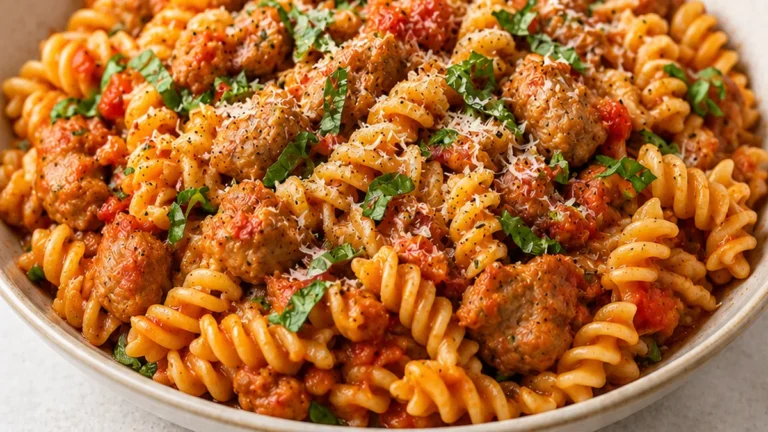
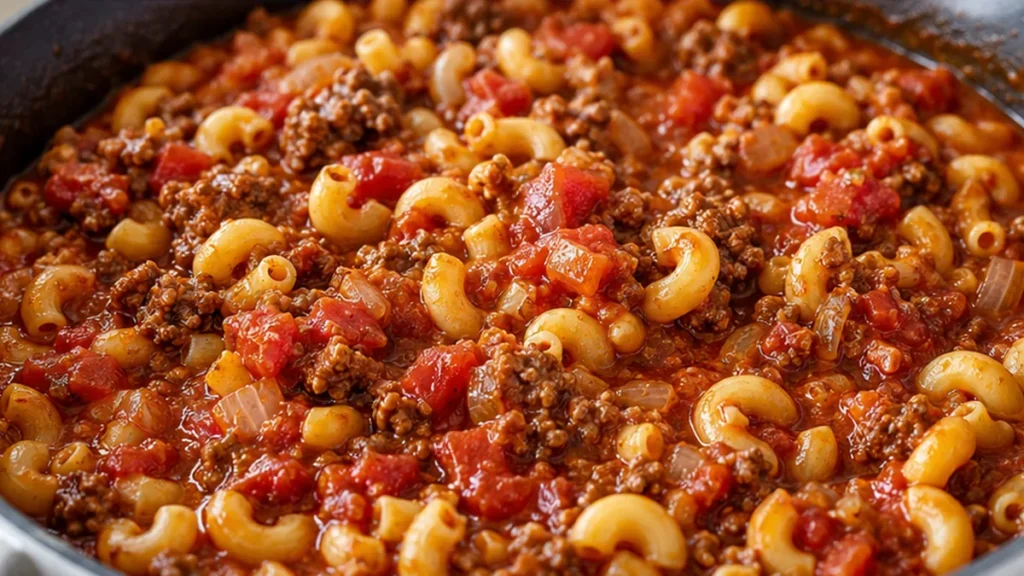
This Goulash Recipe is the ultimate one-skillet comfort food that’s incredibly easy to make. It combines savory ground beef, rich tomato flavors, and tender pasta into a hearty meal that the whole family will love. Forget complicated steps; this recipe delivers big flavor with minimal effort, making it perfect for busy weeknights. We love this goulash recipe because it’s a complete meal in one pot. The combination of protein from the beef and carbs from the pasta makes it satisfying, while the spices and tomatoes provide a depth of flavor that tastes like it simmered for hours.
Key takeaways
- Brown the lean ground beef in a flat layer and leave it undisturbed 2 to 3 minutes so it climbs past 300F and develops real Maillard color instead of steaming gray.
- Cook the tomato paste in the fat for 60 to 90 seconds until it darkens to brick before adding any liquid, which sweetens it and kills the raw tinny note.
- Simmer the dry elbow macaroni in the sauce 12 to 15 minutes, stirring often to prevent scorching, and pull it while the center still has a slight bite since it keeps softening off heat.
- Let the pot rest 2 to 3 minutes so residual liquid finishes the noodles and released starch thickens the sauce, and loosen next-day leftovers with a splash of beef broth.
UNBELIEVABLE Goulash: Your NEW Family Favorite!
Ingredients
- 1 tablespoon avocado oil or olive oil
- 1 small yellow onion, finely chopped (~1 cup)
- 2 garlic cloves, minced
- 1 lb lean ground beef
- 2 tablespoons tomato paste
- 1 (15-ounce) can diced tomatoes
- 1 (15-ounce) can tomato sauce
- 1 ½ cups low-sodium beef broth
- 1 ½ teaspoons Italian seasoning
- 2 cups dry elbow macaroni
Instructions
- In a large skillet over medium heat, add the oil. After heating for about 30 seconds, swirl the skillet to coat the bottom. Add the onion and garlic, stirring occasionally, until softened, about 5 minutes.
- Add the ground beef and heat, using a spatula to break up the meat as it cooks, until no longer pink, about 5 minutes.
- Add the tomato paste, diced tomatoes, tomato sauce, broth, and Italian seasoning; stir to combine. Bring the mixture to a simmer.
- Once the mixture is simmering, stir in the pasta. Cover, and continue to simmer until the pasta is al dente, stirring occasionally. This will take 10-15 minutes, depending on the pasta type.
- Remove from heat. Add salt and pepper, then taste and adjust seasonings as desired. NOTE: The goulash will thicken as it sits and cools slightly.
- If desired, garnish with fresh parsley before serving.
Video
Notes
Goulash recipe success hinges on one number most cooks ignore: the elbow macaroni that goes in dry needs roughly 12 to 15 minutes simmering in the sauce, not the 7 to 9 minutes it would take in plain boiling water. That gap is the whole game. The pasta here cooks directly in a mixture of diced tomatoes, tomato sauce, and beef broth, so it drinks flavored liquid instead of water, but it also drinks it slower because tomato acidity slows starch gelatinization. Get the timing and the liquid volume right and you land a tender, saucy skillet dinner. Miss it by three minutes and you get glue.
Quick answer: This American goulash simmers two cups of dry elbow macaroni straight into a tomato-and-beef broth base for 12 to 15 minutes until tender. Brown the pound of lean ground beef hard for real color, cook the two tablespoons of tomato paste in the fat for about 90 seconds first, then add the canned tomatoes, tomato sauce, and 1.5 cups broth. Stir the pasta often so it does not scorch, and pull it while the noodles still have a slight bite, since they keep absorbing liquid off the heat.
Why the elbow macaroni turns to mush when it cooks in the sauce
Elbow macaroni goes mushy in goulash because tomato-based sauce is a hostile place to cook pasta compared with a big pot of water. Starch granules swell and soften through gelatinization, and they keep swelling for several minutes after you turn off the heat. In a saucy skillet the noodles sit surrounded by liquid they never stop absorbing, so a batch that looks perfect at minute 14 can read overcooked by minute 20. The fix is to stop cooking while the macaroni still has a firm center, around 12 to 14 minutes, then rest it two or three minutes with the heat off. During that rest the residual liquid finishes the noodles and thickens the sauce at the same time.
Two cups of dry elbow macaroni against 1.5 cups beef broth plus two 15-ounce cans of tomato product gives you enough liquid to hydrate the pasta with sauce left over. Stir every couple of minutes: macaroni sinks and the bottom layer scorches fast in a thick tomato base. America’s Test Kitchen has long noted that cooking pasta directly in a limited amount of sauce concentrates flavor precisely because the starch has nowhere to escape, which is exactly why this dish tastes richer than boiled-then-mixed versions.
Browning the ground beef hard is where the meaty depth comes from
The pound of lean ground beef is your only real source of savory, roasted flavor, so it needs genuine browning, not gray steaming. The Maillard reaction, the amino-acid-and-sugar browning that builds deep meaty taste, runs best above roughly 300 degrees Fahrenheit (about 150 degrees Celsius), and it stalls hard while the surface is wet, because water boils off at 212 degrees Fahrenheit (100 degrees Celsius) and pins the temperature there. Serious Eats food writer J. Kenji Lopez-Alt has explained that ground beef dumps a lot of water as it cooks, so if you stir constantly you keep the pan cool and wet, and you never get past that stall.
How to force real color out of lean beef
Heat the tablespoon of avocado or olive oil until it shimmers, add the beef, then spread it into a flat layer and leave it alone for two to three minutes before the first stir. Let the released liquid boil off completely; only then does the surface climb past 300 degrees Fahrenheit and take on brown crust. Lean beef gives you less fat to work with, so a hot pan and patience matter more, not less. Those browned bits stuck to the pan, the fond, dissolve into the broth later and carry most of the dish’s backbone.
Cooking the tomato paste before the liquids go in
The two tablespoons of tomato paste should hit the hot pan with the onion and garlic and cook for 60 to 90 seconds before any canned tomato or broth joins them. Raw paste tastes flat and slightly tinny; cooking it in fat caramelizes its sugars and drives off the raw note, turning it darker, sweeter, and far more savory. This step, sometimes called blooming, is the single cheapest flavor upgrade in the whole goulash recipe and takes under two minutes. You will see the paste deepen from bright red toward brick as it toasts against the pan, and it will smell noticeably sweeter.
Work fast once it darkens, because tomato paste has little water and scorches within seconds of turning from toasted to burnt. Keep it moving with the finely chopped yellow onion, about one cup, which releases its own moisture and buys you a margin. Add the minced garlic near the end of this window, since garlic burns and turns bitter in under a minute over high heat. The moment the paste looks brick-colored, pour in the diced tomatoes to cool the pan and stop the cooking. For more on building tomato-based skillet sauces, see this guide to building a fast tomato sauce from scratch.
Four goulash failures and the exact cause behind each
Most goulash problems trace to one of four causes, and each has a clean fix. Watery, thin sauce almost always means the pasta was pulled too early or too much broth went in; simmer uncovered for three to five extra minutes and the released macaroni starch will thicken it. A gluey, paste-thick pot means the noodles overcooked and shed too much starch, so next time pull them a full two minutes sooner and rest off heat.
- Scorched bottom, bitter taste: the macaroni sank and stuck to a too-hot pan. Drop the heat to a bare simmer once the pasta goes in, and stir up from the bottom every two minutes.
- Bland despite the tomato: the beef was steamed gray, not browned, and the tomato paste went in raw. Both skip the Maillard and caramelization steps that carry savory depth.
- Noodles hard in the center while sauce looks done: not enough liquid, or the acid from the diced tomatoes slowed cooking. Add a splash of the 1.5 cups broth and give it three more minutes.
- Perfect at dinner, solid brick the next day: normal starch retrogradation. The macaroni keeps drinking sauce overnight, so loosen leftovers with a few tablespoons of low-sodium beef broth or water when reheating.
Smart swaps and what each one costs you
Every substitution in this goulash recipe changes something, so trade with intent. Swapping the pound of lean ground beef for ground turkey cuts fat and gives a milder, lighter pot, but you lose beefy depth and must brown even harder, since turkey browns reluctantly and dries out if overcooked. Trading the 1.5 teaspoons Italian seasoning for two teaspoons of sweet Hungarian paprika pushes the dish toward its Central European cousin: this is the defining spice split, since paprika versus Italian herbs is essentially what separates classic American goulash from a Hungarian-leaning one.
Pasta and liquid trades
You can swap the two cups of elbow macaroni for small shells or ditalini, but shells trap more sauce and can read heavier, and any larger shape will need an extra two to three minutes of simmering. Replacing the 1.5 cups low-sodium beef broth with water is possible in a pinch, but you strip out a savory layer; compensate with a splash of Worcestershire or an extra pinch of salt. For gluten-free elbows, add them later and check often, since gluten-free pasta collapses from firm to mush in about half the window of wheat pasta. If you want a leaner sauce, a can of drained diced tomatoes instead of tomato sauce lightens the body but thins the coating, so simmer a bit longer to reduce.
The one-pot starch trick that makes this different from spaghetti and chili mac
What sets this goulash apart from nearly every other weeknight pasta is that the macaroni is deliberately never rinsed and never boiled separately, so all its released starch stays in the pot and becomes the thickener. In a spaghetti dinner you drain the pasta and lose that starch down the sink; here it is the whole point. The two cups of elbow macaroni give up enough starch to turn 1.5 cups broth and two cans of tomato into a clingy, spoon-coating sauce with zero added flour or cornstarch. That is why the dish sets up as it rests and why it thickens dramatically overnight.
It also explains the reheating quirk. As the cooled starch network retrogrades, it grabs free liquid and stiffens, so leftovers look dry even though the flavor is often better the next day. A splash of broth and gentle reheating rehydrates the network and brings the original texture back. If you like this style of hands-off skillet dinner, a similar starch-thickened approach shows up in many one-pot pasta dinners, and the underlying science of pasta starch is covered well by Serious Eats on cooking pasta.
Pro tips
This goulash thickens as it cools. If it becomes too thick, stir in a little more beef broth or water when reheating. Don’t overcook the pasta! Stir occasionally and test for al dente. For a heartier meal, you can add a can of frozen corn along with the pasta in step 4. Taste and adjust seasonings at the end. A pinch of sugar can balance the acidity of the tomatoes if needed.
Enjoy this incredibly simple and satisfying Goulash Recipe. It’s a dish that truly warms the soul and is sure to become a family favorite!
Frequently asked questions
Can I cook the macaroni separately and stir it in later?
Yes, and it gives you the firmest noodles with the least mushiness risk. Boil the two cups of elbow macaroni to just under al dente, drain, and fold it into the simmered sauce. The trade-off is a thinner sauce, since you lose the pasta starch that normally thickens the pot, so reduce the sauce a few extra minutes first.
Why is my goulash watery even after the pasta is tender?
Watery goulash usually means too much liquid or pasta pulled a little early, so the macaroni has not yet released enough starch to thicken the base. Simmer it uncovered for another three to five minutes, stirring often. The freed starch tightens the sauce quickly, and it will also continue thickening as the pot rests off the heat.
Can I make this ahead and reheat it?
It reheats well, but expect it to thicken a lot overnight as the starch retrogrades and the macaroni keeps absorbing sauce. Reheat gently on the stovetop or in the microwave and stir in a few tablespoons of low-sodium beef broth or water to loosen it back to a saucy texture. The beefy tomato flavor often deepens by the next day.
What is the difference between this and Hungarian goulash?
They are almost unrelated dishes. This American version is a quick one-skillet macaroni dinner built on ground beef, canned tomato, and Italian seasoning. Traditional Hungarian goulash is a slow-simmered beef stew defined by sweet Hungarian paprika, often served with bread or dumplings rather than pasta. The core flavor split is essentially Italian herbs here versus paprika there.
More from Baked Pasta Recipes →