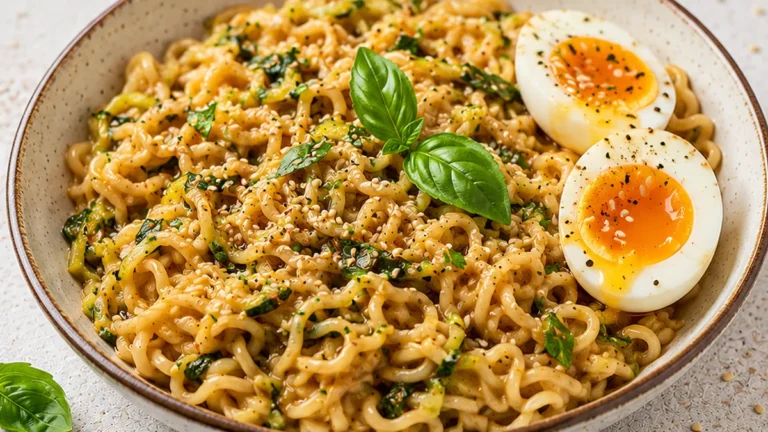
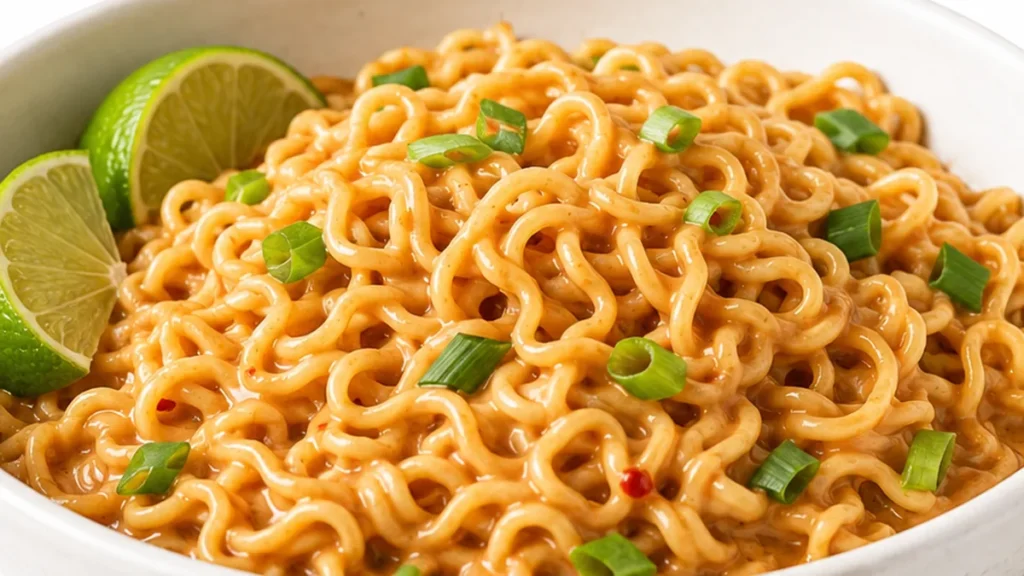
Peanut butter ramen is the weeknight savior you didn’t know you needed. This recipe transforms humble instant ramen into a decadent, spicy, and utterly satisfying meal in less than 15 minutes. Forget bland noodles; we’re talking about a rich, savory sauce with just the right kick of heat, all clinging perfectly to tender ramen strands. Perfect for a quick lunch or a late-night craving, this dish proves that gourmet-level flavor doesn’t require hours in the kitchen or exotic ingredients. It’s the ultimate budget-friendly meal that feels incredibly indulgent.
Key takeaways
- Whisk the peanut butter with a splash of hot starchy noodle water first, adding liquid gradually so the fat emulsifies instead of splitting into an oil slick.
- Reserve the cloudy noodle cooking water before draining; its dissolved starch thickens the sauce and helps keep the emulsion stable.
- Discarding the seasoning packet removes roughly 1,500 to 1,800 mg of sodium and lets the 1 Tbsp soy sauce anchor a cleaner flavor.
- Keep the 1:1:1 chili garlic, soy, and brown sugar balance so heat, salt, and sweet round out the peanut instead of one element dominating.
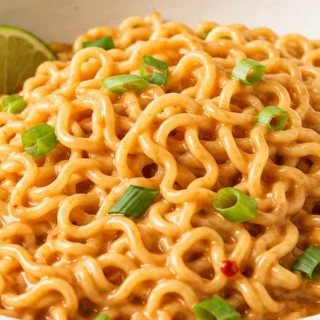
Spicy Peanut Butter Ramen
Ingredients
- 2 tbsp natural-style peanut butter
- 1 tbsp chili garlic sauce
- 1 tbsp soy sauce
- 1 tbsp brown sugar
- 1 packet instant ramen (seasoning discarded)
- 1 green onion, sliced
Instructions
- In a bowl, whisk together the peanut butter, chili garlic sauce, soy sauce, and brown sugar until a smooth paste forms.
- Bring about ½ cup of water to a boil in a small pot. Reserve ¼ cup of this boiling water.
- Stir the reserved water into the peanut-chili paste until it becomes a smooth, pourable sauce.
- Add the ramen noodles to the boiling water and cook for 2-3 minutes, or until just tender.
- Drain the noodles well, then return them to the pot with the heat turned OFF.
- Pour the prepared peanut sauce over the noodles and stir until evenly coated.
- Top with the sliced green onions and serve immediately.
Video
Notes
How 2 Tbsp of peanut butter turns into a glossy sauce instead of a greasy clump
Peanut butter ramen lives or dies on emulsion, the same physics that holds mayonnaise and cacio e pepe together. Natural-style peanut butter is roughly half fat by weight, about 16 grams of fat in a 32-gram serving per the National Peanut Board, plus around 8 grams of protein that acts as a natural emulsifier. When you whisk the 2 Tbsp of peanut butter with hot starchy noodle water, that protein and the trace lecithin coat the fat droplets and suspend them in liquid. Skip the water and you get an oil slick; add it too fast and the sauce seizes into paste. Add it a splash at a time, and it stays creamy.
The mechanics matter more than the ingredient list. Peanut butter is a fat-continuous paste, so it repels a big flood of water and breaks. Serious Eats, in its Food Lab emulsion work, frames every stable sauce as an emulsifier plus mechanical agitation plus gradual addition of the opposing phase. That is exactly the move here: whisk in 1 to 2 Tbsp of hot noodle water first, get it smooth, then loosen further. The brown sugar also helps, since dissolved sugar raises viscosity and slows the droplets from recoalescing.
The temperature window that keeps it from splitting
Water hotter than a hard boil can shock the emulsion and thin the peanut protein’s grip, while cold water leaves the peanut butter stiff and gritty. Reserve a small ladle, roughly 60 to 80 mL, of the noodle water right before draining, when it sits around 90 to 95 C. That heat loosens the paste without cooking the protein into curds. Whisk off direct heat so the sauce never climbs back to a rolling boil in the pan.
Why the seasoning packet gets thrown out and what replaces its salt
Discarding the ramen seasoning packet is not a throwaway step, it is the whole flavor strategy. A single instant ramen seasoning packet carries roughly 1,500 to 1,800 mg of sodium, and Healthline reports a full package around 1,760 mg, close to 88 percent of a 2-gram daily target. Keep that packet and stack it on top of 1 Tbsp of soy sauce and you land near 2,500 mg of sodium in one bowl, plus a muddy chicken-or-beef note that fights the peanut. Tossing it hands salt control back to the soy sauce, which reads clean and lets the peanut, chili, and garlic stay in front.
The noodle brick itself still contributes a little salt, roughly 200 to 250 mg on its own, so the bowl is not bland. The 1 Tbsp of soy sauce becomes the anchor: it supplies sodium and glutamate for savoriness without the packet’s anti-caking fillers and MSG-forward blend. If you find the finished bowl flat, the fix is almost never the discarded packet, it is a few extra drops of soy or a pinch of salt whisked into the sauce base, not the reintroduced seasoning powder.
Balancing chili garlic sauce, soy, and brown sugar so nothing bulldozes the peanut
This bowl is a four-way tug of war between fat, heat, salt, and sweet, and the 1:1:1 ratio of chili garlic sauce to soy sauce to brown sugar is deliberately even so no single element wins. Huy Fong chili garlic sauce is built from chili, garlic, salt, and distilled vinegar, so it brings acid and pungency, not just heat. That vinegar is doing quiet work: acid cuts the peanut fat and keeps the sauce from feeling heavy on the palate. The brown sugar is not there to make it dessert-sweet, it counters the chili’s sharp edge and rounds the soy’s salinity, the same way palm sugar functions in a Thai-style peanut sauce.
Taste before you toss. Peanut brands vary in salt, and some natural jars are unsalted, which shifts the balance toward needing that full 1 Tbsp of soy. If the sauce tastes harsh, add sugar in pinches. If it tastes flat and dull, it needs acid or salt, not more peanut butter.
Failure and fix: the four things that go wrong
- Sauce is oily and separated: the fat broke from the water. Cause is adding hot water too fast or not whisking. Fix by whisking in a fresh teaspoon of hot water off the heat until it re-emulsifies and turns opaque again.
- Sauce is gluey and won’t coat: too little liquid, or the noodle water was too starchy and cooled. Fix by loosening with a tablespoon of hot water at a time until it ribbons off the whisk.
- Bowl tastes flat despite the chili: not enough salt or acid. Fix with a few drops more soy sauce or a squeeze of lime, not more sugar.
- Harsh, one-note heat: chili garlic sauce is dominating. Fix with an extra pinch of brown sugar and a splash of noodle water to dilute and round it.
Swapping the peanut butter, the chili, and the noodles without wrecking the bowl
Every ingredient here has a substitute, but each trade changes the sauce in a predictable direction. Knowing the trade-off lets you swap on purpose instead of hoping. The peanut is the structural backbone, so its replacements matter most, while the chili and noodle swaps mostly move flavor and texture.
- Sunflower seed butter for peanut butter: makes the bowl peanut-free and nut-free, a real fix for allergies. Trade-off is a slightly bitter, earthier edge, so add an extra pinch of brown sugar to compensate. Naturally Ella notes sunbutter can turn faintly green with baking soda, but that reaction won’t happen in this savory sauce.
- Tahini for peanut butter: thinner, looser sauce with a toasty sesame note. It emulsifies more easily because it’s less fat-dense, but it delivers less body, so use a touch less water.
- Sriracha for chili garlic sauce: smoother heat and more built-in sweetness from its added sugar, so cut the brown sugar to avoid a candied sauce. You lose the coarse garlic texture.
- Rice noodles for the ramen brick: gluten-free and silkier, but they release less starch, so your sauce won’t cling as tightly, reserve a bit more cooking water to compensate.
For the sweetener, honey or maple syrup can stand in for brown sugar at roughly a 1:1 volume, though both are wetter and will thin the sauce slightly. For more single-serving noodle ideas that lean on pantry staples, our guide to upgrading instant ramen with pantry staples covers the same discard-the-packet logic across other flavor bases.
The one trick unique to this bowl: starchy noodle water as the only liquid
Unlike most peanut sauces that call for plain hot water, coconut milk, or stock, this bowl uses the noodle’s own cooking water as the emulsifier and the thickener at once, and that is the detail that makes it work in a single pot. As instant ramen boils, it sheds surface starch into the water, the same principle Serious Eats documents for finishing pasta in its sauce. That dissolved starch does double duty: it thickens the peanut sauce so it clings to every strand, and it stabilizes the emulsion so the fat stays suspended longer than plain water would allow.
The practical move is timing. Do not drain into the sink and reach for the tap. Reserve the cloudy water from the pot, ideally the last portion, which is the most concentrated, and use only that to loosen the peanut butter. A cook comparing peanut noodle recipes will notice this bowl skips added stock entirely, which is why keeping that starchy water is non-negotiable rather than optional. The green onion goes on last, raw, for a sharp aromatic lift against the rich sauce. If you want to push the technique further, our breakdown of why starchy pasta water thickens sauces explains the same starch-emulsion mechanism in detail.
Pro tips
- Use natural-style peanut butter for the best sauce texture. Creamy peanut butter can make the sauce too thick.
- Don’t overcook the ramen noodles; they should retain a slight chew.
- For extra heat, add a pinch of red pepper flakes along with the chili garlic sauce.
- Garnish with sesame seeds or a drizzle of sesame oil for extra flavor.
This spicy peanut butter ramen is a testament to how simple ingredients can create extraordinary flavor. Enjoy this quick, satisfying dish anytime!
Frequently asked questions
Can I use crunchy peanut butter instead of natural-style?
Yes, crunchy works, but the peanut pieces stay firm and the sauce coats less evenly. Conventional stabilized peanut butter also has added oils and sugar that make it thicker, so you may need an extra splash of hot noodle water to loosen it. Natural-style emulsifies more smoothly because it is just peanuts and salt.
Why did my peanut sauce turn oily and grainy?
The emulsion broke, usually from adding hot water too fast or not whisking enough. The fat separated from the liquid. Rescue it by whisking in a fresh teaspoon of hot noodle water off the heat, one small addition at a time, until the sauce turns opaque and creamy again rather than slick and split.
How spicy is this bowl and can I tone it down?
With 1 Tbsp of chili garlic sauce it lands at a moderate, garlicky heat, sharper than sriracha because it carries more vinegar and coarse chili. To tone it down, halve the chili garlic sauce and add a pinch more brown sugar, or stir in an extra spoon of peanut butter to buffer the heat with fat.
Can I make the sauce ahead of time?
You can whisk the peanut butter, chili garlic sauce, soy sauce, and brown sugar base a day ahead and refrigerate it. It will firm up cold, so re-whisk it with hot noodle water right before tossing to bring the emulsion back. Add the sliced green onion fresh at serving so it stays sharp and crisp rather than wilting.
More from Easy Pasta Recipes →