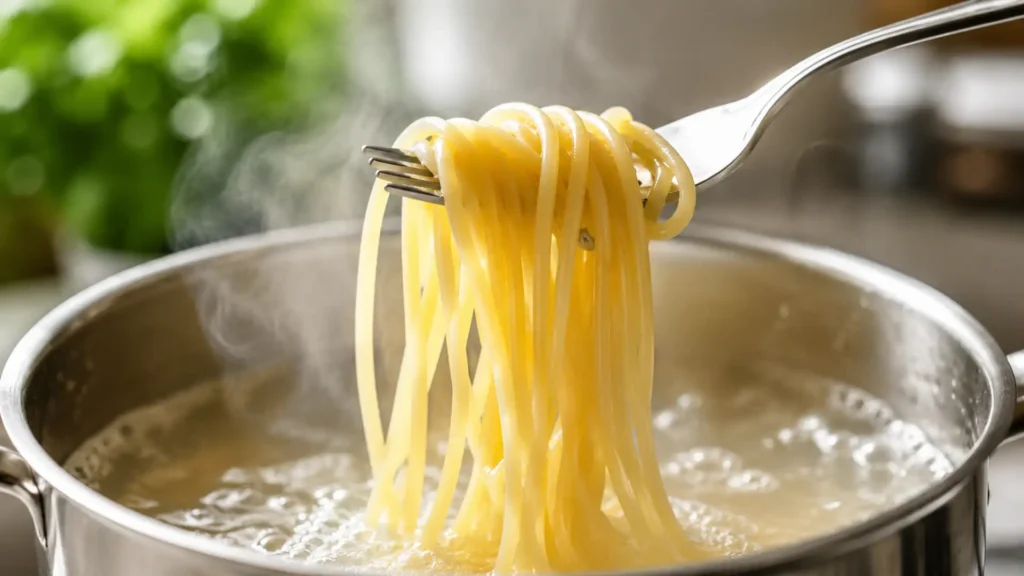
Knowing how to cook pasta al dente is the one skill that separates pasta that tastes Italian from pasta that tastes like a cafeteria side dish. The phrase translates from Italian as “to the tooth,” and it describes pasta cooked until it is tender on the outside but still has a firm, slightly resistant center when you bite into it. That little bit of bite is not just tradition. It changes the texture, the way sauce clings, and even how the pasta affects your blood sugar. This guide breaks down the timing, the testing, the science, and the fixes so you can hit that sweet spot every time.
Once you train your teeth to recognize al dente, you stop trusting the clock blindly and start tasting your way to a perfect plate. It is a small shift that upgrades every pasta dinner you make from here on.
Here is the honest truth that many cooks take too long to accept. The number on the box is a suggestion written by people who do not know your stove, your water, or your pot. It is calibrated for fully soft pasta and for the worst case kitchen. Your job is to ignore it as a finish line and treat it only as a rough heads up to start tasting. The moment you make that mental switch, perfect pasta stops being luck and becomes something you control on purpose, every single time.
What Al Dente Actually Means
Al dente pasta is cooked through but stops just short of fully soft. Cut a piece in half at the right moment and you will see a thin, pale dot or line of slightly firmer pasta at the very center, surrounded by tender cooked dough. That core is the target. It is not raw or chalky, but it offers gentle resistance when you chew. Push the cooking a minute too far and that core vanishes, the pasta turns uniformly soft, and you lose the texture entirely.
This matters for more than mouthfeel. Al dente pasta holds its shape when you toss it with sauce, so it does not turn to mush in the pan. It also has a lower glycemic impact, because the firmer, less broken down starch digests more slowly. Research summarized by Michigan State University Extension explains that pasta cooked al dente raises blood sugar more gradually than soft, overcooked pasta. The classic texture is a feature, not a fussy preference, and the background on al dente traces how it became the Italian standard.
The Setup That Makes Al Dente Possible
You cannot reach al dente reliably without the right pot conditions. Three things matter most: enough water, enough salt, and a true rolling boil. Use a large pot with at least four quarts of water per pound of pasta. Too little water drops in temperature the moment the pasta goes in, the noodles cook unevenly, and they release so much starch that they turn gummy. Plenty of water keeps the temperature stable and the pasta moving freely.
Salt the water until it tastes like the sea, roughly a tablespoon or more per four quarts. This is the only stage at which the pasta itself absorbs seasoning, so skipping it leaves the noodles bland no matter how good the sauce is. Wait for a full, vigorous boil before adding the pasta, because that high heat is what cooks the surface fast and sets up the al dente texture. Stir in the first thirty seconds so nothing sticks, and never add oil to the water, which only coats the pasta and stops sauce from gripping it later. For the full breakdown of water, salt, and timing, the step by step guide on how to boil pasta covers every detail.
| Pasta Shape | Typical Box Time | Pull for Al Dente | Test Method |
|---|---|---|---|
| Spaghetti | 10 to 11 min | 8 to 9 min | Bite, look for firm center |
| Penne | 11 to 13 min | 9 to 11 min | Cut, check pale core |
| Fusilli | 11 to 12 min | 9 to 10 min | Bite a spiral |
| Rigatoni | 12 to 14 min | 10 to 12 min | Cut through the wall |
| Fresh pasta | 2 to 4 min | 2 to 3 min | Taste, very short window |
How to Test for Al Dente
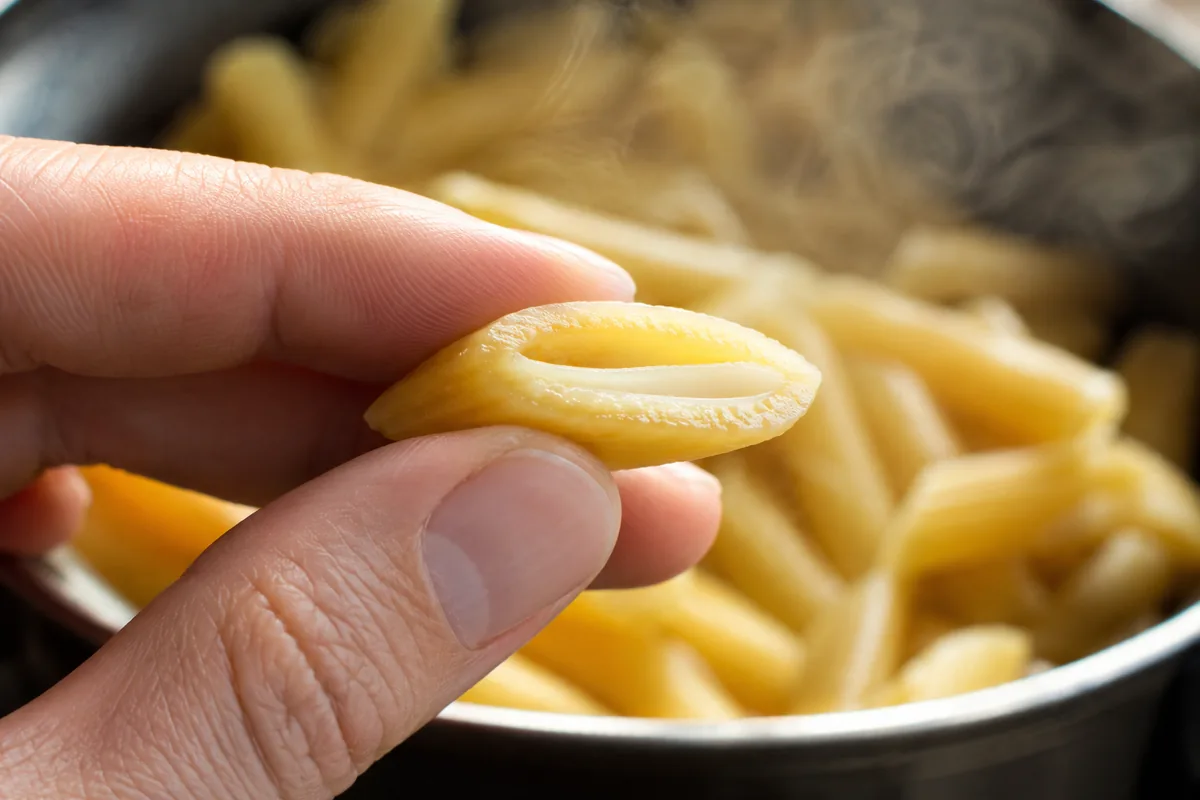
The package time is a starting estimate, not gospel. Different brands, shapes, and even the mineral content of your water shift the real number, so the only reliable test is your own mouth. Start checking two to three minutes before the box says the pasta should be done. Pull out one piece with a fork or spoon, let it cool for a second, and bite through it.
You are feeling for tender pasta with a firm but not hard center. If it bends easily and feels soft all the way through, it is past al dente. If it cracks or tastes chalky and dry inside, it needs another minute. The visual test backs up the bite: snap or cut a piece in half and look for that thin pale dot at the core. When the dot is just barely there, the pasta is ready. Tube and short shapes hide their doneness, so cut through the thickest wall to judge. Fresh pasta moves fast and can go from raw to overdone in under a minute, so taste constantly. Knowing your shapes helps too, and the guide to the different types of pasta noodles explains how thickness and shape change the timing.
The Finish in the Pan Matters
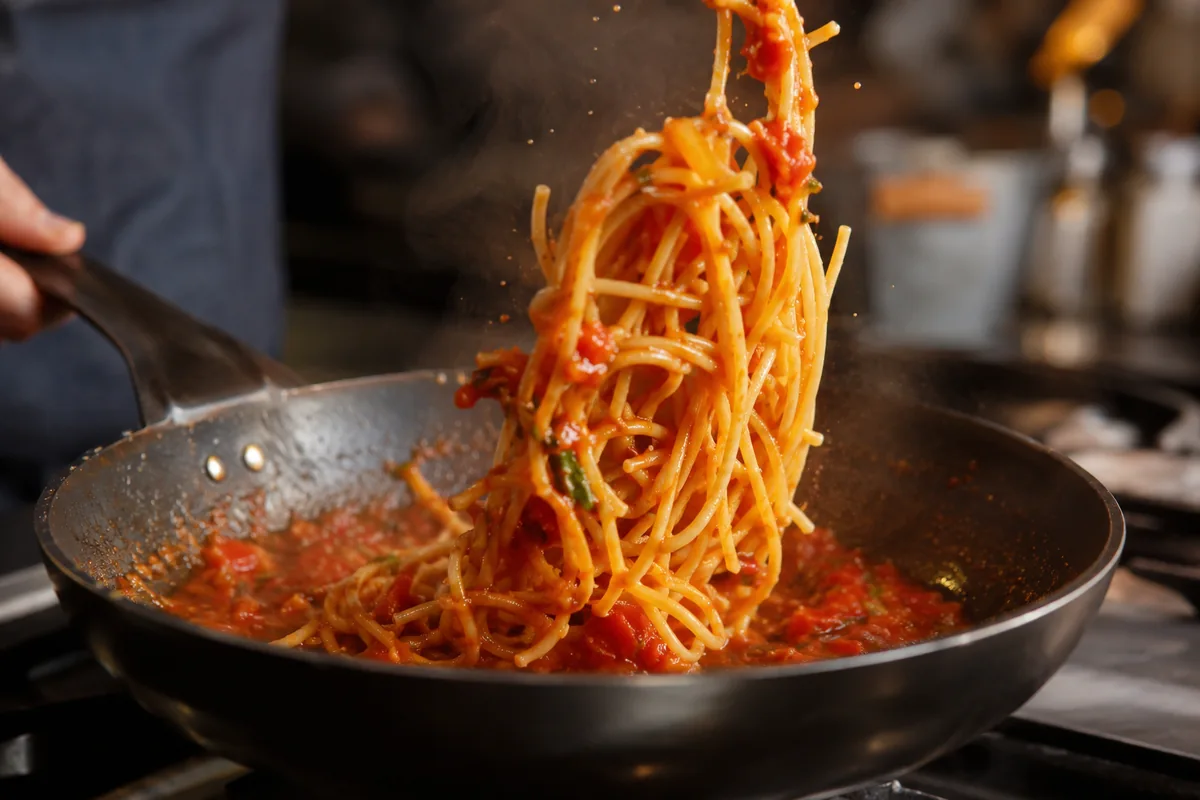
Here is the step that catches people out: pasta keeps cooking after you drain it. The residual heat carries it forward, which means you should pull it from the water slightly before it reaches your final target, especially if you are going to finish it in a hot pan with sauce. Aim to drain pasta about a minute shy of perfect al dente, then toss it in the sauce for that last minute so it finishes there.
This pan finish does two things. It lets the pasta absorb flavor from the sauce instead of plain water, and combined with a splash of reserved starchy pasta water, it emulsifies the sauce into a glossy coat that clings to every noodle. Drain pasta straight into the colander and let it sit, and it overcooks in its own steam while clumping together. Move it into the sauce while it is hot and just under al dente, and it lands on the plate with perfect texture. Always scoop out a cup of pasta water before draining for exactly this reason.
How much earlier you pull the pasta depends on what happens next. If you are serving it plain with a little oil and cheese, drain it right at al dente, since there is no extra cooking to come. If you are finishing it in a hot pan with sauce for a minute or two, drain it a full minute shy, because that pan time pushes it the rest of the way. For a baked dish like a pasta casserole, undercook even more, leaving the pasta clearly firm, because it will keep cooking in the oven and soften under the sauce. Reading the next step and adjusting the drain point is the habit that separates pasta that is perfect on the plate from pasta that was perfect in the pot and overdone by the time it was served. A good sauce makes the whole thing sing, and this collection of Italian sauce recipes pairs naturally with properly cooked al dente pasta.
Common Al Dente Mistakes and How to Fix Them
The most common error is trusting the clock and walking away. Box times run long to cover the worst case, so a recipe that says eleven minutes often hits al dente at nine. Always taste early. The second mistake is too little water, which drops the boil and produces gummy, unevenly cooked noodles. Use a big pot. Third is rinsing the pasta after draining, which strips the surface starch that helps sauce stick and is only ever appropriate for cold pasta salad.
Fourth is overcooking by ignoring carryover heat. If you boil pasta all the way to perfect and then sauce it in a hot pan, it tips into soft. Pull it a touch early. Fifth is using too small a portion of water for too much pasta, which crowds the pot. If you are unsure how much to cook in the first place, the guide on how much pasta per person takes the guesswork out of portions. None of these are hard to fix, and the cure for all of them is paying attention during the last few minutes instead of leaving the kitchen.
| Symptom | What Went Wrong | Fix Next Time |
|---|---|---|
| Pasta is soft and mushy | Cooked too long, trusted the clock | Start tasting 2 to 3 min early |
| Chalky, dry center | Undercooked | Boil one more minute, retest |
| Gummy, sticky noodles | Too little water, boil dropped | Use 4+ quarts per pound |
| Sauce slides off | Rinsed pasta or skipped pan finish | Do not rinse, toss in sauce with pasta water |
| Overcooked by serving time | Ignored carryover heat | Drain a minute early, finish in sauce |
How Shape and Pasta Type Change the Timing
Not all pasta hits al dente on the same schedule, and understanding why helps you stop relying on a single number. Thickness is the biggest factor. A thin strand like angel hair cooks in two or three minutes and races past al dente fast, so you have a tiny window. A thick tube like rigatoni has a heavy wall that takes much longer, and the al dente point sits several minutes later. Short, ridged, or filled shapes all behave differently, which is why the same eleven minute box time can apply to a shape that is actually done at nine.
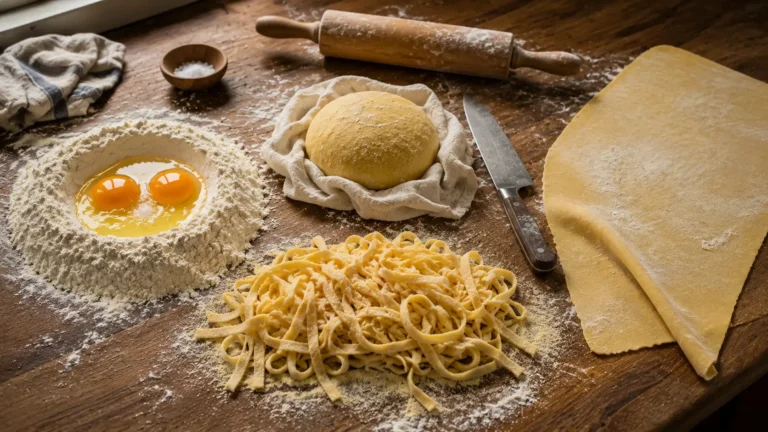
Fresh pasta and dried pasta are different animals entirely. Dried pasta is made from durum wheat and water, pressed hard and dried slowly, which gives it that firm structure that holds an al dente bite well. Fresh egg pasta is softer and more delicate, cooks in just two to four minutes, and never has the same firm center, since the very thin sheets cook through almost instantly. With fresh pasta the al dente window is measured in seconds, so you taste constantly and pull it the moment it loses its raw flour taste.
Whole wheat and legume based pastas add another wrinkle. Whole wheat pasta has more bran, which can make it feel done on the outside while the inside lags, so it often needs the full box time and a careful taste test. Chickpea and lentil pastas cook fast and turn mushy quickly, with a narrow al dente window, so check them early and often. The lesson across all of these is the same. The box gives you a starting estimate, but the shape, the flour, and the freshness all move the real target, and only tasting tells you the truth.
Salting, Stirring, and the Myths Worth Dropping
A few persistent kitchen myths get in the way of good al dente pasta, so it is worth clearing them up. The first is adding oil to the cooking water to stop sticking. Oil floats on top of the water and does almost nothing while the pasta cooks, and worse, it can coat the drained pasta and make sauce slide right off. The real fix for sticking is plenty of water and a stir in the first thirty seconds, when the pasta releases the most surface starch.
The second myth is that salt meaningfully changes how fast water boils. It does not, at least not in any amount you would use for pasta. Salt the water for flavor, because the noodle absorbs seasoning only during the boil, and add it once the water is already boiling. The third is the idea that throwing pasta at the wall tells you it is done. A piece that sticks is often already past al dente and into mushy territory, so the wall test is a worse guide than simply biting a piece.
The fourth myth is that you should always cook pasta the full time printed on the box. Box times are conservative and aimed at fully soft pasta, so for al dente you almost always pull it earlier. Trust your teeth over the package. The fifth is that rinsing keeps pasta from sticking. Rinsing strips the surface starch that helps sauce cling and cools the pasta down, so skip it for any hot dish and save the rinse only for cold pasta salad. Drop these myths and the path to al dente gets a lot clearer.
Does Al Dente Really Make Pasta Healthier?
It genuinely helps, and the reason is starch structure. When pasta is cooked al dente, the starch granules are less broken down than in soft, overcooked pasta. That means your body digests them more slowly, which leads to a gentler, more gradual rise in blood sugar rather than a sharp spike. Over time, choosing slower digesting carbohydrates supports steadier energy and better blood sugar management, which is why nutrition educators consistently recommend the al dente texture.
This does not turn pasta into a health food on its own, and portion size still matters, but it is a free upgrade. You get better texture and a lower glycemic response from the same noodles simply by stopping the cook a minute earlier. Pairing pasta with protein, vegetables, fiber, and a sensible portion does the rest. Even a brothy noodle bowl benefits from the same principle, and you can see how noodles behave in liquid dishes in this set of broth and noodle soup recipes, where firm pasta holds up far better than soft. The takeaway is simple: al dente is the texture Italians have favored for generations, and it happens to be the smarter nutritional choice as well.
Frequently Asked Questions
How do you know when pasta is al dente?
Start tasting two to three minutes before the package time is up. Al dente pasta is tender on the outside with a firm, slightly resistant center. Cut a piece in half and look for a thin pale dot at the core. When that dot is barely visible and the pasta has a gentle bite without any chalky, raw interior, it is ready.
How many minutes does it take to cook pasta al dente?
Most dried pasta reaches al dente about one to three minutes before the box time, so spaghetti often hits it around 8 to 9 minutes and penne around 9 to 11. Fresh pasta is much faster at 2 to 3 minutes. Times vary by brand and shape, so always taste rather than relying only on the clock.
Is al dente pasta undercooked?
No, al dente pasta is fully cooked, just not soft. The phrase means “to the tooth,” describing pasta that is tender with a firm center that offers gentle resistance when you bite. It is not raw or chalky inside. Undercooked pasta tastes dry and brittle at the core, while al dente has a pleasant, springy bite.
Is al dente pasta healthier than soft pasta?
Yes, al dente pasta has a lower glycemic impact than soft, overcooked pasta. The firmer, less broken down starch digests more slowly, which causes a gentler rise in blood sugar. Cooking pasta al dente is a free way to improve both texture and the nutritional profile of the same noodles, especially when paired with protein and vegetables.