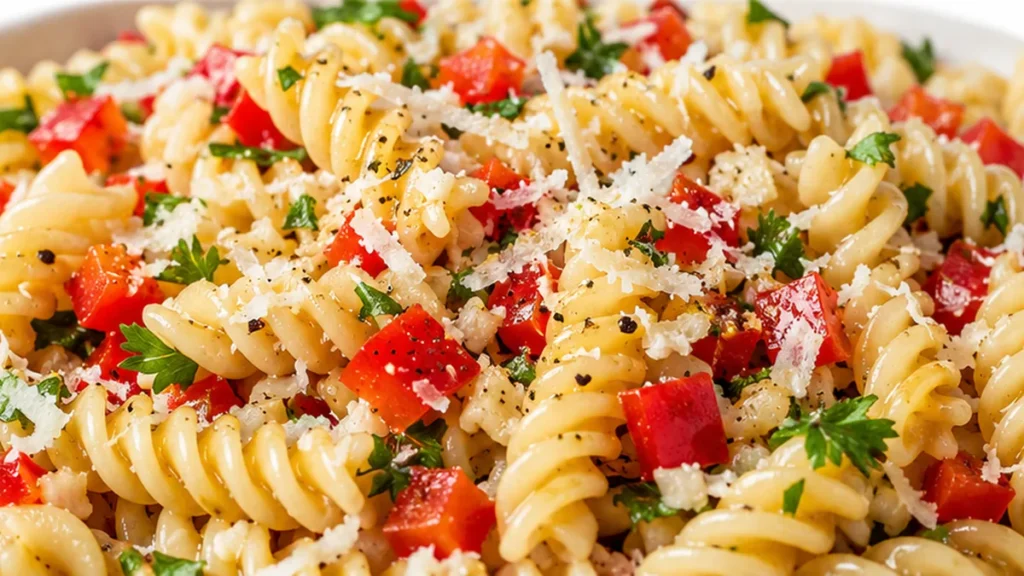
This italian pasta salad recipe combines pasta, fresh vegetables, and a tangy dressing. It’s a simple dish that’s perfect for gatherings.
Key takeaways
- Use al dente pasta for the best texture.
- Balance your dressing with a 3:1 oil to vinegar ratio.
- Incorporate a variety of fresh vegetables for flavor and crunch.
- Avoid overcooking pasta and ensure it cools properly before dressing.
Italian Pasta Salad Recipe
Ingredients
Instructions
- Combine olive oil, white wine vinegar, lemon juice, minced garlic, minced red bell peppers, minced white onions, grated parmesan cheese, Italian seasonings, granulated sugar, and salt in a glass jar.
- Shake the jar well until all dressing ingredients are incorporated.
- Refrigerate the dressing for at least 1 hour for best flavor.
- Place cooked and cooled rotini pasta in a large bowl.
- Stir in chopped tomatoes, black olives, pepperoni, banana peppers, red bell peppers, and green bell peppers.
- Pour your desired amount of dressing over the pasta mixture and toss to combine.
- Stir in fresh basil and mozzarella cheese.
- Add fresh parsley for extra color and freshness.
The Importance of Pasta Choice in Italian Pasta Salad
The selection of pasta is crucial in achieving the ideal texture and flavor in an Italian pasta salad. Traditional pasta varieties like fusilli, penne, or farfalle are preferred due to their ability to hold onto dressings and ingredients. For optimal results, cook the pasta to al dente, which typically requires about 8-10 minutes in boiling salted water. This texture ensures that the pasta remains firm when mixed with the salad’s other components.
Balancing Flavors with Dressings
The dressing is the heart of an Italian pasta salad, often made with olive oil, vinegar, and various herbs. A common ratio for a vinaigrette is 3 parts oil to 1 part vinegar. This balance not only enhances the flavors but also helps to coat each ingredient evenly. For a more robust flavor, consider adding Dijon mustard or garlic to the dressing. Allow the salad to marinate for at least 30 minutes before serving to let the flavors meld together.
Ingredient Pairings and Their Impact
Choosing the right ingredients can elevate your pasta salad. Fresh vegetables like bell peppers, cherry tomatoes, and cucumbers provide crunch and freshness, while proteins such as salami or mozzarella add substance. Each ingredient contributes to the overall flavor profile and texture. For instance, adding olives introduces a briny flavor that contrasts nicely with the sweetness of bell peppers. Be mindful of the ingredient ratios to maintain a balanced taste.
Common Mistakes and How to Avoid Them
One common mistake is overcooking the pasta, which leads to a mushy texture. To avoid this, always check for doneness a minute or two before the package instructions suggest. Another issue is not cooling the pasta adequately before mixing it with the dressing, which can cause the salad to become soggy. To prevent this, rinse the pasta under cold water after draining it. Additionally, be cautious with the amount of dressing; too much can overwhelm the salad.
Unique Characteristics of Italian Pasta Salad
What sets Italian pasta salad apart from other pasta salads is its vibrant use of herbs and the addition of ingredients such as artichokes and sun-dried tomatoes. These elements not only add flavor but also create a visually appealing dish. Moreover, Italian pasta salad is versatile; it can be served cold or at room temperature, making it an excellent option for picnics or potlucks. The ability to customize it with seasonal vegetables further enhances its appeal.
Make-Ahead Strategies for Optimal Flavor
Italian pasta salad is an excellent dish for meal prep, allowing flavors to meld over time. To maximize taste, prepare the salad a few hours or even a day in advance. This resting period enhances the infusion of the dressing into the pasta and vegetables, creating a more cohesive flavor profile. However, keep in mind that some ingredients, like fresh herbs and delicate vegetables, may wilt or lose their crunch. To counter this, consider adding these ingredients just before serving. For best results, store the salad in an airtight container in the refrigerator, where it can last up to three days without significant loss of quality.
Scaling the Recipe for Different Occasions
When planning gatherings, it’s essential to know how to scale your Italian pasta salad recipe effectively. For smaller gatherings, you can halve the ingredients, while for larger events, simply double or triple the quantities. Keep in mind that the pasta-to-dressing ratio is crucial; generally, a good rule of thumb is to use about 1 cup of dressing for every 4 cups of cooked pasta. Adjust the seasoning accordingly, as scaling up may dilute flavors. Always taste and adjust before serving. Additionally, consider the size of your mixing bowl and storage containers, as larger batches may require more space and equipment.
Choosing the Right Equipment for Preparation
The equipment used can significantly impact the preparation of your Italian pasta salad. A large mixing bowl is essential for combining ingredients without spilling. Using a sharp knife for chopping vegetables ensures clean cuts, which helps maintain texture. A pasta pot with a strainer is ideal for cooking and draining pasta, while a whisk or a jar for mixing the dressing can help achieve a well-emulsified blend. If you have a food processor, it can be a time-saver for chopping ingredients uniformly. Lastly, consider using a salad spinner to dry washed vegetables thoroughly, preventing dilution of the dressing.
Seasonal Adjustments and Ingredient Quality
Italian pasta salad can be adapted to reflect seasonal ingredients, enhancing freshness and flavor. In the summer, ripe tomatoes and cucumbers shine, while winter may call for roasted vegetables like bell peppers and squash. The quality of your ingredients also plays a vital role; opt for fresh, high-quality produce to achieve the best results. For instance, using artisanal pasta can elevate the dish, adding unique textures and flavors. Additionally, consider the dressing’s acidity; in peak seasons, you might reduce vinegar in favor of more citrus to brighten flavors. Always adjust based on the season’s offerings to keep your pasta salad exciting and vibrant throughout the year.
Understanding the Impact of Ingredient Quality on Flavor
The quality of ingredients used in an Italian pasta salad significantly influences the dish’s overall flavor and texture. For instance, using fresh, high-quality vegetables like ripe tomatoes, crisp bell peppers, and fragrant basil can elevate the salad’s taste. The type of pasta also plays a crucial role; artisanal pasta made from durum wheat has a firmer texture and better holds the dressing compared to standard pasta. Additionally, the quality of olive oil should not be overlooked—extra virgin olive oil adds depth and richness that lower-quality oils cannot replicate. When selecting ingredients, consider their seasonality; for example, summer tomatoes are sweeter and juicier than those found in winter, which can lead to a more vibrant salad.
Batch Scaling: Adjusting Portions Without Compromising Flavor
When scaling an Italian pasta salad recipe, it’s essential to maintain the balance of flavors and textures. A common mistake is to simply multiply all ingredients by the same factor, which can lead to an overpowering taste or an imbalance in the salad. For instance, when increasing the quantity of dressing, it may be beneficial to start with a smaller increment and gradually adjust to taste. This approach helps prevent the dressing from overshadowing the other ingredients. Furthermore, when scaling, consider the pasta’s cooking time; larger batches may require slightly longer cooking times to ensure even doneness. Aim for a ratio of 1 part pasta to 1.5 parts vegetables and a dressing that complements rather than overwhelms the dish.
Make-Ahead Techniques for Optimal Flavor Development
Preparing an Italian pasta salad in advance can enhance its flavors, allowing the ingredients to meld together beautifully. To do this effectively, cook the pasta al dente, as it will continue to absorb the dressing while resting. After cooking, rinse the pasta under cold water to stop the cooking process and cool it down quickly. Combine the pasta with chopped vegetables and dressing, but consider holding back some dressing until just before serving to prevent the pasta from becoming soggy. Store the salad in an airtight container in the refrigerator for up to three days. The flavors will deepen over time, making it an ideal dish for meal prep or gatherings. Just be sure to give it a good toss and adjust the seasoning before serving.
Understanding the Role of Temperature in Pasta Salad Preparation
The temperature at which you prepare your Italian pasta salad has a significant impact on its texture and flavor. Cooking the pasta at the right temperature is crucial; it should be boiled in salted water at 100°C (212°F) until al dente, which typically takes about 8-10 minutes. This ensures the pasta retains a firm texture, preventing it from becoming mushy when mixed with other ingredients. After cooking, it’s essential to cool the pasta quickly under cold running water or in an ice bath. This halts the cooking process and helps maintain the pasta’s integrity. Additionally, serving the salad cold allows the flavors to meld beautifully. If the salad is served too warm, the dressing may become oily and less cohesive. Therefore, achieving the right temperature balance is key to a successful pasta salad.
Ingredient Quality and Its Impact on Flavor Depth
When preparing an Italian pasta salad, the quality of your ingredients can greatly influence the overall flavor profile. Fresh vegetables, such as ripe tomatoes and crisp bell peppers, should be chosen for their vibrant colors and flavors. Opting for high-quality olive oil and balsamic vinegar can elevate the dressing, providing a richer taste than standard options. Furthermore, using fresh herbs like basil or parsley instead of dried can add a brightness that enhances the dish’s freshness. Each ingredient contributes to the salad’s complexity; for example, using aged balsamic vinegar can introduce a sweet tang that balances the acidity of fresh vegetables. Understanding the nuances of ingredient quality helps in creating a pasta salad that is not only visually appealing but also bursting with flavor.
Pro tips
Pro tip: Best served immediately while hot!
Frequently asked questions
Can I use gluten-free pasta for this recipe?
Yes, gluten-free pasta can be used as a substitute. However, be aware that the cooking time may vary, so check the package instructions for the best results.
How long can I store Italian pasta salad?
Italian pasta salad can be stored in the refrigerator for up to 3 days. To maintain freshness, keep it in an airtight container and avoid adding the dressing until ready to serve.
What can I add to make my pasta salad more filling?
To make your pasta salad more filling, consider adding protein sources like grilled chicken, chickpeas, or beans. These additions will enhance the nutritional value and make it a complete meal.
Is it necessary to let the salad marinate before serving?
While it’s not strictly necessary, allowing the salad to marinate for at least 30 minutes enhances the flavors, as the ingredients will absorb the dressing better, resulting in a more flavorful dish.
More from Pasta Sauces →