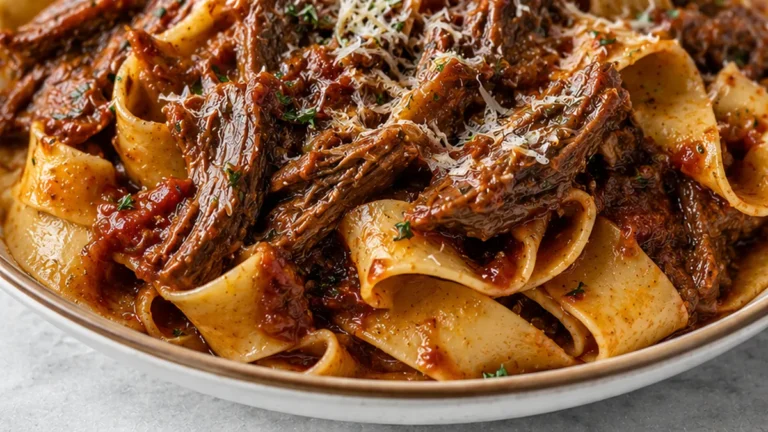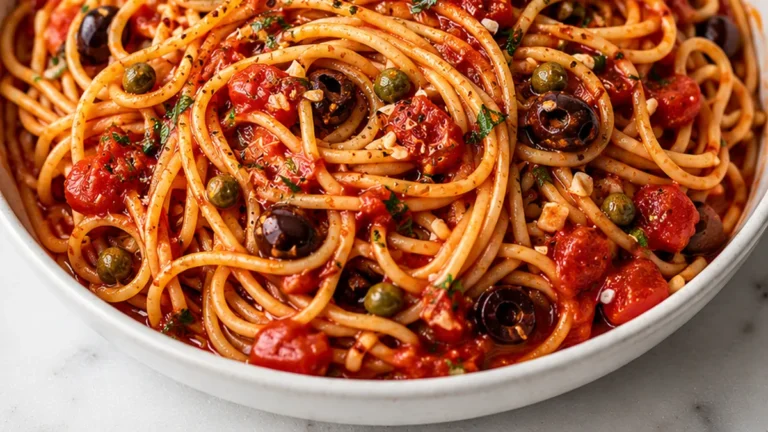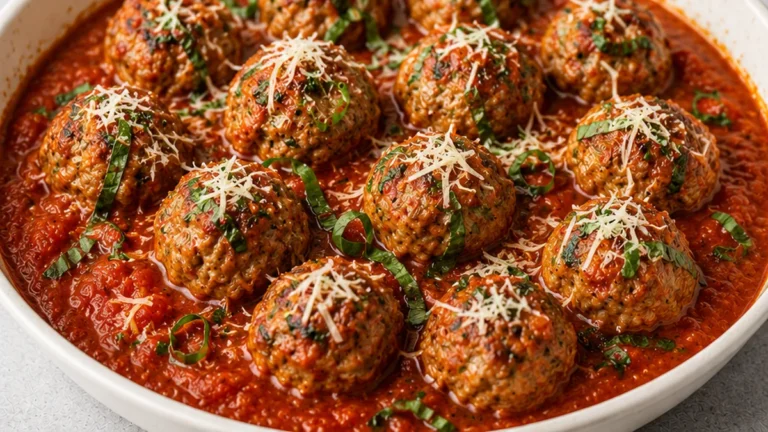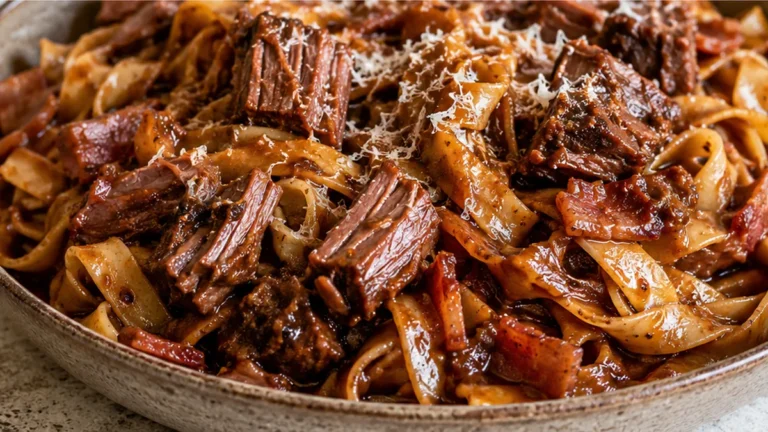
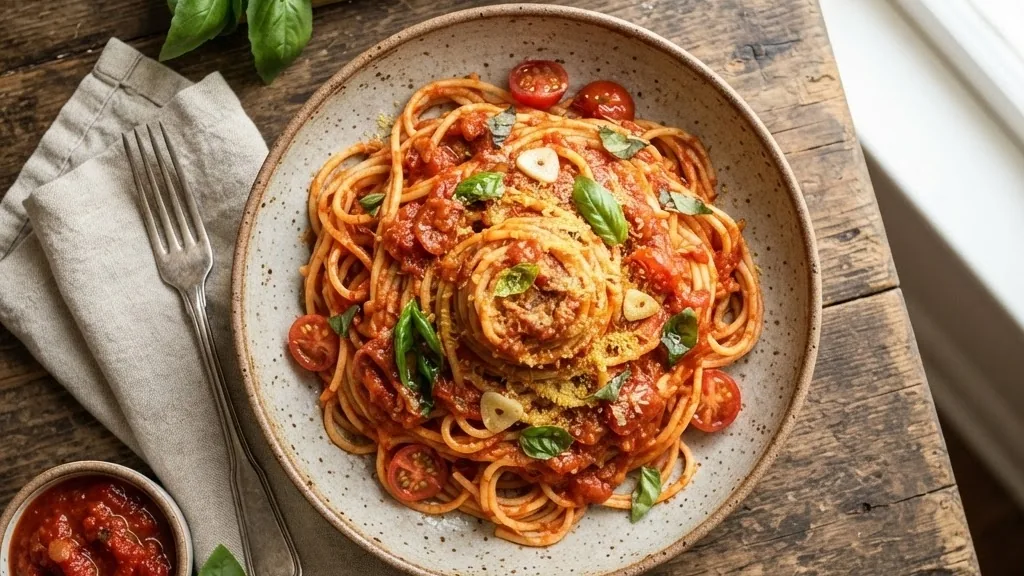
A good vegan pasta sauce is not a compromise, and that is worth saying up front, because many cooks assume going plant based means giving up silky, clingy sauces. It does not. Most of the classic Italian sauces were never built around dairy in the first place, and the few that lean creamy can be rebuilt with cashews and nutritional yeast so faithfully that little seems missing. The key is not one magic recipe but learning the handful of sauces below by heart, so you can walk to the stove on a Tuesday and build one from what is already in the pantry.
The classic early failures are a watery marinara that tastes like warm tomato juice and a cashew alfredo so grainy it could sand a table. The fixes turned out to be small and repeatable: the right simmer time, a proper soak, a splash of acid, and knowing when to stop. Once those clicked, plant based sauce stopped being a project and became a reflex.
Every simmer time, nutrition figure, and storage window below was checked this month against the USDA database, not from memory, because plant nutrition numbers drift between brands and a lazy estimate is how kitchens get food safety wrong.
Quick answer: The easiest vegan pasta sauce is a tomato marinara, which needs only crushed tomatoes, garlic, olive oil, and herbs simmered about 20 to 30 minutes, or under 10 minutes if you are rushing. For creamy sauces, blend soaked cashews with plant milk and nutritional yeast instead of cream and cheese. For a hearty ragu, lentils and mushrooms carry the body that meat used to. Any of these keeps 3 to 5 days in the fridge or 2 to 3 months in the freezer, and you reheat leftovers to 165 degrees Fahrenheit before serving. Learn six sauces and you never need a jar again.
What actually makes a pasta sauce vegan
Here is the quiet truth that is easy to miss: a huge share of traditional pasta sauces are already vegan, or one swap away from it. Marinara, arrabbiata, puttanesca, aglio e olio, and a basic tomato and basil sauce contain no animal products at all in their honest, old-country forms. The dairy sneaks in later, usually as a finishing handful of parmesan or a swirl of cream that habit added, not the recipe. Seen that way, cooking plant based stops feeling like subtraction and starts feeling like getting back to the original.
The sauces that genuinely depend on dairy, alfredo and a creamy vodka sauce for example, are the ones people assume are impossible without cheese. They are not. The job cheese and cream do in those sauces is two things, richness and a savory, salty depth the Italians call umami. Cashews handle the richness once you soak and blend them, and nutritional yeast handles the savory, cheesy depth. Get comfortable with those two ingredients and the whole creamy category opens up. If you want the mechanics of building any of these to the right thickness, the walkthrough on how to make the pasta sauce helps whenever a batch comes out thin.
What most guides skip is that the point is not to imitate dairy exactly, it is to hit the same two targets, richness and savoriness, by another road. Sauces improve fast once you stop trying to make cashew cream taste identical to heavy cream and judge it instead on whether it coats the pasta and tastes deeply savory.
The six vegan pasta sauces worth knowing cold
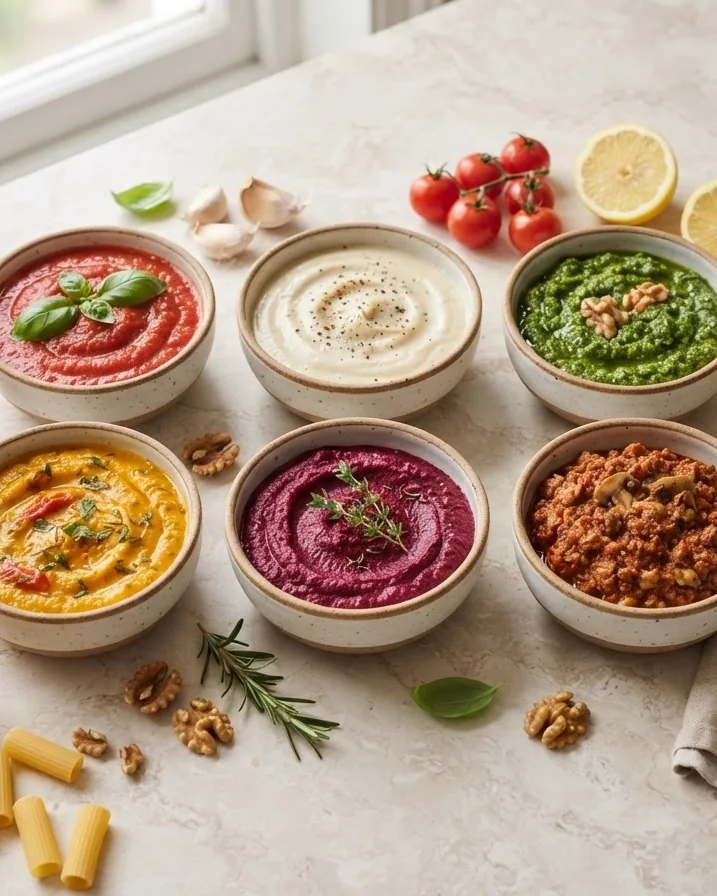
You do not need forty recipes, you need six patterns you can riff on forever. These are the core sauces, and between them they cover almost any craving, from a bright weeknight bowl to a slow Sunday ragu. Each one below is specific about what goes in, because vague is how sauces come out flat.
Marinara is the workhorse and the one to master first. It is crushed or San Marzano tomatoes, olive oil, plenty of garlic, onion, basil, oregano, salt, and a pinch of red pepper if you like warmth. Arrabbiata is simply marinara with the heat turned up, more dried chili and red pepper flakes, and it is the go-to when a bowl needs some fire. Both are naturally vegan and cost almost nothing to make.
Cashew alfredo is the creamy anchor: soaked cashews blended with unsweetened plant milk, nutritional yeast, garlic, lemon juice, and salt until it pours like a dream. Vegan pesto swaps the parmesan out for nutritional yeast and keeps the basil, garlic, nuts, lemon, and olive oil, so it blends in about 10 minutes with no cooking at all. Lentil and mushroom bolognese is the hearty one, where brown or green lentils and finely chopped mushrooms do the meaty work while tomatoes, onion, carrot, and celery round it out. And a roasted red pepper sauce, blended peppers loosened with a little cashew cream, gives you a sweet, smoky option that feels fancier than the effort it takes.
Use this quick map when you are standing at the stove deciding what the night calls for:
- Want fast, cheap, and reliable, make marinara, because pantry tomatoes and garlic are almost always on hand.
- Want heat, make arrabbiata, since it is marinara plus chili and nothing more.
- Want creamy comfort, make cashew alfredo, because blended cashews mimic the coat of dairy cream.
- Want fresh and no-cook, make vegan pesto, since it blends in about 10 minutes and needs no stove.
- Want hearty and filling, make lentil-mushroom bolognese, because lentils bring real plant protein and body.
- Want something sweeter and smoky, make roasted red pepper sauce, since blended peppers carry a mellow depth.
| Sauce | Base ingredients | Cook or simmer time | Texture |
|---|---|---|---|
| Marinara | Tomatoes, garlic, olive oil, basil | 20-30 min (under 10 quick) | Bright, loose |
| Arrabbiata | Marinara plus dried chili | 20-30 min | Bright, spicy |
| Cashew alfredo | Cashews, plant milk, nooch, lemon | 15-20 min | Creamy, thick |
| Vegan pesto | Basil, nuts, garlic, nooch, oil | About 10 min, no cook | Loose paste |
| Lentil bolognese | Lentils, mushrooms, tomato, mirepoix | 30-45 min | Chunky, hearty |
| Roasted red pepper | Roasted peppers, cashew cream, garlic | 15-20 min | Smooth, sweet |
Building a great tomato base: simmer times and the acidity fix
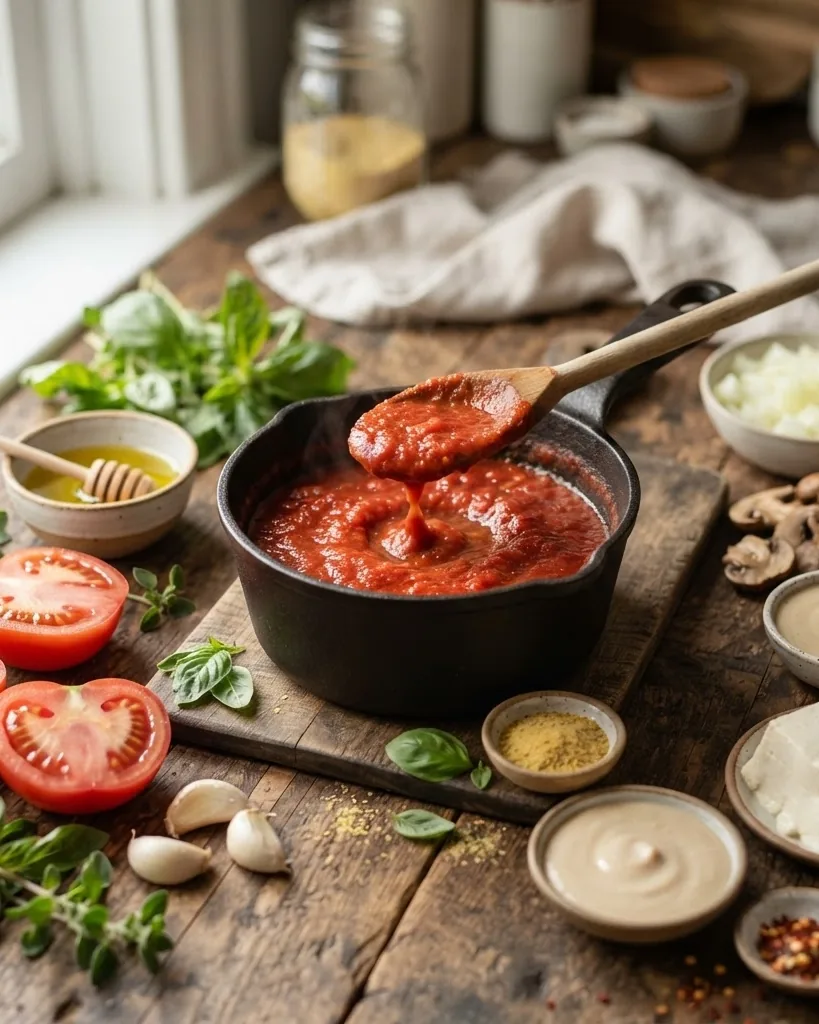
The tomato sauces are where most home cooks either shine or give up, and the difference is almost always the simmer. Marinara rushed off the heat in five minutes tastes sharp and raw, like the can it came from. Give it a proper 20 to 30 minutes at a lazy bubble and the acidity mellows, the flavors marry, and the sauce thickens enough to grip the pasta. You can go as short as under 10 minutes for a weeknight quick sauce, and some cooks push to 40 minutes or longer for a deeper, jammy result, but the 20 to 30 minute window is the honest default for a Tuesday.
The other lever is acidity, and this is the fix few recipes mention. Canned tomatoes are bright and a little sour, and the classic Italian move is a small pinch of sugar or a spoonful of maple to round the edge, not to make the sauce sweet but to take the pucker off. A grated carrot simmered in does the same thing naturally. Taste at the twenty minute mark and adjust, because tomato brands vary wildly in how sharp they run.
Do not skip the aromatics stage either. Softening onion and garlic in olive oil before the tomatoes go in builds a savory floor the whole sauce stands on, and rushing it leaves the sauce tasting flat no matter how long you simmer afterward. Five minutes of gentle sizzle until the onion turns translucent is enough, then in go the tomatoes, herbs, and salt while you boil the pasta. If your sauce keeps coming out watery, the notes on al dente pasta and sauce cover finishing the noodles in the pan so the starch tightens everything up.
Going creamy without dairy: cashews and nutritional yeast
This is the category people swear cannot be done vegan, and it is the most satisfying one to prove wrong. The secret to cashew alfredo is the soak. Cover raw cashews with boiling water and let them sit 5 minutes, or quick-boil them for about 15 minutes if you want them fully soft, then drain and blend with unsweetened plant milk, nutritional yeast, sauteed garlic, lemon juice, and salt. Skip the soak and you get grit, the most common way a first attempt fails. Do it and you get a sauce so smooth and clingy that the whole thing comes together in about 15 to 20 minutes.
Nutritional yeast, nooch to its friends, is the ingredient doing the heavy lifting on flavor, and it happens to be a nutrition standout too. A heaping tablespoon carries roughly 8 grams of complete protein and only about 1 gram of fat, and it supplies all nine essential amino acids your body cannot make on its own. That is a genuinely useful protein hit for a seasoning. If you buy the fortified kind, a single tablespoon can deliver more than 300 percent of the daily value for vitamin B12, which matters on a plant based diet because B12 is one of the few nutrients you cannot get reliably from plants alone. Worth knowing: that B12 is added during fortification, it is not naturally in the yeast, so read the label and buy fortified if the vitamin is why you are reaching for it.
The tomato side has its own numbers worth respecting, especially if you are the one tracking them. A half cup of marinara or tomato sauce runs roughly 56 to 90 calories depending on the brand and recipe, gives you about 1.6 grams of protein, and often carries around 320 milligrams of sodium in a store-bought jar. That sodium figure is exactly why homemade is worth it: a homemade batch lets you control the salt instead of accepting whatever the jar decided. Net carbs land around 5 to 7 grams per half cup, which keeps a tomato sauce light on the plate.
| Ingredient / serving | Protein | Notable number |
|---|---|---|
| Nutritional yeast, 1 heaping Tbsp | About 8 g (complete) | 300%+ DV B12 if fortified |
| Marinara, 1/2 cup (about 125 g) | About 1.6 g | About 320 mg sodium |
| Marinara, 1/2 cup calories | – | About 56-90 kcal |
| Lentils (bolognese base) | High plant protein | Adds fiber and body |
The hearty one, and a method that never fails
For a sauce that eats like a meal, lentil and mushroom bolognese is the answer, and it wins over skeptics expecting sad plant food. Brown or green lentils hold their shape and give the sauce a meaty chew, while finely chopped mushrooms bring the deep, savory umami that a ragu lives on. The two together are why this sauce feels substantial and protein packed without a scrap of meat. It needs a longer simmer than marinara, roughly 30 to 45 minutes, so the lentils turn tender and the sauce thickens, though canned lentils shorten that considerably if you are pressed.
Here is the exact process that keeps a batch from surprising you, whether it is a quick marinara or the long bolognese:
- Step 1 – Build the base by softening onion and garlic, and for a ragu the carrot and celery too, in olive oil for about 5 minutes until translucent, because rushing this leaves the whole sauce tasting flat.
- Step 2 – Add your body, whether that is crushed tomatoes for marinara or lentils and mushrooms for bolognese, then the herbs and a good pinch of salt.
- Step 3 – Simmer to the right window, 20 to 30 minutes for tomato sauce and 30 to 45 minutes for lentil ragu, tasting at the halfway mark to adjust salt and acidity.
- Step 4 – Finish the pasta in the sauce for the last minute or two so the starch binds everything, then kill the heat and, for creamy sauces, stir the blended cashew mix in off the heat so it does not split.
That last step, finishing the noodles in the pan, is the move that separates a sauce sitting on top of the pasta from a sauce that has married it. It matters for every one of these six, and it costs you nothing but a minute of attention. If you are also cooking for someone avoiding wheat, the guide to a gluten free pasta sauce walks through keeping the sauce itself clean of hidden gluten, which is easier than people fear since most of these are naturally free of it.
Storage, freezing, and reheating without the food-safety guesswork
Batch cooking is the real payoff of learning these sauces, so getting storage right is not optional, it is how you actually save time during the week. A homemade vegan tomato sauce keeps about 3 to 5 days in the fridge in a sealed airtight container, and many food safety sources put the safe window at 3 to 4 days to be conservative. An opened jar of marinara holds up to 5 days per the government guidance. Cream and cashew sauces are more perishable than plain tomato, so treat those as a 3 to 4 day proposition and do not push your luck.
For anything longer, the freezer is your friend. These sauces freeze beautifully for 2 to 3 months in airtight containers or heavy-duty freezer bags. Two habits matter here: cool the sauce fully before it goes in, and leave headspace at the top because liquid expands as it freezes and a too-full jar will crack. Portion them into single-dinner amounts. Pesto is the exception, it freezes best in an ice cube tray, and once solid the cubes go into a bag for up to 3 months.
Reheating is where people get careless, and it is the one place worth being precise. Bring refrigerated or thawed sauce back up to 165 degrees Fahrenheit, measured with a food thermometer if you own one, or at least to a full rolling boil for tomato sauces. For food safety context, your fridge should sit at or below 40 degrees Fahrenheit and your freezer at 0 degrees Fahrenheit, per the standard guidance, which keeps everything in the safe zone between cooking sessions. And the simplest rule of all: if a sauce smells off, tastes strange, has changed color, or shows any mold, throw it out, because no batch is worth a sick night.
Two authorities worth cross-checking rather than trusting a random recipe blog: the reheating and cold-holding temperatures come straight from the USDA Food Safety and Inspection Service, and the per-serving nutrition numbers you can pull yourself from USDA FoodData Central. On a temperature that keeps your family safe, the primary source beats any blog.
How to decide which sauce to make
Rather than reaching for a recipe, ask two questions and let the answers pick the sauce. First, how much time do I have? Under twenty minutes means pesto or a quick marinara. An hour to spare, and the lentil bolognese comes out. Second, what mood is the meal? A bright night calls for tomato, a cozy one for cashew alfredo, and a hungry crowd for the ragu. Two questions, six sauces, and no more standing paralyzed at the stove.
A common mistake among new plant based cooks is trying to nail all six at once and burning out by Thursday. Do not. Learn marinara until it is muscle memory, then add cashew alfredo, then the bolognese, and let the rest come as you go. Each one you master makes the next easier because the base moves, the aromatics, the simmer, the finish in the pan, repeat across all of them. For a deep dive on the protein and B12 claims above, the write-up at Healthline is consistent with them. The only real failure here is deciding vegan sauce is not worth the effort before you have made a properly simmered marinara. Make that one first, and the rest of this playbook falls into place on its own.
Frequently asked questions
What is the easiest vegan pasta sauce to make?
Marinara, hands down. It is just crushed tomatoes, garlic, olive oil, onion, and herbs simmered about 20 to 30 minutes, and it is naturally vegan with no swaps needed. For a rushed night you can have a passable version in under 10 minutes, though the longer simmer mellows the acidity and deepens the flavor. Master this one sauce and you have a reliable dinner on the table any night of the week.
How do you make a creamy vegan pasta sauce without dairy?
Blend soaked cashews with unsweetened plant milk, nutritional yeast, garlic, lemon juice, and salt. Cover the cashews with boiling water for 5 minutes first, or quick-boil them about 15 minutes, so they blend perfectly smooth instead of grainy. The cashews provide the richness that cream used to and the nutritional yeast adds the savory, cheesy depth. The whole sauce comes together in roughly 15 to 20 minutes.
Is nutritional yeast good for you?
It is a genuinely useful addition. A heaping tablespoon carries about 8 grams of complete protein with all nine essential amino acids and only around 1 gram of fat. If you buy the fortified kind, one tablespoon can supply more than 300 percent of the daily value of vitamin B12, which is valuable on a plant based diet. Just note the B12 is added during fortification, so check the label if that vitamin is your reason for using it.
How long does homemade vegan pasta sauce last in the fridge?
About 3 to 5 days in a sealed airtight container, with 3 to 4 days being the conservative safe window many food safety sources recommend. Cream and cashew based sauces are more perishable than plain tomato, so treat those as a 3 to 4 day proposition. Always reheat leftovers to 165 degrees Fahrenheit before serving, and discard any sauce that smells off, changes color, or shows mold.
Can you freeze vegan pasta sauce?
Yes, and it is one of the best reasons to make a big batch. Most vegan sauces freeze well for 2 to 3 months in airtight containers or heavy-duty freezer bags. Cool the sauce completely before freezing and leave headspace at the top because it expands as it freezes. Pesto freezes best in an ice cube tray, then transfer the frozen cubes to a bag for up to 3 months.
Are most Italian pasta sauces already vegan?
A surprising number are. Marinara, arrabbiata, puttanesca, aglio e olio, and a simple tomato and basil sauce contain no animal products in their traditional forms. The dairy usually gets added later as a finishing sprinkle of cheese, not as part of the original recipe. The sauces that truly rely on dairy, like alfredo, can be rebuilt with cashews and nutritional yeast, so almost nothing is off the table.
The bottom line
A vegan pasta sauce is not a lesser version of the real thing, it usually is the real thing, minus a dairy garnish habit added along the way. Learn six patterns and you cover any craving: marinara and arrabbiata for bright tomato nights, cashew alfredo for creamy comfort, vegan pesto for a no-cook fifteen minutes, lentil and mushroom bolognese for something hearty, and roasted red pepper when you want sweet and smoky. Simmer your tomato sauce 20 to 30 minutes, soak your cashews before blending, keep a jar of fortified nutritional yeast for the protein and B12, and store the extras 3 to 5 days in the fridge or 2 to 3 months in the freezer, reheating to 165 degrees Fahrenheit. Do that, and you will never want a jar again.