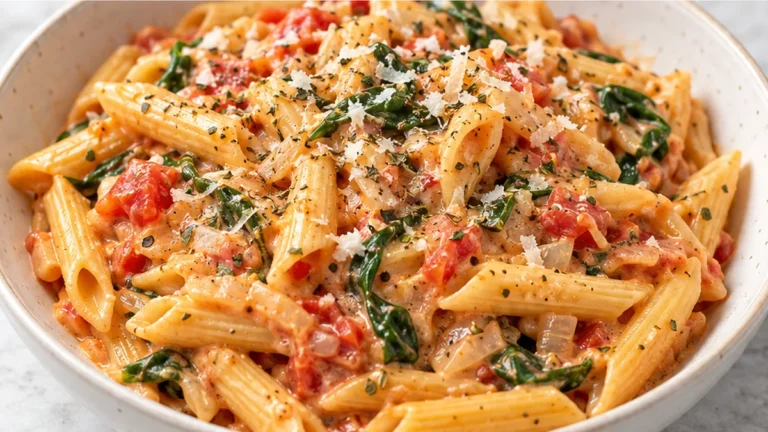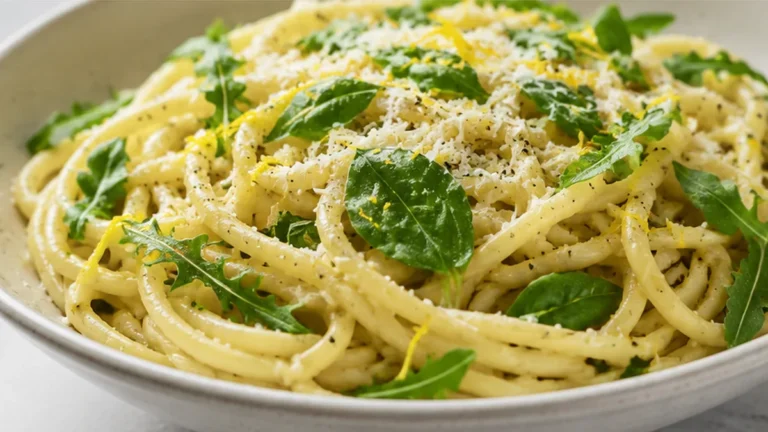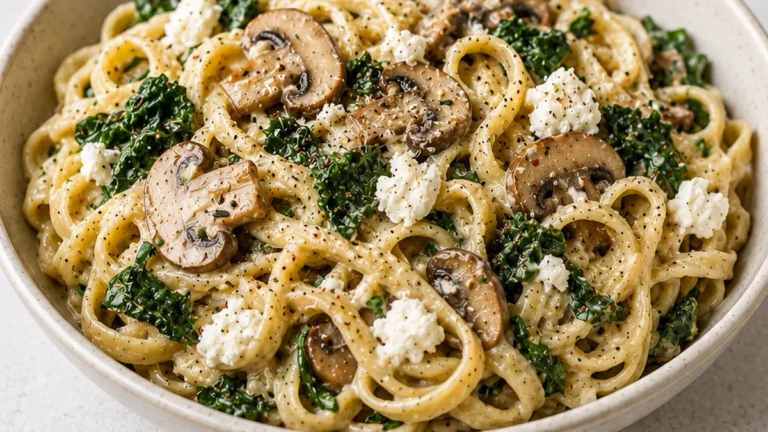
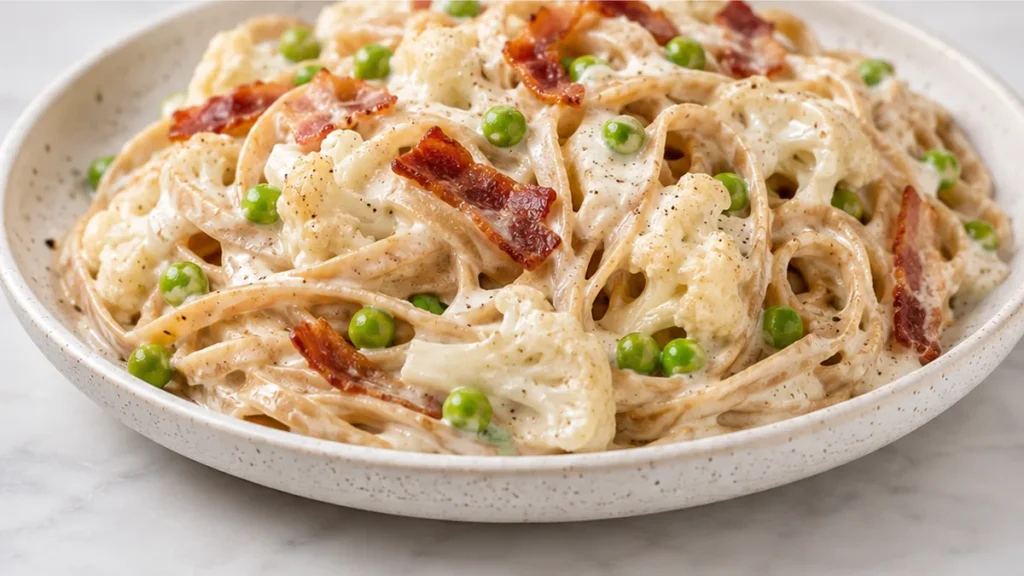
This lightened-up whole wheat fettuccine alfredo offers a decadent pasta experience without the heavy calories. It cleverly uses pureed cauliflower to create a lusciously creamy sauce, making it a healthier alternative to traditional alfredo. Perfect for a weeknight meal or a satisfying weekend dinner. The focus on whole wheat pasta and the innovative cauliflower sauce makes this fettuccine alfredo a dish that satisfies your cravings while being mindful of nutrition. It’s a testament to how delicious healthy eating can be.
Key takeaways
- The key to a creamy guilt-free Alfredo is a smooth cauliflower puree.
- Ensure cauliflower is cooked very tender before blending for a non-gritty sauce.
- Troubleshoot thin sauce by simmering or using a cornstarch slurry.
- Adjust seasonings like salt, pepper, lemon, and nutmeg to enhance flavor.
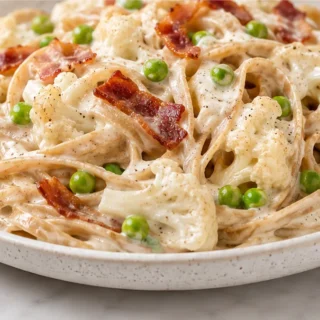
Creamy Fettuccine Alfredo – Guilt-Free & Decadent!
Ingredients
- 6 cups cauliflower florets
- 1 1/2 cups chicken or vegetable broth
- 2 cloves garlic
- 2 tablespoons butter
- 1 1/2 teaspoons salt
- 6-8 slices bacon
- 1 lb DeLallo whole wheat fettuccine
- 1/2 cup Parmesan cheese
- 1 1/2 cups frozen or fresh peas
- parsley, salt, pepper, lemon juice, and/or a dash of nutmeg for topping
Instructions
- For the sauce: Boil 6 cups cauliflower florets in water for 5-6 minutes until fork tender. Drain well and transfer to a blender. Meanwhile, gently sauté minced garlic in 2 tbsp butter for 3-4 minutes until fragrant. Add this butter-garlic mixture, 1 1/2 cups broth, and 1 1/2 tsp salt to the blender. Puree until very smooth.
- Cook 6-8 slices of bacon until crispy (baking at 375°F for 10-15 mins works well). Crumble and set aside.
- Cook 1 lb whole wheat fettuccine in boiling water until al dente, then drain, reserving about 1/2 cup of pasta water.
- Return the drained pasta to the pot. Add the pureed cauliflower sauce, crumbled bacon, 1/2 cup Parmesan cheese (if using), and 1 1/2 cups peas.
- Stir gently to combine, adding reserved pasta water a little at a time until the sauce reaches your desired creamy consistency.
- Return the pot to low heat and warm through, stirring gently. Serve immediately, topped with fresh parsley, a pinch of salt, pepper, and optional nutmeg or extra Parmesan.
Notes
The technique that makes it
The magic behind this guilt-free fettuccine alfredo lies in the cauliflower puree. By steaming the cauliflower until exceptionally tender and then blending it with broth and garlic, you create a surprisingly creamy and rich sauce base. This technique mimics the emulsification of traditional Alfredo, which relies on butter and cheese to bind fat and liquid. The key here is to ensure the cauliflower is cooked until very soft, allowing it to break down completely into a smooth consistency. Overcooking is not a concern for the cauliflower in this context, as it will be blended. The garlic, cooked briefly with the butter before blending, adds a foundational aromatic depth that is crucial for a satisfying Alfredo flavor. The combination of the starchy pasta water (if you reserve some) and the pureed cauliflower creates a velvety sauce that coats the fettuccine beautifully, delivering that decadent mouthfeel without the heavy cream and excessive butter of classic versions. The final emulsification is achieved by vigorously stirring in the Parmesan cheese, which melts and binds with the cauliflower base.
Troubleshooting
- Sauce is too thin: Simmer the sauce uncovered for a few minutes to allow excess liquid to evaporate. Alternatively, blend in a tablespoon of cornstarch slurry (1 tbsp cornstarch mixed with 2 tbsp cold water) and simmer until thickened.
- Sauce is gritty or not smooth: Ensure the cauliflower was cooked until very tender before blending. Use a high-powered blender and blend for at least 1-2 minutes until completely smooth. If using a standard blender, blend in batches.
- Alfredo sauce breaks or separates: This can happen if the sauce is overheated after adding the cheese, or if too much liquid is added. Gently reheat over low heat, stirring constantly. If it still separates, try whisking in a small amount of additional cheese or a tiny bit of butter to help re-emulsify.
- Lack of flavor: Taste and adjust seasoning before serving. Add more salt, pepper, or a squeeze of lemon juice to brighten the flavors. A pinch of nutmeg can also enhance the richness.
Substitutions
- Cauliflower: For a similar creamy texture, steamed and pureed zucchini or white beans (cannellini or great northern) can be used, though they may impart a slightly different flavor profile.
- Broth: Unsalted vegetable broth is a good substitute for chicken broth if making a vegetarian version. Water can be used in a pinch, but it will result in a less flavorful sauce base.
- Butter: Olive oil or a dairy-free butter alternative can replace the butter, though this will slightly alter the richness and flavor.
- Whole Wheat Fettuccine: Any pasta shape will work. Gluten–free pasta or even spiralized zucchini noodles can be used for a different dietary approach, adjusting cooking times accordingly.
Pro tips
- Use a high-powered blender for the smoothest cauliflower sauce.
- Don’t overcook the pasta; al dente is key for texture.
- Reserve more pasta water than you think you’ll need; it helps emulsify the sauce.
Enjoy this comforting and surprisingly light fettuccine alfredo. It’s a versatile dish that can be customized with your favorite vegetables or protein. Bon appétit!
More from Creamy Pasta Recipes →
Frequently asked questions
How do I make fettuccine alfredo healthier?
To make a guilt-free version, use whole wheat fettuccine for added fiber. Substitute heavy cream with evaporated milk or a blend of milk and Greek yogurt for a lighter sauce. Reduce the amount of butter and Parmesan cheese, and incorporate pureed cauliflower for creaminess and nutrients. Season with garlic, nutmeg, and black pepper.
Can I make fettuccine alfredo ahead of time?
Fettuccine Alfredo is best served immediately as the sauce can thicken and separate upon standing. However, you can prepare the sauce components (sautéed garlic, melted butter) ahead of time and refrigerate them. Reheat gently and whisk in the milk or cream just before tossing with freshly cooked pasta.
What can I serve with fettuccine alfredo?
Fettuccine Alfredo pairs wonderfully with simple sides that complement its richness. Grilled or roasted chicken breast, shrimp scampi, or steamed asparagus are excellent choices. A crisp green salad with a light vinaigrette also balances the creamy pasta. Garlic bread is another popular accompaniment.
How do I store leftover fettuccine alfredo?
Store any leftovers in an airtight container in the refrigerator for up to 2-3 days. When reheating, add a splash of milk or cream to loosen the sauce, as it tends to thicken considerably. Gently warm it on the stovetop over low heat, stirring constantly, to prevent separation.