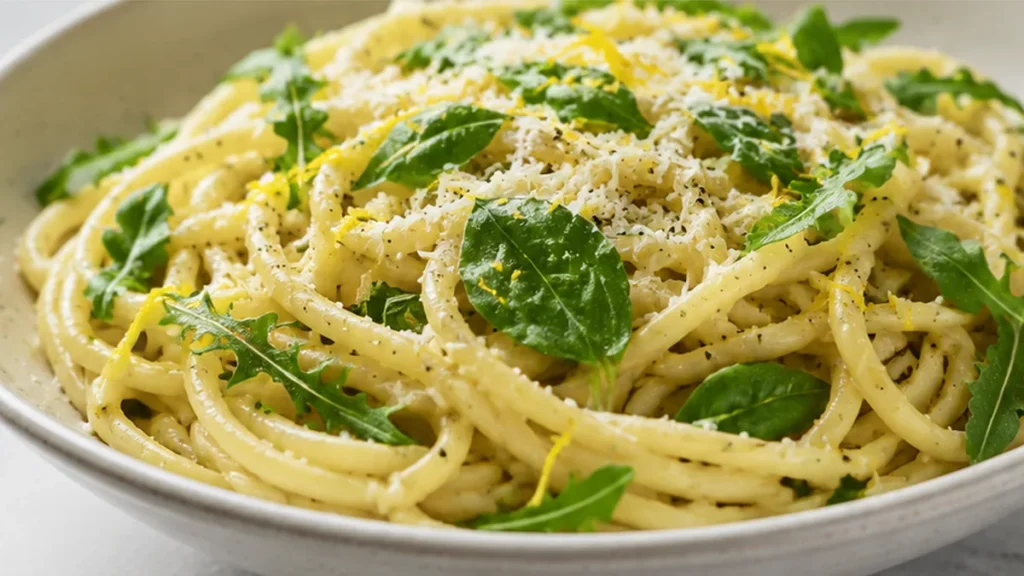
Cacio e pepe is a deceptively simple dish, relying on just a few high-quality ingredients for a rich experience. This cacio e pepe recipe elevates the classic Roman pasta with peppery arugula and bright lemon.
Key takeaways
- Master the emulsion by controlling heat when adding cheese.
- Use starchy pasta water as the key emulsifying agent.
- Toast black pepper in butter to release aromatics.
- Temper cheese off-heat to prevent clumping.
Creamy Cacio e Pepe with Arugula & Lemon
Ingredients
- 1 pound bucatini pasta
- 4 tablespoons salted butter
- 1 1/2 teaspoons freshly cracked black pepper
- 1 cup freshly grated parmesan cheese
- 1/2 cup fresh grated pecorino cheese
- couple handfuls baby arugula
- fresh basil
- lemon zest
Instructions
- Bring a large pot of salted water to a boil and cook pasta according to package directions until al dente. Just before draining, reserve 3/4 cup of the pasta cooking water. Drain.
- Melt 2 tablespoons butter in a large skillet over medium heat. Add the pepper and cook for 30 seconds to 1 minute, until toasted.
- Add the reserved pasta water and bring to a simmer over medium heat. Add the pasta and remaining butter. Reduce the heat to low and add the parmesan and pecorino, tossing until melted and the sauce is creamy.
- Remove from the heat, add the arugula, toss until the greens are wilted and the sauce coats the pasta, adding in more pasta water if needed to thin the sauce. Transfer to a bowl and serve topped with fresh basil and lemon zest. Enjoy!
Notes
The Technique: Mastering the Creamy Emulsion
The magic of Cacio e Pepe lies in creating a smooth, emulsified sauce using pasta water, cheese, and pepper. This recipe elevates it with butter, arugula, and lemon for a richer, brighter flavor. The key is temperature control and the starchy pasta water. As the bucatini cooks, it releases starch into the water. This starch acts as a binder, helping the fats from the butter and cheese to emulsify with the water, creating a creamy sauce rather than a clumpy mess. It’s crucial to temper the cheese; adding it directly to boiling water or very hot pasta will cause it to seize and clump. Instead, we create a slightly cooler environment by adding the cheese to the pasta and butter off the direct heat, using the residual heat and the starchy water to melt and combine. The freshly cracked black pepper is toasted slightly in the butter, releasing its aromatic oils and adding a pungent warmth that is essential to the dish.
Troubleshooting
- Clumpy Sauce: This usually happens if the cheese is added when the pan is too hot, causing the proteins to seize. To fix, remove the pan from the heat entirely before stirring in the cheese and pasta water. You can also try adding a splash more hot pasta water and whisking vigorously off the heat to break up the clumps.
- Sauce Too Thin: If your sauce is watery, it means there wasn’t enough starch or the ratio of liquid to cheese was off. Return the pan to low heat and stir continuously. The starch will continue to thicken the sauce. You can also add a little more grated cheese, a tablespoon at a time, off the heat, stirring constantly until it emulsifies.
- Pasta Overcooked: Cacio e Pepe relies on perfectly al dente pasta to achieve the right sauce consistency. Cook the pasta a minute less than the package directions, as it will continue to cook in the sauce. If it’s already mushy, unfortunately, there’s no real fix for the texture, but you can still salvage the flavor by proceeding with the sauce.
- Peppery Bite Too Strong/Weak: Adjust the amount of freshly cracked black pepper to your preference. Toasting the pepper in butter helps mellow its harshness and bring out its fragrance. For a milder flavor, use slightly less pepper or ensure it’s finely cracked. For a bolder flavor, use more and crack it coarsely.
Substitutions
- Pasta Type: If bucatini is unavailable, spaghetti or linguine are excellent substitutes. They have a similar surface area and texture that holds the sauce well. The result will be a slightly less
Pro tips
- Don’t rinse your pasta after draining; the starch is crucial for creating that creamy cacio e pepe sauce.
- If your sauce seems too thick, gradually add a tablespoon or two more of the reserved pasta water until it reaches your desired consistency. Keeping a little extra on hand is a sensible precaution.
- For a perfect emulsion, remove the skillet from direct heat when adding the cheeses. This prevents them from clumping and ensures a smooth, glossy sauce.
- Leftovers can be stored in an airtight container in the refrigerator for up to 2 days. Reheat gently in a skillet with a splash of water or broth to loosen the sauce.
This delightful cacio e pepe with arugula and lemon offers a fresh take on a beloved classic. It’s a testament to how simple ingredients can create extraordinary flavor. Enjoy this satisfying dish as a quick meal or a lovely addition to any dinner spread!
Frequently asked questions
Can I use pre-grated cheese?
For the creamiest sauce, it’s best to grate your Parmesan and Pecorino just before using. Pre-grated cheeses often contain anti-caking agents that can prevent them from melting smoothly, leading to a grainy or clumpy sauce. Freshly grated cheese melts beautifully and creates the essential emulsion.
How do I make the sauce creamy without cream?
The creaminess comes from a well-executed emulsion of cheese, butter, and starchy pasta water. The starch released from the pasta acts as a binder, while whisking vigorously off the heat prevents the cheese from clumping and helps create a smooth, luxurious sauce. Temperature control is key.
My sauce is clumpy, what did I do wrong?
The most common reason for a clumpy sauce is adding the cheese to pasta that is too hot or directly into boiling water. Always remove the pan from the heat before stirring in the cheese and pasta water. Gradually add the cheese while stirring constantly to allow it to melt smoothly into the starchy liquid.
Can I add other vegetables to this Cacio e Pepe?
This recipe includes arugula for a peppery bite and lemon zest for brightness. You can add other quick-cooking greens like spinach towards the end of cooking, or peas. Avoid vegetables that release a lot of water, as this can thin out your sauce. Ensure any additions are added just before serving.
More from Creamy Pasta Recipes →