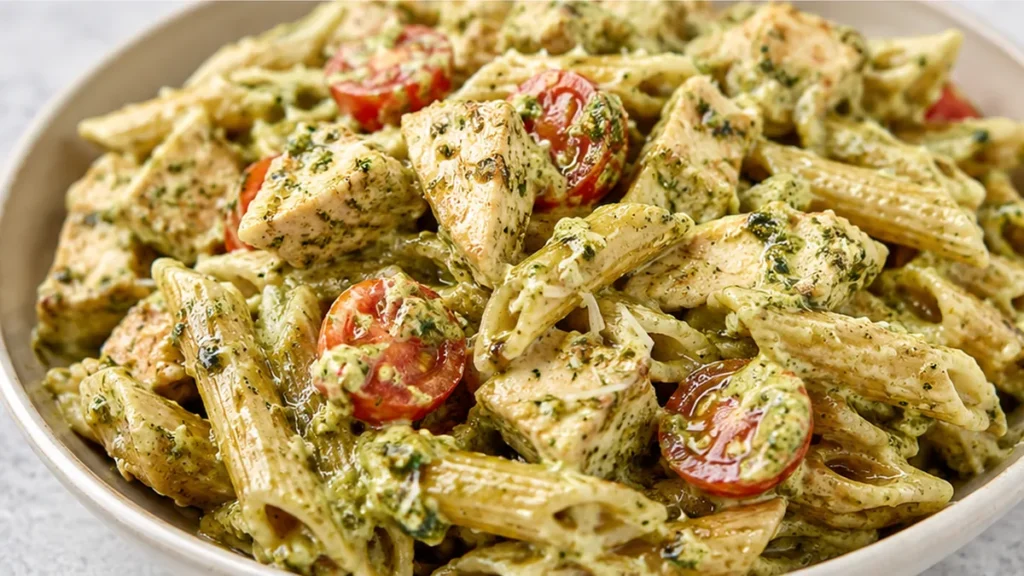
The secret to a truly bright pesto chicken pasta salad lies in layering fresh flavors and textures, ensuring every bite is exciting. This recipe brings together tender grilled chicken, a creamy pesto dressing, and fresh summer produce for a meal that’s both satisfying and light. This pesto chicken dish is designed for those who appreciate a meal that’s easy to assemble but doesn’t compromise on taste. It’s versatile enough for a quick weeknight dinner or a crowd-pleasing potluck addition.
Key takeaways
- Achieve a stable, creamy dressing by properly emulsifying the ingredients.
- Cook pasta al dente and rinse to prevent mushiness.
- Avoid overcooking the chicken to maintain tenderness.
- Taste and adjust seasoning before serving for optimal flavor balance.
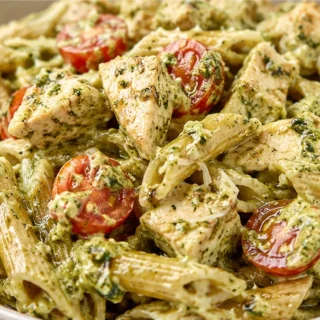
Creamy Pesto Chicken Pasta Salad
Ingredients
- 1 pound boneless skinless chicken, cut into bite size chunks
- 1/2 cup, plus 2 tablespoons basil pesto, homemade or store-bought
- 1/4 teaspoon red pepper flakes
- 1/3 cup extra virgin olive oil
- juice of 1 lemon
- 1/4 cup tahini or avocado oil mayo
- 1 tablespoon dijon mustard
- 2 teaspoons Worcestershire sauce
- 1/3 cup grated parmesan
- 1 pound short cut pasta
Instructions
- In a bowl, combine the chicken, 1/2 cup pesto, red pepper flakes, and a large pinch of salt. Set your grill, grill pan, or skillet to medium-high heat. Grill the chicken until lightly charred and cooked through, turning halfway through cooking, about 10 to 12 minutes.
- Meanwhile, make the dressing. In a large salad bowl, whisk together the olive oil, lemon juice, tahini or mayo, dijon, Worcestershire, parmesan, and a pinch each of red pepper flakes, salt, and pepper.
- Bring a large pot of salted water to a boil. Boil the pasta to al dente, according to package directions. Drain. Add the hot pasta and 2 tablespoons pesto and toss vigorously to combine. Add the chicken, tossing to combine.
- Season with freshly cracked pepper and salt. Serve warm or cold.
Video
Notes
The Technique That Makes It: Emulsifying the Pesto Dressing
The success of this creamy pesto chicken pasta salad hinges on creating a stable and flavorful emulsion for the dressing. The base of the dressing combines basil pesto, tahini (or avocado oil mayo), lemon juice, Dijon mustard, Worcestershire sauce, and olive oil. When these ingredients are vigorously whisked together, an emulsion forms. An emulsion is a mixture of two liquids that normally don’t mix, like oil and water-based ingredients (lemon juice, mustard). The lecithin in the Dijon mustard and the proteins in the tahini/mayo act as emulsifiers, helping to bind the oil and water components. Proper emulsification ensures a creamy, cohesive dressing that coats the pasta and chicken evenly, rather than a greasy, separated mess. The key is to add the olive oil gradually while whisking continuously. This process breaks the oil into tiny droplets, which are then suspended in the water-based ingredients, creating a smooth, thick dressing. The red pepper flakes add a subtle warmth that complements the richness of the pesto and the tang of the lemon.
Troubleshooting
- Problem: Dressing is too thick and clumpy. Fix: Gradually whisk in a tablespoon of water or more lemon juice at a time until the desired consistency is reached.
- Problem: Dressing has separated and looks oily. Fix: Whisk vigorously to re-emulsify. If separation persists, try adding a little more Dijon mustard or tahini/mayo and whisking again.
- Problem: Pasta is mushy. Fix: Ensure pasta is cooked al dente (slightly firm to the bite). Overcooked pasta will absorb too much dressing and become soft. Rinse cooked pasta under cold water to stop the cooking process and prevent sticking.
- Problem: Chicken is dry. Fix: Do not overcook the chicken. Sear the chicken chunks over medium-high heat for a few minutes per side until just cooked through. Alternatively, poach or bake the chicken and then dice it.
Substitutions
- Basil Pesto: Sun-dried tomato pesto or a different herb-based pesto can be used. The flavor profile will change but should still be delicious.
- Tahini/Avocado Oil Mayo: Full-fat Greek yogurt can be used for a lighter, tangier dressing. The texture will be slightly less rich.
- Lemon Juice: Lime juice can be substituted for a different citrus note. Use sparingly as it can be more potent.
- Parmesan Cheese: Pecorino Romano or a sharp white cheddar can be used. The saltiness and sharpness will vary the overall taste.
Pro tips
- For perfectly cooked chicken, ensure an internal temperature of 165°F (74°C) using a meat thermometer.
- If the dressing seems too thick, thin it out with a tablespoon or two of the reserved pasta water.
- Store leftover pesto chicken pasta salad in an airtight container in the refrigerator for up to 3 days. It’s excellent served cold the next day.
This pesto chicken pasta salad offers a delightful balance of fresh ingredients and robust flavors. Feel free to customize it with your favorite vegetables or a sprinkle of fresh herbs. Enjoy this versatile dish!
Frequently asked questions
Can I make this pasta salad ahead of time?
Yes, this pasta salad can be made a few hours ahead of time. The flavors meld beautifully as it sits. However, it’s best to add the pesto dressing just before serving if you are making it more than 4 hours in advance to prevent the pasta from becoming too soft.
What kind of pasta is best for this salad?
Short-cut pasta shapes with nooks and crannies, like rotini, fusilli, penne, or farfalle, are ideal. These shapes hold onto the creamy pesto dressing and small ingredients like chopped herbs or chicken pieces effectively.
How can I make the pesto chicken more flavorful?
For more flavorful chicken, marinate the chicken chunks in a tablespoon of pesto and a pinch of salt and pepper for at least 30 minutes before cooking. Searing the chicken until golden brown also adds a depth of flavor through the Maillard reaction.
Is it okay to use store-bought pesto?
Absolutely. Store-bought basil pesto is a convenient and delicious option for this recipe. While homemade pesto offers a fresher taste, good quality store-bought versions will still yield a fantastic pasta salad.
More from Chicken Pasta Recipes →