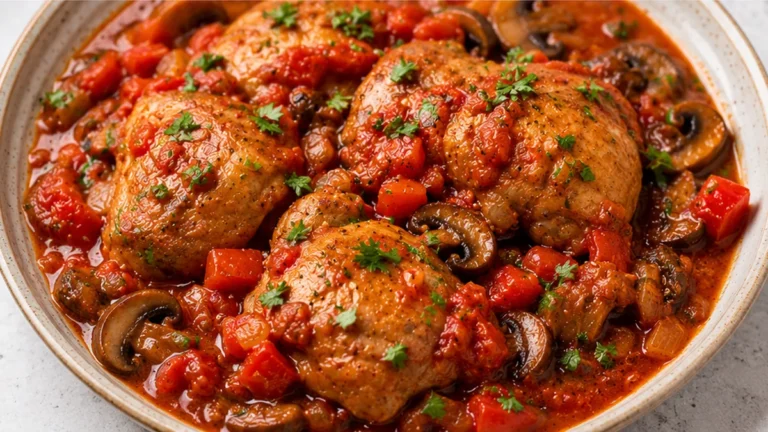
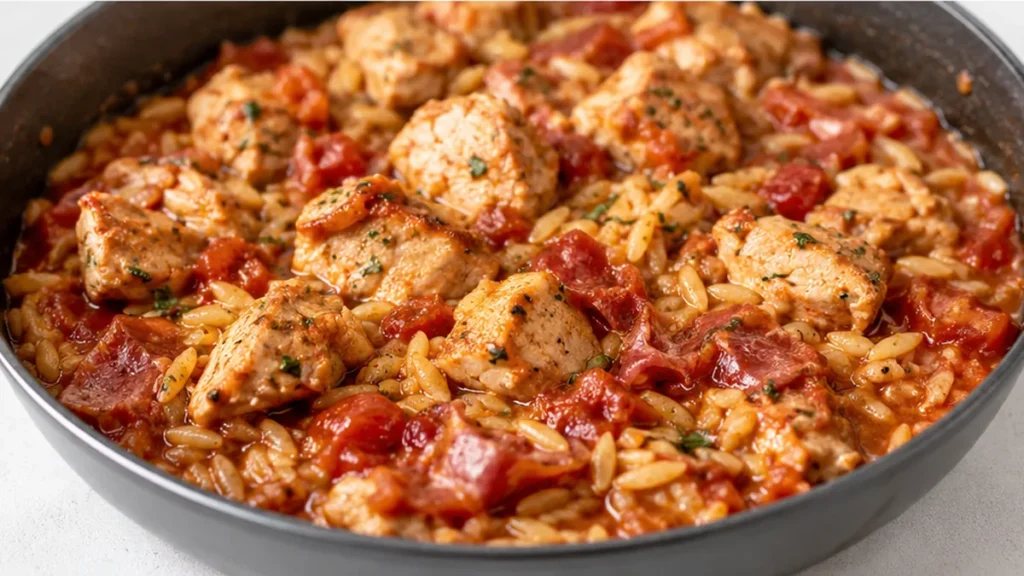
The secret to a truly exceptional skillet chicken and orzo lies in building layers of flavor directly in one pan, ensuring every bite is rich and satisfying. This method simplifies cleanup without sacrificing taste, making it ideal for busy weeknights or a relaxed weekend meal. This skillet chicken recipe stands out with the bright sweetness of sun gold tomatoes and the irresistible crunch of prosciutto, perfectly balancing creamy orzo and tender chicken. Skipping the toasting of the orzo makes a noticeable difference in the final texture; a brief toasting step is crucial for depth.
Key takeaways
- Sear chicken properly for flavor and texture.
- Cook orzo directly in the skillet to absorb sauce flavors.
- Manage liquid levels carefully to avoid mushy pasta.
- Rest chicken briefly before serving for optimal tenderness.
” Skillet Tomato Chicken & Orzo”
Ingredients
- 6 boneless chicken breasts or thighs
- Salt and black pepper
- 1 tablespoon all purpose or gluten free flour
- 8 slices prosciutto
- 4 tablespoons salted butter
- 2 shallots, chopped
- 4 cloves garlic, chopped
- 2 tablespoons fresh thyme
- 6 fresh sage leaves
- 1 cup dry orzo pasta
Instructions
- Preheat the oven to 400°F. Season the chicken with salt and pepper, then lightly coat with flour.
- Heat a large oven-safe skillet over medium-high heat. Cook the prosciutto until crisp, then remove and set aside.
- In the same skillet, add 3 tablespoons of butter. Add the chicken, shallots, garlic, and thyme. Sear the chicken until golden, about 3–5 minutes per side.
- Add 1 tablespoon butter, the sage, orzo, 1 1/2 cups of tomatoes, and season with chili flakes. Cook for 2 minutes, until the orzo is lightly toasted.
- Pour in the wine and 2 cups of water or broth. Bring to a boil and cook for 3–5 minutes. Stir in the cream and parmesan. Transfer the skillet to the oven and bake, uncovered, for 10 minutes, until the sauce is bubbling and the chicken is cooked through.
- Serve topped with 1/2 cup fresh tomatoes, basil, thyme, and the crispy prosciutto.
Notes
The Technique Behind Skillet Tomato Chicken & Orzo
The success of this skillet chicken and orzo dish hinges on a few key culinary techniques that ensure tender chicken, perfectly cooked orzo, and a rich, cohesive sauce. First, the initial searing of the chicken is crucial for developing flavor through the Maillard reaction. This browning process creates complex aromas and a desirable crust. Ensure the skillet is adequately heated before adding the chicken, and avoid overcrowding the pan, which would lead to steaming rather than searing. Patting the chicken dry before seasoning and flouring helps achieve a better sear. The flour not only aids in browning but also acts as a slight thickener for the sauce later on.
Secondly, the management of heat and liquid is vital for the orzo. The orzo is cooked directly in the skillet with the chicken and other aromatics. This method, similar to a risotto, allows the pasta to absorb the flavors of the pan drippings, shallots, garlic, herbs, and the eventual tomato-based liquid. It’s important to manage the liquid level; too much can result in mushy orzo, while too little can lead to undercooked pasta. Stirring the orzo periodically helps prevent sticking and encourages even cooking and starch release, contributing to the sauce’s creamy texture. The prosciutto, crisped separately, adds a salty, savory depth and a textural contrast that complements the tender chicken and soft orzo.
Troubleshooting
- Problem: Chicken is tough or dry. Fix: Ensure chicken is not overcooked. Use thighs for more forgiving results, or if using breasts, cook them to an internal temperature of 165°F (74°C) and let them rest for 5-10 minutes before slicing. Avoid high heat for extended periods after the initial sear.
- Problem: Orzo is mushy or gummy. Fix: Measure the liquid accurately. Too much liquid or over-stirring can break down the orzo. Reduce heat slightly during the orzo cooking phase and stir only occasionally to prevent sticking, allowing the pasta to cook gently.
- Problem: Sauce is too thin. Fix: After the orzo is cooked, increase the heat slightly and allow the sauce to simmer and reduce for a few minutes. The flour on the chicken and the starches released by the orzo will help thicken it. You can also stir in a small amount of additional butter or a cornstarch slurry if necessary.
- Problem: Prosciutto is not crispy. Fix: Cook the prosciutto in a separate, dry skillet over medium heat until it reaches your desired crispness. Drain it on paper towels to remove excess fat and maintain its crisp texture before crumbling or arranging over the finished dish.
Substitutions
- Chicken: Boneless, skinless chicken thighs can be substituted for breasts. They will yield a more tender and moist result due to their higher fat content.
- Prosciutto: Pancetta or good quality bacon can be used instead of prosciutto. Expect a slightly smokier flavor profile and potentially a greasier texture.
- Orzo: Small pasta shapes like ditalini or acini di pepe can be used. Adjust cooking time according to package directions, as they may absorb liquid differently.
- Fresh Thyme/Sage: Dried herbs can be substituted, using about one-third the amount of fresh (e.g., 1 teaspoon dried thyme for 1 tablespoon fresh). Add dried herbs earlier in the cooking process to allow them to rehydrate and release flavor.
Pro tips
- Sear the chicken thoroughly for a golden crust, which adds immense flavor to the skillet chicken.
- Don’t overcrowd the skillet when browning the chicken; work in batches if necessary to ensure proper searing.
- The internal temperature for cooked chicken should reach 165°F (74°C) to ensure food safety.
- Store leftovers in an airtight container in the refrigerator for up to 3 days. Reheat gently on the stovetop with a splash of broth to rehydrate the orzo.
This Skillet Sun Gold Tomato Chicken and Orzo is a comforting and elegant meal that proves delicious dinners don’t need endless dishes. Enjoy the rich flavors and effortless preparation!
Frequently asked questions
Can I use chicken thighs instead of breasts?
Yes, boneless, skinless chicken thighs are an excellent substitute for chicken breasts. They tend to be more forgiving and remain moister during cooking due to their higher fat content, resulting in a very tender dish.
How do I prevent the orzo from becoming mushy?
Accurate liquid measurement is key. Stir the orzo occasionally to prevent sticking, but avoid constant agitation. Ensure the heat is moderate during the orzo’s cooking time to allow it to absorb liquid evenly without overcooking.
What can I use if I don’t have prosciutto?
Crispy pancetta or good quality bacon can be used as a substitute for prosciutto. They will add a similar salty, savory element, though bacon may introduce a distinct smoky flavor.
Can I make this dish ahead of time?
This dish is best enjoyed fresh, as the orzo can become overly soft and the chicken may dry out upon reheating. However, components like the crisped prosciutto can be prepared in advance.
More from Chicken Pasta Recipes →