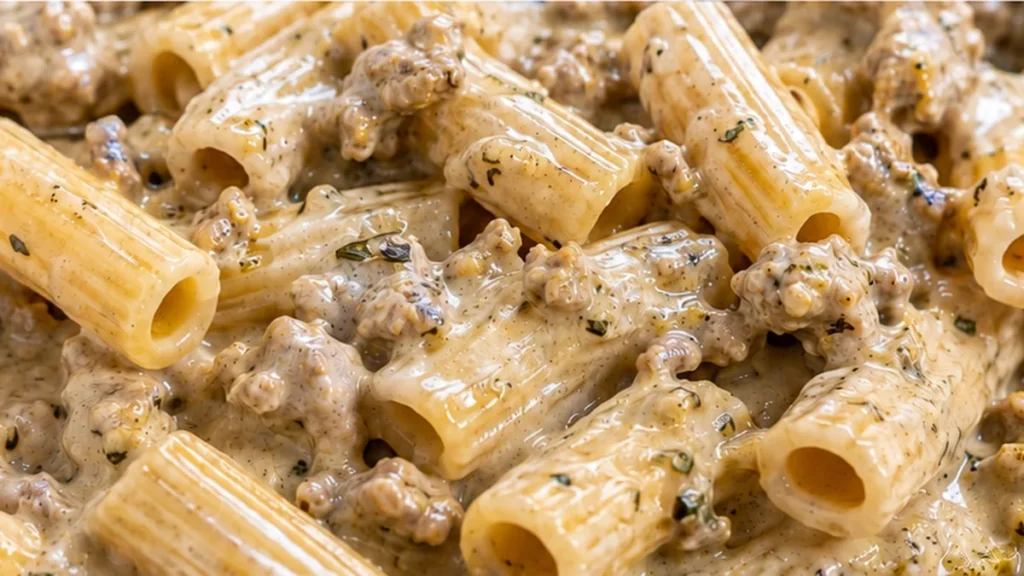
This rigatoni recipe is the ultimate weeknight savior, delivering creamy, comforting flavor with minimal effort. Forget the multiple pots and pans; this one-dish wonder comes together in under 30 minutes, making it perfect for busy evenings. We’ve packed it with savory ground turkey, fresh zucchini, and a luscious sauce that coats every piece of pasta perfectly. Plus, with a simple swap, it’s easily made gluten-free. The key to this rigatoni recipe’s success is cooking the pasta directly in the sauce, allowing it to absorb all the delicious flavors and thicken the sauce naturally. This method not only saves on cleanup but ensures a rich, cohesive dish every time.
Key takeaways
- Crush the fennel seeds before cooking so their aromatic oil releases and the lean turkey reads like real Italian sausage.
- Treat 93/7 turkey with a quarter teaspoon of baking soda per pound to keep it tender at the safe 74 C (165 F) target.
- Salt the zucchini half-moons for 30 minutes and pat dry so they sear golden instead of steaming into mush.
- Brown the turkey in an uncrowded pan and drain released liquid, since crowding drops the heat below the point where browning happens.
Easiest Creamy Rigatoni Recipe!
Ingredients
- 1 tablespoon avocado oil
- 1 lb ground turkey
- 3 garlic cloves, minced
- 1 teaspoon Italian seasoning
- ½ teaspoon fennel seeds, crushed
- ¼ teaspoon ground sage
- ½ teaspoon fine salt
- ⅛ teaspoon black pepper
- 1 medium zucchini, sliced into half-moons
Instructions
- In a Dutch oven or large skillet over medium-high heat, heat the oil. Add the ground turkey, minced garlic, and all seasonings. Cook until the turkey is crumbled and cooked through, about 6-8 minutes.
- With heat still on medium-high, add the zucchini, uncooked pasta, vodka sauce, and 2 cups of water or broth. Stir to combine.
- Cover the pot and cook for 10-15 minutes, stirring once or twice.
- After 10 minutes, test the pasta for doneness. If not cooked to your liking, cover and cook a few more minutes.
- Once pasta is cooked, stir in spinach until wilted, about 1 minute.
Video
Notes
Building the sausage flavor from ground turkey, fennel, and sage
The rigatoni recipe leans on one clever trick: it turns plain ground turkey into something that tastes like Italian sausage without any casing, curing, or pork. That flavor comes almost entirely from three ingredients working together. Fennel seeds are the signature note in sausage, and they carry a compound called trans-anethole, which makes up roughly 70 percent of fennel’s aromatic oil and gives that sweet, licorice-adjacent warmth. Crushing the half teaspoon of seeds is not optional. Whole seeds keep their oils locked inside a hard shell, so you get little pockets of intensity and long stretches of nothing. Crush them coarsely with the flat of a knife or a mortar, and the ground sage plus Italian seasoning fill in the herbal backbone.
Add the crushed fennel, sage, and Italian seasoning early, while the turkey is still rendering, so the fat can carry the fat-soluble aromatics through the whole pan.
Why 93/7 turkey turns dry and rubbery, and the pH fix that saves it
Lean ground turkey, usually sold as 93/7 or even 99/1, has almost none of the fat that keeps beef juicy, so it overcooks the instant its proteins tighten. Poultry is safe at 74 C (165 F) per the USDA Food Safety and Inspection Service, but turkey muscle proteins begin seizing and squeezing out water well before that, which is why the crumbles go from moist to chalky in about a minute. Serious Eats popularized the fix used by America’s Test Kitchen: toss one pound of turkey with a quarter teaspoon of baking soda dissolved in a tablespoon of water and let it sit 15 minutes before it hits the tablespoon of avocado oil. Raising the meat’s pH keeps the proteins from bonding as tightly, so they hold moisture and stay tender even at a safe internal temperature.
Avocado oil earns its spot here for a practical reason: its smoke point sits around 250 C (480 F), so it takes high heat without turning acrid while the turkey browns.
Getting real browning on lean crumbles
Browning is where the savory depth lives, and it stalls the moment the pan crowds. Water pools, the temperature drops below the roughly 150 C needed for the Maillard reaction, and the turkey steams gray instead of searing brown. Spread the meat in one layer, leave it undisturbed for two to three minutes, then break it up. Drain any released liquid rather than boiling it off, since a pound of 93/7 turkey can shed a surprising amount of water that will fight you the whole time.
Salting the zucchini so the half-moons sear instead of steam
Zucchini is more than 90 percent water, which is exactly why the half-moons in this dish so often collapse into a soggy, gray mush that waters down everything around them. The fix, backed by Serious Eats testing, is to salt the slices before they ever touch the pan. Toss one medium zucchini’s half-moons with about a teaspoon of kosher salt, set them in a colander for 30 minutes, then pat them fully dry. That single step pulls out enough internal moisture that the pieces sear golden instead of stewing in their own liquid. Cut them a genuine 1/4 to 1/2 inch thick; anything thinner turns limp before it can brown, and thicker pieces stay raw in the center.
Add the dried half-moons to a hot, uncrowded pan and toss only occasionally, aiming for one hard sear on a cut face rather than even color all over.
Timing the zucchini against the turkey
Because salted, dried zucchini needs only 8 to 10 minutes to reach tender-not-mushy, sear it separately or add it toward the end. Dumping raw slices into the finished turkey means either scorched meat or waterlogged squash, since the two ingredients cook on completely different clocks.
Four failures that ruin this turkey rigatoni, and the exact cause of each
Most problems with this dish trace back to moisture and heat, not seasoning. Fixing the mechanical cause matters more than adding another pinch of anything.
- Flavorless, bland crumbles: the fennel seeds went in whole, so their trans-anethole oil never released. Crush them before cooking and add all the spices while fat is still rendering.
- Dry, rubbery turkey: the lean meat cooked past the point where its proteins seized. Use the quarter-teaspoon baking soda treatment and pull the pan the moment the pink is gone.
- Watery, gray zucchini: the slices were added raw and unsalted, so they released water and steamed. Salt for 30 minutes, pat dry, and sear in an uncrowded pan.
- Nothing browns at all: the pan was overcrowded and the temperature dropped below the roughly 150 C the Maillard reaction needs. Work in batches and drain released liquid.
Swapping the turkey, fennel, and zucchini without breaking the dish
Every ingredient here can flex, but each swap has a trade-off worth knowing before you commit. The goal is to keep the sausage-style flavor and the tender-crisp vegetable texture that define the recipe.
- Ground chicken for the turkey: nearly identical lean-protein behavior and even milder flavor, so lean harder on the crushed fennel and sage; expect slightly less savory depth.
- Ground pork or real Italian sausage: far juicier thanks to 20 to 30 percent fat, and you can drop the added fennel and sage since sausage already contains them; the trade-off is a heavier, richer dish.
- Yellow summer squash for the zucchini: same water content and the same salting requirement, with a slightly sweeter, softer result that browns a touch faster.
- Ground fennel bulb or fennel pollen for the seeds: gentler and less licorice-forward; pollen is more concentrated, so use a pinch, while chopped bulb adds moisture you must cook off first.
For more low-effort weeknight pasta ideas that use this same lean-meat method, our 30-minute one-pot ground turkey pasta is a natural next cook, and the guide to searing zucchini without sogginess goes deeper on the salting step.
The one detail that separates this from every other creamy pasta
What makes this particular dish unusual is that it reverse-engineers Italian sausage from scratch inside the pan, rather than buying it pre-made. Almost every creamy rigatoni you will find starts with either casing sausage or plain browned beef; this one uses crushed fennel seeds, ground sage, and Italian seasoning on lean turkey to hit the same flavor at a fraction of the fat. That single decision is why the recipe reads as indulgent while the ingredient list stays genuinely light. It also means the seasoning is fully in your control, so you can push the fennel forward or dial the sage back without hunting for a different sausage at the store. The USDA safe minimum temperature chart confirms the 74 C target that keeps the turkey safe, and the Serious Eats sauteed zucchini technique backs the salting method that keeps the vegetable from turning to mush.
Cooling, storing and reviving the leftover creamy rigatoni so the sauce comes back glossy
Leftover creamy turkey rigatoni keeps for three to four days in the fridge, but only if you cool it fast and reheat it low. Spread it in a shallow container so the center drops below 40F (4C) within two hours, then cover it tight. The starch that made the sauce cling on night one is the same starch that seizes into a paste as it chills. That is why day-two rigatoni looks dry and clumped even though nothing evaporated. The fix is liquid plus gentle heat, never a blast in the microwave on full power, which splits the dairy and drives the ground turkey past a pleasant texture.
Reheat on the stovetop in a nonstick or stainless skillet over medium-low. Add a splash of milk, cream, or reserved cooking water, roughly two tablespoons per cup of pasta, and stir constantly until the coating loosens and turns silky again. The added moisture rehydrates the retrograded starch and re-emulsifies the fat and water that separated in the cold. Keep the burner gentle: dairy sauces break and turn grainy above a bare simmer. If you must microwave, use 50 percent power in 45-second bursts, stirring between each, with that same splash of liquid stirred in first. Reheat any leftovers to 165F (74C), the United States Department of Agriculture safe minimum for both poultry and reheated dishes, before serving.
Scaling this turkey rigatoni for a crowd without a watery pan or a dry batch
Doubling this rigatoni to serve eight is a ratio problem, not a math problem. The pasta water is the trap. Following guidance from America’s Test Kitchen, two pounds of dried rigatoni cook fine in the same four quarts of water and one tablespoon of salt you would use for one pound; it is the salt-to-water ratio, roughly 2 percent by weight per Serious Eats, that seasons the pasta, not the salt-to-pasta ratio. Just stir more often at the start so the tubes do not clump, and reserve a full cup of that starchy water before draining.
The turkey and zucchini need room, not just volume. Two pounds of ground turkey dumped into one skillet steams instead of browns, and you lose the savory fond that carries the fennel-and-sage flavor. Brown it in two batches, or move to a wide 12-inch pan or Dutch oven so the meat sits in a single layer. Do the same with the zucchini half-moons: crowd them and they weep water that thins the cream. Scale the aromatics conservatively; tripling the garlic and Italian seasoning can turn assertive into harsh, so add three-quarters of the calculated amount, then taste and adjust. One pound of dried pasta feeds about four as a main and yields roughly eight cups cooked, per portioning guidance from What’s in the Pan, so plan a pound for every four hungry eaters and finish the sauce with warm reserved water a few tablespoons at a time until it just coats.
Pro tips
- For a gluten-free version, use your favorite gluten-free rigatoni or penne.
- Ensure your heat is medium-high when cooking the turkey and sauce to properly cook the pasta.
- Don’t skip swirling the water/broth into the empty vodka sauce jar; it gets every last bit of flavor!
- If you don’t have vodka sauce, any marinara or tomato-based sauce will work, but you may need to adjust seasonings.
Enjoy this incredibly simple yet satisfying rigatoni recipe. It’s proof that delicious, homemade meals don’t need to be complicated!
Frequently asked questions
Can I use whole fennel seeds instead of crushing them?
You can, but the flavor suffers noticeably. Whole seeds keep their trans-anethole oil trapped inside a hard shell, so you get scattered bursts of licorice-sweet flavor and long bland stretches. Crushing the half teaspoon coarsely with a knife or mortar releases those oils evenly, which is what makes the lean turkey actually taste like sausage.
Do I really have to salt the zucchini first?
For golden, non-soggy half-moons, yes. Zucchini is over 90 percent water, and unsalted slices release that liquid into the pan and steam gray. Salting for 30 minutes and patting dry pulls the moisture out first, so the pieces sear golden. If you are truly short on time, at least cut them thick and use a very hot, uncrowded pan.
How do I keep the ground turkey from drying out?
Lean turkey seizes and squeezes out water before it even reaches the safe 74 C (165 F). Toss one pound with a quarter teaspoon of baking soda dissolved in a tablespoon of water, rest 15 minutes, then cook. Raising the meat’s pH keeps proteins from tightening, so it stays moist. Just as important, pull the pan the moment the pink disappears.
Can I substitute ground chicken or pork for the turkey?
Both work. Ground chicken behaves almost identically to turkey but tastes even milder, so lean harder on the crushed fennel and sage. Ground pork or real Italian sausage is far juicier thanks to its higher fat content, and if you use pre-made sausage you can skip the added fennel and sage entirely since it already contains those seasonings.
More from Creamy Pasta Recipes →