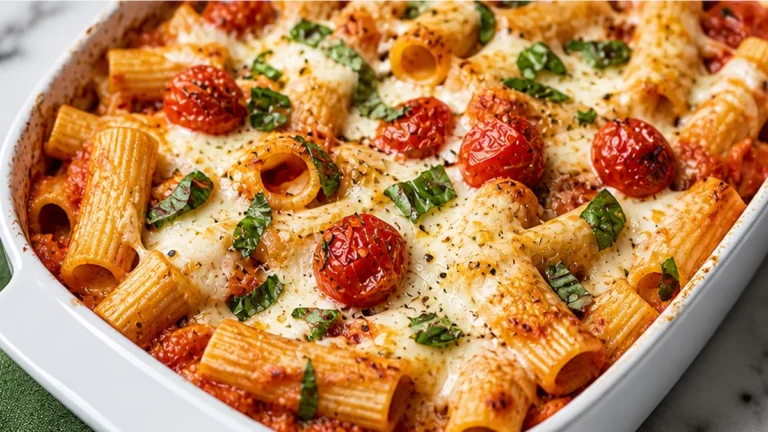
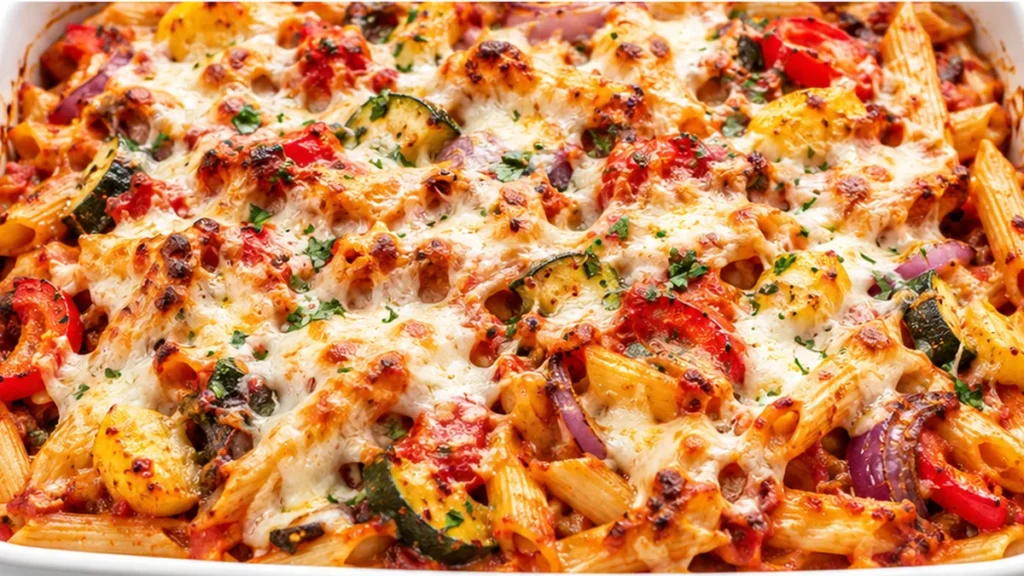
This roasted veggie baked penne combines pasta with roasted vegetables for a satisfying meal. It’s a straightforward recipe that highlights fresh ingredients.
Key takeaways
- Roasting vegetables enhances their flavor through caramelization.
- Cook pasta al dente to prevent mushiness after baking.
- Combine cheeses like mozzarella and parmesan for a rich flavor.
- Balance sauce and vegetable moisture for optimal texture.
Roasted Veggie Baked Penne
Ingredients
Instructions
- Preheat oven to 400ºF (200ºC). Dice red onion, zucchini, yellow squash, and bell pepper into 1-inch pieces.
- Spread diced vegetables on a baking sheet, drizzle with olive oil, salt, and pepper. Toss to coat.
- Roast vegetables for 45 minutes, stirring halfway, until soft and caramelized.
- Finely dice yellow onion and sauté in a pot with butter until soft. Add crushed tomatoes and stir.
- Simmer sauce for about 30 minutes while vegetables finish roasting, stirring occasionally.
- Boil penne pasta in salted water until tender. Drain, then return to pot.
- Stir 1 cup of red sauce into the drained penne. Combine roasted vegetables with the remaining red sauce.
- Layer the casserole: half the sauced penne, half the ricotta mixture, half the roasted veggie sauce. Repeat layers.
Understanding the Role of Roasted Vegetables in Baked Penne
Roasting vegetables before adding them to baked dishes like penne enhances their flavor through caramelization. This process occurs when the natural sugars in the vegetables break down under high heat, typically around 200°C (400°F), resulting in a sweeter, more complex taste. For optimal results, roast vegetables until they are tender and slightly browned, which usually takes about 25-30 minutes. This not only intensifies their flavor but also helps to reduce moisture content, preventing the dish from becoming soggy.
How to Ensure Perfectly Cooked Pasta
The pasta used in roasted veggie baked penne should be cooked al dente before baking. This means cooking it for about 2-3 minutes less than the package instructions suggest, usually around 8-10 minutes in boiling salted water. This is crucial because the pasta will continue to cook in the oven, absorbing moisture from the sauce and vegetables. If overcooked initially, the pasta may become mushy after baking, compromising the dish’s texture.
Choosing the Right Cheese for Optimal Flavor
Cheese plays a pivotal role in the flavor profile of baked penne. A combination of cheeses can deliver a rich, creamy texture and complex flavors. For instance, using a mix of mozzarella and ricotta provides creaminess, while parmesan adds a sharp, nutty element. It’s important to consider the melting properties of the cheese; mozzarella melts beautifully, while parmesan creates a nice crust when baked. Aim for about 150-200 grams of cheese per serving for the best results.
Balancing Sauce and Vegetables
A common issue in baked pasta dishes is an imbalance between sauce and vegetables, leading to a dry or overly wet dish. To achieve the right consistency, ensure that your sauce is neither too thick nor too watery. A good rule of thumb is to use approximately 250-300 ml of sauce per 400 grams of pasta. Additionally, consider the moisture content of the roasted vegetables; if they release a lot of liquid, reduce the sauce slightly to maintain balance. This will help ensure that each bite is flavorful and well-integrated.
Understanding the Impact of Ingredient Quality on Flavor
The flavor profile of roasted veggie baked penne is significantly influenced by the quality of the ingredients used. Fresh, seasonal vegetables not only enhance the taste but also contribute to the overall nutritional value of the dish. For instance, using ripe tomatoes, vibrant bell peppers, and fresh herbs can elevate the dish’s flavor complexity. The Maillard reaction, which occurs during the roasting of vegetables, adds depth through caramelization, creating a sweet and savory balance. When selecting vegetables, consider their peak seasonality; for example, zucchini and eggplant are best in summer, while root vegetables like carrots and sweet potatoes shine in the fall and winter. This consideration ensures that the dish remains delicious and vibrant throughout the year.
Batch Scaling for Large Gatherings
When planning to serve roasted veggie baked penne for a larger group, scaling the recipe can be straightforward, but it requires attention to detail. Doubling or tripling the ingredients is often simple, but keep in mind that cooking times and temperatures may need adjustment. A larger batch may require a longer baking time, as the heat may not circulate as efficiently in a crowded oven. It’s also essential to use larger baking dishes, which can affect how the pasta and vegetables cook. For example, a deeper dish may require additional time to ensure the center heats through without burning the top. Always check for doneness by testing the pasta and ensuring the vegetables are tender.
Equipment Choices and Their Effects on Cooking
The choice of equipment can significantly affect the outcome of roasted veggie baked penne. Using a high-quality oven can ensure even heat distribution, which is crucial for achieving perfectly roasted vegetables. If using a convection oven, you may need to reduce the baking temperature by about 20°C (approximately 25°F) to prevent over-browning. Additionally, the type of baking dish can influence the cooking process; glass or ceramic dishes retain heat well, while metal pans may conduct heat differently, potentially leading to uneven cooking. Consider also the size of the pot used for boiling pasta; a larger pot allows for better heat retention and prevents the pasta from sticking together.
Serving Suggestions and Flavor Pairings
Serving roasted veggie baked penne can be enhanced with thoughtful pairings that complement its flavors. A simple green salad dressed with a light vinaigrette can provide a refreshing contrast to the richness of the baked pasta. For added texture, consider topping the dish with toasted breadcrumbs or a sprinkle of nuts, which adds a delightful crunch. Wine pairing can also elevate the meal; a light-bodied red, such as Pinot Noir, pairs well with the roasted vegetables, while a crisp white like Sauvignon Blanc can enhance the dish’s freshness. Additionally, serving it with crusty bread can help soak up any extra sauce, making for a satisfying meal.
Understanding the Role of Pasta Shape in Texture and Sauce Adherence
The shape of the penne pasta plays a crucial role in the overall texture and sauce adherence of the roasted veggie baked penne. Penne, with its tubular shape and ridges, is designed to trap sauce and small bits of vegetables, enhancing each bite. When baked, the pasta absorbs flavors from the sauce and roasted vegetables, creating a cohesive dish. For optimal results, cook the pasta until it is al dente, as it will continue to soften during baking. This balance ensures that the pasta retains its structure while soaking up the flavors.
Make-Ahead Strategies for Roasted Veggie Baked Penne
Preparing roasted veggie baked penne ahead of time can save you effort on busy days. To make it in advance, follow these steps: roast the vegetables and cook the pasta, then combine them with the sauce and cheese. Instead of baking immediately, store the mixture in a covered dish in the refrigerator for up to 24 hours. When ready to serve, simply preheat the oven and bake until bubbly. This method allows flavors to meld, resulting in an even more delicious dish. If freezing, ensure the dish is well-wrapped to prevent freezer burn, and bake directly from frozen, adding extra time to the cooking process.
Seasonal Adjustments for Optimal Flavor
The beauty of roasted veggie baked penne lies in its adaptability to seasonal ingredients. In spring, consider using asparagus and peas for a fresh taste, while summer can bring in zucchini and bell peppers. Fall might call for roasted butternut squash and Brussels sprouts, and winter can include hearty root vegetables like carrots and parsnips. Adjusting your vegetable selection not only enhances the flavor profile but also adds nutritional variety. Additionally, using seasonal produce often results in better flavor and texture, as these ingredients are typically fresher and more vibrant.
Understanding the Role of Roasted Vegetables in Texture and Flavor
The combination of roasted vegetables in baked penne significantly enhances both texture and flavor. When vegetables are roasted, they undergo caramelization, which brings out their natural sugars and adds a rich depth of flavor. This Maillard reaction occurs at temperatures above 120°C (248°F), creating complex flavor compounds. For optimal results, consider roasting vegetables like bell peppers, zucchini, and eggplant until they are tender and slightly charred, which can take around 20-30 minutes. This not only intensifies their flavors but also contributes to a pleasant contrast in texture against the pasta. Aiming for a balance of softer and slightly crisp vegetables can create a more dynamic dish. Additionally, the moisture released during roasting helps to infuse the pasta and sauce with flavor, making each bite satisfying.
Batch Scaling for Large Gatherings
Scaling roasted veggie baked penne for larger gatherings requires careful consideration of ingredient proportions and cooking times. A standard recipe serving four can typically be multiplied by two or three, depending on the number of guests. However, when increasing the batch size, it’s essential to adjust the roasting time for the vegetables. For instance, if roasting in a single layer, keep the same cooking time, but if using multiple layers or larger pans, you may need to increase the time by 10-15 minutes to ensure even cooking. Additionally, remember to use larger pots for boiling pasta and ensure your baking dish can accommodate the increased volume without overcrowding, which can lead to uneven cooking. This ensures that every serving retains the same delicious flavors and textures as the smaller batch.
Pro tips
Pro tip: Best served immediately while hot!
Frequently asked questions
Can I use frozen vegetables instead of fresh?
Yes, you can use frozen vegetables, but be sure to thaw and drain them before roasting to avoid excess moisture. This helps maintain the desired texture in your baked penne.
How can I make this dish vegan?
To make roasted veggie baked penne vegan, substitute dairy cheese with plant-based cheese alternatives and use a vegan pasta sauce. Ensure the pasta is also egg-free, typically made with just flour and water.
What types of pasta work best for this recipe?
While penne is traditional, you can use other pasta shapes like rigatoni or fusilli, which hold sauce and vegetables well. Just ensure they are cooked al dente before baking.
How long can I store leftovers?
Leftover roasted veggie baked penne can be stored in the refrigerator for up to 3-4 days. Reheat it in the oven or microwave until heated through, adding a splash of water if it seems dry.
More from Baked Pasta Recipes →