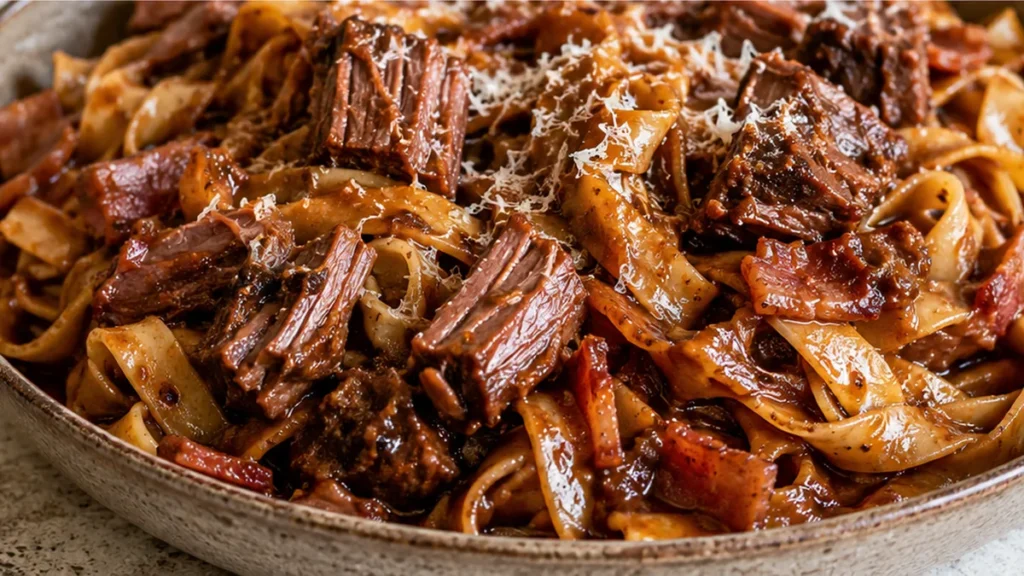
The secret to truly tender short rib pasta lies in the slow braising process, allowing the beef to become fall-off-the-bone soft while infusing a deep, complex flavor into the sauce. This short rib pasta recipe transforms humble ingredients into a luxurious meal that’s perfect for special occasions or a cozy Sunday dinner. A parmesan rind during the braising not only deepens the umami but also thickens the sauce beautifully, making it cling to every strand of pasta. This recipe is designed to be flexible, offering instructions for slow cooker, Instant Pot, and stovetop methods, so you can choose what works best for your schedule.
Key takeaways
- Sear short ribs thoroughly for deep flavor.
- Braise low and slow to break down collagen into gelatin for tenderness.
- Reduce the sauce to concentrate flavors and achieve a rich coating.
- Resting the meat before shredding ensures juiciness.
Melt-in-Your-Mouth Short Rib Pasta
Ingredients
- 4 slices thick-cut bacon, chopped
- 4-5 pounds bone-in beef short ribs
- kosher salt and black pepper
- 2 medium yellow onions, chopped
- 8 cloves garlic, chopped or grated
- 2 cups dry red wine, such as Cabernet Sauvignon
- 2 (6 ounce) cans tomato paste
- 1 teaspoon ground allspice
- 2 bay leaves
- 1 parmesan rind
- Parmesan, for serving
- Fresh basil, for serving
Instructions
- In a slow cooker, combine wine, 2 cups water, tomato paste, onion, garlic, allspice, and bay leaves. Season heavily with salt and pepper.
- Season short ribs with salt and pepper. In a skillet, cook bacon until crisp; add to slow cooker. Sear ribs in the same skillet, then transfer to slow cooker. Gently toss, add parmesan rind. Cook on low for 6-8 hours or high for 4-6 hours.
- Just before serving, boil pasta until al dente. Reserve 1 cup cooking water, then drain.
- Remove bay leaves and parmesan rind. Shred meat, discard bones, and toss meat with sauce. Thin with pasta water if needed. Serve over pasta, topped with parmesan and fresh basil.
Notes
The Technique That Makes It Melt-in-Your-Mouth Short Rib Pasta
The magic behind melt-in-your-mouth short ribs lies in a combination of proper searing, slow braising, and the power of collagen. First, searing the short ribs on all sides in a hot pan is crucial for developing a deep, rich flavor through the Maillard reaction. This browning creates complex aromatic compounds that form the foundation of the sauce. Don’t overcrowd the pan; sear in batches if necessary to ensure a good crust rather than steaming the meat.
Next, the slow braising process is where the real transformation happens. Short ribs are naturally tough cuts rich in connective tissue, primarily collagen. When subjected to low, slow, moist heat over several hours (typically 2.5 to 3.5 hours in this recipe’s liquid), this collagen breaks down into gelatin. Gelatin is what gives braised meats their unctuous, silky texture and mouthfeel. The liquid in the braise (red wine, tomato paste, and aromatics) not only tenderizes the meat but also infuses it with flavor. The presence of the parmesan rind during braising adds a subtle umami depth and richness to the sauce as it slowly dissolves.
Finally, allowing the cooked short ribs to rest slightly before shredding and incorporating them back into the reduced sauce is important. This resting period allows the juices within the meat to redistribute, ensuring maximum moisture and tenderness. The final reduction of the sauce concentrates the flavors and thickens it, coating the shredded short rib meat and pasta beautifully.
Troubleshooting
- Failure: Short ribs are tough and dry. Fix: This usually means they weren’t braised long enough for the collagen to break down. Return the ribs to the braising liquid, cover, and continue cooking at a low temperature until fork-tender. Ensure your oven temperature is accurate or your stovetop is on a very low simmer.
- Failure: Sauce is too thin. Fix: Remove the short ribs, bring the sauce to a simmer over medium-high heat, and let it reduce until it reaches your desired consistency. You can also create a slurry with 1 tablespoon of cornstarch or flour mixed with 2 tablespoons of cold water and whisk it into the simmering sauce until thickened.
- Failure: Sauce lacks depth of flavor. Fix: Ensure you properly seared the short ribs to develop a good crust. Also, taste and adjust seasoning with salt and pepper before serving. A splash of balsamic vinegar or Worcestershire sauce can also add complexity.
- Failure: Meat is falling apart too much, becoming mushy. Fix: This can happen if braised for too long. While some shredding is desired, if it’s excessively mushy, try to gently remove the larger pieces and shred them carefully. For future attempts, slightly reduce the braising time.
Substitutions
- Short Ribs: Beef chuck roast or lamb shanks can be substituted. The cooking time may vary slightly, but they will also become tender with slow braising, yielding a rich, flavorful result.
- Dry Red Wine: Beef broth or a dark beer (like a stout or porter) can be used. This will alter the flavor profile but still provide a robust liquid base for braising.
- Tomato Paste: Crushed tomatoes (about 1 cup) can be used, but you may need to simmer the sauce longer to achieve the same concentrated flavor and thickness.
- Parmesan Rind: A small amount of grated Parmesan cheese (about 1/4 cup) added in the last 30 minutes of braising can provide similar umami notes, though the texture contribution will be less pronounced.
Pro tips
- Sear the short ribs thoroughly before braising; this creates a rich, complex flavor base through the Maillard reaction that is essential for the depth of the sauce.
- If using a slow cooker, ensure the liquid just covers the ribs. Too much liquid will dilute the flavor, while too little could dry out the meat.
- For food safety, ensure beef short ribs reach an internal temperature of 145°F (63°C) and rest for 3 minutes before shredding. This ensures both safety and optimal tenderness.
- Leftovers can be stored in an airtight container in the refrigerator for up to 3-4 days. For longer storage, freeze the sauce and meat (without pasta) for up to 3 months. Thaw overnight and reheat gently on the stovetop, adding a splash of broth if needed.
This Red Wine Braised Short Rib Pasta is a testament to slow cooking’s power to transform simple ingredients into an extraordinary meal. Experiment with different pasta shapes or add a touch of fresh herbs at the end for your personal twist. Enjoy this comforting classic!
Frequently asked questions
Can I make this short rib pasta ahead of time?
Yes, this dish is excellent for making ahead. The flavors meld and deepen overnight. Reheat gently on the stovetop, adding a splash of broth or water if the sauce has become too thick, before tossing with pasta.
What kind of pasta works best with this sauce?
Hearty pasta shapes that can hold a rich sauce are ideal. Think pappardelle, tagliatelle, rigatoni, or even bucatini. The wide surface area or ridges help capture the flavorful shredded short rib meat and sauce.
How do I know when the short ribs are done braising?
The short ribs are done when they are exceptionally tender and can be easily shredded with a fork. They should yield with very little resistance. If they are still firm, continue braising.
Is it okay to use boneless short ribs?
While bone-in short ribs contribute more flavor and richness to the braising liquid due to the marrow and connective tissues, boneless short ribs can be used. Adjust braising time as they may cook slightly faster.
More from Pasta Sauces →