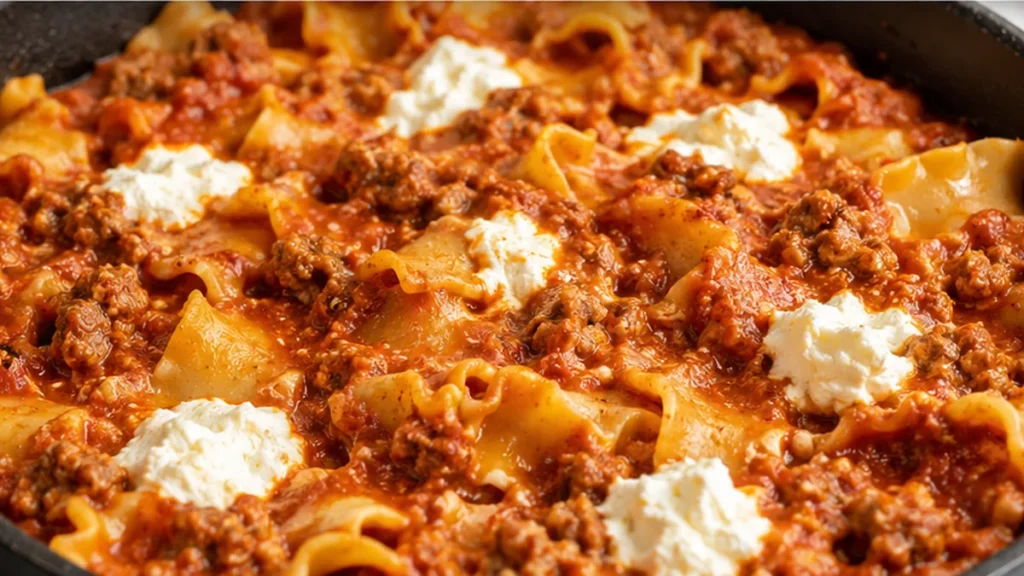
The beauty of skillet lasagna lies in its simplicity and speed. Forget the layered casserole dish and hours of prep; this recipe transforms all your favorite lasagna components into a one-pan wonder. Ready in about 30 minutes total, it’s the perfect solution for busy weeknights when you crave hearty, cheesy comfort food without the fuss. This skillet lasagna delivers all the classic flavors you love with a fraction of the effort. This one-pan lasagna is designed for maximum flavor and minimum cleanup. We’re talking about tender noodles infused with rich marinara, topped with a creamy ricotta mixture and melty cheese, all cooked together in a single skillet. It’s the ideal weeknight meal for families, students, or anyone looking for a satisfying dinner that’s surprisingly quick to prepare.
Key takeaways
- Layering flavors through proper cooking techniques is essential.
- Ensure enough liquid for noodle cooking and overall texture.
- Adjust seasonings to enhance flavor profiles as needed.
- Substitutions can maintain the dish’s integrity while allowing for personal preferences.
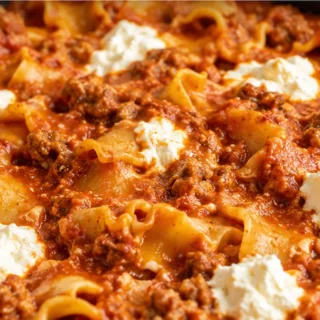
One-Pan Lasagna Magic!
Ingredients
- 1 tbsp olive oil
- 1/2 lb Italian sausage
- 2 cloves garlic, minced
- 24 oz pasta sauce
- 1 cup water
- 1/2 tsp Italian seasoning
- 9 lasagna noodles, broken
- 1 cup ricotta cheese
- 1/4 cup Parmesan cheese
- 1/4 tsp salt
Instructions
- Heat olive oil in a large deep skillet over medium heat. Add Italian sausage and cook until browned.
- Add minced garlic to the skillet and sauté for 1 minute until fragrant.
- Stir in the pasta sauce, Italian seasoning, and water. Bring to a simmer.
- Break the lasagna noodles into 1-2 inch pieces and stir them into the sauce.
- Cover the skillet, turn heat to medium-high, and bring to a boil.
- Reduce heat to medium-low, cover, and simmer for about 15 minutes, stirring occasionally.
- While noodles cook, mix ricotta cheese, Parmesan cheese, salt, and pepper in a small bowl.
- Dollop the ricotta mixture over the cooked noodles. Top with shredded mozzarella and let it melt.
Video
Notes
– For a richer flavor, use a good quality marinara sauce or make your own.
– Ensure noodles are fully submerged in the sauce for even cooking; add a touch more water if they peek out.
– Let the lasagna rest for a few minutes after cooking before serving to allow the cheese to set slightly. Nutrition information is an estimate, calculated automatically. Values vary with brands, substitutions and portion sizes.
The technique that makes it
Skillet lasagna relies on the ability to layer flavors and textures effectively in a single pan. The key to achieving a harmonious dish lies in the proper cooking of the Italian sausage and garlic, which create a flavorful base. When the sausage is browned, it develops a rich umami flavor through the Maillard reaction, enhancing the overall taste of the dish. The use of broken lasagna noodles allows for even cooking and better absorption of the sauce, while the addition of water ensures that the noodles cook properly without becoming dry. The layering of ricotta and Parmesan cheeses adds creaminess and depth, creating a satisfying texture that mimics traditional lasagna.
Troubleshooting
- Problem: Noodles are undercooked or too firm.
Fix: Ensure you have enough liquid; add more water or sauce if needed and allow extra cooking time. - Problem: The dish is too watery.
Fix: Allow it to simmer longer to reduce excess liquid, stirring occasionally to prevent sticking. - Problem: Cheese is clumpy or not melting well.
Fix: Stir the cheese into the sauce thoroughly, and consider covering the pan for a few minutes to trap steam and help it melt. - Problem: Flavors are bland.
Fix: Increase the Italian seasoning or add salt and pepper to taste, enhancing the overall flavor profile.
Substitutions
- Italian sausage: Use ground turkey or chicken for a leaner option; it will still provide good flavor but may be less rich.
- Ricotta cheese: Substitute with cottage cheese for a lighter texture; it will still add creaminess but with a slightly different flavor.
- Pasta sauce: Homemade marinara can replace store-bought sauce; this will enhance freshness and allow for customization of flavors.
- Parmesan cheese: Pecorino Romano can be used for a sharper taste, adding a different but complementary flavor to the dish.
Pro tips
- Reserve a cup of starchy pasta water before draining the noodles; it helps create a silky sauce if needed.
- For a richer flavor, use a good quality marinara sauce or make your own.
- Ensure noodles are fully submerged in the sauce for even cooking; add a touch more water if they peek out.
- Let the lasagna rest for a few minutes after cooking before serving to allow the cheese to set slightly.
Enjoy this incredibly easy and delicious skillet lasagna – your new go-to for a quick and satisfying meal. It proves that classic comfort food can be on the table in no time!
Frequently asked questions
Can I use whole lasagna noodles instead of broken ones?
While whole lasagna noodles can be used, they require more cooking time and may not absorb flavors as well. Breaking them allows for better distribution in the skillet and ensures even cooking.
How do I store leftovers?
Leftover skillet lasagna can be stored in an airtight container in the refrigerator for up to three days. Reheat in the microwave or on the stovetop until heated through.
Can I make this dish vegetarian?
Yes, you can replace the Italian sausage with a plant-based sausage or omit it entirely. Add more vegetables like spinach or mushrooms to enhance the dish’s flavor and texture.
What can I serve with skillet lasagna?
Skillet lasagna pairs well with a simple side salad or garlic bread. A light green salad with vinaigrette can balance the richness of the lasagna.
More from Baked Pasta Recipes →