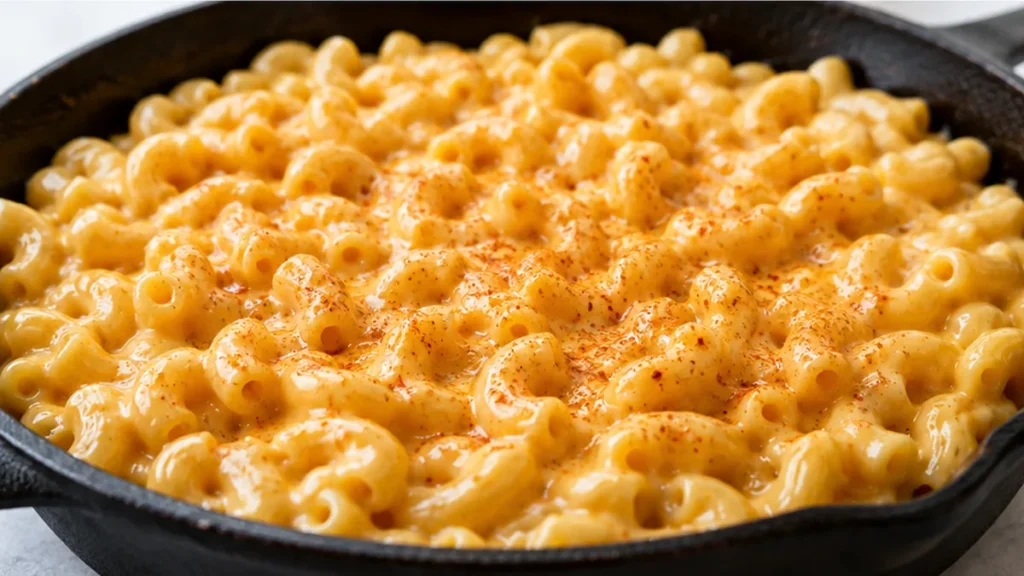
What makes a perfect skillet mac and cheese work is its simplicity and creamy texture. This recipe focuses on achieving that luscious, velvety sauce right in the same pan as the pasta, minimizing cleanup and maximizing flavor. It’s ideal for anyone seeking a quick, satisfying comfort food fix without the fuss of separate pots. This one-pan approach ensures every noodle is coated in rich, cheesy goodness. We use evaporated milk for unparalleled creaminess and sharp cheddar for a robust flavor profile, making this skillet mac a true weeknight dinner.
Key takeaways
- Using freshly shredded cheese ensures a smooth texture.
- Cooking pasta al dente prevents mushiness.
- Gradually adding evaporated milk helps maintain creaminess.
- Mustard and cayenne enhance flavor without overpowering the dish.

Cheesy Skillet Mac and Cheese
Ingredients
- 1/2 tsp salt
- 2 cups elbow macaroni
- 2 tbsp butter
- 3/4 cup evaporated milk
- 1/2 tsp Dijon mustard
- 1 pinch cayenne pepper
- 1.5 cups shredded sharp cheddar
Instructions
- Fill a large skillet about two-thirds full with water. Add the salt and bring to a rolling boil over medium-high heat.
- Add the elbow macaroni, turn the heat to medium, and cook, stirring occasionally, until just shy of al dente (about 10 minutes).
- Drain the macaroni well, returning it to the skillet. Turn the heat to low. Add the butter and stir until melted.
- Pour in the evaporated milk, Dijon mustard, and cayenne pepper. Stir to combine.
- Add the shredded sharp cheddar cheese in three batches, stirring frequently until each batch is melted before adding the next. Continue stirring for about 5 minutes total, until the sauce is smooth and thick.
Video
Notes
Understanding the Role of Cheese in Skillet Mac
The choice of cheese is crucial in achieving the creamy texture and flavor profile of skillet mac. Sharp cheddar, with its high fat content and robust flavor, creates a rich emulsion when combined with evaporated milk. This emulsion is key to preventing the cheese from becoming grainy. For optimal melting, use cheese that is freshly shredded rather than pre-packaged, as the latter often contains anti-caking agents that can affect texture.
Why Cooking Time Matters in Skillet Mac
Cooking the elbow macaroni properly is essential for the final dish. Overcooked pasta becomes mushy, while undercooked pasta remains tough. Aim for al dente, which typically requires about 7-9 minutes in boiling salted water. This ensures the pasta retains a slight bite, allowing it to absorb the creamy cheese sauce without losing its structure.
Preventing a Dry Skillet Mac
A common issue with skillet mac is dryness, which can occur if the pasta absorbs too much liquid or if there is insufficient sauce. To prevent this, ensure that the evaporated milk is added gradually and heat is controlled. If the mixture appears too thick, add more evaporated milk, a tablespoon at a time, until the desired consistency is reached. Always taste and adjust seasoning accordingly.
Enhancing Flavor with Mustard and Cayenne
The inclusion of Dijon mustard and cayenne pepper serves to elevate the flavor profile of skillet mac. The mustard adds a subtle tanginess, while the cayenne provides a gentle heat. These ingredients should be added during the cheese melting stage to allow their flavors to meld with the cheese and pasta. Adjust the amounts based on personal preference, but start with small quantities to avoid overpowering the dish.
Unique Characteristics of Skillet Mac
Skillet mac stands out from traditional baked mac and cheese due to its one-pan cooking method, which allows for quick preparation and easy cleanup. Additionally, the stovetop method facilitates better control over the sauce’s consistency and flavor integration, resulting in a creamier dish that can be customized with various ingredients, such as cooked bacon or vegetables, without the need for baking.
How to Properly Store Leftover Skillet Mac
To maximize the shelf life of your cheesy skillet mac, allow it to cool to room temperature before transferring it to an airtight container. Proper storage can keep it fresh for up to 3-5 days in the refrigerator. For longer storage, consider freezing. When freezing, portion the mac into individual servings and wrap tightly in plastic wrap, followed by foil. This prevents freezer burn and maintains texture. To reheat, thaw overnight in the refrigerator and warm gently on the stovetop or in the microwave, adding a splash of evaporated milk to restore creaminess.
Scaling the Recipe for Larger Gatherings
This skillet mac recipe can easily be scaled up or down depending on the number of servings needed. For every additional cup of elbow macaroni, increase the evaporated milk by 1/3 cup and the cheese by 1/2 cup for optimal creaminess. Adjust the salt accordingly, adding an additional 1/4 teaspoon for every extra cup of pasta. Keep in mind that cooking times may vary slightly; larger batches may require a few extra minutes to heat through evenly. Use a larger skillet or a Dutch oven to accommodate the increased volume.
Choosing the Right Equipment for Skillet Mac
The type of skillet you use can significantly influence the outcome of your skillet mac. A heavy-bottomed skillet or cast-iron pan distributes heat evenly, preventing hot spots that can lead to uneven cooking. Non-stick skillets are also a great option as they help prevent sticking and make cleanup easier. Ensure your skillet is large enough to accommodate the pasta and cheese mixture without overflowing. If using a smaller skillet, consider cooking in batches to maintain even cooking and prevent clumping.
How Ingredient Quality Affects Skillet Mac
The quality of your ingredients plays a crucial role in the final flavor and texture of your skillet mac. Fresh, high-quality cheese will melt more smoothly and provide a richer flavor compared to pre-shredded varieties, which often contain anti-caking agents. Similarly, using fresh elbow macaroni versus older, stale pasta can impact the dish’s overall texture. Seasonal ingredients, such as fresh herbs or vegetables, can also enhance the dish. For example, adding sautéed spinach or roasted tomatoes can elevate the flavor profile while providing nutritional benefits.
Understanding Make-Ahead Strategies for Skillet Mac
Skillet mac can be prepared in advance, making it a convenient option for busy weeknights or gatherings. To make ahead, cook the elbow macaroni until al dente, then drain and rinse under cold water to stop the cooking process. Prepare the cheese sauce separately by melting the butter, whisking in the evaporated milk, Dijon mustard, and spices, followed by the cheese until smooth. Combine the pasta and sauce, then store in an airtight container in the refrigerator for up to 2 days. When ready to serve, reheat in a skillet over low heat, adding a splash of milk to restore creaminess. This method allows flavors to meld and can enhance the overall taste of the dish.
Scaling for Larger Gatherings: Adjusting Ingredients and Cooking Time
Scaling skillet mac for larger gatherings requires careful adjustments to both ingredients and cooking time. For every additional 1 cup of elbow macaroni, increase the butter to 1 tablespoon, the evaporated milk to 1/2 cup, and add an extra 1/4 teaspoon of salt. Additionally, consider using a larger skillet or pot to accommodate the increased volume. Cooking time may also increase; monitor the mac and cheese closely, as it may take an extra 5-10 minutes to achieve the desired creamy consistency. Proper scaling ensures that each serving maintains the rich flavor and texture characteristic of skillet mac.
Choosing the Right Skillet: Impact on Cooking and Texture
The choice of skillet can significantly influence the outcome of your skillet mac. A cast-iron skillet retains heat well and promotes even cooking, creating a desirable crispy bottom layer. Non-stick skillets are easier for cleanup and can prevent sticking, but may not achieve the same level of browning. Stainless steel skillets provide excellent heat conduction but require careful monitoring to avoid sticking. Regardless of the skillet type, preheating the pan before adding ingredients is crucial for optimal texture. Understanding these differences will help you select the best equipment for your skillet mac, enhancing both flavor and presentation.
How to Prepare Skillet Mac and Cheese in Advance
Making skillet mac ahead of time can save valuable cooking time. To prepare in advance, cook the elbow macaroni until al dente, about 6-8 minutes, and drain. In a skillet, melt the butter and combine with evaporated milk, Dijon mustard, and cayenne pepper. Stir in the cooked macaroni and cheese, then allow it to cool. Store in an airtight container in the fridge for up to 2 days. When ready to serve, reheat gently over low heat, adding a splash of milk if necessary to restore creaminess. This method allows the flavors to meld, creating a richer taste.
Adjusting Cooking Times for Different Skillet Sizes
The size of your skillet can significantly impact cooking times and the final texture of your skillet mac. A larger skillet spreads the macaroni and cheese mixture out more, which can lead to a quicker evaporation of moisture and a crispier top. Conversely, a smaller skillet retains more moisture, resulting in a creamier dish. If using a larger skillet, reduce the cooking time by 2-3 minutes to prevent drying out. For smaller skillets, you may need to add an extra minute or two to ensure the dish is heated through. Always keep an eye on the consistency; adjust the heat as necessary to achieve your desired creaminess.
Understanding the Role of Evaporated Milk in Skillet Mac
Evaporated milk is a key ingredient in this skillet mac, providing a creamy texture without the excess water that can dilute flavor. The concentration of milk solids in evaporated milk enhances the richness of the dish. When heated, it helps form a smooth emulsion with the cheese, creating that desirable creamy consistency. For optimal results, use 3/4 cup (180 ml) of evaporated milk, which balances well with the 1.5 cups (150 g) of shredded sharp cheddar. If using regular milk, you may need to adjust the amount of cheese or add a thickening agent to achieve a similar creaminess.
How to Scale Your Skillet Mac for Larger Gatherings
Scaling your skillet mac recipe for larger gatherings requires careful consideration of both ingredient ratios and cooking times. When doubling the recipe, maintain the same proportions: for instance, use 1 tsp salt, 4 cups elbow macaroni, and 3 cups shredded sharp cheddar. However, cooking time may increase slightly; monitor the pasta closely, as it can take an additional 2-4 minutes to cook through. Additionally, ensure your skillet is large enough to accommodate the increased volume without overcrowding, which can lead to uneven cooking. If your skillet is too small, consider using a larger pot or cooking in batches.
Pro tips
- For extra creamy sauce, stir in the cheese gradually, allowing each addition to melt fully before adding more.
- Cook pasta until just shy of al dente as it will continue to cook in the hot sauce.
- Leftovers can be refrigerated in a covered container for up to 2 days. Reheat gently on the stovetop or microwave with a splash of milk.
Enjoy this incredibly easy and satisfying skillet mac and cheese tonight!
Frequently asked questions
Can I use a different type of cheese?
Yes, you can substitute other cheeses like Gruyère or Monterey Jack. However, keep in mind that different cheeses have varying melting properties and flavor profiles, which may alter the final taste and texture of your skillet mac.
What if my macaroni is too dry?
If your skillet mac turns out dry, you can add more evaporated milk or a splash of water to loosen the mixture. Heat gently while stirring to incorporate the added liquid evenly without cooking the pasta further.
Is it necessary to use evaporated milk?
While evaporated milk provides a rich and creamy texture, you can substitute it with whole milk or even cream. However, using whole milk may result in a slightly less creamy consistency, so adjust the quantity accordingly.
How can I make my skillet mac spicier?
To increase the heat in your skillet mac, you can add more cayenne pepper or include other spicy ingredients like diced jalapeños or hot sauce. Start with small amounts to avoid overwhelming the dish, and adjust to your taste.
More from Baked Pasta Recipes →