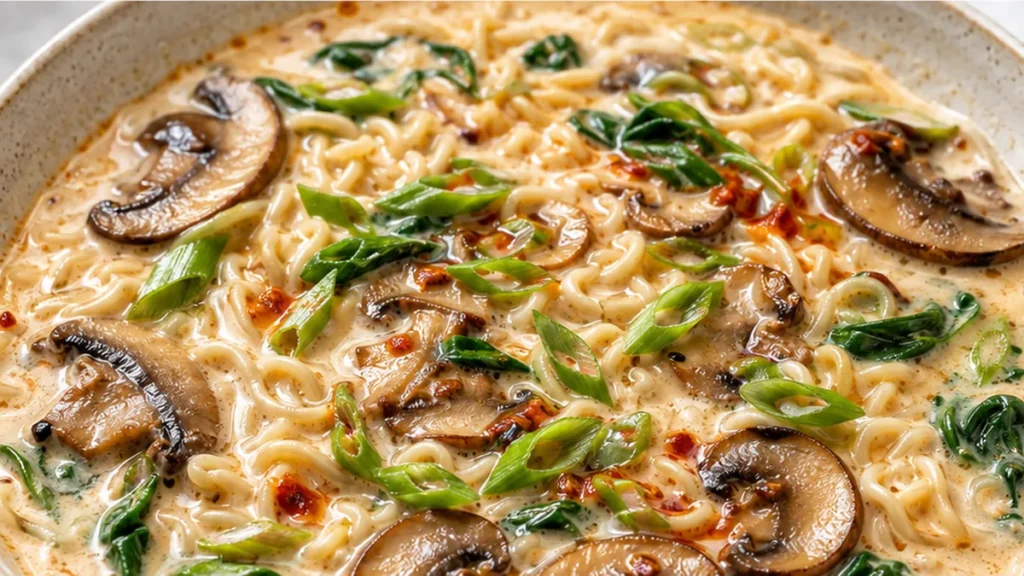
The secret to an unbelievably creamy vegan ramen is surprisingly simple: canned coconut milk and well-sautéed mushrooms. This recipe delivers rich, savory flavor in under 20 minutes, making it perfect for a weeknight dinner that feels like a treat. Forget bland vegan noodles; this mushroom ramen is pure a comforting bowl. We’re using basic pantry staples to create a restaurant-worthy dish. The key is to cook the mushrooms until their moisture evaporates, concentrating their flavor, then building the creamy broth from there. It’s a quick, satisfying, and deeply flavorful vegan meal.
Key takeaways
- Use a 1:3 ratio of coconut milk to vegetable broth for creaminess.
- Sauté mushrooms to enhance umami flavor through the Maillard reaction.
- Adjust chili garlic sauce to control spiciness and flavor depth.
- Cook ramen noodles al dente for the best texture.
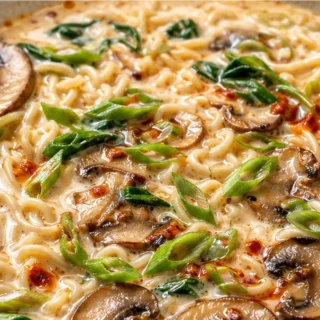
Creamy Vegan Ramen
Ingredients
- 1/2 tbsp cooking oil
- 4 oz baby bella mushrooms, sliced
- 1.5 cups vegetable broth
- 1 cup fresh spinach
- 1 package ramen noodles
- 1/2 cup coconut milk (canned)
- 1 green onion, sliced
- 1 tbsp chili garlic sauce
Instructions
- Slice the mushrooms and sauté them in cooking oil over medium heat until soft.
- Add vegetable broth and bring to a boil over medium-high heat.
- Add ramen noodles to the boiling broth and cook for 3 minutes until tender.
- Turn off the heat, add fresh spinach, and stir until wilted (about 30 seconds).
- Pour in coconut milk and stir to combine.
- Serve immediately, garnished with sliced green onion and chili garlic sauce.
Video
Notes
Understanding the Creamy Base for Mushroom Ramen
The creamy texture of this vegan ramen comes from the combination of coconut milk and vegetable broth. Coconut milk, with its high fat content (approximately 20-25%), creates a rich mouthfeel that mimics traditional ramen broths. The key is to balance the coconut milk with the broth; a ratio of 1:3 coconut milk to broth ensures creaminess without overwhelming the dish.
Why Mushrooms Are Essential in Vegan Ramen
Baby bella mushrooms not only add umami flavor but also contribute to the dish’s texture. Sautéing the mushrooms in cooking oil for about 5-7 minutes allows for the Maillard reaction to occur, enhancing their savory depth. This process caramelizes the natural sugars in the mushrooms, resulting in a richer broth.
Enhancing Flavor with Chili Garlic Sauce
Chili garlic sauce introduces a spicy kick and depth to the dish. The addition of 1 tablespoon can significantly elevate the flavor profile. If the sauce is too spicy, consider reducing the amount or substituting with a milder hot sauce. The heat level can be adjusted to personal preference, ensuring a balanced flavor without overpowering the other ingredients.
Choosing the Right Ramen Noodles
When selecting ramen noodles, consider using fresh or dried varieties. Fresh noodles typically cook in 2-3 minutes, while dried noodles may take 4-5 minutes. The cooking time is crucial; overcooking can lead to mushiness, while undercooking may result in a chewy texture. Aim for al dente for the best bite.
Incorporating Fresh Greens for Nutrition
Fresh spinach not only adds color but also provides vital nutrients. Adding it to the ramen for the last minute of cooking ensures it wilts just enough to retain its vibrant color and nutritional value. This brief cooking time prevents overcooking, which can lead to a loss of texture and nutrients.
How to Adjust the Creaminess for Your Vegan Ramen
The creaminess of your mushroom ramen largely depends on the ratio of coconut milk to broth. For a richer texture, consider increasing the coconut milk to 3/4 cup while reducing the vegetable broth to 1 cup. This adjustment will enhance the mouthfeel, making it velvety without overwhelming the dish. Conversely, if you prefer a lighter ramen, decrease the coconut milk to 1/4 cup and increase the broth to 2 cups. Remember, the fat content in coconut milk also contributes to the overall flavor profile, so adjustments should be made thoughtfully.
Scaling Your Mushroom Ramen for a Crowd
If you want to scale this recipe for multiple servings, it’s essential to maintain the ratios of ingredients. For each additional serving, add 1/2 cup of vegetable broth, 1/4 cup of coconut milk, and 1 oz. of mushrooms. This ensures that the flavor and texture remain consistent. When cooking larger batches, consider using a larger pot to accommodate the increased volume and to allow for even cooking. Cooking time may also vary slightly; keep an eye on the noodles to avoid overcooking.
Choosing the Right Equipment for Cooking Ramen
The choice of cooking equipment can significantly affect the final outcome of your mushroom ramen. A non-stick pot is ideal for preventing the noodles from sticking together, while a heavy-bottomed pot can help distribute heat evenly, preventing hotspots. If you have a stockpot, it can be beneficial for larger batches. Additionally, a ladle or pasta fork can aid in stirring and serving, ensuring even distribution of ingredients. Using the right tools not only enhances the cooking experience but also the final presentation of the dish.
Seasonal Ingredients and Their Impact on Your Ramen
Using seasonal ingredients can elevate your mushroom ramen significantly. For example, in the spring, consider adding fresh asparagus or peas for a pop of color and flavor. In the fall, roasted butternut squash can add sweetness and depth. The quality of your mushrooms also matters; fresh, in-season varieties like chanterelles or oyster mushrooms can enhance the umami flavor profile. Remember, the fresher the ingredients, the more vibrant and flavorful your ramen will be. Adjusting your recipe based on seasonal availability can lead to unique and delightful variations.
How to Prepare Ramen Ahead of Time Without Losing Quality
For those who want to enjoy creamy vegan ramen without the time commitment during busy weeknights, preparing components in advance is key. Cook the ramen noodles and sauté the mushrooms separately, then store them in airtight containers. When ready to eat, reheat the vegetable broth and coconut milk mixture, adding the cooked noodles and mushrooms just before serving. This method preserves the texture of the noodles and the creaminess of the broth. The noodles can be stored in the refrigerator for up to 3 days, but be cautious of overcooking them initially to prevent mushiness upon reheating.
Understanding Equipment Variations and Their Impact on Cooking Time
The type of cookware used can significantly affect the cooking time and the final texture of your creamy vegan ramen. A non-stick pot allows for quicker sautéing of the mushrooms without sticking, while a stainless steel pot may require more attention to prevent burning. If using a pressure cooker, reduce the broth simmering time to about 5-7 minutes to achieve a similar flavor profile. Always monitor the heat; a high flame can rapidly evaporate liquid, leading to a concentrated broth that may overpower the dish.
Finding the Perfect Pairings to Elevate Your Mushroom Ramen
While creamy vegan ramen is delicious on its own, pairing it with the right accompaniments can enhance the overall experience. Consider serving it with a side of pickled vegetables for a tangy contrast, or a light salad to balance the richness. Tofu skewers marinated in soy sauce and sesame oil complement the umami flavors of the mushrooms. Additionally, a sprinkle of sesame seeds or a drizzle of sesame oil right before serving can add depth and richness, making each bowl more satisfying.
How Seasonal Ingredients Influence the Flavor Profile of Your Ramen
Incorporating seasonal ingredients can dramatically change the flavor profile of your creamy vegan ramen. For instance, in spring, fresh peas and asparagus can be added for a sweet crunch, while in autumn, roasted pumpkin or butternut squash can lend a creamy texture and sweetness. Adjusting the broth with herbs like basil or cilantro based on the season can also provide freshness and vibrancy. Always taste your broth and adjust seasoning according to the freshness and intensity of the seasonal ingredients to achieve a well-balanced dish.
How to Store Creamy Vegan Ramen Without Losing Quality
Storing creamy vegan ramen requires attention to its components to maintain texture and flavor. The noodles can become soggy if left in the broth, so it’s best to store them separately. Allow the ramen to cool to room temperature, then portion the broth and noodles into airtight containers. Store in the refrigerator for up to 3 days. When reheating, warm the broth separately and add the noodles just before serving to prevent them from overcooking. If you have leftover spinach and mushrooms, store them in a separate container, as they may lose their texture when reheated.
Adjusting the Recipe for Larger Portions of Mushroom Ramen
Scaling up creamy vegan ramen for larger gatherings is straightforward, but certain factors must be considered to ensure consistent flavor and texture. For every additional serving, increase the vegetable broth by approximately 1.5 cups and the coconut milk by 1/2 cup. Maintain the same noodle-to-broth ratio to prevent a broth that is too thin. If using more mushrooms, consider the cooking time; larger batches may require a longer sauté time to achieve an even texture. Additionally, use a larger pot to accommodate the increased volume, ensuring that the broth reaches a simmer without overcrowding.
How to Make Creamy Vegan Ramen Ahead of Time
Preparing creamy vegan ramen in advance can be a game-changer for busy weeknights. To make this dish ahead of time, cook the ramen noodles separately and store them in an airtight container to prevent them from becoming mushy. The mushroom broth can be prepared and stored in the refrigerator for up to three days. When reheating, add a splash of vegetable broth to the mix to restore the creamy consistency. Be cautious not to boil the broth after adding the coconut milk, as high heat can cause it to separate. Instead, gently warm it over medium-low heat while stirring.
Understanding the Impact of Ingredient Freshness on Flavor
The quality of ingredients significantly influences the final taste of your mushroom ramen. Fresh baby bella mushrooms provide a rich, earthy flavor that dried or older mushrooms cannot match. Similarly, using fresh spinach instead of frozen ensures a vibrant color and crisp texture. Seasonality also plays a role; for example, using mushrooms in peak season will yield a more robust flavor. If you can source local, organic vegetables, the taste will be enhanced due to their freshness. When selecting coconut milk, opt for full-fat varieties for a creamier texture, as low-fat versions can dilute the richness.
Pro tips
- Sauté mushrooms until dry to deepen their flavor.
- Use full-fat canned coconut milk for maximum creaminess.
- Adjust chili garlic sauce to your spice preference.
- Don’t overcook the noodles; they’ll continue to soften.
Enjoy this deeply satisfying and surprisingly quick vegan ramen. It’s proof that plant-based comfort food can be both simple and incredibly delicious.
Frequently asked questions
Can I use other types of mushrooms in this recipe?
Yes, you can substitute baby bella mushrooms with shiitake or oyster mushrooms. Each type will impart a different flavor profile; shiitake offers a stronger umami taste while oyster mushrooms add a subtle sweetness.
How can I make this ramen spicier?
To increase the heat, add more chili garlic sauce or include fresh chopped chili peppers during cooking. You can also sprinkle red pepper flakes on top before serving for an extra kick.
What can I use instead of coconut milk?
If you prefer not to use coconut milk, consider using cashew cream or almond milk. However, these alternatives will yield a different texture and flavor; cashew cream offers creaminess while almond milk is lighter.
Can I prepare this ramen in advance?
While the broth can be made ahead and stored in the refrigerator for up to three days, it’s best to cook ramen noodles fresh. Reheating cooked noodles can lead to a mushy texture, so prepare them just before serving.
More from Baked Pasta Recipes →