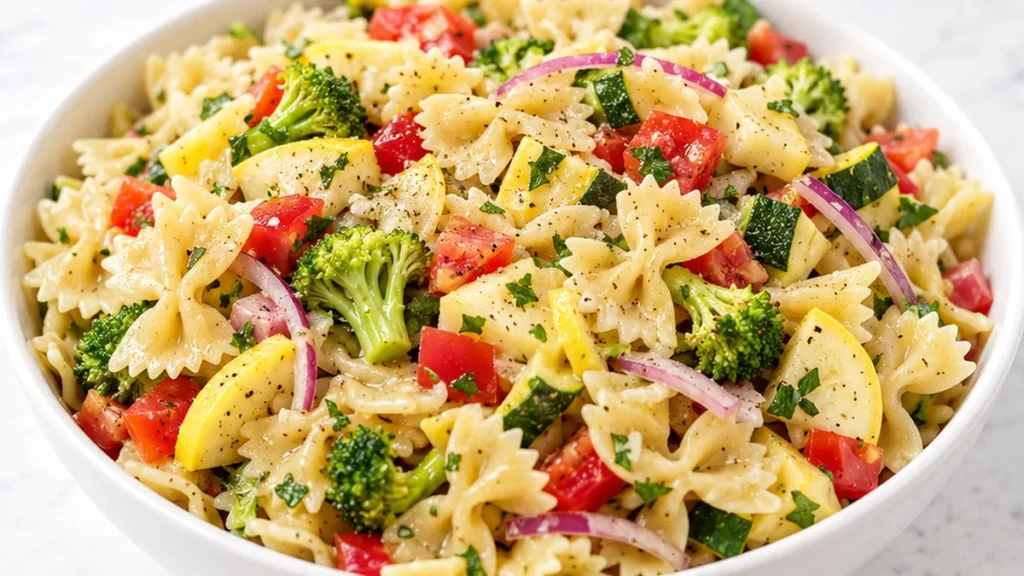
This summer veggie pasta salad combines fresh vegetables and pasta for a light meal. It’s easy to prepare and perfect for warm weather gatherings.
Key takeaways
- Use fresh, seasonal vegetables for the best flavor.
- Cook pasta to al dente for the right texture.
- Balance acidity and sweetness in the dressing.
- Incorporate crunchy elements for added texture.
Summer Veggie Pasta Salad
Ingredients
- ½ cup olive oil
- ⅓ cup red wine vinegar
- 1 tbsp Dijon mustard
- 1 tsp dried oregano
- 1 garlic clove (minced)
- ¾ tsp salt
- ¼ tsp black pepper (freshly cracked)
- 12 oz bowtie pasta
- 2 Roma tomatoes
- 1 yellow squash
Instructions
- Whisk together the olive oil, red wine vinegar, Dijon mustard, dried oregano, minced garlic, salt, and black pepper in a small bowl to make the vinaigrette. Set aside.
- Cook the bowtie pasta according to package directions until tender, about 7-10 minutes. Drain in a colander, rinse briefly with cool water, and drain well.
- While the pasta cooks, chop the Roma tomatoes and yellow squash.
- Place the drained pasta and chopped vegetables in a large bowl.
- Give the vinaigrette a quick whisk, then pour it over the pasta and vegetables.
- Stir everything together until well coated. Taste and add more salt or pepper if needed. Serve immediately or chill for at least 30 minutes before serving.
The Role of Fresh Ingredients in Summer Veggie Pasta Salad
Fresh ingredients are paramount in a summer veggie pasta salad. The quality and ripeness of vegetables like tomatoes, bell peppers, and cucumbers significantly influence the overall flavor and texture of the dish. For instance, using vine-ripened tomatoes can enhance sweetness and acidity, while crisp cucumbers add a refreshing crunch. Aim for seasonal produce, which is often more flavorful and nutritious. When selecting ingredients, consider their color and firmness as indicators of freshness.
Common Missteps When Preparing Pasta for Salad
One frequent mistake is overcooking the pasta. To achieve the ideal texture, cook pasta to al dente, which means it should be firm to the bite. This not only prevents mushiness but also allows the pasta to absorb the dressing without becoming soggy. Additionally, remember to rinse the pasta under cold water after cooking; this halts the cooking process and cools the pasta quickly, making it suitable for a salad. A good rule of thumb is to cook pasta for about 1-2 minutes less than the package instructions suggest for salads.
Choosing the Right Dressing: Balancing Flavors
The dressing is crucial for tying together the flavors in a summer veggie pasta salad. A well-balanced dressing should have a combination of acidity, sweetness, and seasoning. For instance, a vinaigrette made with olive oil, vinegar, and a touch of honey can enhance the natural flavors of the vegetables. When mixing, start with a ratio of 3:1 oil to vinegar, adjusting to taste based on the salad’s ingredients. Remember that the dressing should complement but not overpower the fresh ingredients.
Enhancing Texture: The Importance of Crunchy Elements
Texture plays a significant role in the enjoyment of a pasta salad. Incorporating crunchy elements like raw bell peppers, red onions, or toasted nuts can create a delightful contrast to the tender pasta and soft vegetables. To enhance crunch, consider adding ingredients like sunflower seeds or crispy chickpeas. Toasting these elements can also intensify their flavor, making them a standout component in your salad.
Signature Ingredients: What Sets This Salad Apart
This summer veggie pasta salad stands out due to its use of seasonal vegetables and a light dressing, making it a refreshing choice for warm weather. Unlike heavier pasta dishes, this salad is designed to be light and vibrant, focusing on the freshness of the ingredients. The inclusion of herbs like basil or parsley can also elevate the dish, adding aromatic notes that are often less prominent in traditional pasta recipes. Consider using a mix of herbs for a more complex flavor profile.
Preparing for the Week: Make-Ahead Tips for Your Pasta Salad
One of the great advantages of summer veggie pasta salad is its make-ahead potential. Preparing this dish in advance can save time during busy weekdays or gatherings. To ensure optimal flavor and texture, cook the pasta al dente, as it will continue to absorb moisture while stored. After mixing in the dressing, allow the salad to chill in the refrigerator for at least 30 minutes before serving; this helps the flavors meld. If you plan to keep it for more than a day, consider storing the dressing separately and adding it just before serving to prevent the pasta from becoming soggy.
Scaling Up: Adjusting Ingredients for Larger Gatherings
When scaling your summer veggie pasta salad for larger gatherings, it’s crucial to maintain the balance of flavors and textures. A general rule of thumb is to increase the pasta by 100 grams for every additional 4 servings. Keep the ratio of vegetables to pasta consistent, aiming for about 1 part pasta to 1.5 parts vegetables. This ensures that the salad remains vibrant and not overly starchy. Additionally, consider using larger bowls or containers to mix the ingredients thoroughly, as larger quantities may require more space to combine evenly.
Choosing the Right Equipment for Optimal Mixing
The equipment you use can significantly impact the outcome of your summer veggie pasta salad. A large mixing bowl is essential for combining ingredients without spilling. Using a wooden spoon or a silicone spatula allows for gentle folding, which helps preserve the integrity of the vegetables. If you have a salad spinner, use it to dry washed greens or herbs thoroughly before adding them to the salad, preventing excess moisture. For serving, a large serving spoon or tongs can help you portion the salad without crushing the ingredients.
Seasonal Adjustments: How Ingredient Quality Affects Flavor
Ingredient quality plays a vital role in the success of your summer veggie pasta salad. Seasonal vegetables, such as ripe tomatoes, fresh cucumbers, and bell peppers, not only enhance flavor but also provide vibrant colors. When ingredients are at their peak, they require less seasoning. Conversely, out-of-season produce may need additional herbs or spices to boost flavor. Consider visiting local farmers’ markets for the freshest options, which can elevate your dish and make it stand out.
Understanding the Effects of Ingredient Quality on Flavor
The quality of the ingredients used in a summer veggie pasta salad significantly impacts its overall flavor. Fresh, seasonal vegetables not only enhance taste but also provide better texture and nutritional value. For instance, ripe tomatoes will offer a sweeter, more robust flavor compared to out-of-season varieties. Moreover, using high-quality pasta, such as those made from durum wheat, ensures a better bite and absorbs dressing more effectively. Aim for a pasta that cooks al dente, as it holds up better in salads. When possible, source local produce to maximize freshness and flavor. This attention to ingredient quality can elevate an ordinary pasta salad into something truly special.
Batch Scaling: Adjusting for Larger Gatherings
When scaling up a summer veggie pasta salad for larger gatherings, it’s essential to consider proportions carefully. A general rule of thumb is to increase the pasta quantity by 50% for every additional 4-6 servings. However, be mindful of the dressing; too much can lead to a soggy salad. Start by adding half the amount of dressing and adjust according to taste. Additionally, consider the balance of vegetables; ensure that the ratio of pasta to veggies remains consistent to maintain flavor integrity. When preparing in large batches, use a larger mixing bowl to ensure even distribution of ingredients and dressing, which is crucial for flavor consistency.
Make-Ahead Strategies for Optimal Flavor and Texture
Preparing your summer veggie pasta salad in advance can save time and enhance flavor, but it requires careful planning to maintain texture. To make ahead, cook the pasta and let it cool completely before mixing it with the vegetables and dressing. However, keep the dressing separate until just before serving to prevent the pasta from absorbing too much moisture and becoming mushy. Store the salad in an airtight container in the refrigerator for up to 3 days. If using ingredients like cucumbers or tomatoes, consider adding them fresh on the day of serving to retain their crunch. This approach ensures that your salad remains vibrant and flavorful when it’s time to serve.
Maximizing Flavor and Texture in Make-Ahead Summer Veggie Pasta Salad
When preparing a summer veggie pasta salad in advance, the key is to balance flavor and texture. To prevent sogginess, cook the pasta al dente, allowing it to maintain its firmness even after refrigeration. Additionally, consider marinating your vegetables separately in the dressing for a few hours before mixing them with the pasta. This technique enhances their flavor without compromising the salad’s overall texture. A good ratio is to use about 1 part dressing to 4 parts pasta and vegetables, ensuring that the flavors meld without making the dish overly wet.
Storing the salad in an airtight container is essential to preserve freshness. Ideally, consume the salad within 2-3 days for optimal taste. If you notice excess moisture, draining the salad before serving can help restore its intended texture. When serving, give the salad a gentle toss to redistribute the dressing and flavors.
Understanding the Importance of Ingredient Quality in Summer Veggie Pasta Salad
The quality of ingredients in a summer veggie pasta salad significantly impacts the final dish. Fresh, in-season vegetables not only enhance flavor but also provide vibrant colors and textures. For instance, ripe tomatoes, crisp cucumbers, and sweet bell peppers contribute a refreshing crunch and natural sweetness that elevate the dish. When selecting pasta, opt for high-quality durum wheat pasta, which holds up better in salads compared to lower-quality options.
Moreover, the freshness of herbs plays a crucial role. Using freshly chopped basil or parsley can transform the salad, adding aromatic notes that dried herbs simply cannot replicate. If possible, source ingredients from local farmers’ markets to ensure peak freshness. This attention to ingredient quality not only enhances flavor but also makes your summer veggie pasta salad a standout dish.
Pro tips
Pro tip: Best served immediately while hot!
Frequently asked questions
Can I make this salad ahead of time?
Yes, you can prepare the salad a few hours in advance. However, it’s best to keep the dressing separate until just before serving to prevent the pasta from becoming soggy.
What vegetables work best for this salad?
Vegetables like cherry tomatoes, bell peppers, cucumbers, and red onions are excellent choices. Feel free to experiment with other seasonal veggies like zucchini or radishes for added variety.
How can I make this salad more filling?
To add more substance, consider incorporating protein sources such as grilled chicken, chickpeas, or mozzarella balls. These additions will make the salad more satisfying as a main dish.
What is the best way to store leftovers?
Store any leftover pasta salad in an airtight container in the refrigerator. It’s best consumed within 2-3 days for optimal freshness, though the flavors may intensify over time.
More from Easy Pasta Recipes →