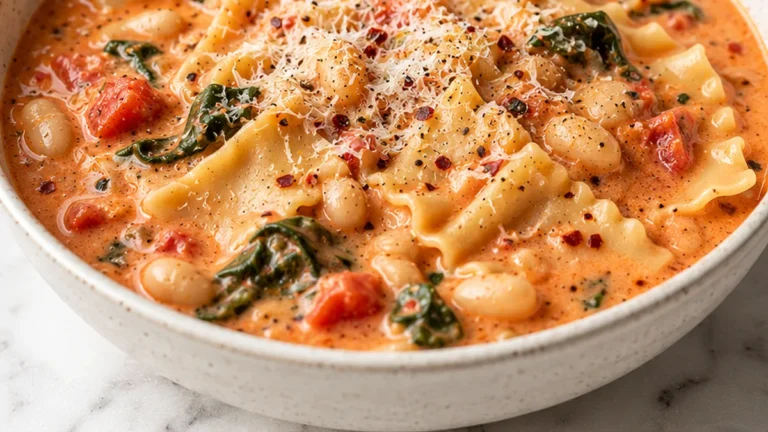
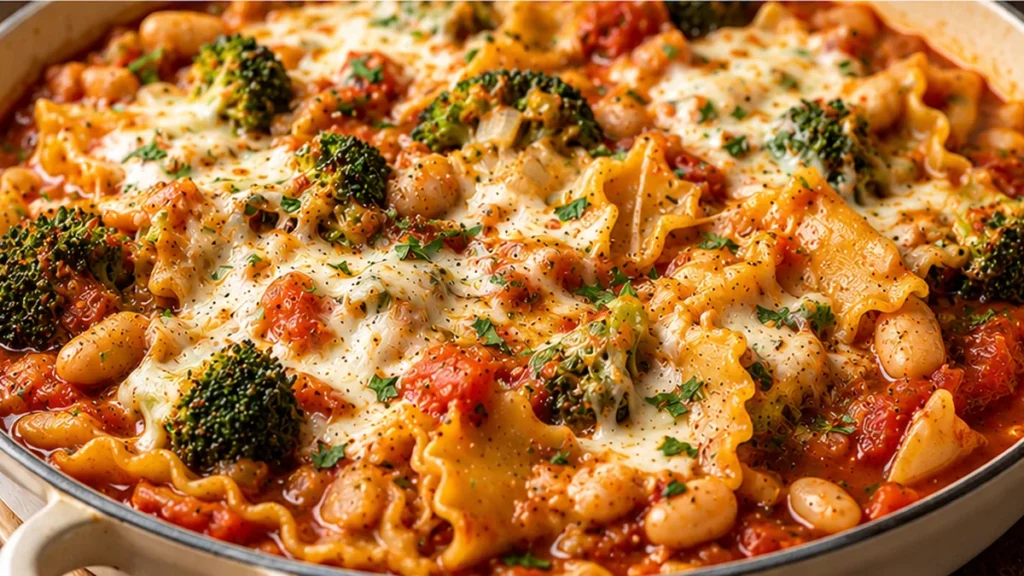
This stovetop lasagna recipe is a real upgrade for busy weeknights. Forget the usual long baking times; this version delivers all the comforting flavors of traditional lasagna in a fraction of the time, all cooked in a single pot. The focus keyword ‘stovetop lasagna’ is central to this quick and satisfying meal. We’ve packed this stovetop lasagna with nutritious broccoli and hearty white beans, making it a balanced and filling meal. It’s perfect for anyone craving a delicious, homemade lasagna without the fuss.
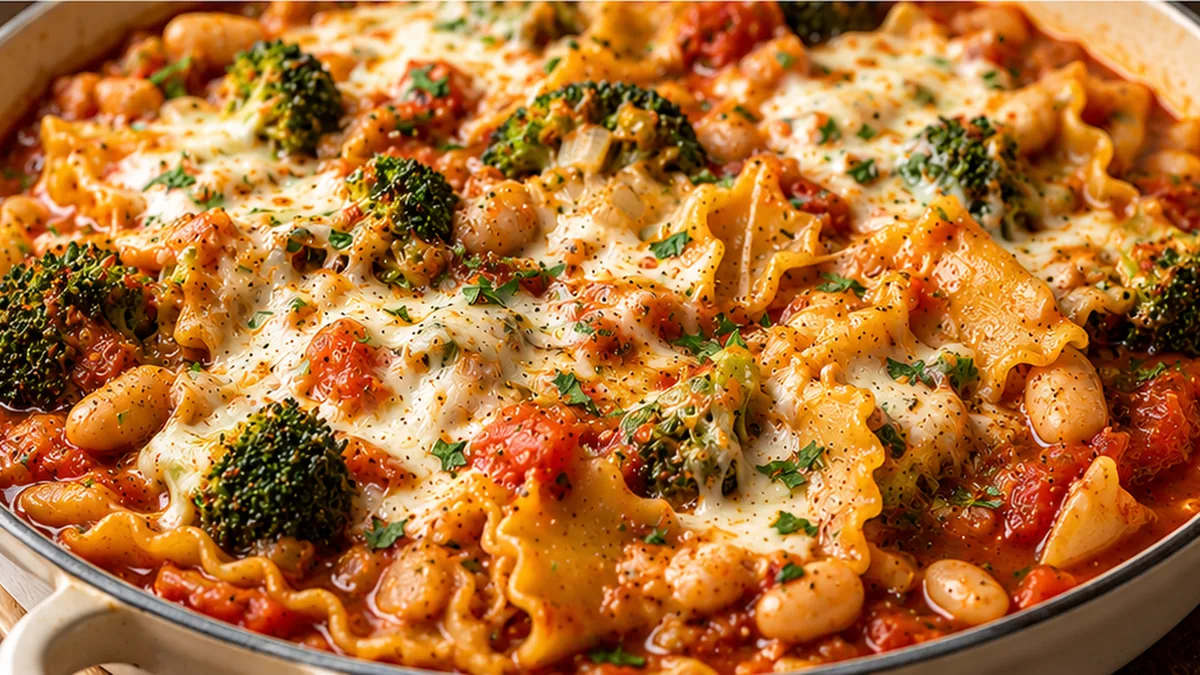
Stovetop Lasagna with Broccoli and Beans
Ingredients
Method
- Break lasagna noodles into small pieces. Cook according to package directions in boiling water. Add broccoli for the last 2-3 minutes until tender-crisp. Drain and set aside.
- Mince onion and garlic. Heat olive oil in a nonstick skillet over medium-high heat. Sauté onion and garlic until softened, about 2-3 minutes.
- Add rinsed and drained white beans to the skillet. Season generously with salt, pepper, and red pepper flakes. Cook for a few minutes until beans are warm.
- Add the bean mixture to the pot with the noodles and broccoli. Stir to combine.
- Stir in spaghetti sauce and cook over medium heat until warmed through.
- Optional: Top with cheese before serving.
Notes
– Feel free to substitute kale or spinach for broccoli.
– A sprinkle of parmesan or mozzarella cheese on top before serving rounds out the dish. Allergens: Milk, Wheat. Nutrition information is an estimate, calculated automatically. Values vary with brands, substitutions and portion sizes.
Pro tips
- For extra flavor, add a pinch of nutmeg to the sauce.
- Feel free to substitute kale or spinach for broccoli.
- A sprinkle of parmesan or mozzarella cheese on top before serving rounds out the dish.
Enjoy this incredibly easy and flavorful stovetop lasagna that proves you don’t need hours in the kitchen to create a satisfying meal. Perfect for any night of the week!
More from Baked Pasta Recipes →
Frequently asked questions
Can I use different beans in stovetop lasagna?
Absolutely! While cannellini beans offer a creamy texture, you can substitute them with great northern beans or even chickpeas. Just ensure they are well-drained and rinsed before adding them to the lasagna mixture. This keeps the flavor profile balanced and the texture consistent.
How do I know when stovetop lasagna is done?
The lasagna is done when the sauce has thickened nicely and the pasta is tender. You can test the pasta by carefully tasting a piece or piercing it with a fork. The cheese should be melted and bubbly, indicating it’s ready to serve.
Can stovetop lasagna be made ahead of time?
Yes, you can assemble the stovetop lasagna a day in advance. Store it covered in the refrigerator. When ready to cook, you may need to add a few extra minutes to the cooking time to ensure it heats through evenly. This makes weeknight dinners much easier.
How to store leftover stovetop lasagna?
Let the lasagna cool completely before storing. Transfer leftovers to an airtight container and refrigerate for up to 3-4 days. Reheat individual portions in the microwave or oven until heated through. It reheats well and makes for a great lunch the next day.
Key takeaways
- This stovetop lasagna cooks noodles directly in the sauce using steam.
- Ensure noodles are submerged and simmer gently for even cooking.
- Cover tightly to trap steam, which is essential for noodle hydration.
- Adjust simmering time and liquid for desired sauce consistency and noodle texture.
The technique that makes it
The magic behind this stovetop lasagna lies in controlled simmering and layering. Unlike traditional baked lasagna, which relies on oven heat to cook the noodles and meld the flavors, this version uses the stovetop. The key is to ensure the lasagna noodles are fully submerged in liquid (the spaghetti sauce and any added moisture) and cooked through at a gentle simmer. Adding the ingredients in stages is crucial. The sauce and beans form the base, providing moisture and flavor. The broccoli is added later to prevent it from becoming overly mushy, allowing it to steam and tenderize within the sauce. The noodles are layered on top, and the pot is covered tightly. This creates a steamy environment that cooks the noodles evenly from the bottom up. It’s essential to use a pot with a tight-fitting lid to trap the steam effectively. Stirring is minimal; excessive stirring can break up the noodles and the layers, disrupting the lasagna structure. The residual heat and steam will continue to cook the noodles after the heat is turned off, allowing them to absorb any excess liquid and achieve the perfect al dente texture.
Troubleshooting
- Noodles are still hard: Ensure the noodles are fully submerged in the sauce. If not, add a splash more water or sauce, cover, and continue simmering. Check that the heat is low and consistent, not too high which can evaporate liquid too quickly.
- Sauce is too thin: If the sauce is thinner than desired after cooking, remove the lid and simmer uncovered for a few extra minutes on medium-low heat to allow some liquid to evaporate. Be careful not to overcook the noodles at this stage.
- Lasagna is sticking to the bottom: This can happen if the heat is too high or if there isn’t enough liquid. Ensure a good layer of sauce is at the very bottom of the pot before adding other ingredients. Stir gently once during cooking if concerned about sticking.
- Broccoli is mushy: Broccoli was likely added too early or cooked at too high a heat. For future attempts, add the broccoli in the last 5-7 minutes of simmering to retain more texture.
Substitutions
- Noodles: While whole wheat wavy noodles are recommended for texture and sauce-holding ability, regular lasagna noodles (no-boil or regular, though regular will need more liquid and time) can be used. Expect a slightly different texture.
- Beans: Cannellini beans or chickpeas can be substituted for white beans. The flavor profile will change slightly, but the creamy texture will remain.
- Sauce: A marinara sauce or a roasted garlic pasta sauce can replace the standard spaghetti sauce. This will alter the final flavor, making it more robust or garlicky.
- Vegetables: Spinach can be wilted in during the last few minutes of cooking, or diced zucchini can be added with the broccoli for extra vegetables.