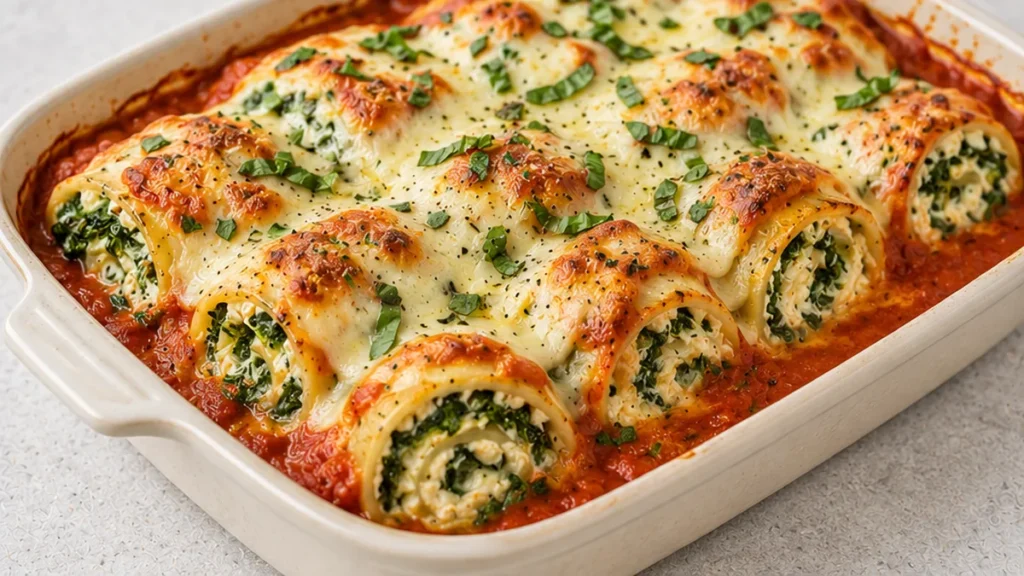
This spinach ricotta rotolo is a straightforward bake. Fresh pasta sheets are rolled with a filling of ricotta cheese and spinach, then baked in marinara sauce. It’s a comforting meal.
Key takeaways
- The rotolo technique ensures even filling distribution and a neat presentation.
- Thoroughly draining the spinach is key to preventing a watery filling.
- Allowing the bake to rest post-oven is crucial for clean slicing.
- Use whole milk ricotta and fresh or carefully prepared dried lasagne sheets for best results.
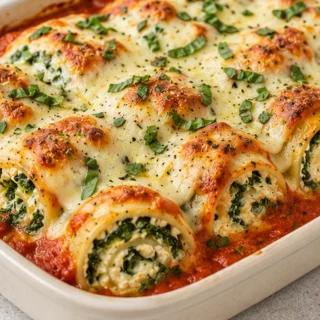
Spinach Ricotta Rotolo: The Ultimate Comfort Bake!
Ingredients
- 8-10 fresh lasagne sheets (15 x 11 cm/6 x 4.5″)
- 1 cup mozzarella cheese (, shredded)
- 1 tbsp olive oil (for drizzling later)
- 500 g / 1 lb frozen spinach (pre chopped) (, thawed and excess water squeezed out)
- 500 g / 1 lb ricotta cheese (NOT smooth, whipped or spreadable in tubs)
- 1 egg
- 1/2 cup parmesan cheese (, shredded)
- 1 garlic clove (, pressed using garlic crusher or finely grated)
- 1/8 tsp finely grated nutmeg (substitute nutmeg powder)
- 1 can (700g / 25 oz) passata (strained tomatoes)
Instructions
- Heat 1 tbsp olive oil in a 25cm/10″ ovenproof skillet over medium-high heat.
- Add 1 garlic clove (pressed or grated) and sauté for 10 seconds. Add 1/2 onion, finely chopped (if using) and cook until translucent and starting to turn golden.
- Stir in 1 can (700g/25 oz) passata, 1/2 cup water, 1/4 tsp chilli flakes (optional), salt and pepper. Simmer for 5 minutes on medium-low.
- Stir through 1 tbsp fresh basil, chopped (or 1 tsp dried basil). Scoop out 1 cup of sauce for drizzling later. Keep warm.
- In a bowl, combine 500g thawed and squeezed spinach, 500g ricotta, 1 cup shredded mozzarella, 1 egg, 1/2 cup shredded parmesan, the pressed garlic, and 1/8 tsp nutmeg. Mix well.
- Preheat oven to 180°C/350°F (160°C fan/325°F gas).
- Spread the remaining tomato sauce in the base of the skillet.
- Lay out 8-10 fresh lasagne sheets. Spread the spinach-ricotta mixture evenly over the sheets, then roll them up tightly like a Swiss roll.
- Place the rolled lasagne bundles seam-side down in the skillet over the sauce. Drizzle with the reserved 1 cup of tomato sauce and 1 tbsp olive oil.
- Cover skillet with foil and bake for 25 minutes. Remove foil and bake for another 10-15 minutes until golden and bubbly. Let rest for 5 minutes before serving.
Notes
The technique that makes it
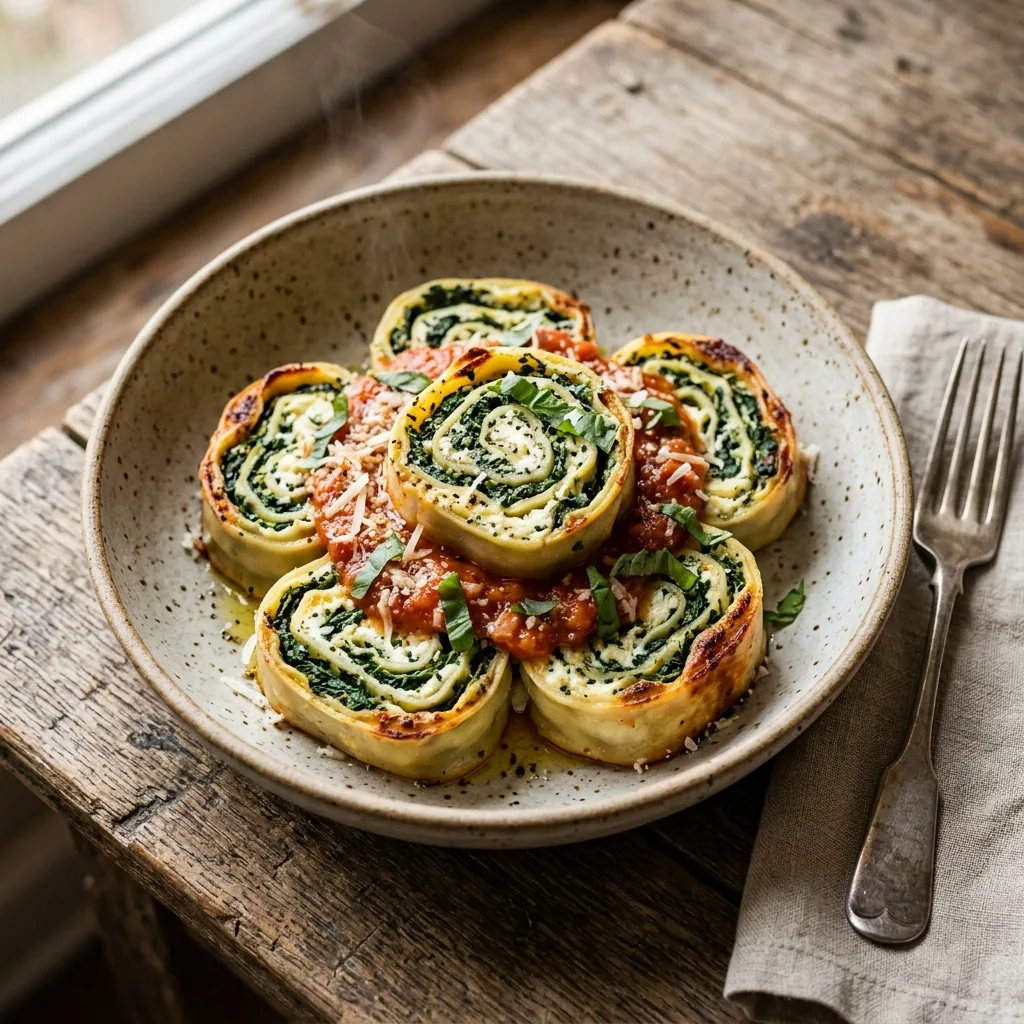
The ‘rotolo’ style of this spinach ricotta bake is what rounds out it from a simple layered dish to a true comfort food masterpiece. Unlike a traditional lasagne where sheets are layered flat, a rotolo involves rolling the pasta sheets with their filling. This technique is crucial for several reasons. Firstly, it ensures an even distribution of the rich spinach and ricotta filling throughout the dish. As the pasta rolls, the filling is encased, preventing it from spilling out during baking and creating distinct, tender layers of pasta and creamy filling in every slice. Secondly, the rolling process creates a more compact structure, which helps the bake hold its shape beautifully when served. The key to a successful rotolo lies in the preparation of the lasagne sheets. They should be pliable enough to roll without cracking. If using fresh sheets, they are usually ready to go. If using dried sheets, they may need a brief soak in hot water to soften, but be careful not to overcook them, as this will make them too fragile to roll. The excess water squeezed from the thawed frozen spinach is also a critical element. Insufficiently drained spinach will introduce too much moisture into the ricotta mixture, leading to a watery filling that can make the pasta sheets soggy and prevent the rotolo from setting properly. The final bake in the passata sauce allows the pasta to cook through and absorb the tomato flavour while the cheese melts and binds the filling, creating a cohesive and deeply satisfying dish.
Troubleshooting
- Problem: Pasta sheets cracking during rolling.
Fix: Ensure your lasagne sheets are adequately softened. If using fresh, they should be pliable. If using dried, briefly soak them in hot (not boiling) water until just pliable, then drain thoroughly. Avoid over-soaking, which makes them too fragile. - Problem: Filling is too watery and seeping out.
Fix: Thoroughly squeeze out as much excess water as possible from the thawed frozen spinach. You can do this by pressing it in a sieve or wrapping it in a clean kitchen towel and wringing it out firmly. - Problem: Rotolo is collapsing or falling apart when sliced.
Fix: Allow the bake to rest for at least 10-15 minutes after removing it from the oven. This resting period allows the filling to set and the pasta to firm up slightly, making it easier to slice cleanly. Ensure the ricotta mixture wasn’t too wet to begin with. - Problem: Undercooked pasta sheets.
Fix: Ensure the passata covers the rolled rotolo sufficiently during baking. If the top seems dry, you can loosely tent it with foil to prevent burning while allowing the pasta underneath to cook through. Check for tenderness with a knife.
Substitutions
- Ricotta Cheese: If you cannot find whole milk ricotta, a good quality part-skim ricotta can be used, though the filling might be slightly less rich. Avoid pre-whipped or spreadable ricotta as it contains stabilizers and air, altering the texture significantly.
- Frozen Spinach: Fresh spinach can be used, but it requires wilting and thorough squeezing to remove excess moisture, similar to frozen spinach. You will need a larger quantity of fresh spinach (around 1kg/2lb) to yield the same amount of cooked, drained spinach.
- Lasagne Sheets: If fresh lasagne sheets are unavailable, you can use no-boil dried lasagne sheets. They may need a brief soak in hot water to become pliable enough for rolling, as per the troubleshooting advice.
- Parmesan Cheese: A good quality Pecorino Romano can be substituted for Parmesan, offering a sharper, saltier flavour profile. Ensure it is finely grated for even distribution within the filling.
Pro tips
- Ensure the spinach is VERY well squeezed to avoid a watery filling.
- Use whole milk ricotta for the best creamy texture.
- If you can’t find fresh lasagne sheets, use no-boil sheets, but you might need a little more sauce.
- Storage: Leftovers can be refrigerated for up to 3 days. Reheat gently in the oven or microwave.
Enjoy this comforting and delicious Spinach and Ricotta Rotolo! It’s a fantastic way to enjoy a hearty Italian-inspired meal.
More from Baked Pasta Recipes →
Frequently asked questions
Can I make spinach ricotta rotolo ahead of time?
Yes, you can assemble the rotolo up to 24 hours in advance. Cover it tightly with plastic wrap and refrigerate. When ready to bake, remove from the refrigerator about 30 minutes before baking to take the chill off, and then bake as directed, adding a few extra minutes if needed.
What can I substitute for ricotta cheese in rotolo?
For a creamy alternative, you can use a combination of cottage cheese (well-drained) and cream cheese. Another option is a firm, pressed tofu blended with nutritional yeast for a cheesy flavor. Goat cheese can also work for a tangier profile, though it will alter the classic flavor.
How do I know when spinach ricotta rotolo is done baking?
The rotolo is done when the pasta is tender and the sauce is bubbling vigorously. The top should be golden brown and slightly crispy. You can test the pasta’s doneness by carefully inserting a knife or skewer into the center; it should slide through easily.
How should I store leftover spinach ricotta rotolo?
Let the rotolo cool completely before storing. Cover it tightly with plastic wrap or transfer it to an airtight container. Refrigerate for up to 3-4 days. Reheat individual portions in the oven or microwave until warmed through. It also freezes well for longer storage.