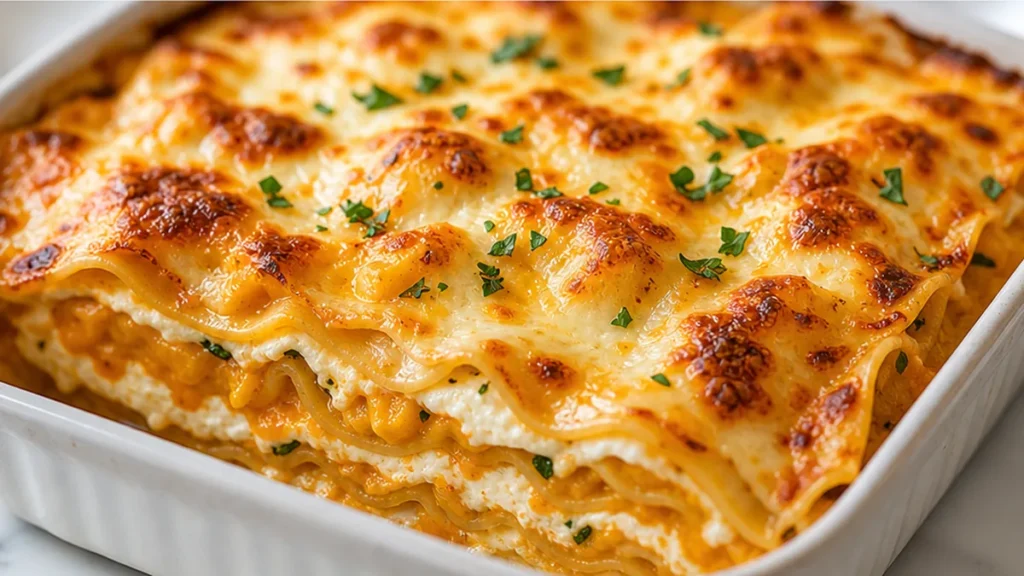
This butternut squash lasagna offers a delightful twist on a classic comfort food, perfect for autumn gatherings or a cozy weeknight dinner. It artfully blends the creamy sweetness of butternut squash with savory herbs and rich ricotta, creating a dish that is both satisfying and elegantly flavorful. Ideal for those seeking a hearty vegetarian meal, this squash lasagna recipe is designed to impress with its depth of flavor and comforting texture. The combination of seasonal squash and traditional lasagna elements makes it a unique and memorable dish that appeals to a wide range of palates.
Key takeaways
- The quality and moisture content of the butternut squash puree are critical for a well-textured lasagna.
- Proper seasoning of the squash and ricotta layers ensures a flavorful dish.
- Covering the lasagna during initial baking allows noodles to cook through evenly.
- Substitutions can be made, but be mindful of potential changes in flavor and texture.

Butternut Squash Lasagna You’ll Crave!
Ingredients
- 4 cups butternut squash puree (i.e. Farmer’s Market Organic canned)
- 1 1/2 tbs. sel de cuisine (features cinnamon, rosemary, and salt)
- 1 tsp minced garlic
- salt and pepper to taste
- 15 oz part-skim ricotta cheese
- 1/2 cup grated Parmesan cheese
- 8 short whole wheat lasagna noodles
- sliced cheese to top pieces (optional – but not really)
Instructions
- Preheat oven to 400°F (200°C). In a bowl, combine butternut squash puree, sel de cuisine blend, minced garlic, and salt and pepper to taste. Mix well.
- In a separate bowl, combine ricotta cheese, 1/4 cup of grated Parmesan cheese, and salt and pepper to taste. Mix well.
- Lightly grease an 8×8 inch baking dish.
- Spread a thin layer of the butternut squash mixture on the bottom of the dish, layer 2 whole wheat lasagna noodles, then spread half of the remaining butternut squash mixture over the noodles.
- Layer 2 more noodles on top, then spread half of the ricotta mixture over these noodles.
- Repeat the layers: noodles, remaining squash mixture, noodles, remaining ricotta mixture.
- Sprinkle the remaining 1/4 cup of Parmesan cheese over the top layer.
- Cover the dish with foil and bake for 45 minutes. Remove foil, top with sliced cheese, and bake/broil for an additional 5-10 minutes, or until cheese is melted and bubbly.
Notes
The technique that makes it
The success of this butternut squash lasagna hinges on two key elements: the preparation of the squash puree and the layering technique. For the squash puree, using a high-quality canned puree, like Farmer’s Market Organic, ensures a smooth, consistent texture and concentrated flavor without the moisture variability that can arise from roasting and pureeing fresh squash at home. This consistency is crucial for a cohesive lasagna filling. The seasoning of the squash puree with ‘sel de cuisine‘ (a blend often containing cinnamon, rosemary, and salt) is deliberate. The cinnamon adds a subtle warmth that complements the squash’s natural sweetness, while rosemary introduces an herbaceous counterpoint. The salt is essential for enhancing all these flavors. Ensure the puree is seasoned well, tasting and adjusting with additional salt and pepper if needed, as it forms the flavor base of the entire dish. The layering itself is straightforward but requires attention to ensure even distribution. A thin layer of the seasoned squash mixture at the bottom of the baking dish prevents the noodles from sticking. Subsequent layers of noodles, ricotta mixture (ricotta combined with Parmesan cheese), and squash mixture build the lasagna. The ricotta cheese acts as a creamy binder, while the Parmesan adds a sharp, nutty depth. The final topping of sliced cheese, while optional, creates a beautifully browned and bubbly crust. Baking at the correct temperature allows the noodles to cook through and the flavors to meld without drying out the lasagna.
Troubleshooting
- Failure: Lasagna is watery. Fix: Ensure your butternut squash puree is not excessively wet. If using homemade, roast the squash until tender and slightly dry before pureeing. For canned, drain any excess liquid. Also, make sure the ricotta mixture isn’t too thin; drain excess liquid from ricotta if necessary.
- Failure: Noodles are undercooked or mushy. Fix: Use whole wheat lasagna noodles as directed, which have a firmer texture. Ensure the lasagna is covered with foil during the initial baking phase to trap steam and cook the noodles evenly. Remove foil for the last part of baking to allow browning.
- Failure: Filling is bland. Fix: Season the butternut squash puree generously with salt, pepper, and the ‘sel de cuisine’ blend. Taste and adjust the seasoning before assembling. The Parmesan cheese in the ricotta mixture also adds significant flavor; don’t skip it.
- Failure: Top is not browned. Fix: If the top isn’t browning to your liking, increase the oven temperature slightly for the last 5-10 minutes of baking, or briefly place it under the broiler, watching very carefully to prevent burning.
Substitutions
- Squash Puree: If butternut squash puree is unavailable, roasted and pureed sweet potato or pumpkin puree can be used. The flavor profile will be slightly different, with sweet potato offering a similar sweetness and pumpkin a more earthy note. Ensure they are unsweetened and unseasoned.
- Sel de Cuisine: A blend of 1 tsp salt, 1/4 tsp cinnamon, and 1/4 tsp dried rosemary can approximate the flavor. Adjust salt to taste.
- Ricotta Cheese: For a dairy-free option, use a firm, unsweetened cashew or almond-based ricotta alternative. The texture may be slightly different, but the creaminess will be comparable.
- Whole Wheat Lasagna Noodles: Regular lasagna noodles can be used, but they may cook faster and absorb more moisture, potentially leading to a softer lasagna. Gluten-free lasagna noodles are also an option if needed.
Pro tips
- Ensure your butternut squash puree is smooth for the best texture.
- Don’t skip the ‘sel de cuisine’ blend; its spices are key to the flavor profile.
- For a richer taste, use a good quality Parmesan cheese.
- If you don’t have whole wheat noodles, regular lasagna noodles work well too.
Enjoy this flavorful butternut squash lasagna, a perfect way to celebrate the season. It’s a comforting dish that’s sure to become a family favorite.
More from Baked Pasta Recipes →
Read also on TastyBend: Ground Turkey Nutrition Facts: Complete Scientific Analysis.
Frequently asked questions
Can I make butternut squash lasagna ahead of time?
Yes, you can assemble the butternut squash lasagna up to 24 hours in advance. Cover it tightly with plastic wrap and refrigerate. When ready to bake, remove the plastic wrap and bake as directed, adding a few extra minutes to the cooking time to ensure it’s heated through.
What can I substitute for butternut squash in lasagna?
If butternut squash is unavailable, consider using acorn squash or kabocha squash. Sweet potatoes also work well as a substitute, offering a similar sweetness and texture. You might need to adjust the roasting time slightly depending on the vegetable chosen.
How do I know when butternut squash lasagna is done?
The lasagna is done when the top is golden brown and bubbly. You can insert a knife into the center; it should go through easily, indicating the squash and noodles are tender. The internal temperature should reach at least 165°F (74°C).
How long does butternut squash lasagna last in the fridge?
Leftover butternut squash lasagna will keep well in the refrigerator for 3 to 4 days. Store it in an airtight container or cover the baking dish tightly with plastic wrap or foil. Reheat individual portions in the oven or microwave until warmed through.