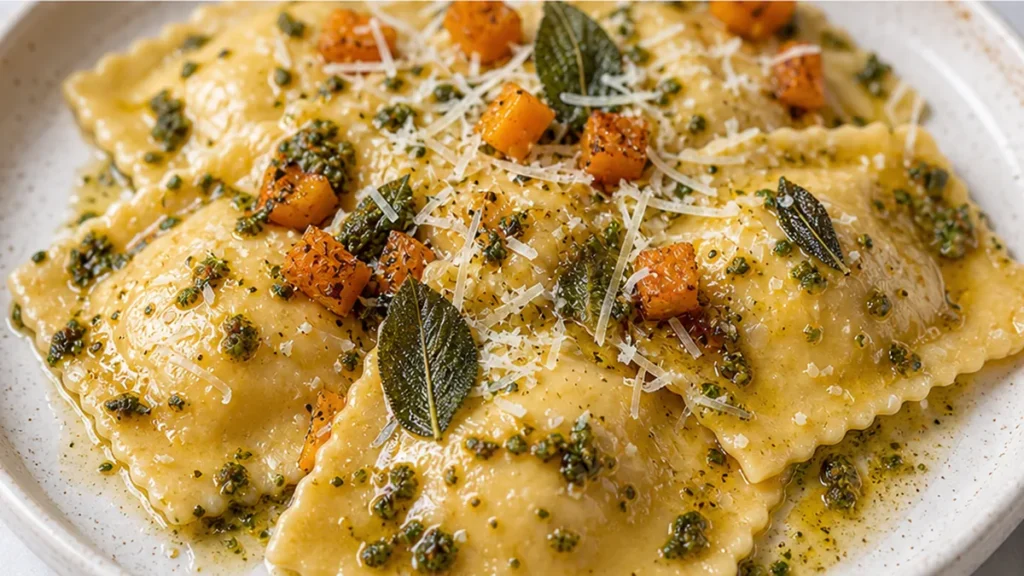
This ultimate squash ravioli recipe improves comfort food to a new level. Combining the sweetness of butternut squash with creamy ricotta and a bright kale pesto, these jumbo ravioli are a delight to make and eat. Perfect for a cozy autumn dinner or impressing guests, this dish offers a satisfying and flavorful experience. The key to these incredible squash ravioli lies in the balance of flavors and textures. The rich butternut squash filling, seasoned perfectly, is encased in delicate wonton wrappers, creating a delightful contrast. The accompanying kale pesto adds a fresh, garlicky brightness that cuts through the richness, making each bite a harmonious blend.
Key takeaways
- Roasting squash concentrates flavor and reduces moisture for a better filling.
- Ensure a strong seal on wrappers to prevent ravioli from opening during cooking.
- Don't overcrowd the pot when boiling to avoid sticking and breakage.
- Adjust seasoning of the filling before assembly for optimal taste.
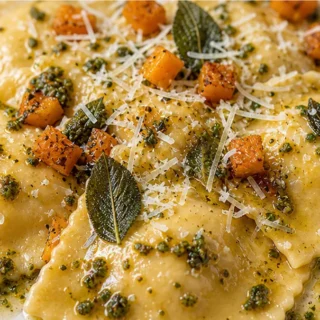
Jaw-Dropping Jumbo Butternut Squash Ravioli!
Ingredients
- 1 whole butternut squash, peeled and cubed and roasted, OR steam-in-the-bag squash, totaling about 4 cups cooked squash
- 1 cup whole milk ricotta
- 1/2 cup grated Parmesan cheese
- 2 tablespoons olive oil
- nutmeg, garlic, thyme, and/or sage (see notes)
- generous pinch of salt and pepper
- 1 beaten egg
- 1 package of round or square wonton wrappers (also gyoza wrappers) (about 50-60)
- Kale Pesto
Instructions
- Combine cooked squash, ricotta, Parmesan, olive oil, seasonings, salt, and pepper in a food processor. Pulse until mostly smooth. The mixture should be very thick and sticky, like cookie dough.
- Bring a large pot of water to a boil.
- Lay out half of the wonton wrappers. Place 1-2 tablespoons of filling in the center of each. Brush the edges with the beaten egg wash. Place another wrapper on top, sealing tightly at the edges, and rounding the top with your palm to make a nice shape.
- Boil the ravioli in batches for about 5-8 minutes. Drain gently (they break easily) and toss with a little olive oil to prevent sticking. Serve with the kale pesto and extra Parmesan cheese!
Notes
The technique that makes it
The key to truly jaw-dropping squash ravioli lies in achieving a perfectly balanced, flavorful, and not-too-wet filling, encased in delicate wonton wrappers. Roasting the butternut squash is paramount. Roasting concentrates the natural sugars in the squash, intensifying its flavor and reducing its moisture content. This is crucial because excess moisture in the filling will make the wonton wrappers soggy and difficult to seal, leading to ravioli that fall apart during cooking. Aim for tender, caramelized edges on your roasted squash cubes. If using steam-in-the-bag squash, ensure it’s cooked until tender but not watery; drain any excess liquid thoroughly before mashing. The combination of creamy ricotta and salty Parmesan cheese provides a luxurious texture and savory depth that complements the sweet squash. The herbs and spices – nutmeg, garlic, thyme, and sage – are not mere additions but essential flavor enhancers. Nutmeg, in particular, has a classic affinity with squash and dairy, adding a warm, aromatic note. A beaten egg acts as a binder, ensuring the filling holds its shape. The wonton wrappers, while simple, require careful handling. They are thin and can tear easily. Working with them slightly damp (but not wet) allows them to be more pliable for sealing. A gentle, consistent seal is vital to prevent the filling from escaping into the cooking liquid. Overcrowding the pot when boiling can also lead to ravioli sticking together and breaking.
Troubleshooting
- Problem: Ravioli wrappers are tearing during sealing.
Fix: Ensure your filling is not too wet. If it is, try adding a little more Parmesan cheese or a tablespoon of breadcrumbs to absorb excess moisture. Also, work with wrappers that are slightly damp, not dry, but avoid soaking them. - Problem: Ravioli are falling apart when boiling.
Fix: This is usually due to a poor seal or a filling that is too wet. Press the edges firmly to ensure a good seal, and consider using a fork to crimp the edges for extra security. Ensure your filling has a good binder (the egg) and is not watery. - Problem: Ravioli are sticking together in the pot.
Fix: Do not overcrowd the pot when boiling. Cook the ravioli in batches, ensuring they have enough space to move freely in the boiling water. Stir gently once they float to the surface. - Problem: Filling is too bland.
Fix: Taste and adjust seasoning before filling the wrappers. Add more salt, pepper, nutmeg, or a pinch of garlic powder or dried herbs as needed. The sweetness of the squash needs savory balance.
Substitutions
- Squash: While butternut is ideal for its sweetness and texture, you can substitute with roasted acorn squash or kabocha squash for a similar flavor profile. Sweet potato can also be used, but it will impart a different, though still delicious, sweetness.
- Cheese: If ricotta is unavailable, a drained whole milk cottage cheese can be a substitute, though the texture will be slightly grainier. For a richer, nuttier flavor, consider substituting half the ricotta with mascarpone cheese.
- Herbs: Fresh herbs like thyme and sage offer the best flavor. If using dried, use about one-third the amount of fresh. A pinch of dried rosemary can also be a flavorful addition.
- Wrappers: While wonton or gyoza wrappers are specifically recommended for their thinness and ease of use, fresh pasta sheets cut into rounds or squares can be used. This will result in a more traditional ravioli texture and may require a more robust sealing method.
Pro tips
- Ensure your squash filling is very thick; a watery filling will make the ravioli hard to seal and prone to breaking.
- Don’t overcrowd the pot when boiling; cook ravioli in batches for even cooking.
- Gently toss the cooked ravioli with olive oil immediately after draining to prevent them from sticking together.
Enjoy these homemade squash ravioli as a show-stopping centerpiece for your next meal. Experiment with different pestos or sauces to make it your own.
More from Easy Pasta Recipes →
Read also on TastyBend: Ground Turkey Nutrition Facts: Complete Scientific Analysis.
Frequently asked questions
How do I know when jumbo butternut squash ravioli is done?
The ravioli are done when they float to the surface of the boiling water. This typically takes about 4-6 minutes for fresh pasta. Taste one to be sure; it should be tender but still have a slight bite, indicating perfect al dente texture.
Can I make jumbo butternut squash ravioli ahead of time?
Yes, you can prepare the ravioli a day in advance. Lay them on a lightly floured baking sheet, cover loosely with plastic wrap, and refrigerate. For longer storage, freeze them in a single layer until solid, then transfer to a freezer bag.
What sauce is best for jumbo butternut squash ravioli?
A brown butter sage sauce is a classic and complements the sweetness of the squash beautifully. Alternatively, a creamy Alfredo sauce or a simple marinara can also work well, depending on your preference.
How do I store leftover cooked jumbo butternut squash ravioli?
Leftover cooked ravioli should be stored in an airtight container in the refrigerator. They are best consumed within 2-3 days. Reheat gently in a pan with a little sauce or butter to prevent them from becoming mushy.