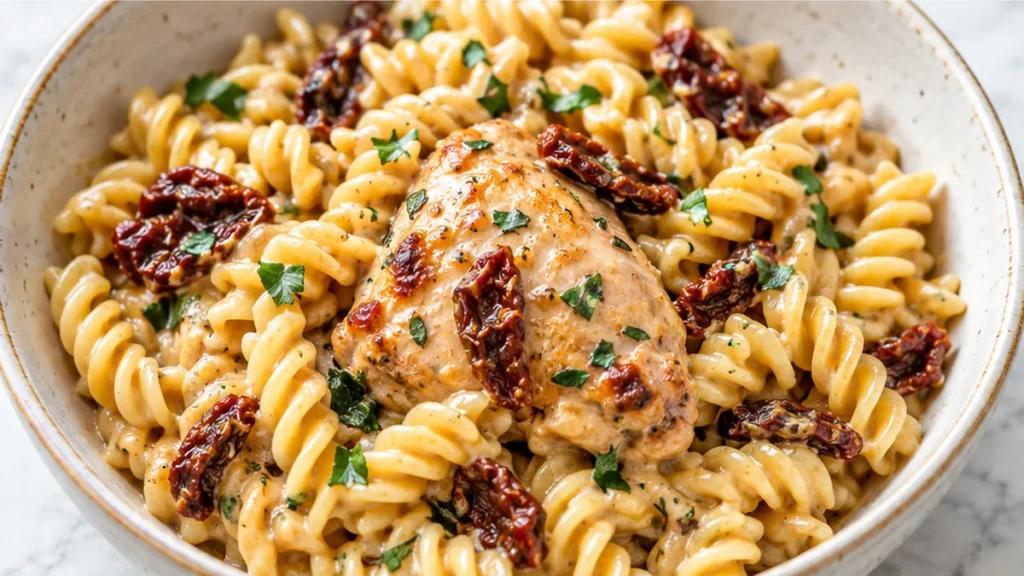
Sun-dried tomato chicken pasta is the ultimate comfort food that comes together in under an hour, making it perfect for busy weeknights. This recipe focuses on building deep flavor with simple ingredients, ensuring a rich, creamy sauce that perfectly coats tender chicken and pasta. The key to this sun-dried tomato chicken pasta is deglazing the pan with broth and incorporating the sun-dried tomato oil, which infuses the sauce with an incredible depth of flavor. It’s a dish that tastes like it took hours, but is surprisingly quick to prepare.
Key takeaways
- Sun-dried tomatoes enhance flavor and texture significantly.
- Control heat to prevent cream from curdling in the sauce.
- Common issues include curdling and thin sauce; solutions are available.
- Ingredient swaps can create lighter or dairy-free versions without losing creaminess.

Creamy Sun-Dried Tomato Chicken Pasta
Ingredients
- 6 Bone-in, skinless Chicken Thighs
- Salt and freshly ground pepper (to taste)
- 1 tablespoon Olive Oil (from sundried tomatoes in oil)
- 2 teaspoons Butter
- 1 teaspoon Garlic (minced)
- ½ teaspoon Dried Thyme
- ½ teaspoon Chilli Flakes
- ½ cup Sun-dried Tomatoes (roughly chopped)
- ¾ cup Low sodium Chicken Broth
- ½ cup Heavy Cream
Instructions
- Season the chicken thighs generously with salt and pepper.
- Melt the butter in a large skillet over medium-high heat. Add the chicken thighs and sear for 3-4 minutes per side until golden brown.
- Remove the chicken from the skillet and set aside on a plate.
- Add the sun-dried tomato oil to the same skillet. Add the minced garlic, dried thyme, and chilli flakes. Sauté for 1-2 minutes until fragrant.
- Stir in the chopped sun-dried tomatoes and chicken broth. Bring to a simmer, scraping up any browned bits from the bottom of the pan. Season with a pinch of salt and pepper.
- Return the chicken thighs to the skillet. Cover and cook for 20-25 minutes, or until the chicken is cooked through and tender.
- Stir in the heavy cream and simmer gently for 1-2 minutes until the sauce thickens slightly. Toss with your favorite cooked pasta and serve immediately.
Video
Notes
Understanding the Role of Sun-Dried Tomatoes in Flavor Development
Sun-dried tomatoes are a key ingredient in this dish, contributing both texture and a concentrated burst of flavor. The drying process intensifies their sweetness and umami characteristics, making them an excellent complement to the richness of the creamy sauce. Typically, sun-dried tomatoes contain about 70% less water than fresh tomatoes, which means they pack a powerful flavor punch. When you add them to the dish, they not only enhance the taste but also provide a chewy texture that contrasts beautifully with the tender chicken and creamy sauce.
Perfecting the Creamy Sauce: Techniques and Tips
The sauce in this recipe is a delightful blend of heavy cream and chicken broth, creating a rich and velvety texture. To achieve the perfect emulsion, it’s crucial to control the heat. Begin by heating the chicken broth before incorporating the heavy cream, as this helps prevent the cream from curdling. Aim for a simmering temperature around 85°C (185°F) when combining the two. This temperature allows for a smooth blend without boiling, which can separate the fats in the cream. Stirring constantly while adding the cream ensures that it integrates fully, resulting in a cohesive sauce.
Common Issues and Solutions When Making Creamy Sun-Dried Tomato Chicken Pasta
One common issue when making creamy sauces is the risk of curdling. If your sauce curdles, it’s often due to high heat or adding cold cream to hot broth. To fix this, remove the sauce from the heat immediately and whisk in a splash of warm broth to temper the cream before reheating gently. Another potential problem is a sauce that’s too thin. If this happens, you can thicken it by simmering it longer to reduce the liquid or adding a cornstarch slurry (1 tablespoon cornstarch mixed with 2 tablespoons water) to achieve a desired consistency. Lastly, if the sauce lacks flavor, consider enhancing it with additional seasonings like garlic powder or more sun-dried tomatoes.
Ingredient Swaps and Their Effects
While the original recipe is delicious, there are several swaps you can make that will still yield a tasty dish. For instance, if you prefer a lighter sauce, you can substitute half of the heavy cream with Greek yogurt. This will introduce a tangy flavor while reducing calories. Alternatively, if you want a dairy-free option, use coconut milk instead of heavy cream; it will provide a different flavor profile but still create a creamy texture. If you can’t find sun-dried tomatoes, roasted red peppers can serve as a substitute, though they will impart a different sweetness and texture. Lastly, for a spicier kick, consider swapping dried thyme with fresh basil and adding more chili flakes.
Unique Aspects of This Dish
This creamy sun-dried tomato chicken pasta stands out for its combination of flavors and textures that are rarely found in traditional pasta dishes. The use of sun-dried tomatoes not only enhances the dish’s flavor but also adds a distinct chewiness, complementing the tender chicken thighs and the velvety sauce. Additionally, the method of using both olive oil and butter in the sautéing process creates a rich base that elevates the overall taste. This dual fat approach allows for a deeper flavor profile and a more luxurious mouthfeel, making this dish a standout choice for dinner parties or special occasions.
How to Successfully Scale Creamy Sun-Dried Tomato Chicken Pasta
Scaling a recipe can be tricky, especially when it comes to maintaining the balance of flavors and textures. For this sun-dried tomato chicken dish, if you want to double the recipe, ensure you adjust the cooking time accordingly. For instance, when cooking more chicken thighs, consider using a larger pan to avoid overcrowding, which can lead to uneven cooking. Ideally, increase the chicken broth and cream proportionately, maintaining a ratio of 1:1.5 for broth to cream for that creamy consistency. If you find the sauce too thick, add a splash of pasta water to loosen it up without sacrificing flavor.
Understanding the Importance of Equipment in Cooking Techniques
The choice of equipment can significantly impact the outcome of your creamy sun-dried tomato chicken pasta. A heavy-bottomed skillet is ideal for even heat distribution, which is crucial for browning the chicken thighs properly. If using a non-stick pan, you may need less oil, but ensure it can withstand higher temperatures for searing. Additionally, using a lid while simmering the dish can help retain moisture and enhance the chicken’s tenderness. If you opt for a pressure cooker, adjust the liquid amounts slightly, as pressure cooking requires less liquid than traditional methods.
Serving Suggestions and Pairings for Enhanced Flavor
When serving creamy sun-dried tomato chicken pasta, consider pairing it with fresh ingredients that complement the dish’s rich flavors. A side of sautéed spinach or a simple arugula salad with a light vinaigrette can add a refreshing contrast. For a more indulgent experience, serve with garlic bread or a sprinkle of freshly grated Parmesan cheese on top. Wine pairings can also elevate the meal; a light white wine, such as Pinot Grigio, pairs well with the creamy sauce, enhancing the overall dining experience.
How Seasonal Changes Affect Ingredient Quality in Your Dish
Ingredient quality can vary with the seasons, impacting the overall flavor of your creamy sun-dried tomato chicken pasta. In summer, fresh herbs like basil can replace dried thyme, providing a vibrant and aromatic quality to the dish. Conversely, during winter, the flavors of sun-dried tomatoes become even more pronounced, adding depth to the creamy sauce. Always consider sourcing high-quality chicken and cream; organic options tend to have richer flavors. Adjusting your ingredient choices based on seasonal availability can enhance the dish’s taste and nutritional value.
Understanding the Emulsion for a Creamy Sauce
Creating a smooth and creamy sauce in your sun-dried tomato chicken pasta relies heavily on the emulsion process. Emulsification is the combination of fat and liquid, which typically do not mix. In this recipe, the heavy cream acts as the liquid, while the olive oil and butter provide the fat. To achieve a stable emulsion, it is crucial to incorporate the cream gradually into the hot chicken broth while whisking continuously. This should be done at a temperature of around 70°C (160°F) to ensure that the fat molecules disperse evenly, resulting in a creamy texture. If the sauce separates, it could be due to adding the cream too quickly or cooking it at too high a temperature. Maintaining a gentle simmer rather than a vigorous boil is essential for preventing the sauce from breaking, which can lead to a grainy texture.
Batch Scaling: Adjusting Ingredients for Larger Portions
When scaling up your sun-dried tomato chicken pasta recipe for a larger gathering, it’s vital to adjust ingredient ratios carefully to maintain flavor and texture. For instance, if doubling the recipe, you should not simply double the amount of salt and spices without tasting, as flavors can intensify. A good rule of thumb is to increase the salt by 75% and then adjust according to taste. Additionally, consider the cooking time; larger batches may require a longer simmer to ensure the chicken is fully cooked and the flavors meld together effectively. If using a larger pot, keep in mind that the heat distribution may differ, so monitor the cooking temperature closely. Aim for a consistent internal temperature of 74°C (165°F) for the chicken to ensure food safety. This way, you can serve a deliciously creamy sun-dried tomato chicken pasta that satisfies a crowd without compromising on quality.
Understanding the Best Practices for Make-Ahead Creamy Sun-Dried Tomato Chicken Pasta
Preparing creamy sun-dried tomato chicken pasta in advance can be a great time-saver for busy weeknights. To successfully make this dish ahead of time, cook the chicken thighs fully and allow them to cool before storing them in an airtight container. The pasta can also be cooked al dente, as it will absorb some sauce when reheated, preventing it from becoming mushy. Store the sauce separately to maintain its creamy texture. When ready to serve, reheat the chicken and sauce gently over low heat, adding a splash of chicken broth or cream to restore creaminess. This method allows the flavors to meld and can even enhance the dish. However, be cautious of reheating too quickly, as high temperatures can cause the cream to separate, leading to an unappealing texture.
How to Adjust for Seasonal Ingredient Variability in Creamy Sun-Dried Tomato Chicken Pasta
The quality of ingredients can significantly affect the outcome of your creamy sun-dried tomato chicken pasta. For instance, sun-dried tomatoes can vary in flavor intensity and moisture content depending on the season. During peak summer months, you might find fresher, more flavorful tomatoes, which can enhance your dish. Conversely, off-season tomatoes may be less vibrant and require a bit more seasoning to achieve the desired flavor. When using fresh herbs or vegetables, consider their peak seasons; for example, basil in the summer can add a fresh note, while dried herbs may be more suitable in colder months. Adjusting the amount of garlic and chili flakes can also compensate for the varying potency of ingredients throughout the year, ensuring a balanced flavor profile regardless of the season.
Pro tips
- Use good quality sun-dried tomatoes packed in oil for the best flavor.
- Don’t skip deglazing the pan; those browned bits are pure flavor!
- For a spicier kick, increase the chilli flakes.
- If adding pasta, cook it al dente as it will finish cooking in the sauce.
Enjoy this creamy, satisfying sun-dried tomato chicken pasta that’s sure to become a family favorite. Serve with a side salad for a complete meal!
Frequently asked questions
Can I use fresh tomatoes instead of sun-dried tomatoes?
While fresh tomatoes can be used, they will not provide the same concentrated flavor as sun-dried tomatoes. To mimic their sweetness, consider roasting fresh tomatoes until caramelized before adding them to the dish.
What can I do if my sauce is too thick?
If your sauce becomes too thick, you can thin it out by adding a bit more chicken broth or heavy cream. Gradually add small amounts while stirring until you reach the desired consistency.
How do I store leftovers of this dish?
To store leftovers, let the dish cool completely before transferring it to an airtight container. It can be refrigerated for up to 3 days. Reheat gently on the stove, adding a splash of broth to restore creaminess.
Can I make this dish ahead of time?
Yes, you can prepare the chicken and sauce ahead of time. Simply store them separately and combine them with freshly cooked pasta just before serving to maintain the best texture and flavor.
More from Chicken Pasta Recipes →