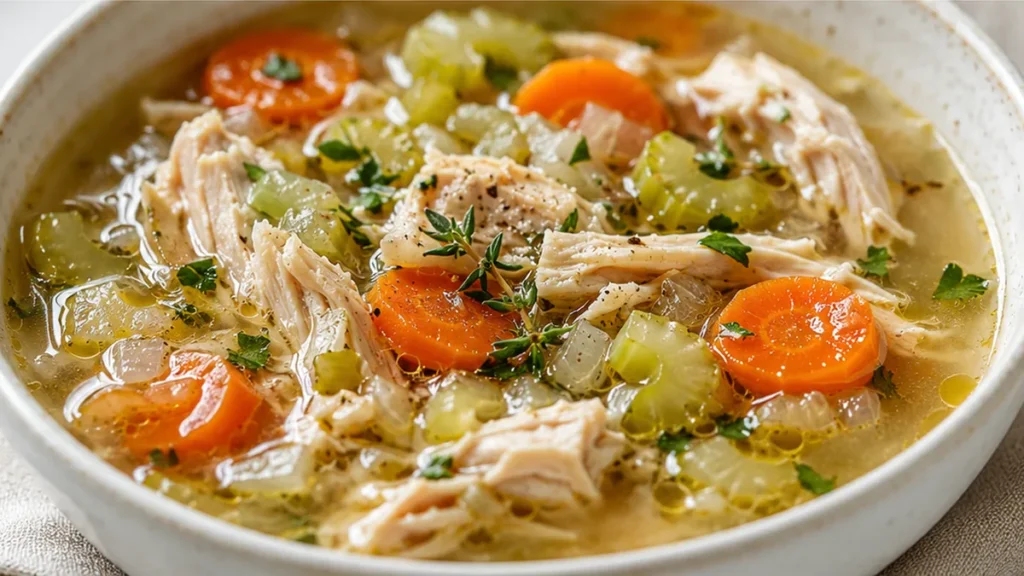
Turkey soup: This hearty and comforting soup is the ultimate way to use leftover turkey, transforming it into a delicious meal. Packed with tender vegetables like carrots and celery, aromatic herbs, and tiny ancini di pepe pasta, this turkey soup recipe is incredibly satisfying. It’s an easy, flavorful dish perfect for a chilly evening or a wholesome lunch. Making turkey soup is simple and rewarding. The key is to build flavor from the start with sautéed aromatics and good quality broth. This recipe ensures every spoonful is rich and comforting, making it a go-to for using up Thanksgiving or holiday turkey.
Key takeaways
- Cook the acini di pepe separately if you want clear broth or expect leftovers, since these pinhead grains keep absorbing liquid and cloud the pot.
- Add the pre-cooked leftover turkey near the end and only bring it to 165F, because boiling already-cooked meat squeezes it dry.
- Sweat the onion, celery and carrot slowly for 6 to 8 minutes and add garlic only in the last minute so nothing burns bitter.
- Bruise and chop the fresh sage, rosemary and thyme, then stir them in during the final 2 to 3 minutes so their oils smell alive at the table.
Cozy Turkey Soup
Ingredients
- 1 tablespoon extra-virgin olive oil
- 1 small onion, diced (~1 cup)
- 2 medium celery stalks, thinly sliced (~1 cup)
- 3 medium carrots, thinly sliced (~1 ¼ cups)
- 3 garlic cloves, minced
- 2 ½ cups leftover cooked turkey, cut or shredded into bite-sized pieces (1 lb)
- 6 cups low-sodium chicken broth
- ⅔ cup dry ancini di pepe pasta
- 1 ½ tablespoons minced fresh herbs (sage, rosemary, thyme)
- ½ teaspoon fine salt, plus more to taste
Instructions
- Place a large pot or Dutch oven (6 quarts or larger) over medium heat.
- When the pot is hot, add the olive oil.
- Add the chopped onion, celery, and carrots. Stir and cook until the onion starts to soften, about 7-8 minutes.
- Add the garlic and cook until fragrant, about 1 minute.
- Add the cooked turkey and broth to the pot.
- Increase heat to medium-high and bring to a boil, uncovered.
- Reduce heat to low, cover, and simmer until vegetables are almost tender, about 10 minutes.
- Add the pasta and simmer until cooked through, about 8-10 minutes.
Video
Notes
Why acini di pepe turns your leftover turkey soup cloudy (and how to keep the broth clear)
Turkey soup goes cloudy when acini di pepe simmers directly in the pot, because these pinhead-sized spheres (only a few millimeters across, per Share the Pasta) shed surface starch straight into the broth. The two-thirds cup of dry pasta in this recipe cooks in roughly 8 to 10 minutes at a bare simmer, and every minute past that releases more amylose and swells the grains further. If you want a glassy, brothy bowl rather than a thickened one, cook the acini di pepe in a separate pot of salted water, drain it, and spoon it into each serving bowl before ladling the soup over. Cooked in the pot, the pasta thickens the liquid and tastes homier; cooked apart, the six cups of low-sodium chicken broth stay bright and light-bodied. Both are correct. Decide which texture you are after before the pasta hits the water.
The starch math that also controls tomorrow’s leftovers
Acini di pepe never stops drinking liquid once it is wet. A portion that looks perfect at dinner will have soaked up a visible amount of your six cups of broth by breakfast, and reheating only accelerates it because carryover heat keeps the granules gelatinizing. Cooks on r/Cooking pin the mushiness on that residual heat more than on the storage itself. The fix is structural: undercook the pasta by about a minute if it lives in the pot, and if you expect leftovers, store the cooked acini di pepe separately from the broth and combine only at serving. A quarter cup of extra broth stirred into reheated portions restores the volume the pasta stole overnight.
Keeping 2 1/2 cups of leftover turkey tender instead of stringy and dry
Leftover turkey is already fully cooked, so the single biggest mistake is boiling it. The 2 1/2 cups (one pound) of shredded meat in this recipe only needs to reach a safe serving temperature of 165 degrees F / 74 degrees C, the leftover reheating standard published by FoodSafety.gov and the USDA Food Safety and Inspection Service. That happens in two to three minutes of gentle simmering. Push it to a rolling boil for fifteen and the muscle fibers contract and squeeze out what little moisture remains, leaving stringy, cottony shreds. Add the turkey near the end, after the carrots are tender and the pasta is nearly done. White-meat scraps suffer most from over-reheating; dark meat, richer in connective tissue and fat, forgives a longer stint. If your leftover bird was already overcooked, the broth genuinely rescues it, because the surrounding liquid masks dryness that a dry plate cannot.
Bite-sized really means bite-sized here
Cut or shred the turkey into pieces small enough to load a soup spoon alongside a carrot slice and a scatter of acini di pepe. Big chunks reheat unevenly, sink, and dominate the spoon; half-inch shreds distribute through all six cups of broth and warm through the instant they hit the pot.
Sweating the mirepoix so this turkey soup tastes deep, not watery
The onion, celery, and carrot are your only built-in flavor base, so how you cook them decides whether the finished bowl tastes rich or thin. This recipe uses roughly one cup onion, one cup celery, and one and a quarter cups carrot, close to the classic mirepoix ratio of two parts onion to one part each celery and carrot that Simon Wood and most French kitchens teach. In one tablespoon of extra-virgin olive oil over medium-low heat, sweat them for six to eight minutes until the onion turns translucent and smells sweet, not raw. Sweating (not browning) pulls water out and concentrates sugars without the bitterness of scorched edges. The three minced garlic cloves go in only for the final 30 to 60 seconds, because garlic burns and turns acrid fast once the pan is hot. Rush this stage and no amount of broth or salt fixes the hollow, watery result later.
When to add sage, rosemary and thyme so they smell alive at the table
Add the one and a half tablespoons of minced fresh sage, rosemary, and thyme in the last few minutes, not at the start. Long simmering drives off the volatile oils that make these herbs smell vivid, leaving a flat, hay-like background note. Food Republic recommends bruising fresh herbs first (press them on the board or between your fingers until the color darkens and the surface looks wet) to release those oils, then chopping and stirring them in near the end. Because sage, rosemary, and thyme are hardy, woody herbs, you have a small window of flexibility: a two-part trick works beautifully here. Toss the bare stems into the broth early for a complex background, then stir the finely chopped leaves in during the final two to three minutes for the bright top note. A final pinch over each bowl is the difference between soup that smells herby and soup that only tastes of broth.
Fixing bland, over-salted, or one-note bowls before serving
Most turkey soup problems trace to salt timing and broth choice, both fixable in the last five minutes. Serious Eats notes that low-sodium broth carries only about 16 percent of the sodium in regular broth, which is exactly why this recipe leans on it: you control the seasoning instead of the carton doing it for you. Salt in stages and taste as you go.
- Tastes flat and thin: the mirepoix was rushed or the broth is unsalted. Add the half teaspoon of salt, taste, then climb in quarter-teaspoon steps. A squeeze of lemon at the end also lifts a dull bowl without more salt.
- Too salty: you likely used full-sodium broth instead of low-sodium. Add a cup of water or unsalted broth and a few extra carrot slices; the starch and dilution pull it back.
- Broth turned thick and gluey by the second day: the acini di pepe absorbed the liquid. Loosen with a quarter to half cup of warm broth per bowl when reheating.
- Herbs taste like nothing: they went in too early. Stir in a fresh pinch of chopped thyme and sage just before serving.
Smart swaps and what each one costs you
- Ditalini or orzo for acini di pepe: both work in the same 8 to 10 minute window, but their larger surface means faster broth absorption, so expect thicker leftovers sooner. For a gluten-free bowl, cook the pasta separately and add per serving.
- Turkey stock for the six cups of chicken broth: deeper, more roasted flavor if you simmered the carcass; the trade-off is it is often saltier, so hold back the half teaspoon of salt until you taste.
- Rotisserie chicken for the 2 1/2 cups of leftover turkey: identical technique and reheat rules, slightly milder flavor and a touch more moisture in white meat.
- Dried herbs for fresh: use one third the amount (about one and a half teaspoons total) and add them earlier with the broth, since dried sage, rosemary, and thyme need simmering time to rehydrate and bloom.
What freezing does to the ancini di pepe and how to freeze this soup without mush
Freeze the broth and the acini di pepe separately, because that tiny pasta keeps drinking liquid for days and turns to paste once thawed. The starch granules in acini di pepe hydrate fully within about 9 minutes of cooking, then continue swelling in storage; a portion frozen with the pasta already in it loses roughly a third of its broth to the grains and reheats cloudy and gluey. Ladle the turkey, mirepoix, and broth into containers, leave 2 cm of headspace for expansion, and freeze up to 3 months at minus 18 C (0 F). Cook a fresh two-thirds cup of pasta the night you serve it, or hold it in a separate bag. Refrigerated, the finished soup keeps 3 to 4 days, matching the food-safety window the USDA sets for cooked poultry. Reheat gently to 74 C (165 F) rather than a hard boil, which shreds the turkey further. If you already cooked the pasta into the whole pot, add a splash of broth or water when reheating to loosen the acini di pepe that has bound the liquid. The carrots and celery survive freezing better than the pasta; they soften by one stage but hold their shape. For meal-prep logic that carries over to other brothy dishes, this guide to building better soups from scratch is a useful companion.
Doubling the pot for a crowd without watering down the turkey flavour
Scale the aromatics and turkey by your exact multiplier, but hold the broth at about 1.8 times per doubling rather than a flat 2x, because a wider, fuller pot loses less to evaporation and a straight double often tastes thin. This recipe runs on 6 cups broth to roughly 1 lb turkey and 3 cups of vegetables; that ratio is what carries the flavour. When you double, the mirepoix needs a bigger surface to sweat properly, so use an 8-quart pot or work in two batches for the onion, celery, and carrot step. Crowding drops the pan temperature below the 90 to 120 C range where the vegetables release their sugars, and you end up steaming instead of sweating, which is exactly what makes a big-batch soup taste watery. Keep the acini di pepe at two-thirds cup per 6 cups of broth; scaling pasta linearly is safe as long as you add it near serving, since a larger volume of that pasta will soak up broth aggressively if it sits. Salt last and by taste, because a doubled pot of low-sodium chicken broth does not need double the half-teaspoon of salt to hit the same seasoning; concentration, not volume, drives perceived saltiness. For festive-scale planning around leftover bird, Serious Eats and America’s Test Kitchen both note that turkey carcass stock deepens a scaled pot far more than extra water ever will, so simmer the bones if you have them. A quick browse through our collection of cozy soup ideas can help you round out a larger spread.
Pro tips
- Sauté the vegetables until tender-crisp to develop their flavor.
- Use low-sodium broth so you can control the saltiness.
- Don’t overcook the pasta; it will continue to cook slightly after adding.
- For a richer flavor, use homemade chicken stock if available.
- Taste and adjust seasoning at the end.
Enjoy this warming turkey soup anytime you need a comforting and delicious meal. It’s a perfect way to savor those leftover turkey flavors!
Frequently asked questions
Can I cook the acini di pepe directly in the turkey soup?
Yes, but it changes the result. Cooked in the pot for 8 to 10 minutes, the pasta sheds starch that thickens and slightly clouds the broth, giving a homier, heavier bowl. Cook it separately and add it per serving if you want clear, light broth or plan to keep leftovers, since the grains keep absorbing liquid.
How do I stop the leftover turkey from turning dry and stringy?
Add the shredded turkey near the end and heat it only to 165 degrees F, the USDA leftover reheating standard, which takes two to three minutes of gentle simmering. Because the meat is already cooked, a hard boil contracts the fibers and squeezes out moisture. Dark meat forgives longer heat than lean white meat.
Why did my soup turn into a thick paste in the fridge overnight?
The acini di pepe kept drinking your broth. These tiny pasta grains never stop absorbing liquid once wet, and carryover heat accelerates it during storage and reheating. Loosen each portion with a quarter to half cup of warm broth when you reheat, or store the cooked pasta separately from the broth next time.
When should I add the fresh sage, rosemary and thyme?
Stir them in during the last two to three minutes. Long simmering drives off the volatile oils that make these herbs smell vivid, leaving a flat note. Bruise the leaves first by pressing them until they darken and look wet, then chop and add. A final pinch over each bowl sharpens the aroma even more.
More from Baked Pasta Recipes →