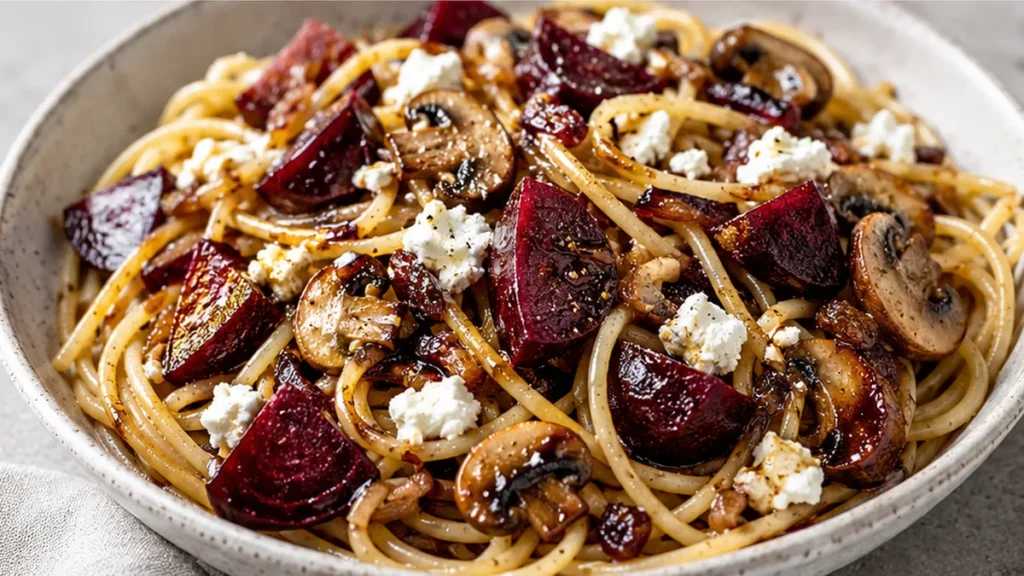
This balsamic pasta recipe features tangy caramelized goat cheese. It’s a quick and easy dish perfect for a weeknight meal, balancing rich flavors.
Key takeaways
- Achieve a thick, syrupy balsamic reduction by simmering over low heat.
- Blend the cooked beets thoroughly to create a smooth sauce base for emulsification.
- Reserve pasta water to adjust sauce consistency and ensure it coats the pasta evenly.
- Sauté mushrooms and garlic until well-browned to build savory depth.
Tangy Caramelized Balsamic Goat Cheese Pasta!
Ingredients
- 4 tablespoons olive oil
- 4 medium red beets, quartered
- 1 tablespoon chopped fresh thyme
- kosher salt and pepper
- 1 pound long cut pasta, such as spaghetti
- 2 tablespoons butter
- 8 ounces cremini mushrooms, sliced
- 4 cloves garlic, thinly sliced
- 1 cup balsamic vinegar
- 2-3 tablespoons honey
Instructions
- Preheat the oven to 425 degrees F.
- On a baking sheet, toss together 2 tablespoons olive oil, the beets, thyme, and a good pinch of salt + pepper. Transfer to the oven and roast for 25-30 minutes or until the beets are tender and lightly charred.
- Meanwhile, bring a large pot of salted water to a boil. Boil the pasta until al dente according to package directions. Just before draining, reserve 1 cup of the pasta cooking water. Drain.
- Melt the butter and 2 tablespoons olive oil in a large skillet over high heat. Add the mushrooms and cook until they just begin to caramelize on the edges, about 5 minutes. Add the garlic and cook 30 seconds to 1 minute or until fragrant. Remove the mushrooms and garlic from the skillet and place on a plate. To the same skillet, add the balsamic vinegar, honey and crushed red pepper flakes. Bring to a boil over medium high heat and cook for 5-8 minutes or until the balsamic reduces by about 1/3 and is sticky to touch. Reduce the heat to low and stir in the pasta and mushrooms. Toss to coat, if the sauce seems too thick, thin it with a little of the pasta cooking water. Season to taste with salt and pepper.
- Serve the pasta immediately, topped with roasted beets, goat cheese, and pomegranate arils (if using). Eat!
Notes
The Technique That Makes It: Mastering the Balsamic Reduction and Beet Emulsion
This balsamic pasta recipe hinges on two key techniques: achieving a perfect balsamic reduction and creating a creamy, emulsified sauce with the beets and goat cheese. The balsamic vinegar reduction is crucial for concentrating its flavor and sweetness. Simmering the vinegar allows the alcohol to evaporate and the sugars to caramelize, transforming it into a syrupy glaze. This process requires careful heat control; too high, and it can burn, resulting in a bitter taste. Too low, and it won’t thicken sufficiently. The beets, when blended, provide a natural, vibrant base for the sauce. Their inherent starches, combined with the fat from the olive oil and butter, and the tang of the goat cheese, help to create a stable emulsion. This emulsion binds the sauce ingredients together, preventing separation and ensuring a smooth, cohesive coating for the pasta. The Maillard reaction during the mushroom sauté also adds depth, creating savory, browned notes that complement the sweet and tangy sauce.
Troubleshooting
- Sauce is too thin: If the balsamic reduction hasn’t thickened enough or the beet mixture is too liquid, return it to low heat and simmer gently, stirring constantly, until it reaches a syrupy consistency. You can also create a slurry of 1 teaspoon cornstarch mixed with 2 teaspoons cold water and whisk it into the simmering sauce to thicken it quickly.
- Balsamic sauce is bitter: This usually happens if the balsamic vinegar burned during reduction. To fix this, try stirring in an additional teaspoon of honey to balance the bitterness. Ensure future reductions are done over lower heat.
- Pasta is sticky: Ensure you use plenty of salted water for cooking the pasta and cook it until al dente. Reserve at least 1 cup of the starchy pasta water before draining. This water is essential for emulsifying the sauce and can be added gradually to achieve the desired consistency and prevent sticking.
- Goat cheese won’t incorporate smoothly: Ensure the beet and balsamic mixture is warm but not boiling when you add the goat cheese. Whisk vigorously or blend briefly to help it melt and emulsify evenly into the sauce.
Substitutions
- Beets: Roasted red peppers can be used as a substitute for beets. They will provide a different flavor profile, leaning more towards sweet and smoky, and will create a vibrant red-orange sauce.
- Goat Cheese: Cream cheese or a soft, mild feta can be used instead of goat cheese. Cream cheese will yield a milder, richer sauce, while feta will add a saltier, tangier dimension.
- Thyme: Fresh rosemary or sage can be substituted for thyme. Rosemary offers a more pungent, pine-like flavor, while sage provides an earthy, slightly peppery note. Adjust quantity as these herbs can be stronger.
- Honey: Maple syrup or agave nectar can be used as sweeteners. Maple syrup will impart a distinct caramel-maple flavor, while agave offers a neutral sweetness.
Pro tips
- For best results, use a good quality balsamic vinegar; it makes a huge difference in the glaze’s flavor.
- When caramelizing mushrooms, ensure the skillet is hot and don’t overcrowd it to achieve a nice sear.
- Leftover balsamic pasta can be stored in an airtight container in the refrigerator for up to 3 days. Reheat gently in a skillet with a splash of water or vegetable broth to loosen the sauce, avoiding the microwave if possible to maintain texture.
This caramelized balsamic goat cheese pasta is a testament to how simple ingredients can create extraordinary flavors. Experiment with adding toasted nuts or fresh herbs for an extra touch. Enjoy crafting this delightful dish!
Frequently asked questions
Why does my balsamic glaze taste bitter?
Balsamic glaze can become bitter if the vinegar is reduced too quickly over high heat, causing the sugars to burn. Always use low to medium-low heat and stir frequently. If it’s slightly bitter, adding a touch more honey can help balance the flavor.
Can I use pre-cooked beets?
Yes, you can use pre-cooked, vacuum-sealed beets. Ensure they are plain and not pickled. Drain them well before pureeing. The texture might be slightly different, but they will work as a substitute for fresh, cooked beets in this recipe.
What if my sauce separates?
Sauce separation often occurs if the ingredients aren’t emulsified properly or if the temperature is too high. Ensure the beet puree is warm when adding goat cheese. Gradually adding reserved pasta water while whisking vigorously helps to bring the emulsion back together.
How can I make this pasta spicier?
To add a spicy kick, you can incorporate red pepper flakes along with the garlic during the sautéing process. Start with half a teaspoon and adjust to your heat preference. A pinch of cayenne pepper could also be added to the sauce.
More from Creamy Pasta Recipes →