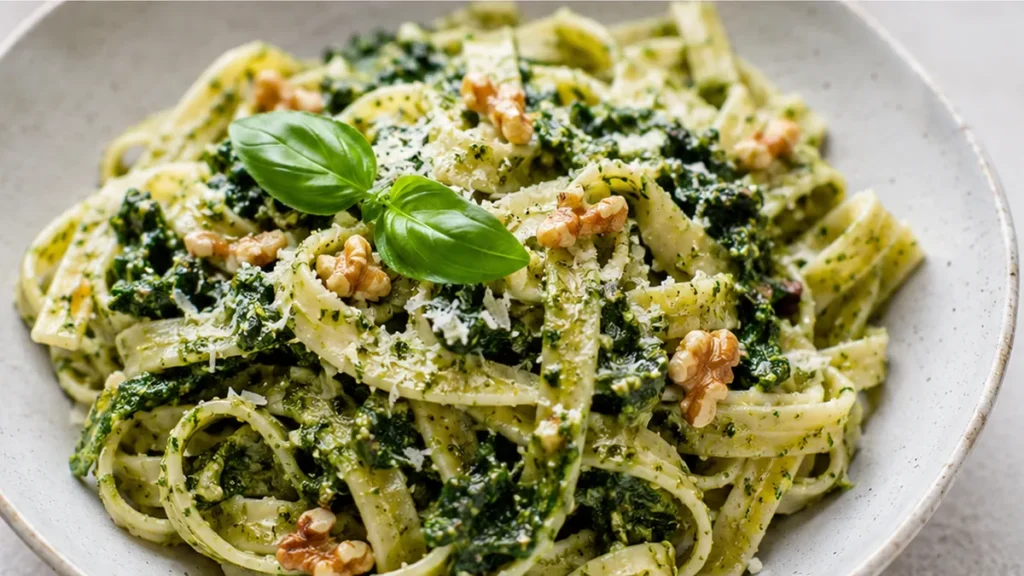
Kale pesto pasta stands out for its flavor and speed. This recipe transforms nutritious kale into a bright, herbaceous pesto that clings beautifully to your favorite pasta, offering a delightful twist on a classic. The kale might seem likely to overpower the basil in this kale pesto, but the balance works. It’s a wonderful way to incorporate more greens into your diet without sacrificing taste, making it ideal for busy weeknights or a quick, satisfying lunch. This particular kale pesto pasta stands out with its rich, buttery walnuts, adding a layer of texture and nutty depth that truly elevates the dish.
Key takeaways
- Blanching kale is essential for texture and color.
- Toast walnuts for enhanced flavor and reduced bitterness.
- Use starchy pasta water to create a creamy, emulsified sauce.
- Emulsify the sauce gently off-heat or over very low heat.
Creamy Kale Pesto Pasta!
Ingredients
- 1 bunch Tuscan kale, roughly chopped (about 2 cups)
- 1 cup fresh basil
- 1/2 cup grated parmesan cheese
- 1/3 cup extra virgin olive oil
- 1/2 teaspoon kosher salt
- 1 pinch crushed red pepper flakes
- 3/4 pound your favorite pasta
- 1/4 teaspoon black pepper
- 3 tablespoons salted butter
- 1 cup raw walnuts (roughly chopped)
Instructions
- In a blender or food processor, combine the kale, basil, parmesan, olive oil, and a pinch of salt and crushed red pepper. Pulse until chunky smooth.
- Bring a large pot of salted water to a boil. Cook the pasta according to package directions until al dente. Reserve 1/2 cup of the pasta cooking water. Drain the pasta.
- Meanwhile, heat the butter and walnuts in a large skillet. Cook 5 minutes, stirring occasionally, until the butter is browned and the walnuts are toasted. Remove the nuts from the skillet to a plate.
- Add the pasta to the skillet. Add the kale pesto and a pinch of pepper. Toss to combine. Thin the pasta as desired with the reserved pasta cooking water.
- Serve the pasta topped with the buttery walnuts. Enjoy!
Notes
The Technique: Creating a Silky, Vibrant Pesto Emulsion
The success of this kale pesto pasta hinges on creating a stable, vibrant pesto that emulsifies beautifully with the pasta cooking water and butter. Unlike traditional basil pesto, Tuscan kale has a tougher texture and a more robust, slightly bitter flavor. Blanching the kale briefly is a crucial step. This process softens the tough cell walls, making it easier to blend into a smooth consistency and mellowing its bitterness. It also helps to preserve the kale’s bright green color. When blending the pesto, the ratio of liquid (olive oil) to solids (kale, basil, walnuts, cheese) is key to achieving a creamy, emulsified sauce rather than a dry paste. The walnuts, when toasted, add a depth of flavor and a slightly coarser texture that complements the smooth pesto. The addition of pasta water, a starchy liquid, acts as a binder, helping the pesto cling to the pasta and creating a cohesive, glossy sauce. The final step of tossing the pasta with butter, pesto, and a splash of pasta water over low heat allows the ingredients to meld together, forming a rich, creamy emulsion.
Troubleshooting
- Problem: Pesto is too bitter or gritty. Fix: Ensure the tough kale stems were removed before blending. Blanching the kale for 60 seconds in boiling water, then immediately shocking in ice water, significantly reduces bitterness and softens the leaves for smoother blending. Toasting the walnuts also enhances their flavor and reduces any raw bitterness.
- Problem: Sauce is too dry or oily. Fix: The key is the starchy pasta water. Gradually add it, a tablespoon at a time, while tossing the pasta with the pesto and butter off the heat. This emulsifies the sauce, creating a creamy consistency. Aim for a sauce that coats the pasta without being soupy or greasy.
- Problem: Pesto color is dull brown. Fix: Over-processing the kale or blending at high speed for too long can oxidize the greens, leading to a loss of color. Blanching the kale and shocking it in ice water helps lock in the vibrant green. Blend in short bursts, adding olive oil gradually to aid in smooth processing without excessive heat.
- Problem: Sauce separates after a few minutes. Fix: This indicates a weak emulsion. Ensure you used enough starchy pasta water and that it was incorporated properly over gentle heat. Tossing the pasta with the pesto and butter off the heat, then returning to very low heat for a minute, helps stabilize the emulsion.
Substitutions
- Kale: Spinach can be substituted for Tuscan kale. The result will be a milder, less earthy pesto with a similar vibrant green color.
- Walnuts: Pine nuts are a classic pesto ingredient and can be used instead of walnuts. This will yield a smoother, slightly sweeter pesto with a more traditional flavor profile. Almonds also work, offering a slightly different nutty depth.
- Parmesan Cheese: Pecorino Romano can be used for a sharper, saltier flavor. For a vegan version, nutritional yeast can be used, though it will alter the flavor profile significantly, offering a cheesy, umami note without the same richness.
- Olive Oil: Avocado oil or another neutral-flavored oil can be used if extra virgin olive oil is unavailable. The flavor will be less pronounced, but the texture of the pesto will remain similar.
Pro tips
- For a truly vibrant kale pesto, blanch the kale in boiling water for 30 seconds then immediately plunge into ice water before blending. This locks in the color.
- If your pesto seems too thick, gradually add more olive oil or a tablespoon of the reserved pasta water until it reaches your desired consistency.
- Store leftover kale pesto in an airtight container in the refrigerator for up to 5 days, with a thin layer of olive oil on top to prevent browning. It also freezes well for up to 3 months.
This kale pesto pasta with buttery walnuts is a testament to how simple ingredients can create extraordinary flavors. Give it a try and discover your new favorite way to enjoy kale!
Frequently asked questions
How do I make the kale pesto smoother?
Ensure you remove the tough center ribs of the Tuscan kale leaves before blending. Blanching the kale briefly also softens it. Blend the ingredients in stages, adding the olive oil gradually, and use a high-powered blender if possible. A final pass through a food mill can also achieve a very smooth texture if needed.
Can I make the kale pesto ahead of time?
Yes, the kale pesto can be made up to 3 days in advance and stored in an airtight container in the refrigerator. A thin layer of olive oil on top will help prevent oxidation and maintain its vibrant green color. Bring to room temperature and re-whisk with a little pasta water before tossing with pasta.
What if I don’t have Tuscan kale?
You can substitute regular Lacinato kale or even baby spinach. If using baby spinach, you may need slightly less, as it wilts down more. The flavor profile will be milder than with Tuscan kale, but the pesto will still be delicious and vibrant.
How can I make this recipe vegan?
Omit the Parmesan cheese and butter. For the cheese, substitute 2-3 tablespoons of nutritional yeast for a cheesy flavor. For the butter, you can use a vegan butter alternative or simply rely on the olive oil and a bit more pasta water to create a creamy sauce. Ensure your pasta is also egg-free.
More from Creamy Pasta Recipes →