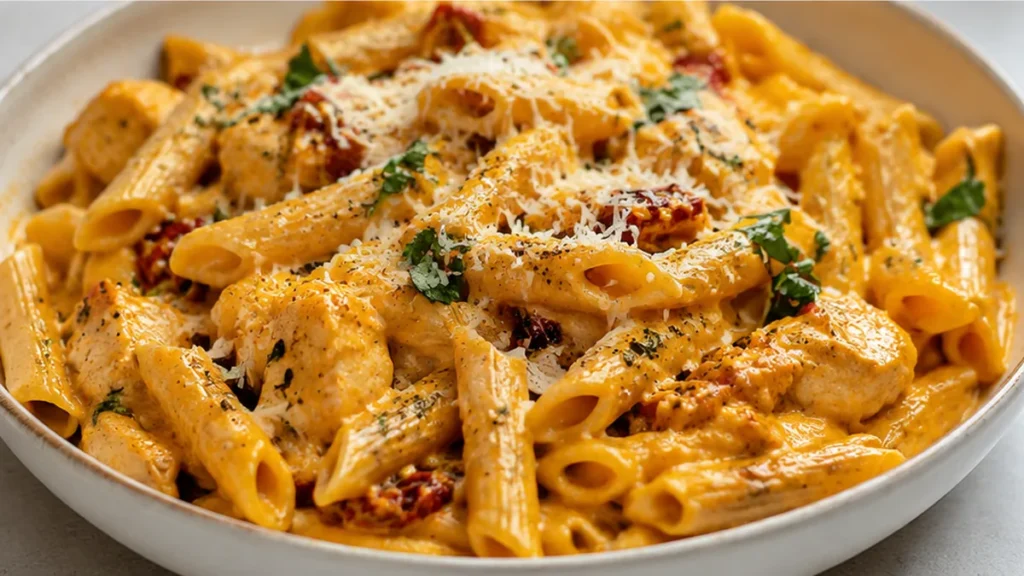
This butternut squash pasta recipe offers a rich, savory flavor profile. The creamy sauce, made from roasted butternut squash, pairs perfectly with sun-dried tomatoes and chicken.
Key takeaways
- Achieve a creamy, emulsified sauce by gently simmering heavy cream and Parmesan cheese with the softened butternut squash.
- Control sauce thickness by simmering uncovered to reduce excess liquid or adding pasta water if too thick.
- Prevent grainy sauce by avoiding overheating the cheese; maintain a medium-low heat.
- Ensure tender chicken by searing for flavor and then finishing cooking gently to avoid dryness.
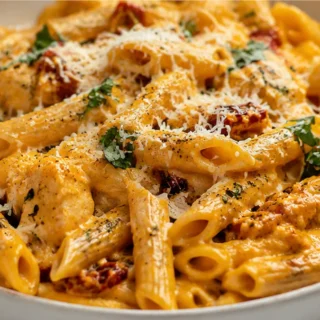
Creamy Butternut Squash Pasta
Ingredients
- 1 tablespoon extra virgin olive oil
- 2 cups cubed butternut squash
- 6-10 cloves garlic
- 1 shallot, quartered
- 2 tablespoons chopped fresh sage
- 1 tablespoon chopped fresh rosemary
- kosher salt and black pepper
- 1 cup heavy cream
- 1 cup grated parmesan cheese
- 1 jar (8 ounce) oil-packed sun-dried tomatoes
- 1 pound boneless, skinless chicken breast
- 2 tablespoons unsalted butter
- 2 tablespoons Italian seasoning
- 3 1/2 cups water
- 1 pound pasta (e.g., penne, rigatoni)
- 1/4 cup fresh basil, chopped
Instructions
- Preheat oven to 400°F. On a baking sheet, toss together the olive oil, butternut squash, garlic, shallot, sage, rosemary, salt, and pepper. Bake for 20 minutes, until the squash is tender.
- Add the roasted butternut squash, garlic, and shallot to a food processor. Puree until smooth. Add 1/3 cup heavy cream and 1/3 cup parmesan. Season with salt and pepper. Blend until creamy.
- Meanwhile, drain 3 tablespoons of oil from the sun-dried tomato jar into a large pot or skillet with sides. Chop the sun-dried tomatoes and set aside.
- Set the pot over medium-high heat. Add the chicken, 2 tablespoons of Italian seasoning, salt, and pepper. Cook until golden brown, about 5 minutes. Remove the chicken from the pot.
- To the same pot, add the butter and 1 tablespoon Italian seasoning. Cook until fragrant, about 1 minute. Add 3 1/2 cups water. Bring to a boil, add the pasta, and cook, stirring often, until the pasta is al dente, about 8 minutes.
- Stir in the butternut puree, 2/3 cup heavy cream, 2/3 cup parmesan, chopped sun-dried tomatoes, and the cooked chicken with any juices left on the plate.
- Serve topped with parmesan and fresh basil. Enjoy immediately.
Notes
The Technique That Makes It Creamy
The magic behind this butternut squash pasta lies in creating a stable, luscious sauce. We achieve this through a two-pronged approach: the emulsification of fats and the careful management of starch. First, the butternut squash, when roasted or sautéed with garlic and shallots, breaks down into a tender, slightly starchy base. This forms the foundation of our sauce. The key to its creaminess is the combination of heavy cream and Parmesan cheese. When heated gently, the fat globules in the cream and the proteins in the cheese emulsify with the water content from the squash and any rendered chicken fat. This process creates a smooth, cohesive sauce that coats the pasta beautifully. Overheating can cause the cheese to seize and become grainy, so maintaining a medium-low simmer is crucial. The oil from the sun-dried tomatoes also contributes to the sauce’s richness and helps bind the ingredients.
Troubleshooting
- Sauce is too thin: Simmer the sauce uncovered for a few extra minutes to allow excess water to evaporate. Ensure the Parmesan cheese is fully incorporated and not clumped.
- Sauce is grainy or oily: This often happens if the sauce is overheated, causing the cheese proteins to break down. Reduce heat immediately and whisk vigorously. Adding a tablespoon of pasta water can sometimes help re-emulsify.
- Squash is not tender: Ensure the butternut squash is cut into uniform, bite-sized cubes. If sautéing, cover the pan for a portion of the cooking time to trap steam and aid in softening.
- Chicken is dry: Avoid overcooking the chicken. Sear it quickly on both sides to develop flavor and color, then finish cooking it in the sauce or remove it to rest while the sauce is made, slicing it before adding back to the finished pasta.
Substitutions
- Butternut squash: Acorn squash or sweet potatoes can be used, though they may impart a slightly different sweetness and texture. The cooking time might need slight adjustment.
- Heavy cream: Half-and-half can be used for a lighter sauce, but it will be less rich and potentially thinner. Coconut milk (full-fat) is a dairy-free alternative, but will alter the flavor profile significantly.
- Parmesan cheese: Pecorino Romano offers a sharper, saltier flavor. A good quality aged cheddar can also work, but will change the classic Italian profile.
- Chicken breast: Boneless, skinless thighs offer more flavor and moisture. Tofu or large white beans can be used for a vegetarian option, adding them towards the end of cooking.
Pro tips
- To ensure the chicken is cooked through and juicy, check for an internal temperature of 165°F (74°C) using a meat thermometer.
- For a richer flavor profile, consider adding a splash of white wine to the pot after cooking the Italian seasoning, letting it reduce slightly before adding water for the pasta.
- Store leftover butternut squash pasta in an airtight container in the refrigerator for up to 3 days. Reheat gently on the stovetop with a splash of milk or broth to maintain its creamy texture.
This roasted butternut squash pasta is a testament to how simple ingredients can create extraordinary flavors. Experiment with different pasta shapes or add a sprinkle of fresh goat cheese for an extra tang. Enjoy this comforting dish!
Frequently asked questions
Can I use pre-cubed butternut squash?
Yes, pre-cubed butternut squash is a convenient option. Ensure the cubes are roughly uniform in size for even cooking. You may need to adjust the sautéing or roasting time slightly depending on the freshness and size of the cubes.
What kind of pasta is best for this sauce?
Short, sturdy pasta shapes like penne, rigatoni, or fusilli are ideal. Their nooks and crannies hold onto the creamy butternut squash sauce exceptionally well, ensuring every bite is coated in flavor.
How can I make this recipe spicier?
To add heat, consider incorporating a pinch of red pepper flakes along with the Italian seasoning when cooking the chicken. You could also add a small amount of cayenne pepper to the sauce base while it simmers.
Can I make the sauce ahead of time?
The sauce can be made a day in advance and refrigerated. Gently reheat it over low heat, adding a splash of water or cream if it has become too thick. Stir in the Parmesan cheese just before serving to maintain its smooth texture.
More from Creamy Pasta Recipes →