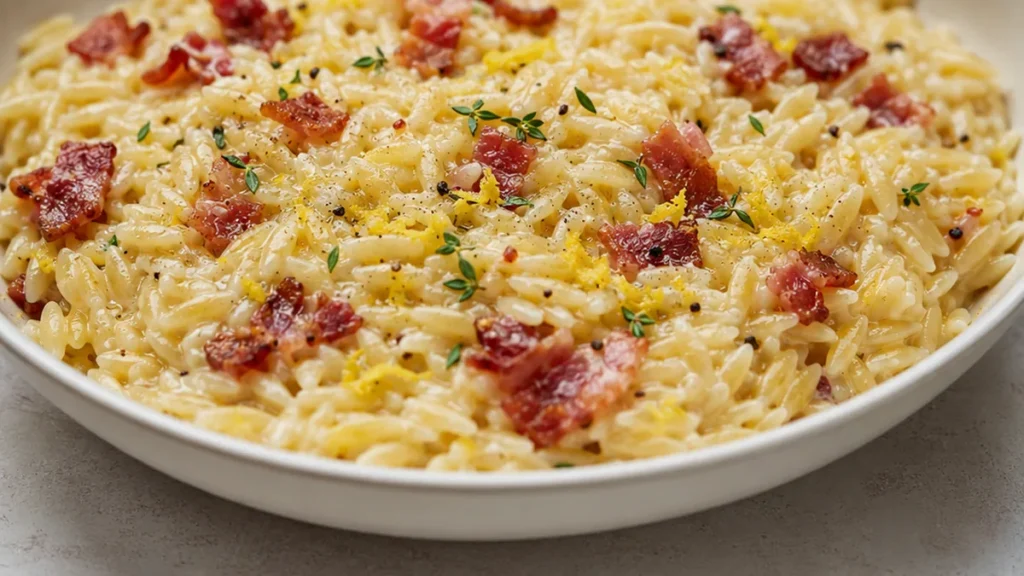
Orzo carbonara offers a delightful twist on a classic, transforming simple ingredients into a dish that’s both comforting and bright. This recipe elevates the traditional carbonara experience by introducing the vibrant freshness of lemon and the tender bite of orzo pasta. Orzo might seem unlikely to hold a carbonara sauce like spaghetti, but the smaller pasta pearls embrace the creamy lemon butter sauce in a unique, irresistible way, making every mouthful a burst of flavor. This particular orzo carbonara is designed for ease and maximum flavor, perfect for those seeking a quick yet sophisticated meal.
Key takeaways
- Control the heat carefully when adding eggs to prevent scrambling.
- Use room temperature eggs and cheese for a smoother sauce.
- Cook orzo to al dente to avoid a mushy texture.
- Add lemon juice and zest at the end for bright flavor without curdling.
Creamy Lemon Orzo Carbonara
Ingredients
- 6 slices bacon, chopped
- 2 tablespoons salted butter, at room temperature
- 1 lemon, zested and juiced
- 2 tablespoons fresh thyme leaves
- 2 cloves garlic, chopped
- 1 pound dry orzo pasta
- salt and black pepper
- 3 large eggs, at room temperature
- 1 cup freshly grated parmesan cheese
Instructions
- Cook the bacon in a large skillet over medium heat until crisp. Drain onto a paper towel. If desired, remove some of the bacon fat.
- To the skillet, add the butter, lemon zest, thyme, and chopped garlic. Cook until fragrant, about 1 minute. Add the orzo and toast for 2 minutes. Add 3 cups water and season with salt and pepper. Cook for 5 minutes, until the orzo is al dente and most of the liquid has evaporated.
- Whisk together the eggs and parmesan in a bowl until well combined.
- Remove the orzo from the heat. Immediately add the egg/cheese mixture, tossing quickly and continuously (to ensure the eggs do not scramble) until the eggs thicken and create a creamy sauce. Season with additional salt and pepper to taste.
- Serve the carbonara with grated parmesan and the cooked bacon. Enjoy immediately!
Notes
The technique that makes it
The magic of this Creamy Lemon Orzo Carbonara lies in creating a stable, luscious sauce using the residual heat of the cooked orzo and the emulsifying power of eggs and cheese. The key is temperature control. You are not cooking the eggs into scrambled eggs; instead, you are gently tempering them with the hot pasta and rendered bacon fat. The starch released from the orzo as it cooks, combined with the fat from the bacon and butter, and the finely grated Parmesan, forms the base of your emulsion. The lemon zest and juice are added at the end to brighten the rich sauce without curdling the dairy. Ensure your eggs and Parmesan are at room temperature to help them incorporate smoothly and prevent a sudden temperature shock that could scramble the eggs.
Troubleshooting
- Sauce is too thick or clumpy: This usually means the heat was too high, causing the eggs to scramble. Immediately remove the pot from the heat and vigorously whisk in a tablespoon or two of the reserved hot pasta water. The hot water and starch will help loosen the sauce and create a smoother emulsion.
- Sauce is too thin: The pasta might not have released enough starch, or not enough cheese was used. Return the pot to very low heat (or residual heat) and stir in an additional tablespoon of Parmesan cheese, whisking constantly. Allow it to gently melt and thicken the sauce.
- Orzo is mushy: The orzo was likely overcooked. Cook the orzo until it is al dente, meaning it has a slight bite. It will continue to absorb liquid and soften slightly when mixed with the sauce. Check the package directions for the recommended cooking time and start testing a minute or two before it’s up.
- Lemon flavor is too sharp: Too much lemon juice was added, or it was added too early. Lemon juice is acidic and can break emulsions if added to hot eggs. Add lemon zest and juice towards the very end of the cooking process, after the sauce has formed, and stir gently.
Substitutions
- Bacon: Pancetta or guanciale can be used for a more traditional carbonara flavor. The result will be a slightly different, perhaps more refined, pork flavor profile. Prosciutto, crisped up, could also work for a saltier, leaner alternative.
- Thyme: Fresh parsley or chives would offer a fresh, herbaceous note. Parsley will provide a clean, green flavor, while chives will add a mild oniony bite.
- Parmesan cheese: Pecorino Romano is a classic substitute in carbonara, offering a sharper, saltier, and tangier flavor. A blend of Parmesan and Pecorino Romano is also excellent.
- Butter: You can omit the butter and rely solely on the rendered bacon fat for richness. The sauce might be slightly less creamy but will still be delicious and rich from the pork fat.
Pro tips
– For the creamiest orzo carbonara, ensure your skillet is off the heat when you add the egg and cheese mixture. This prevents the eggs from scrambling and ensures a silky smooth sauce. – Cook your bacon until genuinely crisp, as its texture provides a wonderful contrast to the tender orzo. – If the sauce seems too thick, add a splash of the pasta water you cooked the orzo in—its starchiness helps emulsify the sauce beautifully.
This Lemon Butter Orzo Carbonara is a testament to how simple ingredients can create extraordinary flavors. Give it a try and discover your new favorite pasta dish. Don’t forget to share your delicious creations!
Frequently asked questions
Can I make this orzo carbonara ahead of time?
This dish is best served immediately. The sauce relies on the heat of the pasta and the emulsion of eggs and cheese, which can break or become clumpy if left to sit. Reheating can also scramble the eggs, ruining the creamy texture.
What if I don’t have bacon?
You can substitute pancetta or guanciale for a similar cured pork flavor. If you prefer a vegetarian option, omit the bacon and use olive oil or extra butter for sautéing the garlic, although you will lose the smoky, savory notes.
Why is my sauce scrambled?
The most common reason for scrambled eggs in carbonara is adding the egg mixture to pasta that is too hot, or cooking the pasta and egg mixture over direct high heat. Remove the pan from the heat before tossing with the egg and cheese mixture.
How do I make the sauce creamier?
Ensure you use enough cheese and whisk vigorously as you combine the eggs, cheese, and hot pasta. The starch from the orzo, combined with the fat and cheese, creates the emulsion. A splash of the starchy pasta cooking water can also help achieve a silkier consistency.
More from Creamy Pasta Recipes →