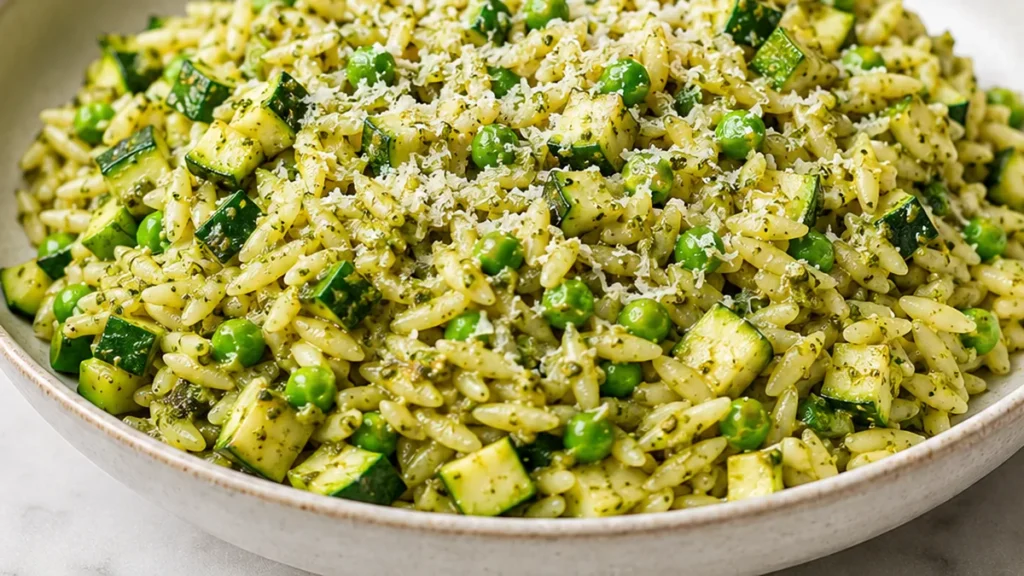
This Pesto Orzo is a revelation for anyone seeking a fast, flavorful, and satisfying meal. Designed for speed and taste, this dish transforms simple ingredients like risoni, zucchini, peas, and bright pesto into a dish. It’s the perfect answer to ‘what’s for dinner?’ when time is short but flavor is a must.
Key takeaways
- The key to this quick pesto orzo is sautéing aromatics and tender-crisp zucchini before cooking the orzo in the flavorful base.
- Preserve the pesto's fresh flavor by adding it at the end.
- Adjust liquid for desired consistency and avoid overcooking the orzo.
Zucchini Pesto Orzo: 15-Minute Summer Dream!
Ingredients
- 2/3 cup risoni
- 1 tbsp olive oil
- 2 1/2 tbsp basil pesto
- 1 small onion, diced
- 1 garlic clove, crushed
- 3 cups zucchini, diced
- 1 cup frozen peas, preferably defrosted
- 1/4 tsp salt
- Black pepper
- Parmesan cheese, freshly grated
Instructions
- Bring 8 cups of water to a boil in a large saucepan.
- Add risoni and cook for 4 minutes, then add peas and cook for 1 minute more until al dente.
- Reserve 1/2 cup of pasta water, then drain risoni and peas.
- Heat olive oil in a fry pan over medium-high heat.
- Add garlic and onion; sauté for 1 minute until softened.
- Add zucchini and sauté for 2-3 minutes until tender and lightly golden.
- Stir in pesto, drained risoni and peas, reserved pasta water, salt, and pepper. Simmer for 1 minute until liquid is absorbed.
- Serve immediately, garnished generously with freshly grated Parmesan cheese.
Notes
The technique that makes it
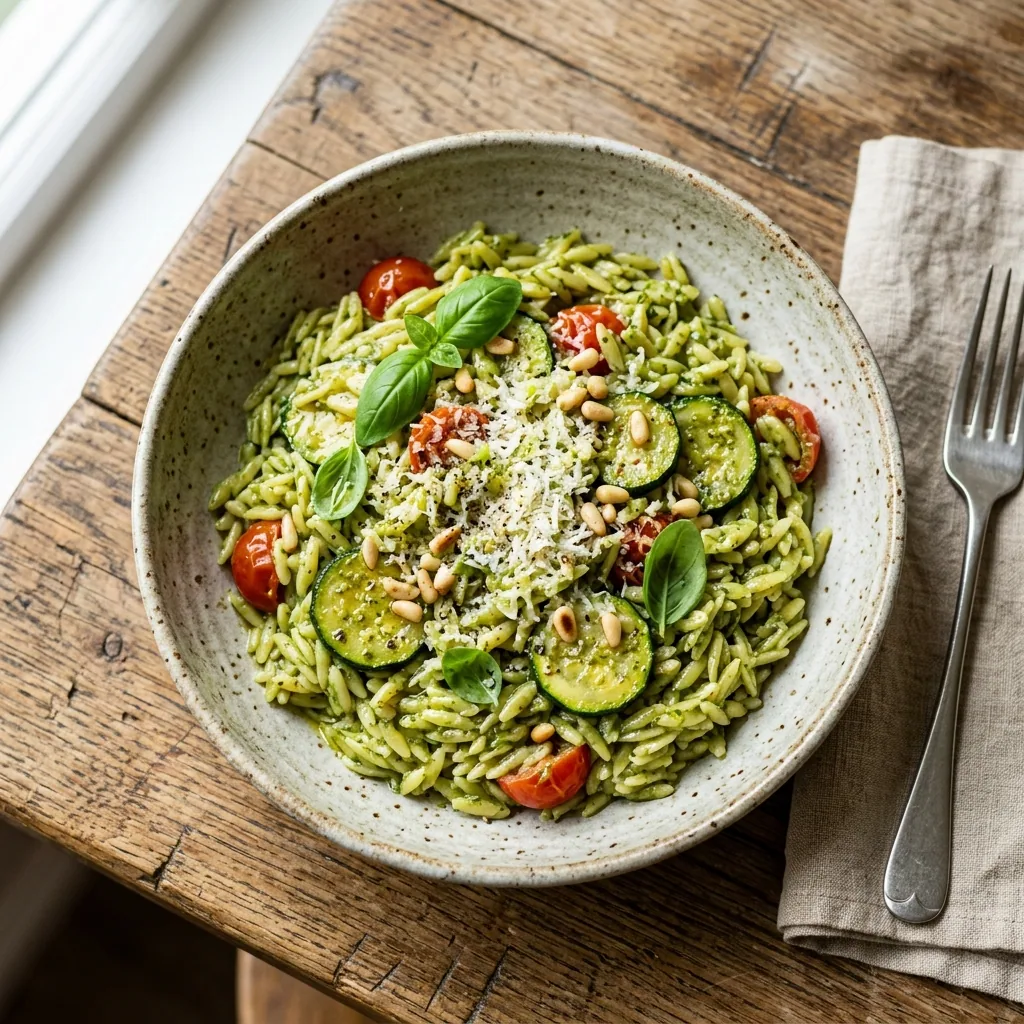
What makes this 15-minute pesto orzo work is a few key techniques that ensure a harmonious blend of flavors and textures without overcooking the delicate orzo pasta. The foundation is building flavor quickly. Starting with sautéing the onion and garlic in olive oil releases their aromatic compounds, creating a savory base. Crucially, the zucchini is added next and cooked just until tender-crisp. Overcooking zucchini will make it watery and mushy, detracting from the dish’s freshness. The goal is to retain a slight bite. When the orzo (also known as risoni) is added, it’s important to understand its cooking process. Unlike traditional pasta, orzo cooks relatively quickly, absorbing liquid and becoming creamy. By adding it to the pan with the sautéed vegetables and then introducing the liquid (implicitly from the vegetables and the pesto, with the option to add a splash of water or broth if needed), you allow it to cook directly in the flavorful base. This method, often referred to as a ‘one-pan’ or ‘pilaf-style’ cooking for pasta, ensures each grain of orzo is coated in the delicious pesto and infused with the vegetable flavors. The final addition of pesto off the heat, or with minimal residual heat, is vital. Pesto, particularly if it contains fresh basil and cheese, can lose its bright color and fresh flavor if subjected to prolonged high heat. Stirring it in at the end preserves its bright, herbaceous notes and creamy texture, making the pesto orzo a true summer dream.
Troubleshooting
- Problem: Orzo is mushy or overcooked. Fix: Ensure you are using the correct cooking time for orzo, which is typically 8-10 minutes. Avoid adding too much extra liquid and stir frequently to prevent sticking and clumping. If it overcooks, it’s best to start over as the texture cannot be recovered.
- Problem: Pesto flavor is dull or lost. Fix: Add the pesto towards the end of the cooking process, ideally after removing the pan from the heat. High heat can degrade the fresh basil and cheese components of the pesto, diminishing its bright, fresh flavor and aroma.
- Problem: Dish is too dry. Fix: While the recipe doesn’t call for a lot of extra liquid, if the orzo absorbs all the moisture and the dish seems dry, add a tablespoon or two of hot water or vegetable broth while stirring in the pesto. This will help loosen the orzo and create a silkier sauce.
- Problem: Zucchini is watery. Fix: Ensure the zucchini is diced and added to the pan after the aromatics but before the orzo. Cook it for only 2-3 minutes until just tender-crisp. Avoid overcrowding the pan, which can steam the zucchini instead of sautéing it, releasing excess moisture.
Substitutions
- Orzo (Risoni): You can substitute with other small pasta shapes like ditalini, acini di pepe, or even couscous. If using couscous, prepare it according to package directions separately and then toss it with the sautéed vegetables and pesto at the end. The cooking time will vary significantly.
- Basil Pesto: If you don’t have basil pesto, a sun-dried tomato pesto or a Kalamata olive tapenade can offer a different but equally delicious flavor profile. For a nut-free option, look for pestos made without pine nuts or use a seed-based alternative.
- Frozen Peas: Fresh peas can be used, but they may require a slightly longer cooking time to become tender. Alternatively, chopped green beans or edamame can be substituted for added green vegetables and texture.
- Parmesan Cheese: A good quality Pecorino Romano will provide a sharper, saltier flavor. For a dairy-free option, nutritional yeast can be used to impart a cheesy, umami flavor, though the texture will be different.
Pro tips
- Use a good quality basil pesto for the best flavor.
- Don’t overcook the orzo in the initial boil; it finishes in the pan.
- For a richer dish, add a splash of cream with the pesto.
Enjoy this incredibly easy and delicious Pesto Orzo anytime you need a fast meal that doesn’t compromise on taste. Perfect for busy evenings!
More from Easy Pasta Recipes →
Frequently asked questions
Can I make pesto orzo ahead of time?
While best enjoyed fresh, pesto orzo can be made ahead. Store it in an airtight container in the refrigerator for up to 2 days. Reheat gently on the stovetop with a splash of water or broth to loosen the pasta and revive the flavors. The pesto’s vibrancy may be slightly diminished upon reheating.
What kind of pesto is best for this recipe?
A good quality store-bought basil pesto works perfectly for speed and convenience. For the best flavor, use one that contains fresh basil, good olive oil, garlic, and Parmesan cheese. Homemade pesto will also yield excellent results and allow for customization of ingredients.
Can I add other vegetables to this pesto orzo?
Absolutely. This recipe is versatile. Consider adding cherry tomatoes halved, chopped bell peppers, or even spinach wilted in at the end. Ensure any added vegetables are cooked to a similar tender-crisp consistency or added in stages to avoid overcooking.
Is risoni the same as orzo?
Yes, risoni is simply the Italian name for orzo, which is a type of small pasta shaped like a large grain of rice or barley. They are interchangeable in recipes, and both cook relatively quickly, making them ideal for fast weeknight meals.