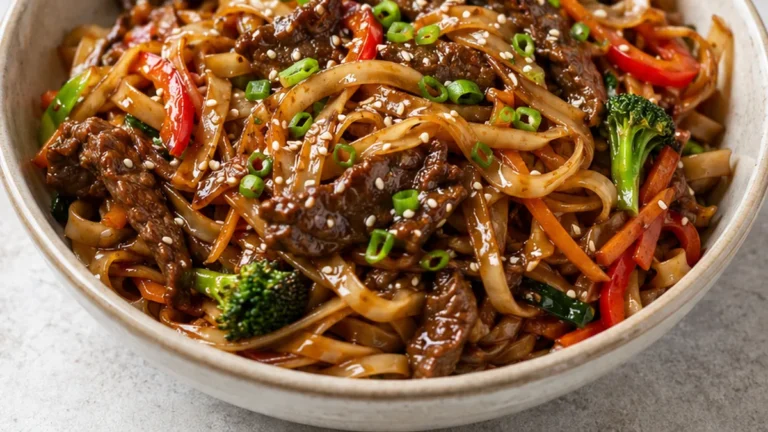
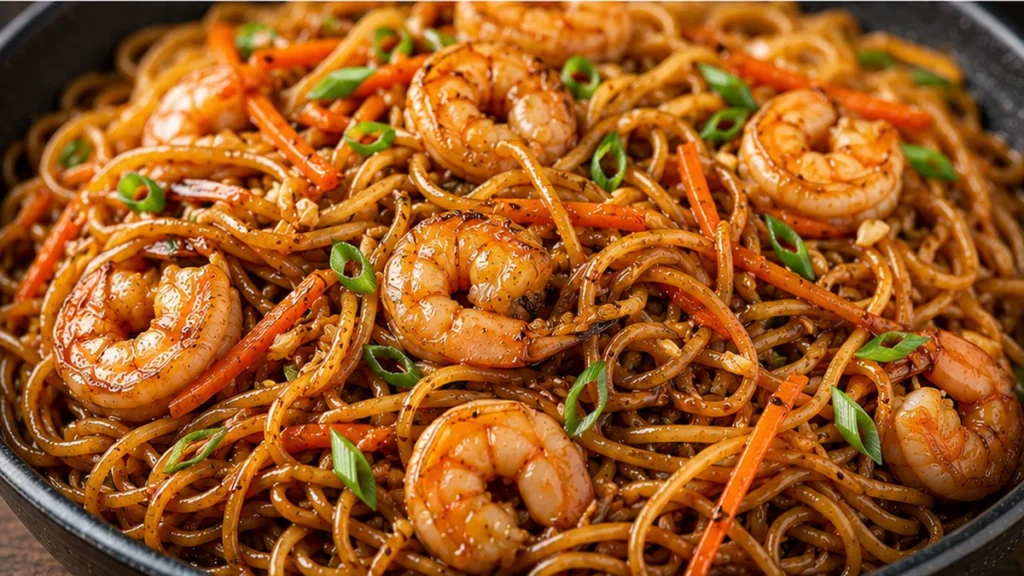
This shrimp noodles recipe is your ultimate guide to a quick and flavorful weeknight dinner. Combining succulent shrimp, crisp vegetables, and perfectly cooked noodles in a savory sauce, it’s a dish that rivals your favorite takeout. Easy to prepare and highly customizable, these shrimp noodles are perfect for busy evenings or when you crave a satisfying meal that doesn’t take hours to make. Experience the bright taste and satisfying textures.
Key takeaways
- Manage noodle and shrimp cooking times carefully to avoid mushiness and toughness.
- Sauté aromatics like garlic and onion until fragrant to build a flavor base.
- Add vegetables in stages based on their cooking time for optimal crispness.
- Adjust sauce seasoning to personal preference for the perfect balance of salty and umami.
Viral Shrimp Noodles Stir-Fry
Ingredients
- 1 lb raw, tail-off shrimp
- 3 tablespoons oil
- 3 cloves garlic
- 1 onion
- 1 head green cabbage
- 2 large carrots
- 8 ounces dry pancit canton noodles
- 3 cups chicken stock
- 2 tablespoons soy sauce
- 1 tablespoon fish sauce
Instructions
- Mince the garlic and onion. Heat 1 tablespoon of oil in a large skillet over medium heat. Add garlic and onion and stir-fry until soft, about 3 minutes. Add shrimp and cook, stirring frequently, until no longer translucent, about 3-5 minutes. Remove from heat and set aside.
- Chop the cabbage and peel and grate the carrot. Add another tablespoon of oil into the skillet and stir fry the vegetables until tender-crisp, about 5 minutes. Remove from heat and set aside.
- In a large pot, bring the chicken stock, soy sauce, and fish sauce to a boil. Add the pancit noodles and boil until the noodles are soft, about 5 minutes. Add the shrimp and vegetables to the pot and stir to combine.
- Add the remaining tablespoon of oil to a large skillet and add the contents of the pot. Stir fry the mixture for about 10 minutes until heated through and most of the liquid has been absorbed.
Notes
The technique that makes it
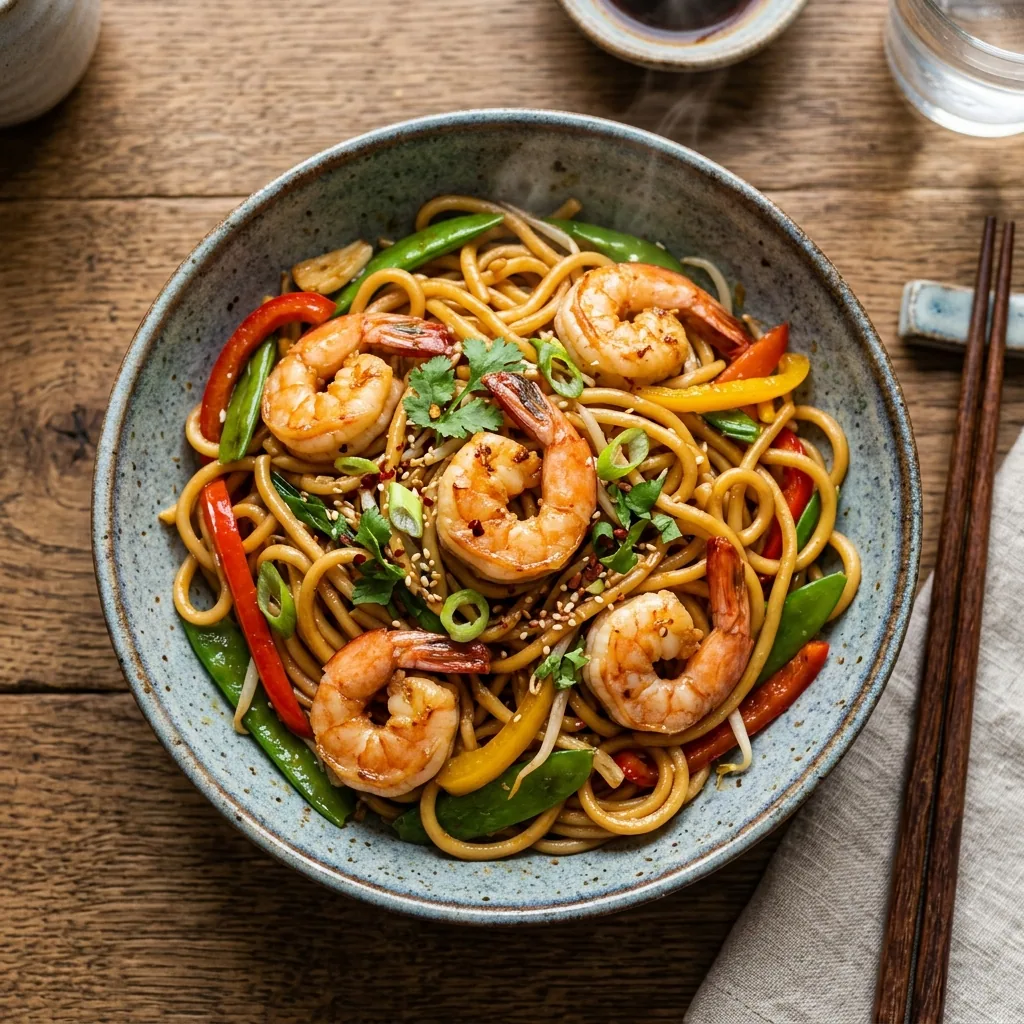
The key to a successful viral shrimp noodle stir-fry lies in managing the cooking times of each component to achieve optimal texture. The pancit canton noodles, often sold dried, require rehydration. Boiling them until just al dente, rather than fully cooked, is crucial. They will continue to absorb liquid and cook in the sauce. Overcooked noodles will turn mushy and break apart during the stir-frying process. Similarly, the shrimp should be cooked quickly over high heat. Raw shrimp cook very fast, and overcooking will make them tough and rubbery. The goal is to cook them through without losing their succulence. The vegetables, like cabbage and carrots, should retain a slight crispness, indicating they are cooked but not soft. This is achieved by adding them to the wok or pan in stages, starting with the harder carrots and finishing with the more delicate cabbage. The sauce, a simple combination of chicken stock, soy sauce, and fish sauce, is designed to coat the noodles and ingredients without making the dish soupy. Allowing the sauce to simmer and reduce slightly as it coats the noodles is essential for developing flavor and achieving the right consistency.
Troubleshooting
- Problem: Mushy, broken noodles. Fix: Ensure noodles are cooked only until al dente before adding to the stir-fry. Avoid over-boiling. Also, stir-fry gently to prevent breakage.
- Problem: Tough, rubbery shrimp. Fix: Add shrimp towards the end of the stir-fry process and cook only until pink and opaque. High heat and short cooking time are essential.
- Problem: Watery stir-fry. Fix: Ensure vegetables are not overcrowded in the pan, which can steam them instead of stir-frying. Allow the sauce to simmer and reduce slightly to thicken before serving.
- Problem: Bland flavor. Fix: Ensure all ingredients are seasoned adequately. Taste the sauce before adding it and adjust soy sauce or fish sauce levels as needed. Ensure garlic and onion are sautéed until fragrant before adding other ingredients.
Substitutions
- Noodles: If pancit canton noodles are unavailable, ramen noodles (without the seasoning packet) or even spaghetti can be used. Adjust boiling time accordingly; ramen will cook faster, while spaghetti may require a longer initial boil. The texture will differ slightly.
- Protein: Chicken breast, thinly sliced, or firm tofu, pressed and cubed, can replace shrimp. Chicken will require a slightly longer cooking time before adding vegetables. Tofu should be pan-fried until golden before adding to the stir-fry.
- Vegetables: Broccoli florets, bell peppers (sliced), or snap peas can be added or substituted for cabbage and carrots. Adjust cooking times based on the density of the substituted vegetables; denser vegetables like broccoli will need to be added earlier.
- Sauce: For a gluten-free option, tamari can replace soy sauce. A vegetarian oyster sauce or mushroom sauce can be used instead of fish sauce if desired, though it will alter the umami profile.
Pro tips
- Use high-quality soy sauce and fish sauce for the best flavor.
- Don’t overcook the shrimp; they should be pink and opaque.
- Adjust the amount of chicken stock and soy sauce to your taste preference.
Enjoy this flavorful shrimp noodles dish as a complete meal or serve as a side. Experiment with different vegetables to make it your own!
More from Easy Pasta Recipes →
Frequently asked questions
What kind of noodles are best for shrimp stir-fry?
For this viral shrimp noodle stir-fry, egg noodles or udon noodles work exceptionally well due to their chewy texture and ability to hold sauce. Thin spaghetti or ramen noodles are also good alternatives. Ensure they are cooked al dente before adding to the stir-fry to prevent them from becoming mushy.
Can I make this shrimp noodle stir-fry ahead of time?
It’s best to assemble this dish just before serving. While you can prep the ingredients (chop vegetables, marinate shrimp) a day in advance and store them separately in the refrigerator, cooking the noodles and stir-frying everything together yields the best texture and flavor.
How do I prevent my shrimp from getting rubbery in stir-fry?
To avoid rubbery shrimp, add them to the wok during the last 1-2 minutes of cooking. They cook very quickly. Ensure the pan is hot and don’t overcrowd it. Stir-fry them just until they turn pink and opaque, then remove them immediately to prevent overcooking.
What can I serve with shrimp noodle stir-fry?
This stir-fry is a complete meal on its own. However, for a more substantial meal, you can serve it with a side of steamed rice or a light, crisp salad. A sprinkle of toasted sesame seeds or chopped scallions adds a nice finishing touch.