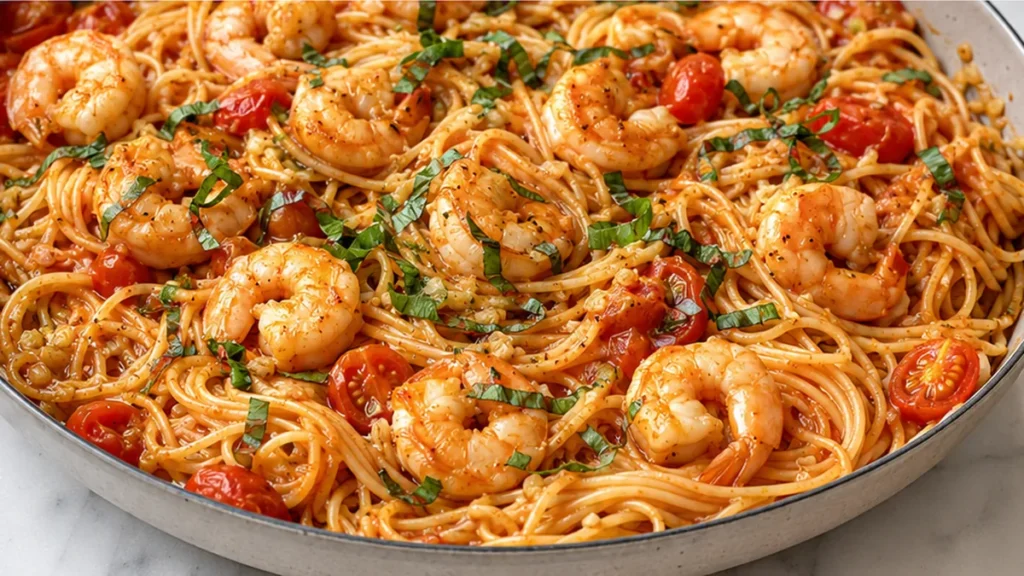
This shrimp pasta recipe is an absolute a real upgrade for weeknight dinners. Combining plump, juicy shrimp with a luscious garlic butter pomodoro sauce and delicate capellini pasta, it offers a restaurant-quality meal that’s surprisingly easy to prepare. You’ll love the balance of fresh tomatoes, fragrant basil, and rich butter, all clinging perfectly to the strands of pasta. impressive dish, this shrimp pasta is designed to delight. It’s a testament to how simple ingredients can transform into something truly spectacular with just a little bit of care and attention.
Key takeaways
- Perfectly cooked shrimp are key; sear briefly and remove early.
- The sauce emulsifies best with cold butter whisked in off-heat.
- Add fresh basil at the very end for maximum flavor and color.
- Cook capellini until al dente, as it will finish cooking in the sauce.
Capellini Pomodoro with Shrimp: Pure Bliss!
Ingredients
- 1 lb large shrimp
- salt, pepper, and olive oil for the pan
- 4 cloves garlic
- 4 cups diced fresh tomatoes or halved cherry tomatoes
- 2 cups chicken or vegetable broth
- 4 tablespoons butter
- 1/2 cup fresh basil leaves, cut or torn into small pieces
- salt to taste
- 8 ounces DeLallo capellini
- Parmesan cheese for topping
Instructions
- SHRIMP: Heat a swish of olive oil in a large skillet over medium heat. Add the shrimp and season with salt and pepper. Cook until pink, about 2 minutes per side. Remove shrimp from the pan and set aside.
- GARLIC BUTTER POMODORO SAUCE: In the same pan, heat a tiny bit more oil over medium-low heat and toss the garlic in. Sauté for 1-2 minutes until fragrant. Add the tomatoes and broth and simmer for about 10 minutes until the tomatoes start to break down and the sauce thickens.
- CAPELLINI: Cook the capellini according to package directions. Drain and set aside.
- ALL TOGETHER NOW: Add the butter and basil to the thickened sauce and stir to combine. If the sauce needs more thickening, let it simmer on low heat for a little longer. Season to taste.
- FINISHING TOUCHES: Add the cooked shrimp back into the sauce. Stir gently to combine and heat through.
- SERVE: Serve the sauce generously over the cooked capellini pasta. Top with grated Parmesan cheese, a pinch of salt, and pepper.
Notes
The technique that makes it
The success of this Capellini Pomodoro with Shrimp hinges on two key techniques: achieving perfectly cooked shrimp and creating a bright, emulsified sauce. For the shrimp, it’s crucial to avoid overcooking. Shrimp cook very quickly, turning opaque and firm within minutes. Overcooked shrimp become tough and rubbery. The best approach is to sear them briefly in a hot pan with olive oil, salt, and pepper until they just turn pink and curl slightly. Remove them from the pan immediately and set aside. This partial cooking allows them to finish gently in the warm sauce later, ensuring tenderness.
The sauce’s magic lies in the emulsification of the pan juices, tomatoes, broth, and butter. Start by sautéing the garlic in olive oil until fragrant, but not browned, to build an aromatic base. Add the tomatoes and cook them down slightly to release their juices and soften. Then, incorporate the broth and bring it to a simmer. The crucial step for achieving a glossy, cohesive sauce is the addition of cold butter at the end, whisked in off the heat (a technique called ‘monter au beurre’). This emulsifies the fat from the butter with the liquid, creating a richer, more luxurious sauce that clings beautifully to the delicate capellini. Finally, tossing the cooked capellini and reserved shrimp with the sauce and fresh basil just before serving ensures everything is coated and the basil retains its fresh, herbaceous aroma.
Troubleshooting
- Shrimp are rubbery: This indicates they were overcooked. To fix, ensure you remove shrimp from heat as soon as they turn pink and slightly curled. Add them back to the sauce only for the last minute of warming to finish cooking gently.
- Sauce is watery: The sauce needs to reduce further or emulsify better. Simmer uncovered for a few extra minutes to evaporate excess liquid. Ensure butter is whisked in off the heat to aid emulsification.
- Capellini is mushy: Overcooked pasta. Cook capellini according to package directions, but test for al dente a minute or two early. Drain well and toss immediately with the sauce.
- Basil is wilted and brown: Basil was added too early or cooked too long. Stir in fresh basil right at the end, just before serving, to preserve its bright color and fresh flavor.
Substitutions
- Shrimp: Scallops or mussels can be substituted for shrimp. Scallops will require a similar quick sear, while mussels should be steamed open in the sauce before adding the pasta.
- Tomatoes: If fresh tomatoes are unavailable, use 1 (14.5 ounce) can of diced tomatoes (undrained) or 1 cup of sun-dried tomatoes (oil-packed, drained and chopped). Adjust seasoning as canned tomatoes can be saltier.
- Broth: White wine can replace half of the chicken or vegetable broth for a more complex flavor profile. Use a dry white wine like Pinot Grigio.
- Capellini: Any thin pasta like angel hair, vermicelli, or even spaghetti will work. Adjust cooking time according to the pasta’s thickness.
Pro tips
- Use fresh, high-quality shrimp for the best flavor and texture.
- Don’t overcook the shrimp; they should be just pink and opaque.
- Let the tomato sauce simmer long enough for the flavors to meld and thicken naturally.
- Reserve a little pasta water to help adjust sauce consistency if needed.
Enjoy this delightful shrimp pasta creation that brings together simple ingredients for an unforgettable meal. Feel free to adjust the spice level or add other vegetables.
More from Chicken Pasta Recipes →
Read also on TastyBend: Turkey Sausage Nutrition: Complete Health-Focused Analysis.
Frequently asked questions
What is the best way to cook shrimp for pasta?
For Capellini Pomodoro with Shrimp, aim for a quick sauté. Heat olive oil or butter in a skillet over medium-high heat. Add peeled and deveined shrimp and cook for 1-2 minutes per side, until pink and opaque. Be careful not to overcook, as they can become tough.
Can I make the tomato sauce for Capellini Pomodoro ahead of time?
Yes, the tomato sauce can be made up to 2-3 days in advance. Store it in an airtight container in the refrigerator. Reheat gently on the stovetop before adding the cooked capellini and shrimp. This allows the flavors to meld beautifully.
What can I use instead of capellini pasta?
If you don’t have capellini, angel hair pasta is a perfect substitute as it’s very similar in thickness. Thin spaghetti or even regular spaghetti can also work, though they will have a slightly heartier bite. Adjust cooking time accordingly.
How do I know when the capellini pasta is cooked?
Capellini cooks very quickly, usually in 3-5 minutes. Test a strand by tasting it. It should be al dente, meaning it’s tender but still has a slight bite. Avoid overcooking, as it can become mushy, especially with its delicate strands.