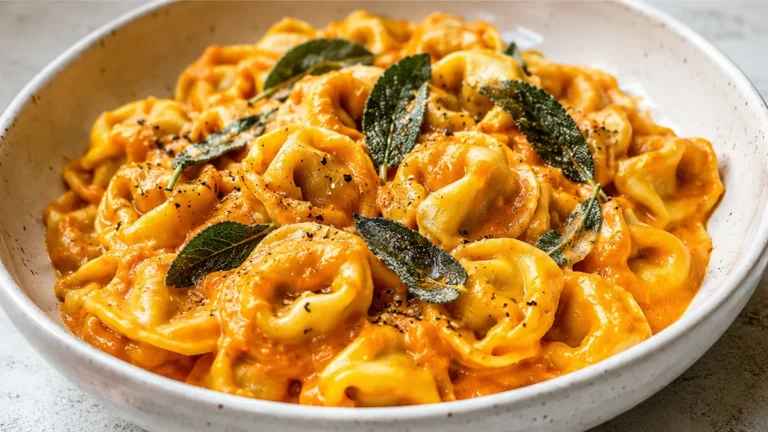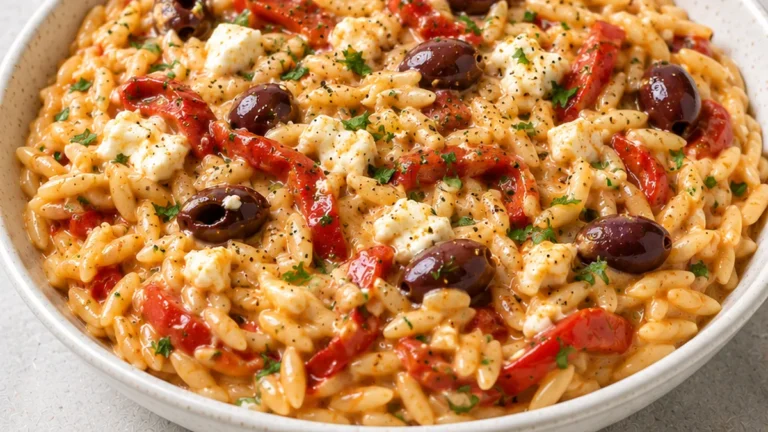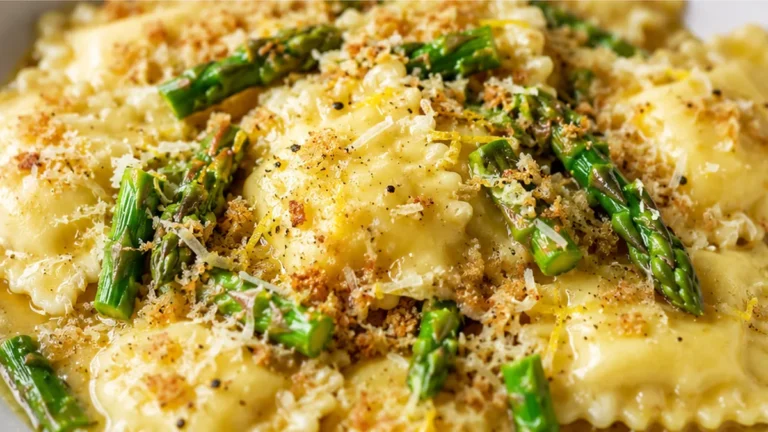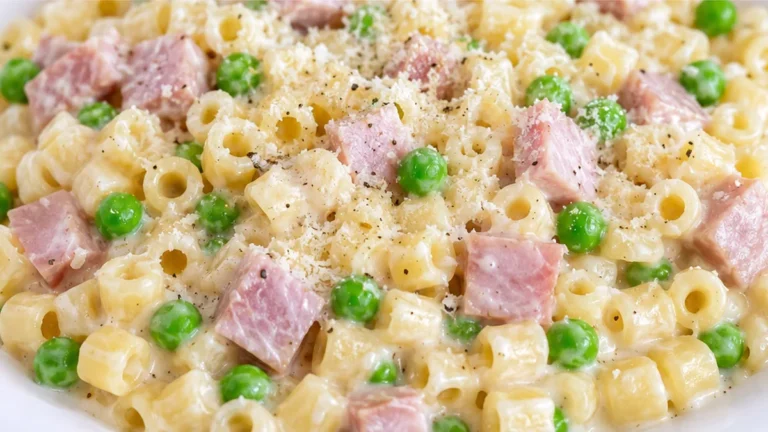
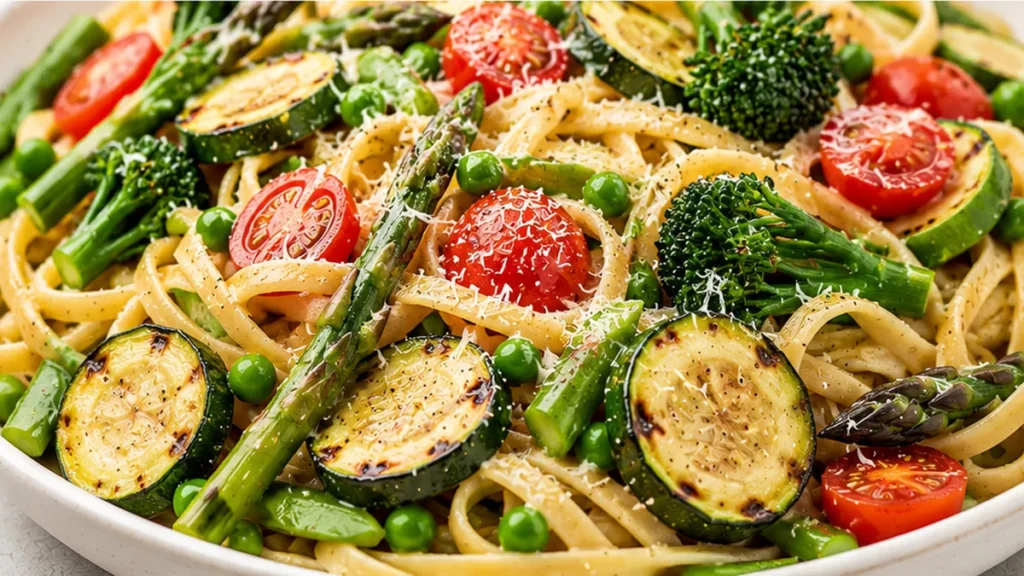
Pasta Primavera, meaning “Spring Pasta,” is a celebration of fresh, seasonal vegetables tossed with pasta in a light, often creamy, sauce. This recipe focuses on bright spring produce like tender asparagus, sweet peas, crisp snow peas, and juicy cherry tomatoes, all brought together with a luscious Parmesan cream sauce. Perfect for a quick weeknight dinner or a light yet satisfying meal, this Pasta Primavera is as beautiful to look at as it is delicious to eat. It’s an adaptable dish, allowing you to swap in your favorite spring vegetables based on availability and preference.
Key takeaways
- Cook vegetables in stages to maintain distinct textures and bright colors.
- Salt pasta water generously and reserve some for the sauce.
- Sauté vegetables separately or in batches to prevent sogginess and ensure even cooking.
- Finish the dish with butter and garlic gently warmed through to meld flavors.
Pasta Primavera: The BEST Spring Veggie Feast!
Ingredients
- 300 g / 10 oz linguine (fettuccine, or other long and flat pasta)
- 150 g / 5oz white mushrooms (, sliced 0.4cm / 1/6″ thick)
- 1/2 large zucchini (, cut into 0.5cm / 0.2″ rounds)
- 1 bunch broccolini
- 1 1/2 cup snow peas (~10 pieces)
- 1 bunch green asparagus (~8 to 10)
- 1 cup green peas (, defrosted)
- 10 cherry tomatoes (, cut in half)
- 2 garlic cloves (, finely minced)
- 5 tbsp / 75 g unsalted butter
Instructions
- Prepare the vegetables: Slice mushrooms thinly (about 0.4cm/1/6″). Cut zucchini into 0.5cm/0.2″ rounds. For broccolini, cut off florets and halve them lengthwise, then slice stems diagonally into 2.5cm/1″ pieces. Remove the tough string from snow peas, stack, and slice diagonally about 1cm/0.4″ wide. Snap woody ends off asparagus, cut off tips, and slice stems diagonally into 2.5cm/1″ pieces.
- Make the creamy sauce: Melt butter in a saucepan over medium-high heat. Add heavy cream and grated Parmesan cheese. Stir until the cheese is melted and the sauce is gently simmering. Remove from heat and set aside.
- Cook the pasta: Bring a large pot of generously salted water to a boil over high heat. Add linguine and cook according to package directions MINUS 1 minute (al dente is key!).
- Cook the harder vegetables: While pasta cooks, add mushrooms, zucchini, broccolini stems, and asparagus stems to the boiling pasta water during the last 3 minutes of cooking time.
- Cook the tender vegetables: During the LAST MINUTE of pasta cooking, add snow peas, asparagus tips, broccolini florets, green peas, and cherry tomato halves to the pot.
- Combine and serve: Drain the pasta and vegetables, reserving about 1/2 cup of the starchy pasta water. Return pasta and vegetables to the pot. Pour over the reserved creamy sauce and add the minced garlic. Toss gently to combine, adding a splash of reserved pasta water if needed to reach desired consistency. Serve immediately.
Notes
The technique that makes it
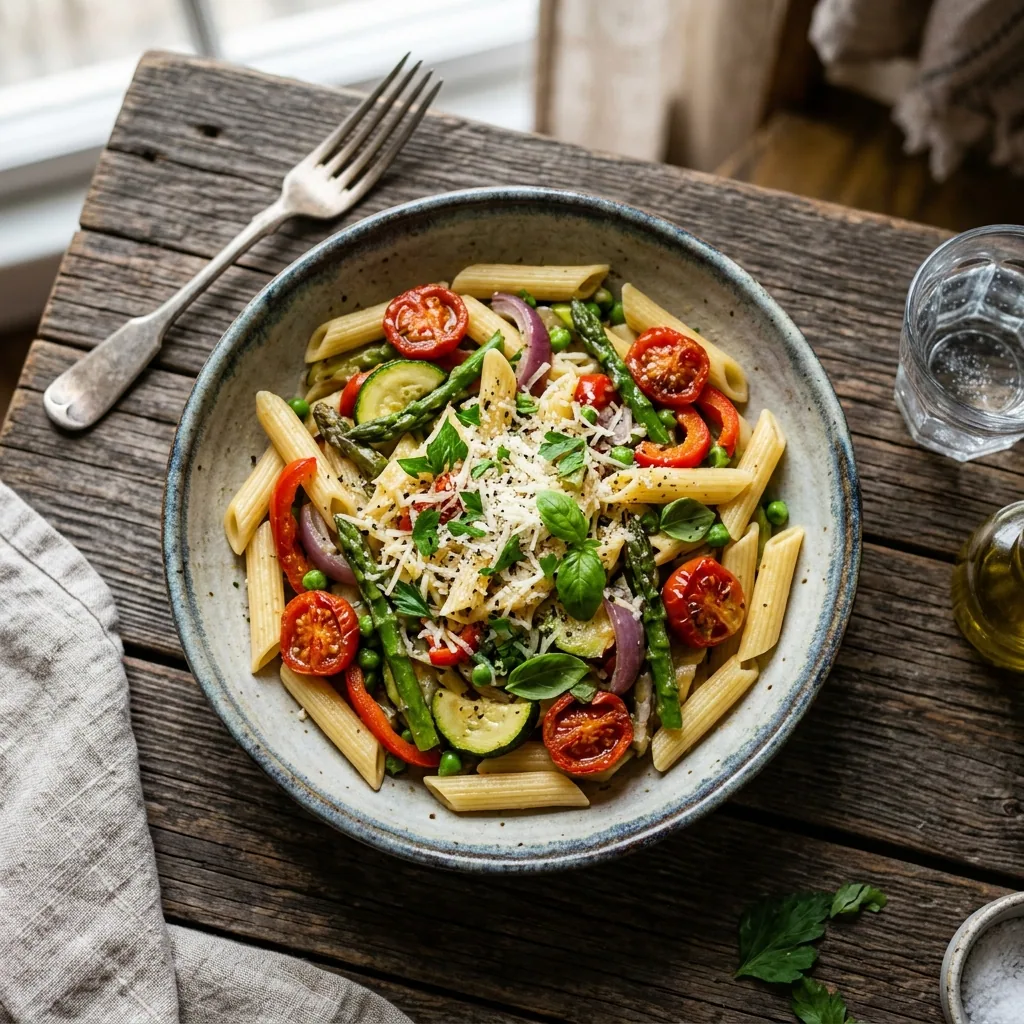
The success of a truly exceptional pasta primavera lies in the precise cooking of each vegetable to achieve optimal texture and flavor, ensuring they remain fresh and distinct rather than a homogenous, overcooked mush. The key is a multi-stage cooking process that respects the individual cooking times of each ingredient. First, the pasta should be cooked to al dente in generously salted boiling water. While the pasta cooks, the vegetables are prepared. The broccolini and asparagus are blanched briefly in the same pasta water, allowing them to become tender-crisp while retaining their bright green color. Mushrooms are sautéed in butter until golden brown, developing their earthy flavor. Zucchini rounds are also quickly sautéed to soften slightly without becoming watery. Snow peas and green peas require minimal cooking; they are added towards the end of the sautéing process to maintain their crispness and sweetness. The cherry tomatoes are added last, just long enough to warm through and release some of their juices, adding a burst of acidity. Finally, all the cooked components are brought together with the drained pasta, a final knob of butter, and the minced garlic, which is gently warmed through to release its aroma without burning. This staggered approach ensures each ingredient is at its peak, creating a harmonious and texturally interesting dish.
Troubleshooting
- Problem: Vegetables are mushy and overcooked.
Fix: Ensure vegetables are added to the pan in stages according to their cooking times. Blanching harder vegetables like broccolini and asparagus separately before sautéing helps control their texture. Avoid overcrowding the pan, which can steam vegetables instead of sautéing them. - Problem: Pasta is sticky or clumped.
Fix: Use plenty of salted boiling water. Stir the pasta occasionally during the first minute of cooking. Reserve some pasta water before draining; the starch in this water helps emulsify the sauce and prevent sticking when tossed with the vegetables and butter. - Problem: Dish lacks flavor or brightness.
Fix: Season each component as you cook it. Ensure the pasta water is well-salted. Finish the dish with a squeeze of fresh lemon juice (optional, but recommended) and freshly cracked black pepper to enhance the flavors. - Problem: Watery sauce.
Fix: Avoid overcrowding the pan when sautéing vegetables, especially zucchini, which can release a lot of water. Cook vegetables in batches if necessary. Ensure the sauce is finished over medium-high heat to allow any excess liquid to evaporate.
Substitutions
- Pasta: Fettuccine, spaghetti, or even short pasta shapes like penne or farfalle can be used. The cooking time will vary, so follow package directions.
- Mushrooms: Cremini or shiitake mushrooms can be substituted for white mushrooms, offering a deeper, earthier flavor profile.
- Broccolini/Asparagus: Broccoli florets or green beans can be used. Adjust blanching time as needed for tenderness.
- Snow Peas: Sugar snap peas offer a similar crunch and sweetness, though they are slightly thicker.
Pro tips
- Cook pasta until al dente (firm to the bite) as it will finish cooking in the sauce.
- Reserve pasta water! The starchy water helps emulsify the sauce and achieve the perfect creamy consistency without being too heavy.
- Adjust cooking times for vegetables based on their tenderness; add harder vegetables earlier and tender ones in the last minute.
Enjoy this delightful Pasta Primavera, a true taste of spring that’s both elegant and easy to prepare. Feel free to customize with your favorite seasonal vegetables!
More from Healthy Pasta Recipes →
Frequently asked questions
What is the best way to cut the vegetables?
Cut vegetables into uniform, bite-sized pieces. Zucchini should be sliced into thin rounds, broccolini and asparagus into manageable lengths, and mushrooms thinly sliced. This ensures even cooking and makes the pasta primavera easier to eat.
Can I use frozen vegetables instead of fresh?
Yes, you can use frozen green peas and corn. For other frozen vegetables like broccoli or green beans, add them directly to the boiling pasta water during the last few minutes of cooking to prevent them from becoming too soft.
How do I make pasta primavera creamy?
To achieve a creamier texture, reserve about a cup of the starchy pasta water before draining. Add this water gradually to the finished pasta and vegetables along with the butter. The starch in the water will emulsify with the butter, creating a light, creamy sauce.
Is pasta primavera a healthy dish?
Pasta primavera is generally considered healthy due to its high vegetable content, providing essential vitamins, minerals, and fiber. Using whole wheat pasta and a moderate amount of butter or olive oil further enhances its nutritional profile.