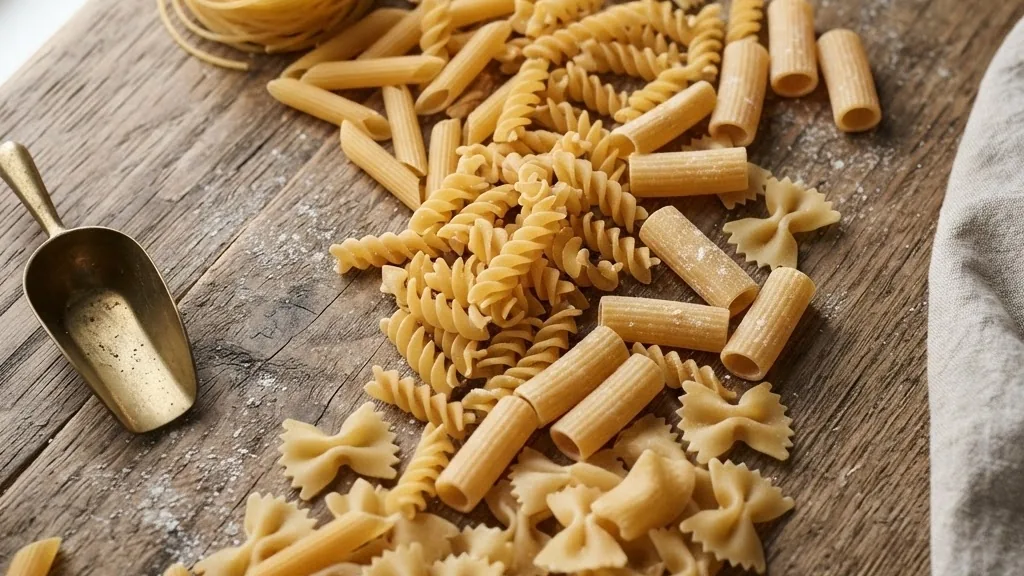
Dry pasta is the most reliable pantry staple, and also the most misunderstood one. People treat the box like an afterthought, grab whatever is on sale, boil it too long, then blame the sauce when the plate falls flat. The truth is that dry pasta is a precise, engineered food with a real recipe, a real cook window, and a real shelf life, and once you understand those three things you stop guessing and start getting the same good bowl every time.
The classic mistake is dumping a handful into a small pot of barely salted water, walking away, and coming back to a gummy tangle no sauce can rescue. What changed everything was learning what the food actually is and what it needs. Dry pasta is not fussy, but it does have rules, and the cooks who follow them quietly turn out better weeknight dinners than the ones chasing fancy technique.
Every cook time, ratio, and nutrition number below was checked this month against package labels and the USDA database, not from memory.
Quick answer: dried noodles is durum wheat semolina mixed with water, pushed through a die to shape it, then dried and boxed. It has no egg, which is exactly why it goes firm and al dente. Cook it in a big pot of well salted water, 4 to 6 quarts and about 1 to 2 tablespoons of salt per pound, boil it 8 to 12 minutes depending on the shape, and taste it a couple of minutes early. A 2 ounce (56 gram) dry serving runs around 200 calories, 42 grams of carbohydrate, and 7 to 8 grams of protein. Stored cool and dry, an unopened box keeps well for about 2 years and stays safe far longer than that.
What dry pasta actually is
Strip away the marketing on the box and dried noodles is a two-ingredient food: durum wheat semolina and water. Semolina is the coarse, golden flour milled from durum, the hardest variety of wheat grown, and it is prized because it is highly glutinous, which is a technical way of saying it forms a strong, self-supporting dough that holds a shape and holds a bite. That protein strength is the whole reason a thin strand of spaghetti can survive a rolling boil without dissolving into paste.
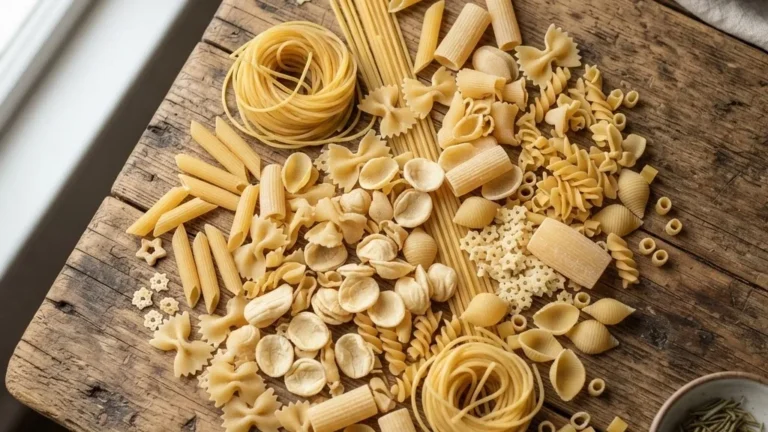
The making of it is more mechanical than most people picture. The semolina and water are mixed into a stiff, crumbly dough, then that dough is forced under pressure through a shaped metal plate called a die. Push it through a die full of round holes and you get spaghetti; push it through slots and ribbon dies and you get fettuccine or tubes. This is the extrusion step, and it is where the shape is born. After that the wet pasta is dried slowly and carefully, and here is the surprising part: most of the texture and quality of the finished noodles comes from the drying, not the shaping. Dry it too fast and it cracks; dry it right and you get that clean, glassy snap when you break a strand. If you want the deeper story on the grain and the grind, the explainer on what pasta is made of gets into it.
There is a legal side that shows how seriously the tradition takes it. In Italy, France, and Greece it is mandatory by law that dried pasta be produced from 100 percent durum wheat semolina, no soft flour cutting it, because softer wheat makes a weaker, stickier noodle that goes to mush. When a good imported box lists nothing but durum wheat semolina and water, that short label is not a gap; it is the point. Dried noodles is the second most consumed food on the planet precisely because those two humble ingredients travel well, cost little, and keep for ages.
Dry pasta versus fresh pasta, honestly
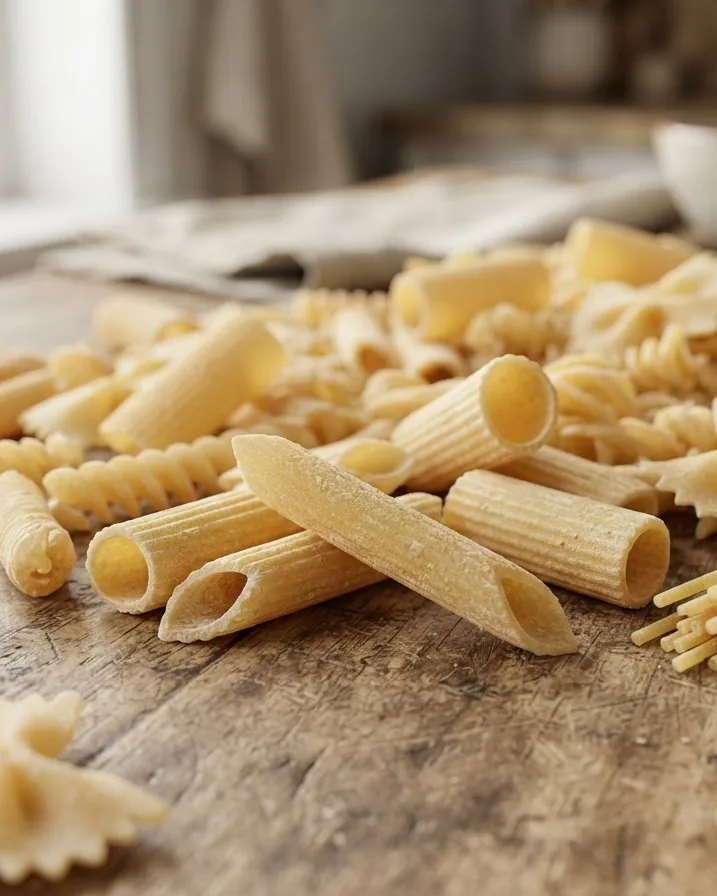
People assume fresh pasta is automatically the upgrade, but that deserves some pushback, because it is not better, it is different. The core split comes down to two ingredients: eggs and moisture. Fresh noodles is made with eggs and a soft, fine flour, often the type labeled 00, and it stays high in moisture. dry pasta is made with durum semolina and water and carries almost no moisture at all. That single difference cascades into everything else about how the two behave in the pot and on the plate.
Texture is where you feel it first. Because fresh noodles has never been dried and is full of moisture and egg, it cooks up silky, soft, and tender, and it genuinely cannot go al dente the way dried pasta can. dried noodles, built from hard durum, cooks to that firm, springy, resistant bite that so many dishes are designed around. Neither is superior; they are tools for different jobs. Fresh egg noodles is glorious under a butter sauce, a delicate cream, or wrapped around a filling like ravioli. Dry durum pasta is the one you want under a bright acidic tomato sauce, because durum holds its structure and stands up to the acid where a soft egg noodle would go slack.
Here is the part that saves you money and stress: for the vast majority of weeknight cooking, dry noodles is not the compromise, it is the correct choice. It is cheaper, it keeps for years, and it is the authentic partner for most of the tomato-based and oil-based sauces people actually make at home. Fresh pasta is best kept for the occasional dish that is delicate on purpose. If you ever do want to try rolling your own from scratch, the guide to making homemade pasta walks through the whole process, and doing it once will teach you more about what it is than any article can.
How to cook dry pasta al dente
This is where most good boxes get ruined, so precision beats vagueness here. Al dente means firm to the bite, tender all the way through, with just a little resistance at the center and no hard raw core and no soft collapse. Getting there reliably comes down to four things: enough water, enough salt, a real boil, and pulling the pot early.
Start with water, because a cramped pot is the single most common mistake. You want 4 to 6 quarts of water for every pound of dried noodles, and if you go below about 3 quarts per pound the temperature crashes when the pasta goes in, the strands crowd, and you get uneven, gummy results. The noodles needs room to move. Then salt it like you mean it: 1 to 2 tablespoons per gallon, until the water genuinely tastes like the sea. This is the only chance you get to season the pasta from the inside, and you cannot fix a bland noodle by salting the sauce later. Wait for a full rolling boil before the noodles ever touches the water, because a slack simmer leaves you with sticky strands.
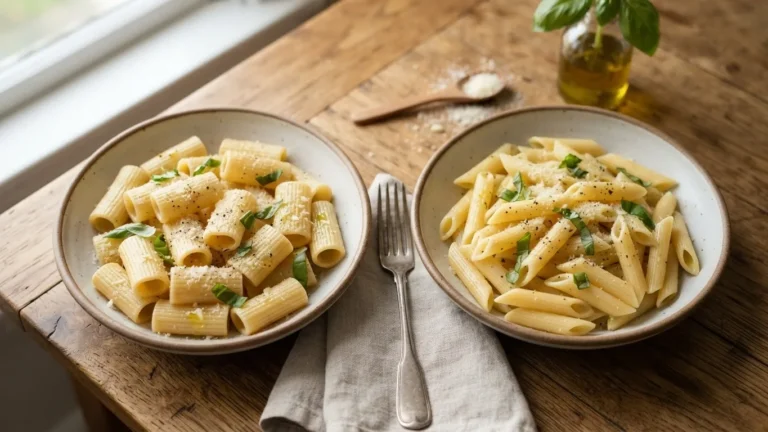
Then it comes down to time and attention. Cook times vary by shape because thicker pasta needs longer to hydrate all the way through. As a working range, thin strands like spaghetti hit al dente in about 9 to 10 minutes, short shapes like macaroni, penne, and shells land around 8 to 10 minutes, and thicker ribbons like fettuccine need roughly 10 to 12 minutes. The rule is to set a timer for 2 minutes before the box time and taste a piece right then, because brands, thickness, and even your altitude shift the window. One more habit worth stealing: do not rinse the drained noodles unless you are making a cold salad, because the surface starch is what makes the sauce actually grip. For the full method with pictures of the water and the drain, see the step by step on cooking dry pasta.
| Shape | Al dente time | Best for |
|---|---|---|
| Spaghetti / thin strands | 9-10 minutes | Oil, tomato, seafood sauces |
| Macaroni / short tubes | 8-10 minutes | Cheese sauces, bakes, salads |
| Penne / shells | 8-11 minutes | Chunky and creamy sauces |
| Fettuccine / thick ribbons | 10-12 minutes | Rich cream and butter sauces |
One practical note: the last minute matters more than the first nine. Pull the pot a full minute before the noodles seem done, drain them while they still have a firm center, and finish them right in the hot sauce. The pasta drinks up flavor, the starch tightens the sauce, and the whole dish comes together instead of sitting in two separate puddles.
What is in a serving: dry pasta nutrition
Here are the numbers, because portion confusion is where a lot of people go sideways. The standard serving of dried noodles is 2 ounces, which is 56 grams, and that is smaller than the mountain most of us pour out of the box. That 56 gram serving of enriched it lands at about 200 to 208 calories, roughly 42 grams of carbohydrate, and around 7 to 8 grams of protein. On a per 100 gram basis, dry pasta is about 371 calories, which sounds high only because it has not soaked up any water yet.
The number that trips people up is the difference between dry weight and cooked weight. When you boil that same 56 grams of dried noodles, it soaks up water and roughly doubles, giving you close to 221 calories, about 8 grams of protein, and around 43 grams of carbohydrate on the plate, filling roughly 1 to 1.5 cups for short shapes. The calories barely move; the noodles just gets bigger and heavier because it is now full of water. So if you are measuring for a target, weigh it dry, before it hits the pot, when 56 grams is still 56 grams. A cheap kitchen scale next to the stove solves exactly this, keeping portions honest in a way eyeballing never does.
| Per 2 oz (56 g) dry, enriched | Approx value |
|---|---|
| Calories (dry) | About 200-208 kcal |
| Carbohydrate | About 42 g |
| Protein | About 7-8 g |
| Calories (cooked from 56 g) | About 221 kcal |
| Cooked yield | About 1-1.5 cups |
For the primary source on any of these figures, go straight to the government database rather than a random blog. You can pull the exact enriched-pasta entries from USDA FoodData Central, and the plate-building and portion guidance sits at MyPlate. The numbers here are cross-checked against those two because grain nutrition drifts a little between brands and enrichment levels, and yours should be too.
Is dry pasta actually healthy?
Dried noodles have spent years as a punching bag for low-carb diets, and that reputation is lazy. The honest answer is that plain dry pasta is a moderate, energy-dense carbohydrate that is perfectly healthy in a sensible portion, and how you cook it genuinely changes how your body handles it. The most interesting lever is doneness. noodles cooked al dente has a lower glycemic index than pasta boiled to mush, because the firmer, more intact starch structure digests more slowly and releases its sugar into the blood more gradually. In numbers, al dente semolina noodles sits around a glycemic index of 40, while the same pasta overcooked to soft can climb toward 60.
That is a real, free health upgrade hiding inside a cooking habit: pull the pot early, keep the bite firm, and you are already eating a gentler-on-blood-sugar plate than the person who let it go soft. It is the rare case where the tastier version and the healthier version are the same version. According to guidance summarized by outlets like Healthline, the firmer starch structure of al dente noodles is what slows that digestion down, so this is not kitchen folklore.
To push the nutrition further, the box matters. Whole wheat dried pasta keeps the bran and germ, so it carries more fiber, protein, and minerals like magnesium and iron, and it lands at a low glycemic index around 40 because that extra fiber slows digestion. Wholemeal noodles also fills you up harder, with a satiety index reported near 188 percent of white bread, meaning you feel satisfied on less. Both earn a place in the pantry: refined durum for a classic silky bite, whole wheat for everyday bowls where the fiber carries you to the next meal.
How long does dry pasta last, and how to store it
Here is the reassuring truth about that box in the back of your cabinet: dried noodles lasts a very long time, and the best-by date is not a safety cliff. That printed date is a quality marker set for peak texture, color, and flavor, not a moment when the pasta turns dangerous. In practice, an unopened box keeps its best quality for about 2 years, and an opened box holds well for about 1 year. The USDA considers commercially dried noodles shelf-stable and safe essentially indefinitely when stored properly, and kept truly dry it can go 10 years or more without becoming unsafe. It just slowly loses a little of its fresh snap.
The enemy is never time, it is moisture, and secondarily heat and light. A little dampness is what invites pantry pests and, in bad cases, mold, so the entire game of storing dry pasta is keeping water away from it. That means an airtight container once the box is opened, kept in a cool, dark cabinet away from the stove and any window. There is no benefit to refrigerating or freezing it; the fridge does not extend its life and only risks introducing humidity. If you want the full spoilage breakdown and the signs that a box has finally turned, the guide to whether pasta goes bad covers it in detail.
Here is a simple routine for a pantry of dried noodles that never lets you down.
- Step 1 – Decant opened boxes into airtight jars or clip-sealed containers, because the original cardboard box is not moisture-proof once you tear it open.
- Step 2 – Label each container with the month you opened it, so the one-year opened window is a fact you can read, not a guess.
- Step 3 – Store everything in a cool, dark, dry cabinet, ideally not the one right beside the oven or above the dishwasher where heat and steam collect.
- Step 4 – Rotate front to back, using the oldest box first, and glance for any musty smell, webbing, or tiny holes before you cook, which are the real signs to toss it rather than any date on the flap.
How to run a dry pasta pantry that actually works
The way to always have the right pasta on hand is to treat it as a small system, not a single item. Keep three tiers in the cabinet at all times: a long strand like spaghetti for oil and tomato nights, a short ridged tube like penne or rigatoni for chunky and baked dishes, and a whole wheat box for the everyday bowls where you want the extra fiber. That covers about ninety percent of everyday cooking without a special trip to the store.
The habit that ties it together is buying dry noodles in a small rotation rather than one panic box at a time. Because it keeps for years, stock a handful of shapes, cook through them front to back, and top up whatever is running low. The only real mistakes with dried pasta are the avoidable ones:
- Cooking it in too little water, which crashes the temperature and leaves gummy, unevenly cooked strands.
- Forgetting to salt the water hard, since you cannot season the noodles from the inside after it drains.
- Walking away from the pot past the al dente window and letting a firm bite slide into mush.
- Leaving an opened box in torn cardboard until it goes stale or picks up pantry bugs.
Fix those four and it becomes what it should be, the most dependable dinner in the house. What most guides skip is telling you it really is that simple once the system is in place. Match the water, salt it hard, mind the clock, and store it dry, and a one-dollar box will feed you better than a lot of far fancier food.
Frequently asked questions
What is dry pasta made of?
dry pasta is made from durum wheat semolina and water, and nothing else is required. The semolina is mixed with water into a stiff dough, extruded through a shaped die, then dried and packaged. Unlike fresh noodles it usually contains no egg, which is exactly why it cooks to a firm al dente bite. In Italy, France, and Greece law requires dried pasta to be 100 percent durum wheat semolina.
How long do you cook dry pasta?
It depends on the shape, but most dried noodles reaches al dente in 8 to 12 minutes. Thin spaghetti takes about 9 to 10 minutes, short shapes like macaroni and penne about 8 to 10 minutes, and thick ribbons like fettuccine around 10 to 12 minutes. Set a timer for 2 minutes before the box time and taste a piece, since brands and altitude shift the window. Pull it while the center is still firm.
How much dry pasta is one serving?
A standard serving of dried noodles is 2 ounces, which is 56 grams, and that is smaller than most people pour. It carries about 200 to 208 calories, roughly 42 grams of carbohydrate, and 7 to 8 grams of protein. Cooked, it roughly doubles in weight as it absorbs water and fills about 1 to 1.5 cups for short shapes, while the calories stay close to the same. Weigh it dry for an accurate portion.
How long does dry pasta last in the pantry?
An unopened box of dry pasta keeps its best quality for about 2 years, and an opened box for about 1 year. The best-by date is a quality marker, not a safety deadline. The USDA treats commercially dried noodles as shelf-stable and safe essentially indefinitely when stored properly, and kept truly dry it can last 10 years or more. Discard it only if you see musty odor, webbing, or signs of pests.
Is dry pasta healthier than fresh pasta?
Neither is strictly healthier; they are different foods. dried pasta is semolina and water with no egg, so it is lower in fat than egg-rich fresh noodles and goes fully al dente, which gives it a lower glycemic index, around 40 versus about 60 when overcooked. Fresh pasta is silkier but higher in moisture and fat. For everyday eating and blood-sugar control, al dente dried noodles, especially whole wheat, is a smart choice.
How should I store dry pasta after opening?
Move opened dry noodles out of the torn box and into an airtight container, then keep it in a cool, dark, dry cabinet away from heat, light, and moisture. Moisture is the real enemy, since it invites pantry pests and mold, so a sealed jar is the key move. Do not refrigerate or freeze it, since that adds no shelf life and only risks introducing humidity. Label the container with the month you opened it.
The bottom line
dried pasta is a simple, engineered food that rewards you for understanding it. It is durum wheat semolina and water, extruded and dried, built specifically to cook firm and al dente in a way fresh egg noodles never can. Cook it in a big pot of well salted water, 4 to 6 quarts and 1 to 2 tablespoons of salt per pound, boil it 8 to 12 minutes for the shape you chose, and taste it early so you pull it firm. A 2 ounce dry serving is about 200 calories, 42 grams of carbohydrate, and 7 to 8 grams of protein, and cooking it al dente keeps its glycemic index low. Store it airtight in a cool dark cabinet and an unopened box will keep for years. Respect those few rules and the cheapest box in the store turns out a plate you are genuinely proud of.