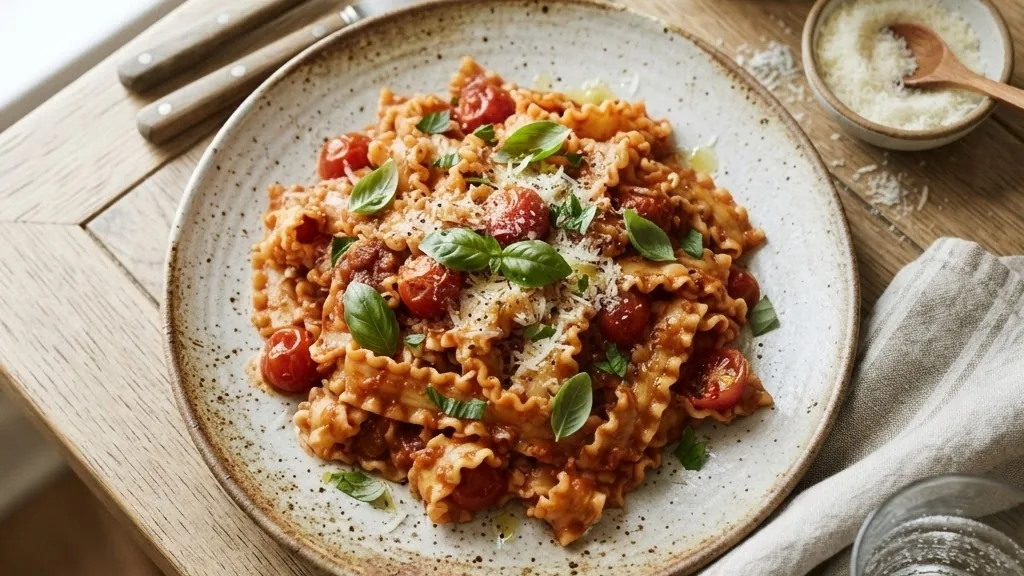
Gluten free mafaldine pasta is one of those boxes that looks familiar and behaves like a stranger, which matters most when cooking for someone who cannot eat wheat. Mafaldine is the long, flat ribbon with wavy ruffled edges down both sides, thicker than fettuccine and far prettier, and the wheat version cooks without a second thought. Swap the semolina for rice and corn flour, though, and it turns delicate. Boil it the way you boil regular pasta and you get a gummy, split, sad plate of ribbons. Treat it right and it is every bit as good as the original.
This guide walks through what those frilly ribbons are, what the gluten free ones are made of, whether they are safe for a celiac guest, how long to boil them without turning them to mush, and how to keep them from clumping into a starchy knot. Every cook time and nutrition number below was checked against package labels and public databases this month, not from memory, because gluten free figures drift more than people think.
The notes here focus on what makes it turn out right on a weeknight.
Quick answer: Gluten free mafaldine is the classic ruffled ribbon pasta made without wheat, usually from a blend of rice and corn flour, sometimes quinoa, or from higher-protein legume flours like chickpea or red lentil. Cook it in a big pot of salted water at a gentle simmer, not a violent boil, set your timer for the shortest time on the box, stir hard for the first few minutes, and taste a ribbon a minute or two early. Skip the rinse for hot saucy dishes so it clings, and only rinse for cold salads. A standard 2 ounce dry serving runs about 200 calories, and the ruffled edges grab sauce beautifully once you stop overcooking them.
What mafaldine is, and why the gluten free version fights back
Before we get to the gluten free part, it helps to know what you are holding. Mafaldine is a long ribbon pasta, wider and thicker than fettuccine, with a curly ruffled border down each edge. You will also see it sold as mafalde, mafalda, or reginette, Italian for little queens. That royal name is not an accident: the shape was created in the early 20th century in Naples to honor Princess Mafalda of Savoy, daughter of King Victor Emmanuel III, and the frilled edges were designed to echo the pleats of a royal gown. So you are cooking a little piece of Neapolitan flattery from a century ago.
Those ruffled edges are not just decoration, and this is the part that matters at the stove. The pleats catch and hold sauce in every fold, which is exactly why mafaldine works with both a light garlic-oil dressing and a clingy tomato or cream sauce. Traditional wheat mafaldine is made from durum wheat semolina and water, pushed through bronze dies so the surface stays rough and grippy. That semolina gives the ribbon a strong gluten network, the invisible scaffolding that lets regular pasta take a hard boil and still hold its shape.
Here is the whole problem with the gluten free version in one sentence: it has no gluten scaffolding. Rebuild the ribbon from rice, corn, or legume flour and you lose the elastic net that forgives a distracted cook. The starch is doing all the work of holding the ribbon together, so the moment it overcooks, it collapses. The gluten free ribbon is not worse, it is just less patient. It rewards attention and punishes autopilot.
What gluten free mafaldine is actually made of
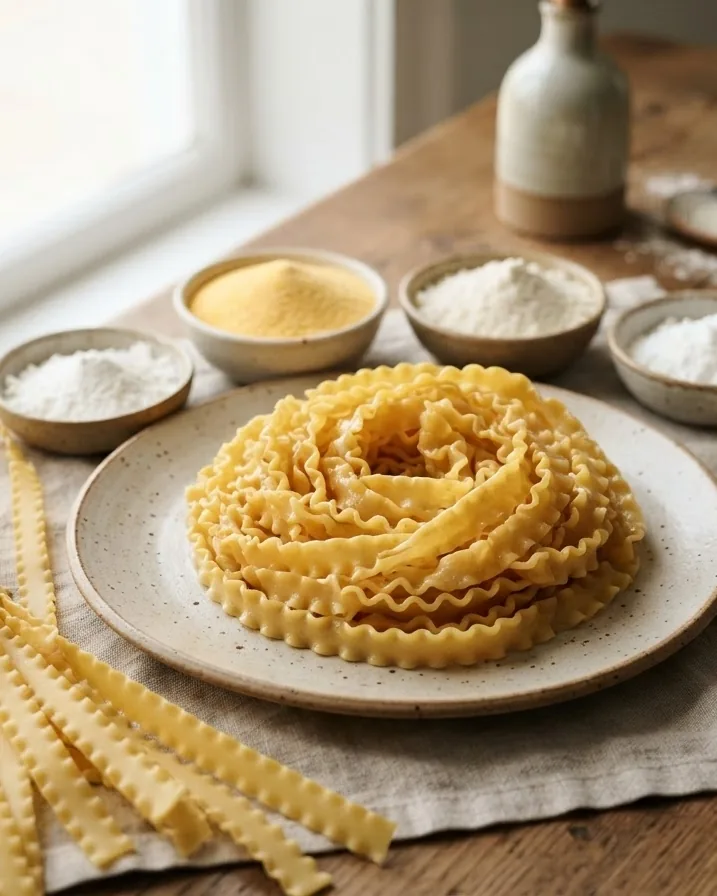
Walk down the gluten free aisle and you will notice the boxes do not agree on a recipe. Unlike wheat pasta, which is basically semolina and water everywhere you look, gluten free mafaldine is built from whatever naturally gluten free flour the maker prefers, and that flour changes how it cooks, how it tastes, and how it feeds you. The most common bases are rice and corn, but you will also find quinoa in the blend and, increasingly, legume flours like chickpea and red lentil.
A few real ingredient lists show how different these boxes are. A classic Italian gluten free mafaldine from La Fabbrica della Pasta keeps it simple: corn flour, rice flour, water. A Gragnano-style artisan version leans hard on corn, around 60 percent white corn flour, 20 percent yellow corn flour, and 20 percent rice flour. A more elaborate American blend from Pappardelle’s stacks brown rice flour, tapioca flour, corn flour, quinoa flour, egg whites, and a pinch of konjac or xanthan gum. None is wrong, but they will not cook or taste identical, so read your box.
The flour base breaks into three rough camps, and knowing which you bought tells you what to expect:
- Rice and corn blends are the most common and most neutral. They taste closest to regular pasta and cook up tender, but they are nutritionally close to wheat pasta and fall apart fastest if overcooked.
- Quinoa or multigrain blends add a slightly nutty flavor and hold their bite a touch better than pure rice.
- Legume flours like chickpea and red lentil are the powerhouse option, loaded with protein and fiber, with an earthier taste and a tendency to soften fast in the pot.
If you are curious about how any pasta gets its structure, or why wheat behaves so differently, the explainer on what pasta is made of digs into it. The short version is that flour choice is not a detail on these boxes, it is the whole personality of the pasta.
Is gluten free mafaldine safe for celiac disease?
This is the question that actually matters if you are cooking for someone who cannot cheat, so it deserves an honest answer rather than a breezy one. The flours gluten free mafaldine is built from, rice, corn, quinoa, and legumes, are all naturally gluten free. According to celiac diet guidance from the NIDDK, part of the National Institutes of Health, grains and starches like rice, corn, quinoa, buckwheat, amaranth, millet, and teff are safe on a gluten free diet because they do not contain the wheat, rye, or barley protein that triggers the celiac immune response.
So the ingredients themselves are fine. The catch is cross-contamination. Corn and rice can pick up wheat gluten if they are milled or processed in a facility that also handles wheat, which happens more than you would hope. This is why the single most useful thing you can do at the shelf is look for a certified gluten free label, not just a product that happens to lack wheat in the ingredient list. For a genuine celiac guest, that certification is the difference between a safe dinner and a mistake you cannot see. Keeping one certified box in the pantry means never squinting at fine print when someone is coming over.
One honest note: this site does not give medical advice. If you or a guest has celiac disease, trust a certified label and your own care team over any recipe blog, this one included. What this guide can cover with confidence is the cooking.
Cook times and the al dente window
Here is the rule that saves the whole dish: set your timer for the shortest time printed on the box, and start tasting before it even goes off. Gluten free pasta does not ease from firm to soft the way wheat does. It goes from undercooked to overcooked in what feels like seconds, because there is no gluten net to buy you a grace period. A wheat ribbon forgives a lost minute; a rice-and-corn ribbon does not.
Most gluten free mafaldine lands around 7 to 11 minutes depending on the brand and flour, but that range is exactly why you cannot trust the number in your head. Rice and corn blends run a little longer, while legume ribbons can be done shockingly fast. Taste a ribbon 1 to 2 minutes before the box time, and pull the pot while the pasta still has a real bite at the center, because it keeps cooking on its way to the bowl.
The other half of the cook is the water, and this is where most people go wrong. Do not blast gluten free ribbons over a raging, rolling boil. That violent churn batters the delicate pasta, knocks the ruffled edges apart, and makes the ribbons split and shed starch into a cloudy pot. Bring the water to a boil to drop the pasta, then pull it back to a gentle, steady simmer. You still want plenty of well-salted water and a big pot so the ribbons are not crowded, but you want the motion calm. If you have nailed the timing on regular pasta with the walkthrough on making pasta at home, the instinct is the same, just gentler on the heat.
Stirring is the last piece, and it is not optional. The first 3 to 5 minutes are when these ribbons are stickiest and most likely to weld into a clump, because that surface starch is loose and hungry to glue everything together. Drop the pasta, stir it hard and constantly for the first 30 seconds, then keep stirring gently every minute or so through that early window. Once you are past the sticky stretch, it behaves. Forgetting that early stir is how you end up peeling a solid brick of ribbons out of the pot.
| Step | What to do | Why it matters |
|---|---|---|
| Water | Big pot, well salted, gentle simmer | A hard boil splits delicate ribbons |
| Timer | Set to the shortest box time | GF pasta overcooks in seconds |
| Stir | Constant first 30 sec, then every minute for 5 | Surface starch clumps early |
| Taste | Try a ribbon 1-2 min early | Catches al dente before it turns |
| Finish | Drain, then toss straight into warm sauce | Keeps ribbons from stiffening |
How to keep the ribbons from turning gummy
Gumminess is the number one complaint about gluten free pasta, and it is almost always a starch problem. As the pasta cooks it sheds starch into the water and onto its own surface. With wheat, the gluten holds that in check; with gluten free flour, the loose surface starch turns into a sticky film that glues the ribbons together and gives you that pasty mouthfeel. You control it with two habits.
The first is knowing when to rinse and when not to, because getting this backward wrecks the dish. For a hot dish you are saucing right away, do not rinse: you want that surface starch to help the sauce grip the ruffled edges. But for a cold pasta salad, or any time a thick starchy film builds up, rinse the drained pasta under running water until it runs clear to wash off the excess starch that would otherwise clump into a gluey lump. Warm water for a warm dish, cold water for a salad.
The second habit is finishing the pasta in the pan instead of drowning it in a bowl. Before you drain, scoop out a little starchy cooking water. Drain the ribbons, tip them straight into your warm sauce with a splash of that water, and toss for the last minute over low heat. The pasta drinks up flavor, the sauce coats every ruffle, and the ribbons never sit naked and cold, which is exactly when gluten free pasta stiffens and clumps. Never let cooked gluten free pasta sit plain in the colander while you finish the sauce.
If you want a sauce that plays nicely with these fragile ribbons, a smooth, well-emulsified one treats them far better than a dry, chunky sauce that drags them apart. The guide to gluten free pasta sauce lists a few go-to options, because matching a gentle sauce to a gentle noodle is half the battle.
Nutrition, side by side
Here is where the flour you chose at the store shows up on your plate, and the spread is wider than most people expect. A plain rice or corn gluten free pasta is nutritionally close to regular wheat pasta. A 2 ounce, or 56 gram, dry serving of brown rice pasta runs about 200 calories, roughly 43 grams of carbohydrate, around 4 grams of protein, about 2 grams of fiber, and about 1 gram of fat, and some brands nudge up to 210 calories and 5 grams of protein. That 2 ounces cooks up to about 1 cup. So if you switched to gluten free expecting a health upgrade, rice and corn will not deliver one.
Legume pasta is a completely different animal, and this is the real lever if nutrition is your goal. A cup of cooked chickpea pasta carries around 250 calories, 40 grams of carbohydrate, 6 grams of fiber, and a hefty 19 grams of protein. A cup of cooked red lentil pasta lands near 220 calories, 35 grams of carbs, 9 grams of fiber, and 18 grams of protein. As a group, legume gluten free pastas cluster around 11 to 13 grams of protein and 5 to 6 grams of fiber per serving, versus 4 to 8 grams of protein and 2 to 3 grams of fiber for standard or rice pasta, and they tend to sit lower on the glycemic index.
| Per serving | Brown rice GF (2 oz / 56 g dry) | Chickpea (1 cup cooked) | Red lentil (1 cup cooked) |
|---|---|---|---|
| Calories | About 200 kcal | About 250 kcal | About 220 kcal |
| Carbohydrate | About 43 g | About 40 g | About 35 g |
| Protein | About 4 g | About 19 g | About 18 g |
| Fiber | About 2 g | About 6 g | About 9 g |
The honest takeaway is that gluten free does not automatically mean healthier, and the box you pick decides the story. Want the closest thing to classic pasta? Rice or corn mafaldine. Chasing protein and fiber? Reach for a chickpea or lentil version and accept a slightly earthier taste and a shorter cook time. For the primary numbers, this guide cross-checks against the public database at USDA FoodData Central and, for legume specifics, the breakdown at Healthline, rather than trusting a single box label, because these figures drift between brands and flour blends.
Best sauces for those ruffled edges
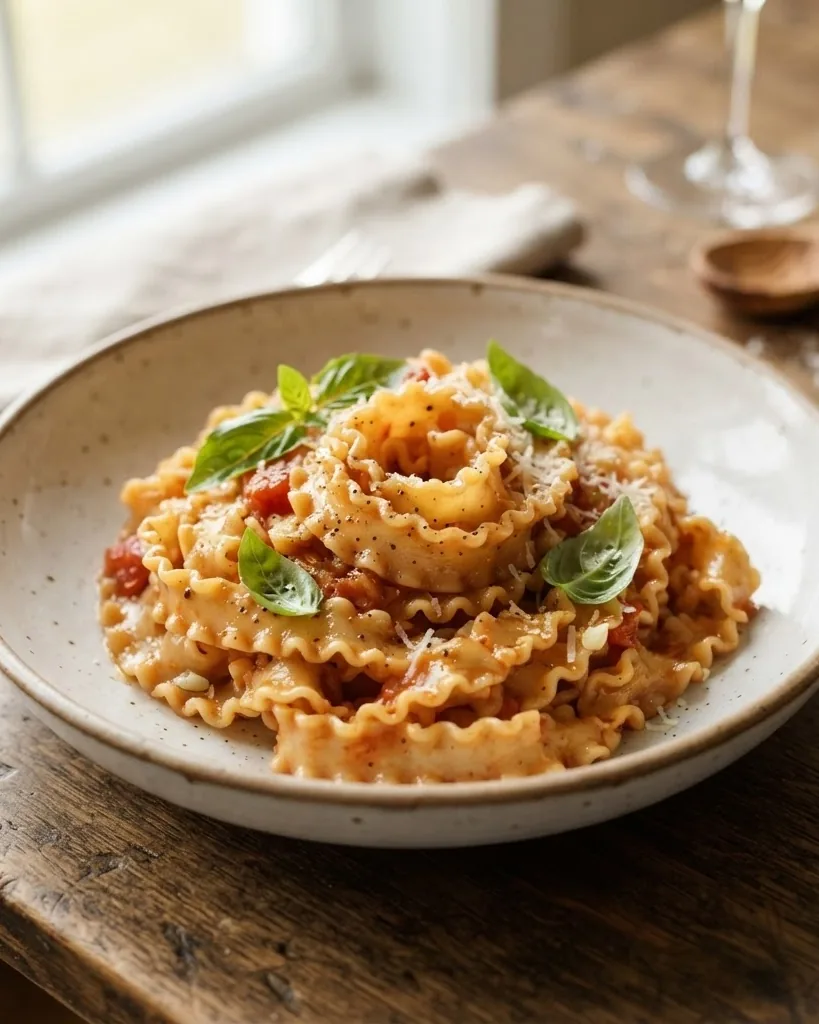
The whole reason to bother with mafaldine over a plain ribbon is the ruffled border, so let it do its job. Those pleats catch and hold sauce in every fold, which makes the shape unusually flexible. It handles a light garlic-and-oil toss, a lemon-butter, or a spoon of sheep milk ricotta with the grace of a delicate noodle, and Neapolitans traditionally pair it exactly that way, with ricotta in bianco or a simple chickpea sauce. But it also grabs a clingy tomato, a mushroom cream, or a crumbled sausage sauce and carries plenty in each frilled bite.
The gluten free twist is fragility. A wheat ribbon shrugs off a rough, heavy chunk sauce; a rice or corn ribbon is more tender, so a slick, cohesive sauce treats it far better than a stiff, draggy one. For the gluten free version, sauces that emulsify with a splash of pasta water into something glossy work best, coating rather than clobbering, and a heartier sauce should be loosened on purpose so it hugs the ribbons instead of tearing them.
Storage and reheating without ruining it
Gluten free pasta keeps like regular pasta on the shelf but is fussier once cooked. Here is a routine that keeps a batch from going to waste.
- Step 1 – Store the dry box airtight and in a cool, dry pantry, where an unopened bag holds its quality to the printed best-by date, usually 1 to 2 years out.
- Step 2 – Refrigerate cooked pasta in a sealed container for 3 to 5 days, and toss it with a little oil first so the ribbons do not weld into a clump as they chill.
- Step 3 – Freeze cooked, sauced pasta for about 1 to 2 months, since the texture survives freezing much better coated in sauce than bare.
- Step 4 – Reheat gently with a splash of water or extra sauce, because rice and corn pasta turns grainy and stiff if you microwave it dry.
The biggest storage mistake is stashing cooked gluten free pasta plain and cold, then wondering why it reheats into a rubbery brick. Sauce or oil it before it goes in the fridge, add moisture back when it comes out, and the leftovers treat you fine.
Frequently asked questions
What is gluten free mafaldine pasta made of?
It is the classic ruffled ribbon pasta built without wheat. Most boxes use a blend of rice and corn flour, sometimes with quinoa or tapioca and a little xanthan or konjac gum to replace the missing gluten. Higher-protein versions are made from legume flours like chickpea or red lentil. The flour blend changes the taste, cook time, and nutrition, so read the specific box rather than assuming they are all the same.
Is gluten free mafaldine safe for celiac disease?
The flours themselves, rice, corn, quinoa, and legumes, are naturally gluten free and safe on a celiac diet per NIH guidance. The real risk is cross-contamination if the grain was processed in a facility that also handles wheat. For a celiac guest, look for a certified gluten free label rather than just a product that lacks wheat, and follow your own medical guidance over any recipe.
How long do you cook gluten free mafaldine?
Roughly 7 to 11 minutes depending on the brand and flour, but always set your timer to the shortest time on the box and taste a ribbon 1 to 2 minutes early. It goes from firm to overcooked very fast because there is no gluten net, so pull it while it still has a real bite at the center. It keeps cooking on the way to the bowl.
Why does my gluten free pasta turn out gummy?
Gumminess comes from excess surface starch, which gluten free pasta sheds freely with no gluten to hold it in check. Cook it at a gentle simmer rather than a hard boil, stir constantly for the first few minutes, and do not overcook it. For hot saucy dishes, skip the rinse and toss it straight into sauce; for cold salads, rinse until the water runs clear.
Is gluten free mafaldine healthier than regular pasta?
Not automatically. Rice and corn gluten free pasta is nutritionally close to wheat pasta, around 200 calories, 43 grams of carbohydrate, and only 4 grams of protein per 2 ounce dry serving. Legume versions are the real upgrade, with chickpea pasta near 19 grams of protein and lentil pasta near 9 grams of fiber per cooked cup. For a nutrition boost, choose a chickpea or lentil box.
What sauce goes best with mafaldine?
The ruffled edges hold sauce in every fold, so it is flexible. Light dressings like garlic-oil, ricotta, lemon-butter, or pesto suit it beautifully, as the traditional Neapolitan pairings show. Clingy tomato, mushroom cream, and sausage sauces work too. With the gluten free version, lean toward smooth, well-emulsified sauces, since a dry, heavy chunk sauce can tear the fragile ribbons apart.
The bottom line
Gluten free mafaldine pasta is not a lesser copy of the ruffled ribbon you already love, it is the same century-old Neapolitan shape rebuilt from rice, corn, quinoa, or legume flour, and it asks for a slightly gentler hand. Cook it in salted water at a calm simmer, set the timer to the shortest box time, stir hard through the first five minutes, and taste it early, because without gluten it overcooks in a blink. Skip the rinse for hot dishes and sauce it the moment it drains so those pleated edges grab every drop. Pick rice or corn for the closest thing to classic pasta, or chickpea and lentil if you want real protein and fiber. Mind those few minutes and gluten free mafaldine turns out a plate worth setting in front of anyone.