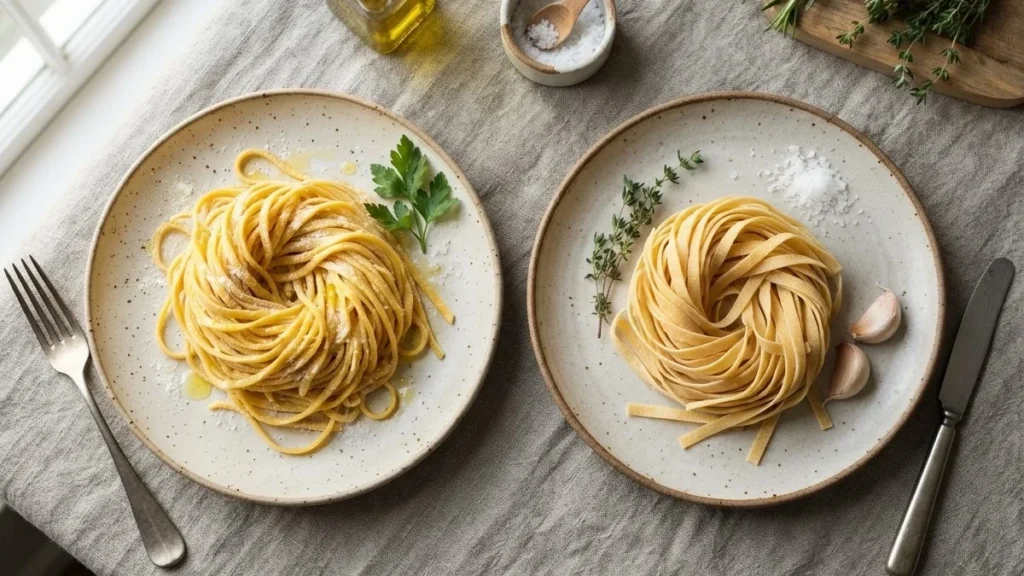
The egg noodles vs pasta question comes up more than almost any other swap, usually when someone is halfway into a stroganoff and staring at a box of spaghetti instead of the bag of wide noodles the recipe wanted. The two look like cousins, they cook in the same pot of salted water, and both start with wheat. But the differences are real, and they quietly decide whether your dinner turns out tender and saucy or firm and chewy.
Egg noodles and durum pasta are not interchangeable in the way most people assume, and once you understand the one ingredient that separates them, every other difference – texture, cook time, calories, best use – falls into place on its own.
Every number below is checked against USDA nutrition data and the federal food standards, so the facts rest on sources you can verify.
Quick answer: Egg noodles are made from wheat flour plus egg (federal rules require at least 5.5 percent egg solids), so they cook faster, taste richer, and turn tender – which is why they own stroganoff, chicken noodle soup, and creamy casseroles. Regular pasta is durum semolina and water, which gives it a firmer al dente bite that holds up under Italian sauces and in baked dishes. Nutritionally they are close, roughly 200 to 220 calories per cooked cup, but egg noodles add a little fat and about 46 milligrams of cholesterol, while plain semolina pasta has none and runs slightly higher in fiber. When you swap, go about one to one by weight and adjust the timer.
What separates them at the mixing bowl
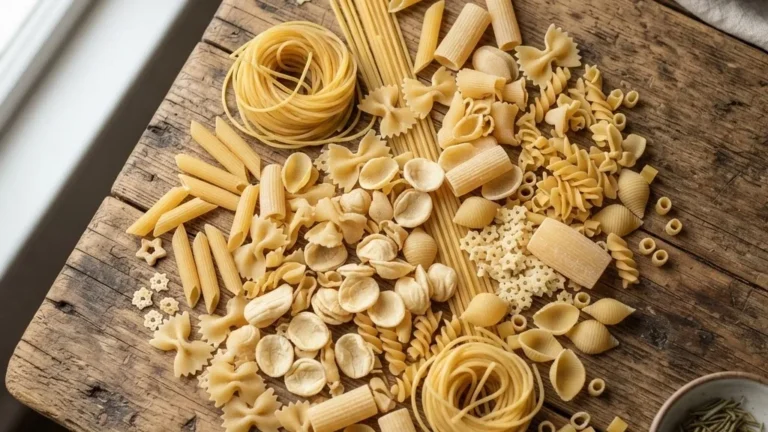
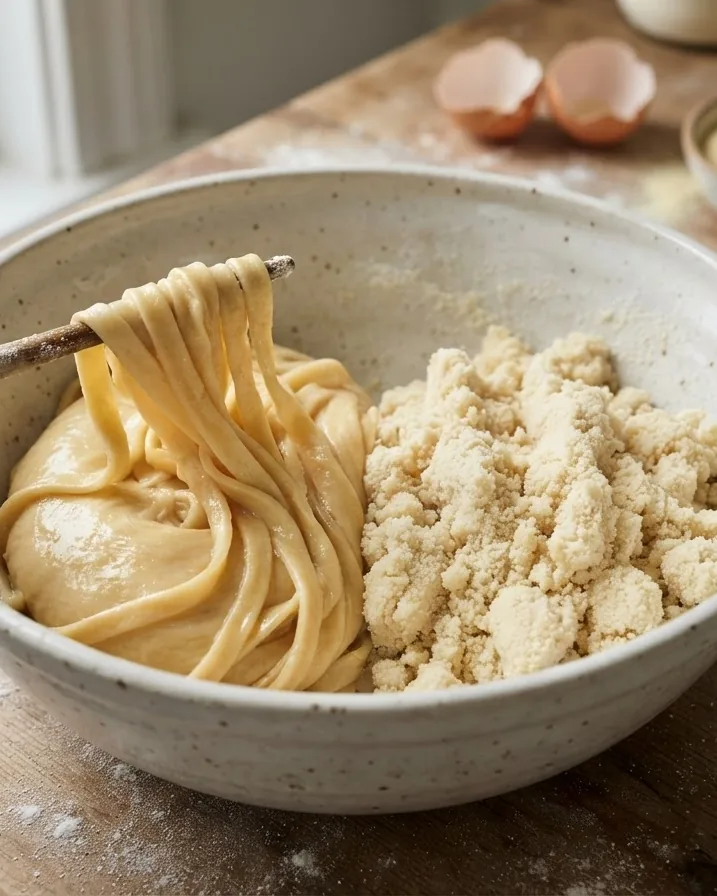
Everything comes down to what goes into the dough. Regular dried pasta – the everyday Italian-style box – is made from just two things: durum wheat semolina and water. Durum is a hard, high-protein wheat, and semolina is its coarse golden grind. That combination is what gives good pasta its structure and that clean snap when you bite it. There is no egg in a standard box of spaghetti or penne, which surprises people who assume all noodles carry egg.
Egg noodles are a different animal. They are made from wheat flour, egg (whole egg or just the yolk), and water, worked into an unleavened dough and cut into ribbons. Here is what most guides get wrong: they treat “egg noodle” as a loose marketing word, when it is actually a defined federal standard. The rule is real, and according to USDA and the food standards enforced by the FDA under 21 CFR 139.150, a product sold as egg noodles must contain not less than 5.5 percent egg solids by weight. That is not a suggestion on the label; it is the line between real egg noodles and plain ribbon pasta wearing the name.
That single rule explains the rest of the article. The egg brings fat, protein, color, and a softer bite. The semolina in regular pasta brings firmness and a more neutral wheat flavor. Egg noodles usually lean on a softer flour than hard durum, so they land tender where semolina pasta lands chewy; treating them as the same product with a different shape is how dishes get ruined when the wrong one goes into the pot. The semolina is why a good dried pasta stays springy in the pot; the egg is why a good noodle turns silky.
Texture and taste once they hit the plate
Pick both up off a fork and the difference is obvious. Egg noodles are softer and more tender, with a faint springiness and a genuinely richer, slightly eggy flavor. That richness is why they drink up cream sauces and gravies so well: the tender ribbon grabs the sauce instead of shrugging it off, and a plate of buttered egg noodles with nothing but salt and pepper tastes like more than the sum of its parts, which is the egg talking.
Durum pasta is firmer and chewier, especially when you cook it al dente, and its flavor is cleaner and more neutral. That neutrality is a feature, not a flaw. It means the pasta gets out of the way and lets a bright tomato sauce, a garlicky aglio e olio, or a sharp cacio e pepe be the star. The firm bite also survives contact with bold, acidic, or oily sauces without going to mush, which matters when you are tossing hot pasta hard in a pan. If you want the bite dialed in exactly, the walkthrough on how to cook pasta al dente covers the timing that keeps semolina pasta firm.
There is a structural reason for all this. Egg proteins set soft and coat; durum protein sets into a tight gluten matrix that resists. Neither is better in the abstract. They are built for different jobs, and the cook who knows which texture a dish needs never has to guess.
How the two stack up nutritionally
This is where the myths pile up, so here are the real numbers. People assume egg noodles must be the protein winner because of the egg. They are not. Despite carrying egg, egg noodles actually run about 1.3 grams lower in protein per 100 grams than regular pasta. What the egg adds is fat, cholesterol, and richness, not a meaningful protein bump. Among people who choose one over the other for “health” reasons, that is the single most common mix-up.
Here is how a cooked cup of each compares, using enriched, cooked figures. You can pull the same values yourself from USDA FoodData Central, and both fall squarely in the grains group that USDA MyPlate tells you to fill a quarter of your plate with.
| Per 1 cup cooked | Egg noodles (enriched) | Regular pasta (enriched) | Whole wheat pasta |
|---|---|---|---|
| Calories | about 221 | about 220 | about 174 |
| Protein | about 7.3 g | about 8 g | about 7.5 g |
| Fat | about 3.3 g | about 1.3 g | about 0.8 g |
| Carbohydrate | about 40 g | about 43 g | about 37 g |
| Fiber | about 2 g | about 2.5 g | about 4 to 6 g |
| Cholesterol | about 46 mg | 0 mg | 0 mg |
Read that table and the pattern is clear. The calorie difference between plain egg noodles and regular pasta is basically noise – roughly one calorie per cup. The real gaps are fat and cholesterol, both higher in egg noodles because of the egg, and fiber, where regular pasta edges ahead and whole wheat pasta runs away with it. Enriched versions of both are decent sources of iron, thiamin, and selenium, so neither is a nutritional dead weight. If you are chasing lighter, higher-fiber bowls, the notes on healthy pasta break down where whole grain and legume options fit.
The honest takeaway: for most people the choice between these two barely moves the nutrition needle. Portion size does far more work than the egg-versus-semolina decision, and how much you actually put in the bowl is the lever that matters. If that is your worry, start with how much pasta per person before you fuss over which box to buy.
Cook time and how each behaves in the pot
The pot is where a lot of good dinners die, because egg noodles and pasta do not run on the same clock. Dried egg noodles are quick, usually 6 to 10 minutes depending on how wide they are cut, and fresh egg noodles can be done in 2 to 4 minutes. Dried semolina pasta takes longer, generally 8 to 12 minutes by shape, and you pull it about a minute before the package time if you want a true al dente bite.
The behavior matters as much as the clock. Egg noodles soften faster and their good-texture window is narrower, so they slide from tender to mushy in a hurry if you wander off. Durum pasta is more forgiving and holds its shape longer in the water. The number one egg-noodle mistake is walking away to stir the sauce and coming back to a pot of paste. Set a timer and taste early. My step-by-step on how to boil pasta applies to both, but egg noodles reward you for watching them like a hawk.
Here is the routine to follow, whichever one is going in:
- Step 1 – Bring a big pot of water to a hard, rolling boil before anything else; skimping on water gives you gummy, sticky noodles.
- Step 2 – Salt the water generously, about 1 to 2 tablespoons per 4 quarts, so the noodles are seasoned from the inside, not just sauced on the outside.
- Step 3 – Add the noodles, stir right away to stop clumping, and start a timer for the low end of the package range – about 6 minutes for egg noodles, 8 for pasta.
- Step 4 – Start tasting a minute or two before the timer ends; egg noodles should be tender with a slight spring, pasta should have a firm center for al dente.
- Step 5 – Drain but save a cup of the starchy cooking water, then toss the noodles into the warm sauce so it clings instead of sliding off.
That saved cooking water is the trick most home cooks skip, and it works for both. A splash loosens a tight sauce and helps it grip the noodle, which matters more with slick egg noodles than you would think.
Where each one earns its place
This is the part people actually want to know: which one for which dish. Each one has clear strengths, and they come straight from how the two behave. Tender, sauce-hungry egg noodles belong with cream and gravy; firm, neutral durum pasta belongs with bright, bold, and baked.
Reach for egg noodles when the dish is comforting, creamy, or brothy:
- Beef, chicken, or turkey stroganoff, where the tender ribbon soaks up the sour-cream gravy.
- Chicken noodle soup and hearty stews, because they cook fast and stay soft in the broth.
- Creamy casseroles like tuna noodle or chicken noodle bake.
- Simple buttered noodles with parsley as a fast side.
- Kugel and other old-school baked egg-noodle dishes where richness is the point.
Reach for regular durum pasta when the sauce is assertive or the dish goes in the oven:
- Classic Italian sauces – marinara, arrabbiata, aglio e olio, cacio e pepe, carbonara.
- Baked pasta like ziti, lasagna, and stuffed shells, where firm shapes hold structure.
- Cold pasta salad, because al dente shapes keep their bite after chilling.
- Pesto and oil-based tosses that need a sturdy surface to cling to.
- Seafood pastas, where a clean wheat flavor lets the shellfish lead.
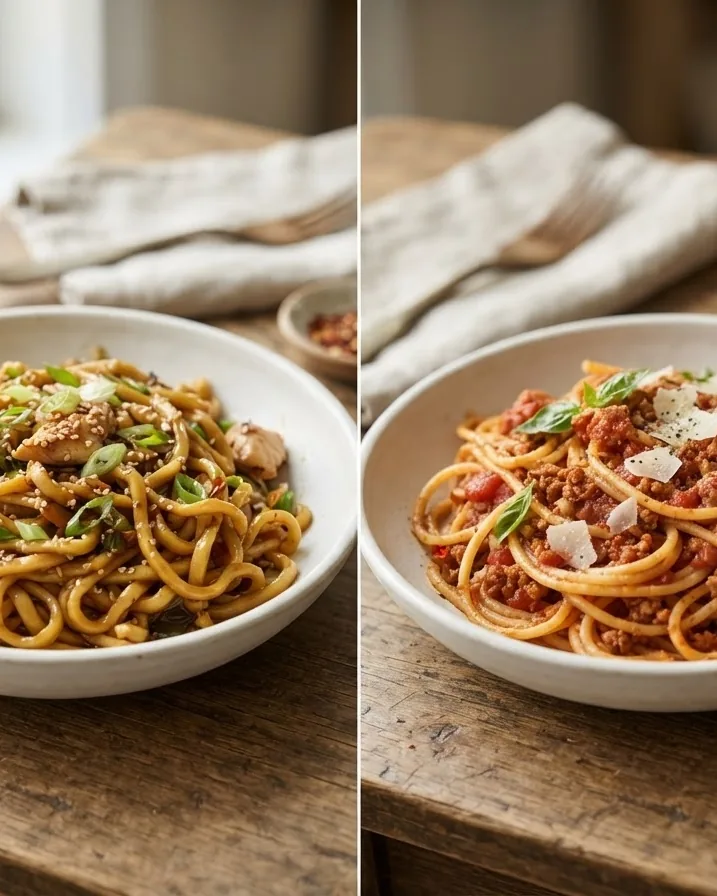
The quick gut check is this: if the sauce is creamy, brothy, or built for comfort, egg noodles will make it better; if the sauce is bright, oil-slicked, or the dish is headed for the oven, durum pasta is the one that holds. Match the noodle to the sauce and the dish almost cooks itself.
Swapping one for the other without wrecking dinner
Life happens, the pantry is thin, and you end up weighing egg noodles versus semolina pasta for a recipe that asked for the other. Good news: you can usually make the swap. Go about one to one by weight, not by cup, since the shapes pack so differently. A pound of egg noodles stands in for a pound of pasta and the reverse holds too.
The trick is respecting the differences you already read about. Egg noodles finish sooner, so cut a couple of minutes off the timer if you drop them into a recipe written for pasta. The usual pattern is that home cooks swap the noodle but forget to swap the clock, and then blame the recipe when the egg noodles turn soft. Expect a more tender result any time egg noodles replace a firm pasta, and a chewier result the other way around.
For stroganoff with no egg noodles in the house, short pasta is your friend. Bowtie (farfalle), rotini, elbow macaroni, and wide fettuccine all carry that sour-cream gravy just fine. Going the other direction, if a baked pasta recipe is all you can shop for and you only have egg noodles, know that the finished dish will read softer and richer than the firm, sliceable original. It still eats well; it just is not the same texture. When you need to hold cooked leftovers of either, the same rules apply, and the guide to how long pasta is good for in the fridge keeps you out of trouble.
Shelf life and keeping them fresh
Storage is the least glamorous part of this comparison and the one that saves you the most money, so it deserves a proper look. For anyone buying both in bulk, dry and fresh are two completely different storage problems. Sealed dry egg noodles keep in a cool pantry for up to about 2 years, and dried semolina pasta holds 1 to 2 years and often stays fine well past the best-by date because there is so little moisture for anything to grow in.
Fresh egg noodles are the fragile ones. Refrigerated, they last only 3 to 5 days, because the moisture and egg give bacteria something to work with, so treat them like the perishable they are. You can freeze fresh egg noodles for about 6 months, thawed in the fridge before cooking. Cooked noodles of either kind – egg or pasta – keep 3 to 5 days in the fridge and freeze at best quality for about 1 to 2 months. And do not leave any cooked noodle sitting out for more than 2 hours, since the 40 to 140 degree Fahrenheit range is exactly where bacteria multiply. If you batch-cook, freezing is the safe play, and the rundown on whether you can freeze pasta walks through doing it without ending up with a frozen brick.
Frequently asked questions
Are egg noodles healthier than pasta?
Neither is clearly healthier for most people. A cooked cup of each runs about 220 calories, and they sit within a gram or so of each other on protein and carbs. Egg noodles add roughly 3.3 grams of fat and 46 milligrams of cholesterol per cup from the egg, while plain semolina pasta has none and a touch more fiber. If fiber and lower fat are your goals, regular or whole wheat pasta edges ahead. Portion size matters far more than the choice between them.
Do egg noodles really have more protein because of the egg?
No, and this is the big myth. Despite the egg, egg noodles actually contain about 1.3 grams less protein per 100 grams than regular durum pasta. The egg contributes fat, cholesterol, richer flavor, and color, not a meaningful protein increase. If protein per serving is what you are after, standard semolina pasta quietly wins, and legume-based pastas beat both by a wide margin.
What actually makes a noodle an egg noodle?
It is a legal definition, not just a name. Under the federal standard of identity at 21 CFR 139.150, a product labeled egg noodles must contain at least 5.5 percent egg solids by weight and is a ribbon-shaped noodle product. Regular pasta is made from durum semolina and water with no egg required. So the label is telling you something real: real egg noodles carry a guaranteed minimum of egg.
Can I substitute pasta for egg noodles in stroganoff?
Yes. Swap about one to one by weight and reach for short shapes – bowtie, rotini, elbow macaroni, or wide fettuccine all hold the creamy gravy well. The result will have a firmer, chewier bite than tender egg noodles, and you should watch the cook time, since semolina pasta usually needs a couple of minutes longer in the pot. Rice or mashed potato works too if you want to skip noodles entirely.
Which cooks faster, egg noodles or pasta?
Egg noodles, by a clear margin. Dried egg noodles are usually done in 6 to 10 minutes and fresh ones in 2 to 4, while dried semolina pasta takes 8 to 12 minutes depending on shape. Egg noodles also overcook faster, so their tender window is narrower. Taste-test a minute or two early either way, and pull pasta just short of soft if you want al dente.
How long do dry egg noodles and pasta last in the pantry?
Sealed dry egg noodles keep for up to about 2 years in a cool, dry pantry, and dried semolina pasta lasts 1 to 2 years and often stays usable past the best-by date. Fresh egg noodles are different – only 3 to 5 days refrigerated, or about 6 months frozen. Cooked noodles of either type hold 3 to 5 days in the fridge, so an airtight container is your friend.
The bottom line
Egg noodles and regular pasta start from the same grain and split on one ingredient: the egg. That egg makes noodles softer, richer, faster-cooking, and slightly higher in fat and cholesterol, which is exactly why they own stroganoff, soups, and creamy casseroles. Durum semolina pasta keeps a firmer al dente bite, a cleaner flavor, and a hair more fiber, which is why it holds Italian sauces and survives the oven. Nutritionally the two are close enough that portion size decides more than the label does. Pick egg noodles when you want tender and comforting, pick pasta when you want bite and structure, swap about one to one by weight when you must, and adjust the timer for whichever one is in the pot. Do that, and you will never stand over a boiling pot second-guessing the box again.