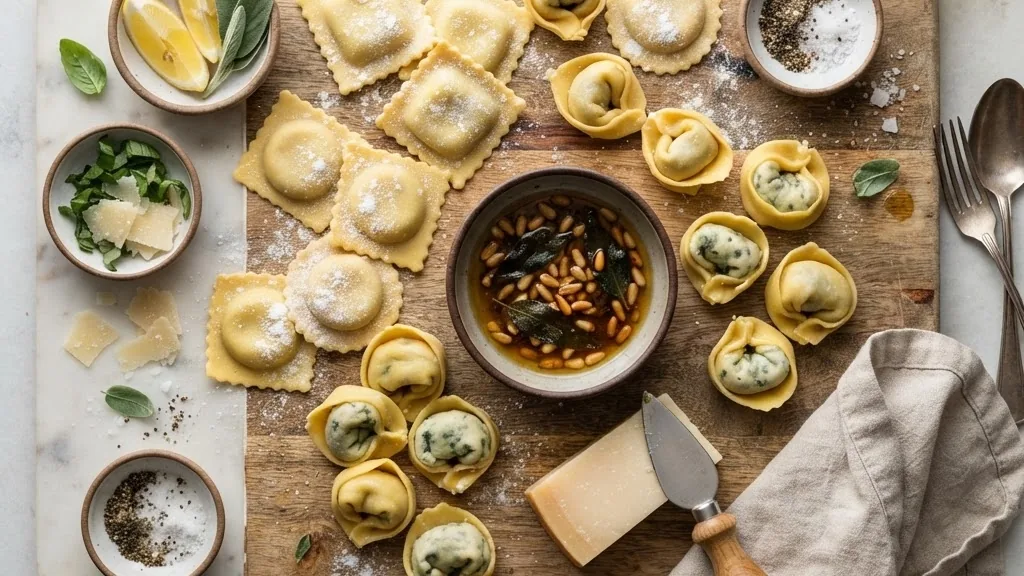
pasta parcels recipes begin with a deceptively simple idea: put a flavorful filling inside a sheet of pasta, seal it well, and cook the little package without letting the water reach its center. That sounds straightforward until the dough sticks, the filling leaks, the edges dry out, or a beautiful parcel opens in the pot. The good news is that each problem has a mechanical cause. Once the relationship between dough hydration, filling texture, sealing pressure, shape, and sauce is clear, stuffed pasta becomes much easier to control.
The wider family is also far more interesting than ravioli alone. The Accademia Italiana della Cucina maintains regional recipes that include agnolotti, while its stated mission is to protect and promote Italian culinary traditions. The Accademia Italiana della Cucina is therefore useful when thinking about stuffed pasta as a family of regional forms rather than a single recipe template.
For another useful pasta pairing, the rich, soft texture of stuffed pasta can be contrasted with the approach used in Dreamy Caramelized Shallot Pasta. The distinction matters: a filled parcel already carries its main flavor inside the dough, so the sauce should usually clarify that filling rather than bury it.
Quick answer: the structure behind great pasta parcels
Pasta parcels recipes work best when three things stay balanced: a workable dough, a filling that is flavorful but not wet, and a seal that removes trapped air. Traditional fresh egg pasta is associated with roughly 57 percent hydration, expressed in the practical ratio of 1 egg for every 100g of flour. Fresh parcels cook very quickly, needing only 2 to 3 minutes in salted boiling water for an al dente texture. Ravioli, tortellini, agnolotti, cappelletti, and mezzelune differ mainly in shape, folding method, and regional identity. Delicate ricotta or vegetable fillings suit restrained sauces such as brown butter and sage, while meat fillings can carry broth or ragù. Freezing works best when parcels are separated before being transferred to a bag.
Why ravioli is only one branch of the pasta parcel family
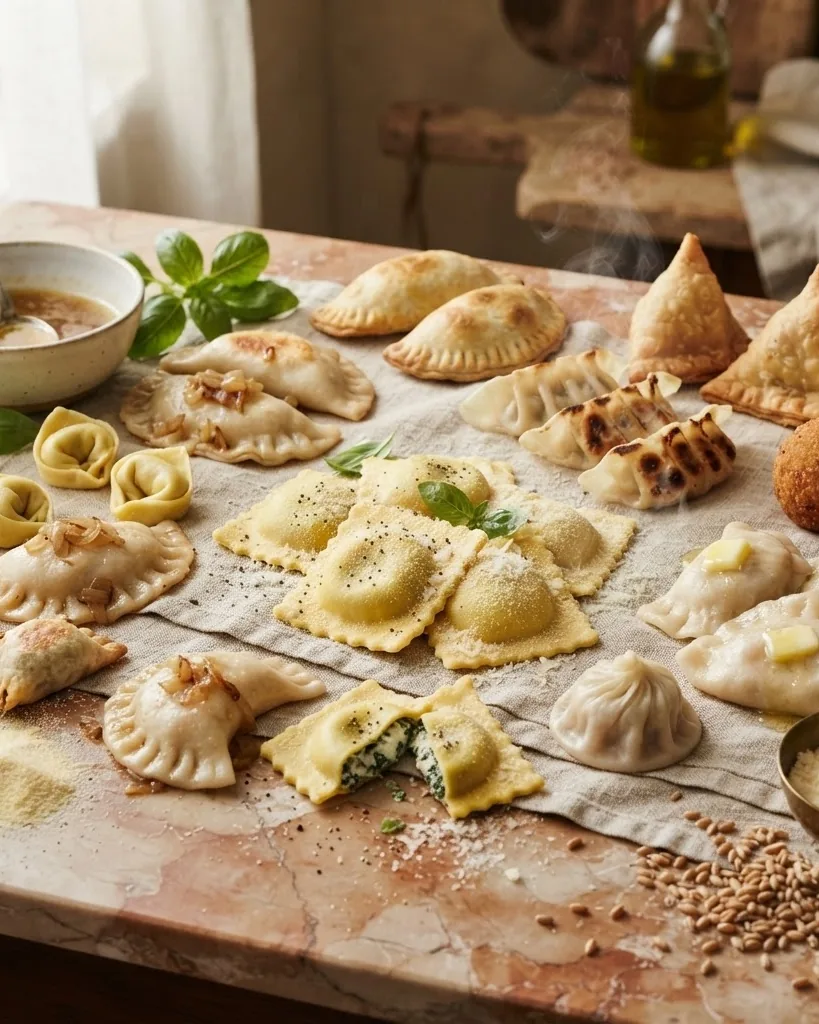
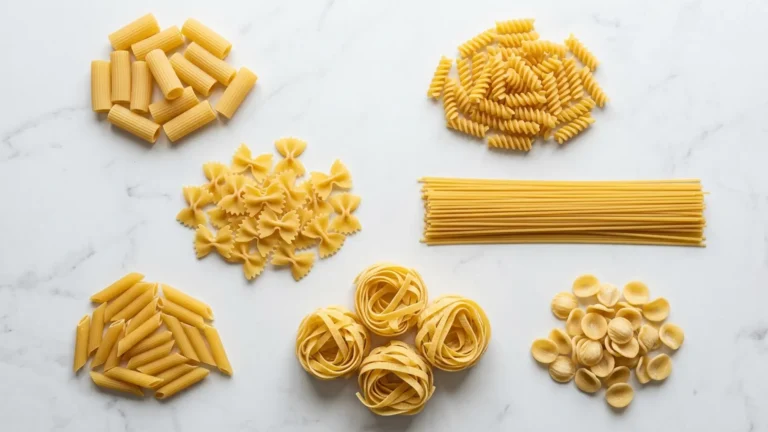
Stuffed pasta is easiest to understand when shape is treated as a functional design rather than decoration. Ravioli usually presents a flat square or circular parcel with a defined seam around the filling. Tortellini is much smaller and is formed into a ring, while agnolotti is typically pinched into a compact pocket. Cappelletti takes its name from its little hat-like appearance. Mezzelune are half-moons, created by folding a round sheet over its filling. The differences affect how much filling can be used, where the seam sits, and how the parcel behaves in the pot.
The distinction also explains why a single folding method cannot serve every filled pasta. A square ravioli gives you broad edges for pressing out air. A tortellini demands a tighter sequence of folding and joining. An agnolotti can be pinched into a compact shape that feels almost like a small envelope. Mezzelune offer a generous curved seam, which makes them especially useful when you want a clearly defined filling.
Historical context adds another layer. A notarial deed from 1158 contains a documented trace of ravioli, mentioning a baker from Prato preparing the dish for pilgrims. That date does not turn every modern filled pasta into a medieval replica, but it does show how long the idea of enclosing food in pasta has been part of Italian culinary history.
The Accademia Italiana della Cucina treats regional variation as central to Italian cuisine rather than as a problem to eliminate. Its recipe collection includes several agnolotti preparations from Piedmont and other regions. That is a useful reminder that names and shapes carry geographical meaning, and that a home cook can learn the structural logic of a shape without pretending every filling belongs to one rigid canonical recipe.
For practical cooking, think of the family this way:
- Ravioli: broad, sealed parcels that are forgiving for beginners and easy to fill with cheese, vegetables, meat, or seafood.
- Tortellini: small ring-shaped parcels that reward controlled filling and careful folding.
- Agnolotti: compact pinched pockets that work especially well with concentrated fillings.
- Cappelletti: little hat-like parcels with a distinctive folded silhouette.
- Mezzelune: half-moons with a curved seam and a generous surface for sealing.
Shape should follow filling. A loose seafood mixture benefits from a form with a generous seam and controlled portioning. A dense meat filling can sit comfortably in a compact parcel. Soft ricotta and spinach are particularly suited to broad ravioli because the filling can be distributed evenly without requiring an elaborate fold.
That is also why the best filled pasta recipes do not treat shaping as an afterthought. The shape determines the seam. The seam determines how much pressure can be applied. The pressure determines whether water reaches the filling. Once those links are understood, the visual differences between pasta shapes become practical information rather than vocabulary to memorize.
Building a fresh pasta dough that can survive folding
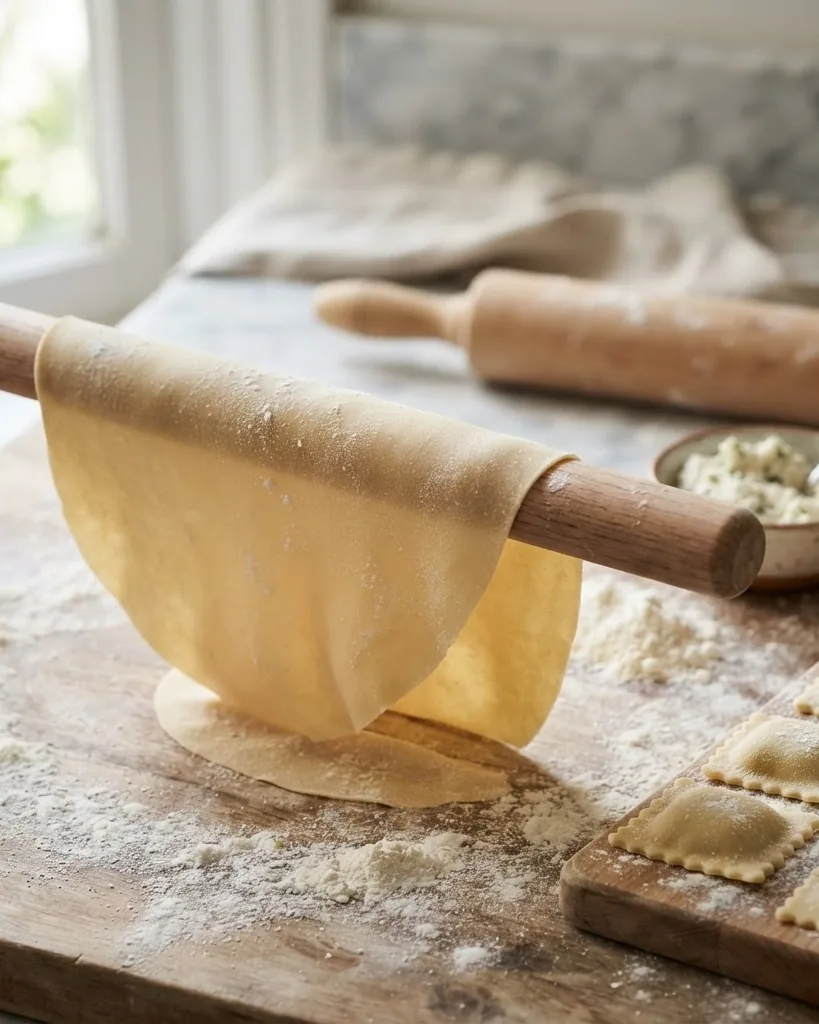
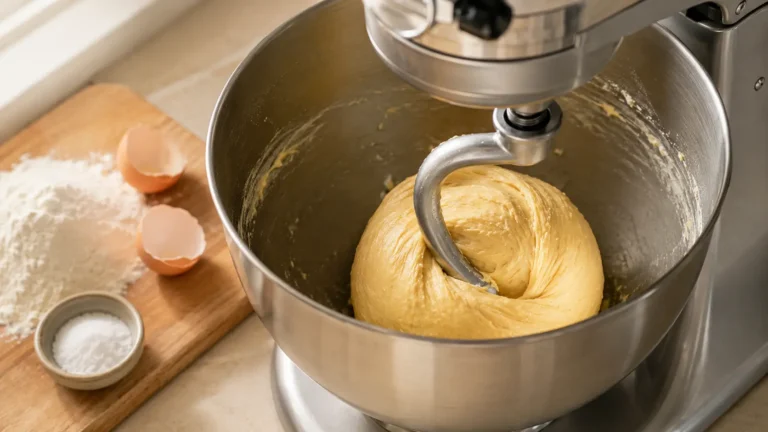
A parcel dough needs a different kind of reliability from a simple noodle. It must roll thin enough to feel tender, remain flexible while the filling is placed, and hold together when the edges are pressed. Traditional fresh egg pasta is commonly built around Tipo 00 flour and eggs, with a useful hydration benchmark of roughly 57 percent. The practical ratio supplied for that style is 1 egg for every 100g of flour. The important point is consistency: the dough should be cohesive enough to roll, but not so soft that its edges become difficult to seal.
Tipo 00 flour is widely associated with Italian pasta dough, and the stated protein range in the supplied reference is 11.00 percent to 12.50 percent. Protein matters here because the dough needs enough structure to stretch and hold its shape. Too little structural strength can make a thin sheet fragile. Too much stiffness can make folding feel like forcing cardboard around the filling.
The working sequence is simple, but each stage has a job.
- Combine the flour and eggs. Bring them together until the mixture forms a rough dough rather than trying to make it perfectly smooth immediately.
- Knead until cohesive. Work the dough until the surface becomes more even and the mass feels elastic rather than crumbly.
- Let the dough relax. A relaxed dough rolls more willingly, which reduces the temptation to force a thick or uneven sheet through the pasta roller.
- Roll progressively. Reduce the thickness in stages rather than trying to compress the dough dramatically in one move.
- Keep exposed dough covered. Dry edges are difficult to seal because they lose flexibility precisely where you need the dough to bend and adhere.
For a vegan approach, semolina and water provide a useful alternative foundation. It does not behave identically to an egg dough, so the goal should not be to imitate egg pasta perfectly. Instead, treat the dough as a separate system and pay attention to its ability to roll and close cleanly.
Food science supports the broader principle that water content changes pasta behavior. Research indexed by PubMed on fresh gluten-free pasta has examined how different flour-to-water ratios affect processing properties, firmness, swelling, and cooking loss. The study used amaranth-based dough rather than conventional egg pasta, so it should not be treated as a direct formula for ravioli. It does, however, reinforce why hydration is a structural variable rather than a minor detail.
The same logic helps diagnose dough problems. Sticky dough is usually a handling problem before it is a recipe failure. Dry dough is the opposite: its edges resist joining and can crack during folding. Instead of covering every surface with flour, adjust the dough gradually and preserve enough flexibility for the seam. Excess flour on the joining edge can work against adhesion, leaving a dry barrier between two pieces that need to bond.
When the dough feels right, it should cooperate with the filling. You should be able to press an edge without it immediately splitting. A sheet that becomes brittle while you work is telling you to reduce exposure to air and shorten the time between rolling and shaping.
Four filling formulas that stay flavorful without flooding the seam
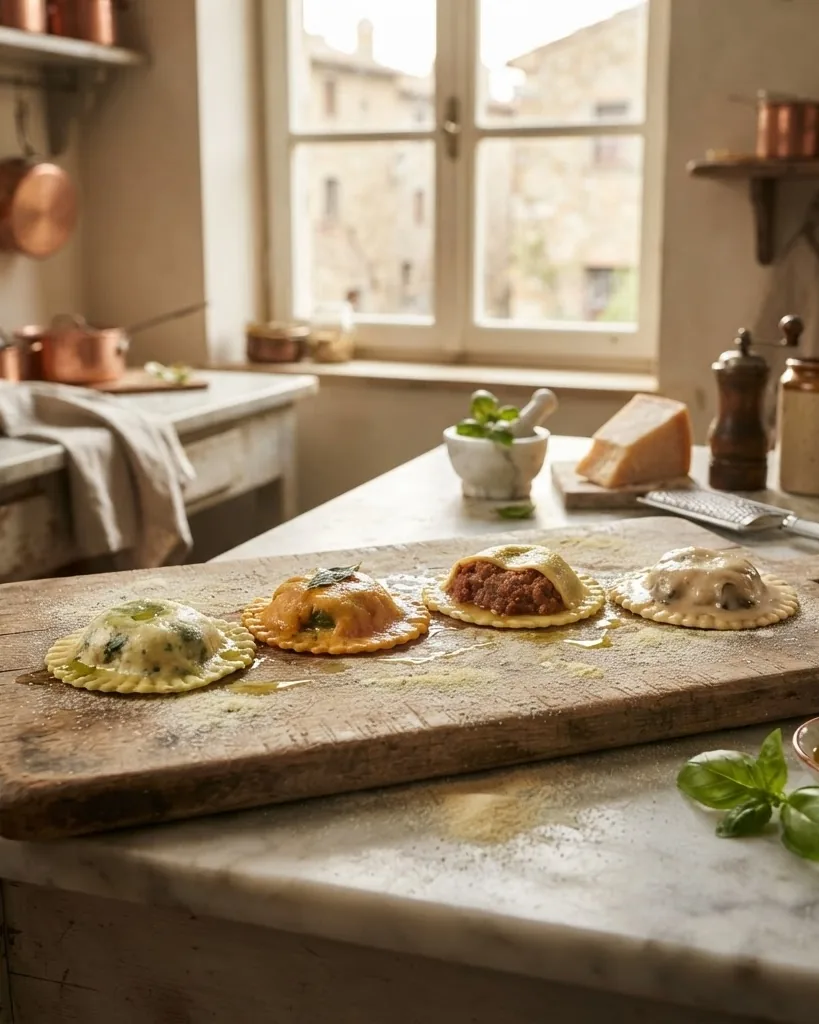
The filling is the center of the parcel, but its texture controls the entire assembly. A good filling should be cohesive enough to sit where it is placed, concentrated enough that it does not require a large portion, and balanced enough to taste complete after being wrapped in pasta. Four useful families cover much of the territory: cheese, meat, vegetables, and seafood. Each starts with a different source of body, then adds seasoning and a supporting flavor rather than piling ingredients into a wet mixture.
Cheese fillings are especially versatile. Ricotta provides a soft base, while Parmigiano Reggiano can add savory depth. The Consorzio del Formaggio Parmigiano Reggiano explains that authentic Parmigiano Reggiano is protected as a PDO product and produced according to defined production rules. Its official guide is a useful reference when the cheese itself is meant to be part of the identity of a filling rather than just a generic garnish.
A cheese parcel becomes difficult when the filling behaves like a sauce. Ricotta should therefore be treated as the body of the mixture, with other ingredients added to shape flavor rather than loosen it. Spinach can work beautifully with ricotta, but vegetable moisture needs attention. Squash offers another vegetable route, especially when its sweetness is balanced with savory cheese and herbs.
Meat fillings need concentration. Pork or beef can be combined with cheese or aromatics, but the mixture should remain cohesive enough to hold its mound. A watery meat filling creates two problems at once: it weakens the seam and releases moisture into the parcel while cooking.
Seafood parcels benefit from restraint. Crab and prawn already have distinct flavors, so the filling does not need to become heavily seasoned to taste interesting. The shellfish should remain the central note, while the pasta and sauce provide contrast. A lighter sauce is usually easier to control than a heavy one that competes with delicate seafood.
A useful mental formula is:
- Cheese: ricotta for body, Parmigiano Reggiano for savory depth, herbs for lift.
- Meat: pork or beef for substance, aromatic ingredients for complexity, enough binding to keep the mixture compact.
- Vegetable: spinach or squash for the main character, cheese or seasoning for balance, moisture control for structure.
- Seafood: crab or prawn as the focal flavor, restrained seasoning, and a sauce that does not overpower the filling.
The most useful test is not whether a filling tastes exciting from the bowl. It is whether it will still taste balanced after being enclosed by pasta. A filling that seems aggressively seasoned on its own may become exactly right once wrapped. A mild filling can disappear entirely beneath a thick sauce.
Portioning matters too. Small tortellini from Bologna are traditionally associated with an individual handmade weight of approximately 5g each. That figure illustrates the scale difference between a delicate ring and a larger raviolo. It is not a universal target for every parcel. A large ravioli and a tiny tortellino simply demand different filling discipline.
The fold and seal: where trapped air becomes a real problem
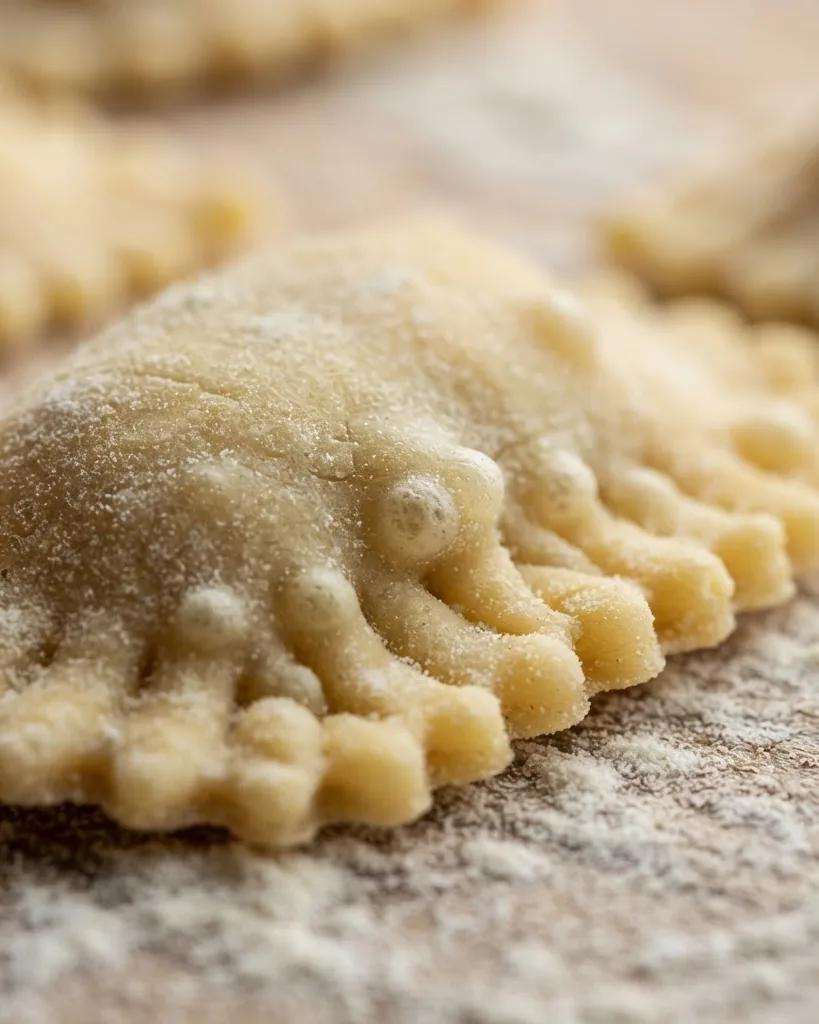
Sealing is the make-or-break stage because the parcel must survive both handling and boiling. The central rule is simple: place the filling away from the edge, bring the pasta together without trapping a pocket of air, and press the seam firmly enough to close it without tearing the dough. Water can be used to help the edges adhere, while egg wash is another option for egg pasta. The seal should be continuous, with no gaps hidden beneath folds or corners.
Begin with a clean sheet of rolled dough. Place portions of filling at consistent intervals, leaving enough surrounding pasta to create a seam. Fold the dough or place a second sheet over it, depending on the shape. Start close to the filling and press outward toward the edge. That movement matters because it pushes trapped air away from the center rather than sealing the air inside.
Air is the enemy of a filled parcel for a simple physical reason. A sealed pocket expands as the parcel heats. If the seam is weak, the pressure can force filling through the weakest point. The answer is not simply to press the entire parcel harder. A heavy-handed seal can flatten the filling, thin the surrounding dough, and create a new weak spot.
Use the fingertips to define the boundary around the filling first. Then reinforce the outer seam. For ravioli, a cutter can create clean edges after sealing, but the cut should not replace the sealing step. A neat square can still burst if its perimeter was not properly bonded.
For mezzelune, press from the center of the curved seam outward. For ravioli, work around the perimeter in a controlled sequence. For tortellini and cappelletti, the fold becomes more involved because the ends must meet in a particular arrangement. Agnolotti relies more heavily on the precision of its pinched closure.
Keep the unshaped dough protected from air while you work. Dry dough is much harder to bend around a filling, and a cracked edge cannot form a dependable seal. If a sheet has already become brittle, do not assume more pressure will solve it. A better approach is to reduce exposure time and keep the working surface organized so that each sheet moves from rolling to filling to sealing quickly.
The seam should look intentional. If filling is visibly squeezing through the edge before cooking, the parcel is already telling you that the ratio between filling and dough is wrong. Remove a little filling rather than forcing the seam shut.
Fresh parcels have another advantage here: they do not need a long boiling period. The supplied reference gives 2 to 3 minutes in salted boiling water for fresh pasta parcels to reach an al dente texture, compared with up to 12 minutes for dried pasta. That short cooking window makes careful sealing especially important because there is little reason to subject a delicate parcel to prolonged boiling.
Choosing a sauce by the strength of the filling
The sauce should answer the filling rather than compete with it. Delicate parcels such as ricotta and spinach benefit from light sauces because the filling already supplies creaminess and body. Brown butter and sage provide richness and aroma without turning the dish into another heavy component. Robust meat parcels can handle a deeper broth or ragù because the filling has enough intensity to remain recognizable.
This is where shape and sauce can work together. A broad ravioli presents a generous surface for butter to coat. A small tortellini can be served in brodo, where the broth becomes part of the eating experience rather than merely a coating. Agnolotti with a concentrated meat filling can support a more assertive sauce. Mezzelune filled with squash can take a sauce that reinforces sweetness while adding savory contrast.
The Accademia Italiana della Cucina has specifically published work examining sauces, gravies, and condiments in regional Italian cuisine. That emphasis is useful because sauce pairing is part of regional culinary identity, not merely a finishing decision made after the pasta is cooked.
Think in terms of weight and contrast:
- Ricotta and spinach: brown butter, sage, or another restrained butter-based sauce.
- Squash: brown butter, sage, or a savory cheese accent.
- Crab or prawn: a light sauce that leaves the seafood recognizable.
- Pork or beef: broth or ragù with enough depth to match the meat.
- Strong cheese filling: a simple coating that adds gloss without burying the cheese.
Parmigiano Reggiano can bridge several of these combinations, but it should be used deliberately. The Consorzio del Formaggio Parmigiano Reggiano describes the cheese as a protected PDO product with defined production standards. When it is part of a filling, its identity can be central. When it is grated over the finished dish, it should reinforce the sauce and filling rather than become a blanket over both.
A useful final question is: can you still identify the filling after the first bite? If the answer is no, the sauce is probably doing too much. Filled pasta has a built-in flavor reveal. The sauce should frame that reveal.
Fixing sticky dough, dry edges, and parcels that burst
Most stuffed-pasta failures can be traced to one of three points: the dough has the wrong handling texture, the filling is too wet or too generous, or the seam contains trapped air. The fastest fix is to identify which of those three occurred instead of changing several variables at once. Sticky dough needs controlled flouring and better handling. Dry dough needs protection from air and a return to flexibility. Bursting parcels need better filling control and a more complete seal.
If the dough is sticky: avoid turning the work surface into a blanket of flour. Excess flour can make the edges dry and harder to seal. Use only enough to prevent sticking while keeping the sheet supple.
If the dough is dry: protect the unused portion and shorten the time that sheets remain exposed. Dryness becomes particularly troublesome around the perimeter, exactly where flexibility is needed for a strong seam.
If the filling leaks: inspect the portion size and texture first. A filling that spreads into the seam leaves less clean dough available for bonding.
If parcels burst during boiling: look for trapped air, weak corners, overfilled centers, or an incomplete seam. Press outward from the filling before finishing the seal. Do not rely on a visually attractive crimp to compensate for a weak underlying bond.
If the edges look ragged: clean cutting and consistent filling placement can help. Ragged edges are not automatically a problem, but they make it harder to see whether the seam is continuous.
Egg-based dough also brings a food-safety consideration. The U.S. Department of Agriculture’s Food Safety and Inspection Service explains that egg products are processed and inspected under its system, and it recommends safe handling and storage for egg products. Its guidance is especially relevant when recipes involve egg mixtures or fillings that may remain uncooked during preparation. USDA FSIS egg safety guidance provides the official reference.
The Food and Drug Administration, Centers for Disease Control and Prevention, FoodSafety.gov, National Institutes of Health, MedlinePlus, and the U.S. Department of Health and Human Services also operate within the broader public-health framework for food and nutrition information. Their roles differ, so they should not be treated as interchangeable authorities. For everyday cooking, the practical rule remains simple: keep perishable ingredients handled safely, follow package instructions where applicable, and avoid treating a cooking technique as a substitute for food-safety guidance.
When a parcel fails, do not blame the boiling water automatically. The pot exposes weaknesses that were created earlier. A good seam is prepared before the pasta reaches the water.
Freezing and make-ahead parcels without turning them into one solid block
Freezing is one of the most useful ways to make filled pasta manageable because the shaping work can be separated from the final meal. The critical detail is preventing individual parcels from touching and sticking together before they are fully frozen. Arrange the finished pieces individually on a tray, freeze them as separate parcels, then transfer them to a bag or other suitable freezer container once they are firm. This preserves their individual shapes and makes it possible to remove only what you need.
The same principle applies before freezing. A parcel that has a damp seam, excess filling, or soft dough is more likely to deform when handled. The freezer cannot correct a poor seal. It simply preserves the structure you created.
For food safety, USDA and FSIS guidance should take precedence over casual kitchen assumptions about refrigeration and freezing. FSIS publishes specific information on safe food handling, including egg products and other perishable foods. The FSIS safe food handling guide is a useful official reference when deciding how to handle ingredients before and after preparation.
There is also a quality reason to work in organized stages. Fresh pasta dries as it sits exposed, while a filling can soften or release moisture. Moving from shaping to freezing without unnecessary delay reduces the amount of time the assembled parcel spends waiting on the tray.
For a make-ahead session, organize the work as a small production line:
- Roll a manageable amount of dough.
- Prepare a consistent set of filling portions.
- Seal and cut each group before rolling more dough.
- Place finished parcels separately on the tray.
- Freeze the individual pieces before transferring them together.
Do not confuse freezing with long-term room-temperature storage. Filled pasta contains perishable ingredients, and the presence of flour and dough does not make the finished parcel shelf stable. The safest approach is to use established refrigeration and freezing practices for the ingredients involved and to follow the storage directions associated with any packaged ingredient.
Once frozen individually, the parcels become much easier to portion. That is particularly useful for tortellini because their small size can make them awkward to separate after they have stuck together. The same method protects larger ravioli and mezzelune from losing their edges.
Seven practical combinations worth shaping first
The easiest way to turn the techniques into actual meals is to choose a filling, a shape, and a sauce as one decision. Ricotta and spinach make a forgiving starting point because the filling is familiar and works with a light sauce. Squash creates a sweeter direction that pairs naturally with sage and butter. Meat fillings bring more intensity and can move toward broth or ragù. Seafood parcels need a gentler treatment so the crab or prawn remains identifiable.
These combinations are deliberately built around the four filling families rather than around one single pasta shape. That gives you room to choose the form based on how much folding you want to do.
- Ricotta, spinach, and Parmigiano Reggiano ravioli: use a broad ravioli shape, keep the filling compact, and finish with brown butter and sage.
- Squash mezzelune: use a half-moon shape and a restrained butter sauce so the squash remains the central flavor.
- Pork agnolotti: use a compact pinched shape and pair it with a savory broth or ragù.
- Beef ravioli: choose a sturdy filling and a simple sauce with enough depth to match the meat.
- Crab mezzelune: keep the seafood mixture controlled and use a light sauce that does not overwhelm it.
- Prawn cappelletti: make the parcels small and carefully sealed, then use a delicate sauce that keeps the seafood in focus.
- Ricotta tortellini in brodo: use the small ring shape when you want the broth to be part of the dish rather than a coating.
For readers who prefer to explore a different pasta format before committing to hand-shaped parcels, Egg Noodle Recipes From Scratch: Dough, Drying, and Dinners provides a useful comparison because noodles remove the sealing problem entirely. Filled pasta adds another layer of technique, but the underlying lesson is the same: dough handling controls the final texture.
The important choice is not which combination sounds fanciest. It is which one matches the skill you want to practice. Ravioli is the clearest shape for learning sealing. Mezzelune teach curved seams. Agnolotti introduces pinching. Tortellini teaches compact folding. Cappelletti adds another small-form construction challenge.
Once one shape feels predictable, changing the filling becomes much easier. Then the sauce becomes the final variable. That sequence keeps the cooking focused instead of turning dough, filling, shape, and sauce into four simultaneous experiments.
Why the numbers matter when you are aiming for consistency
Several concrete benchmarks help turn stuffed pasta from an intuitive craft into something repeatable. The supplied fresh egg pasta reference places traditional dough hydration at roughly 57 percent and expresses that balance as 1 egg for every 100g of flour. The stated Tipo 00 flour protein range is 11.00 percent to 12.50 percent. These are not commands that every dough must obey, but they explain why ingredient choice and hydration have such a visible effect on handling.
Cooking time is another sharp contrast. Fresh parcels are given a cooking window of 2 to 3 minutes for al dente texture, while dried pasta can take up to 12 minutes. That difference means fresh stuffed pasta should be watched closely rather than treated like a dried product simply because both are made from flour.
The small scale of tortellini is equally revealing. Handmade tortellini from Bologna are described as approximately 5g each. A parcel at that scale has very little room for sloppy filling placement. A larger ravioli gives you more surface area for the seam and more room to control the filling.
Even the historical record offers a useful concrete marker. The documented trace of ravioli cited in the supplied historical reference is a notarial deed from 1158. That does not tell a modern cook exactly how to fold a raviolo, but it gives the broader pasta family a traceable historical depth.
These figures also show why recipe writing needs context. A number without its purpose is easy to misuse. The 57 percent hydration benchmark belongs to a traditional fresh egg dough context. The 5g figure describes the traditional scale associated with handmade Bologna tortellini. The 2 to 3 minute cooking time describes fresh pasta parcels, not every pasta product in every form.
Consistency comes from keeping the variables connected. If the dough is changed, its handling may change. If the shape becomes smaller, the filling portion must change with it. If the filling becomes wetter, the sealing challenge increases. If the sauce becomes heavier, the filling needs enough intensity to remain visible.
Frequently asked questions about filled pasta technique
Can I use store-bought fresh pasta sheets?
Yes. Store-bought fresh sheets can simplify the dough stage and let you focus on filling, sealing, and shaping. The same structural rules still apply: avoid overfilling, keep the edges flexible, remove trapped air, and seal the perimeter firmly. The parcel is only as reliable as its weakest seam, regardless of whether the dough was made at home or bought ready to roll.
Why do my ravioli open while boiling?
Ravioli commonly open because air was trapped inside, the filling reached the seam, or the edge was not fully bonded. Press outward from the filling before closing the perimeter. Keep the dough flexible and use water or egg wash where appropriate to help the edges adhere. If the seam looks strained before cooking, reduce the filling rather than forcing it shut.
Is ricotta too wet for stuffed pasta?
Ricotta can work very well when it forms the body of a cohesive filling rather than behaving like a loose sauce. The key is moisture control. Combine ricotta with supporting ingredients in a way that keeps the mixture compact enough to portion cleanly. A filling that spreads into the seam will make sealing harder and increase the chance of leakage during cooking.
Which pasta shape is easiest for beginners?
Ravioli is usually the most approachable starting point because its broad shape gives you a clear perimeter and a straightforward sealing path. Mezzelune are a natural next step because the curved seam is easy to understand. Tortellini, cappelletti, and agnolotti require more deliberate folding or pinching, so they are useful once the basic relationship between filling, air removal, and sealing is comfortable.
Can stuffed pasta be frozen before cooking?
Yes. Arrange the finished parcels individually on a tray so they do not stick together, freeze them separately, and then transfer the firm pieces to a suitable freezer bag or container. This method preserves individual shapes and makes portioning easier. Food-safety handling still matters because the filling may contain perishable ingredients, so refrigeration and freezing should follow established guidance.
What sauce works best with meat-filled pasta?
Meat-filled pasta can support stronger sauces because pork and beef have enough flavor to remain recognizable beside broth or ragù. The sauce should still complement the filling rather than erase it. For a concentrated meat filling, a savory broth can provide contrast. A ragù creates a deeper, richer direction. The best choice depends on how assertive the filling already is.
From first fold to finished plate
The most reliable way to approach filled pasta is to treat every parcel as a small engineered package. The dough supplies the flexible shell. The filling supplies the identity. The seam keeps the two together. The cooking water tests the construction, and the sauce determines how clearly the filling comes through.
Start with a dough you can roll and fold without fighting it. Use the fresh egg benchmark of roughly 57 percent hydration as a useful reference point, expressed practically as 1 egg for every 100g of flour. Keep the sheets protected from drying. Prepare fillings that are cohesive rather than wet. Portion them consistently. Then seal from the filling outward so trapped air has somewhere to escape.
Shape is the next decision. Ravioli offers the cleanest introduction. Mezzelune add a curved seam. Agnolotti brings pinching into play. Cappelletti and tortellini make compact folding the main challenge. The traditional scale of Bologna tortellini, approximately 5g each, shows just how precise the smallest parcels can become.
Cooking should remain brief for fresh parcels. The supplied benchmark of 2 to 3 minutes is a reminder that these delicate pieces do not need the long cooking period associated with dried pasta, which can take up to 12 minutes.
Finally, choose the sauce according to the filling. Ricotta and spinach can shine with brown butter and sage. Squash can take a savory butter-based finish. Seafood benefits from restraint. Pork and beef can stand beside broth or ragù.
For another route into pasta-centered comfort food, Pasta Mama: One-Pan Wonder! shows how different the cooking logic becomes when there is no filled seam to protect. That contrast is useful: once you understand why a stuffed parcel needs careful sealing, ordinary pasta dishes become easier to diagnose too.
Good stuffed pasta does not depend on one secret move. It comes from matching the dough to the fold, the filling to the seam, the shape to the portion, and the sauce to the flavor inside. Once those relationships become familiar, the kitchen opens up to a much wider range of ravioli, tortellini, agnolotti, cappelletti, and mezzelune without losing the practical discipline that keeps every parcel intact.
For additional food-safety guidance concerning egg products and their handling, consult the Food Safety and Inspection Service guidance on egg products. For traditional Italian culinary context, the Accademia Italiana della Cucina remains a useful reference for regional recipes and culinary heritage.