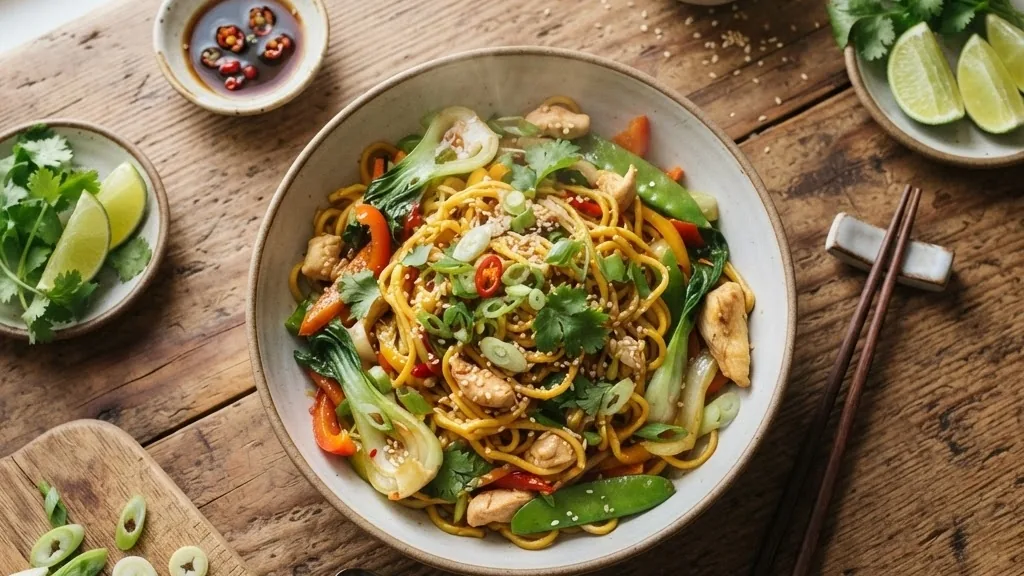
Egg noodle recipes hinge on a single legal number most home cooks never hear: 5.5 percent. Under the federal standard of identity enforced by the U.S. Food and Drug Administration, a commercial noodle product must contain not less than 5.5 percent by weight of the solids of egg, or egg yolk, to be sold as an “egg noodle” at all. That threshold, spelled out in 21 CFR 139.150, is the difference between the springy, golden strand you want in a bowl of stroganoff and a plain wheat ribbon dressed up in marketing. Get the egg ratio right and everything downstream (texture, color, how the sauce clings) falls into place.
Below is the full path: what the egg content actually does, how to build the dough by hand, how to boil it without turning it to paste, how to dry and freeze it without inviting salmonella, and four dinners that put it to use.
Quick answer: Egg noodle recipes start with flour, egg, salt, and a splash of water or milk kneaded into a stiff dough, rested, rolled thin, and cut into ribbons. Boil them in heavily salted water for a few minutes until tender but firm. To sell a product as an egg noodle, the FDA requires at least 5.5 percent egg solids by weight. Never leave fresh raw-egg dough drying at room temperature past 2 hours, and cook any chicken-and-noodle dish to an internal 165 degrees Fahrenheit.
Why the 5.5 Percent Egg Rule Changes the Whole Noodle
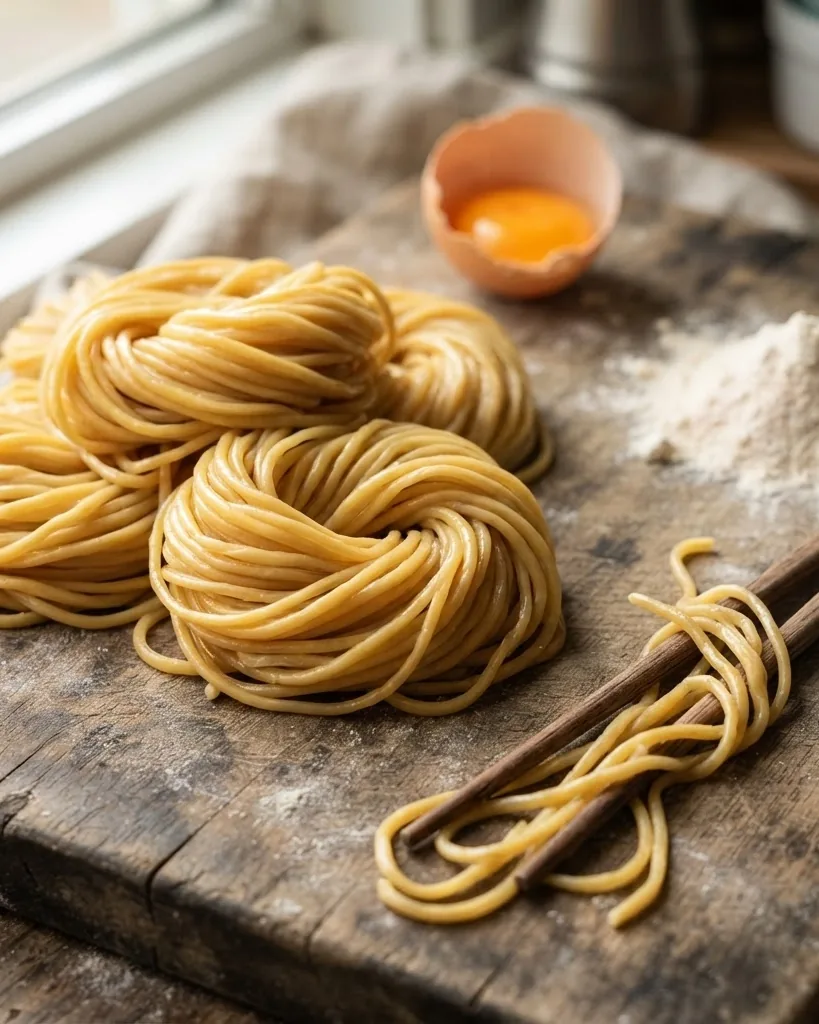
The FDA standard of identity does more than gatekeep a label. Egg is why egg noodles behave the way they do. The 5.5 percent egg-solids minimum, codified in 21 CFR 139.150 and administered by the U.S. Food and Drug Administration, forces enough yolk into the dough that the fat coats flour proteins and the emulsifiers bind water. That yields the tender-yet-elastic bite and the yellow color you associate with a good bowl of chicken noodle soup. Standard durum pasta made without egg leans on gluten alone, so it cooks up chewier and more neutral. When you make noodles at home, you are usually running an egg ratio far above that legal floor, which is exactly why homemade tastes richer than the dried box.
The color tells you what you are getting. Deep gold means yolk-forward dough with more fat and flavor. Pale strands mean egg whites are carrying the load, giving a firmer, less rich noodle.
- More whole eggs or extra yolks: softer, richer, more tender bite.
- More whites, fewer yolks: firmer, springier, paler.
- No egg at all: not an egg noodle by federal definition, and it will read like plain pasta.
If you want to understand the wheat side of this equation, the timing logic in our guide to al dente pasta science and timing carries straight over to fresh egg ribbons.
Building Egg Noodle Dough by Hand Without a Machine
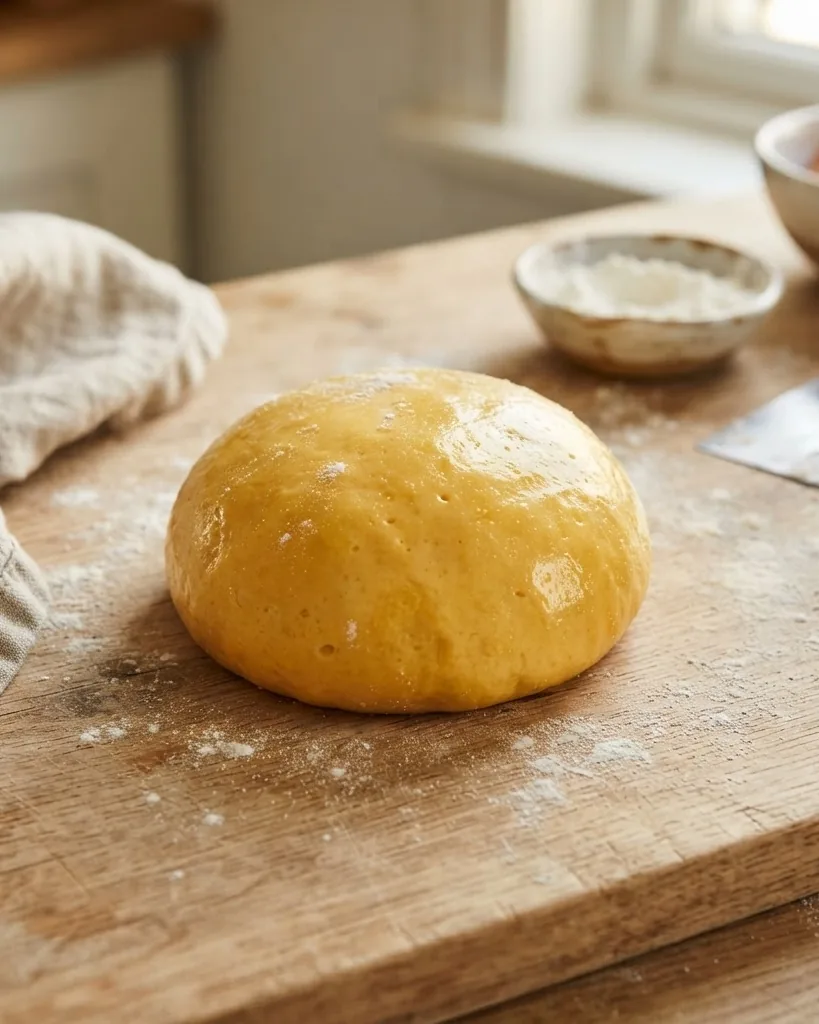
Scratch egg noodle dough needs only four things: all-purpose flour, eggs, a pinch of salt, and a splash of liquid to bring it together. A standard batch uses 2 cups of all-purpose flour, 3 large eggs, 1/2 teaspoon of salt, and 1 to 2 tablespoons of water or milk, adjusted a little in either direction to reach the right consistency. Mound the flour, make a well, crack the eggs into the center, add salt, and pull the flour inward with a fork until a shaggy mass forms. Then you knead. This is where most first attempts go sideways, because egg dough should feel far stiffer than bread dough, closer to modeling clay than to pizza. Knead for several minutes until the surface turns smooth and springs back slowly when pressed. The stiffness is deliberate: a loose dough will not hold a clean cut and will bloat in the pot.
Rest matters as much as kneading. Wrap the ball and let it sit so the gluten relaxes, or the dough will fight you and snap back every time you try to roll it thin.
- Flour first, well in the middle: controls how fast the eggs hydrate the flour.
- Knead to a stiff, smooth ball: a tacky dough means more flour; a crumbly one means a few drops more liquid.
- Rest wrapped, then roll: relaxed gluten rolls thinner without tearing.
Roll the rested dough as thin as you can manage on a floured surface, dust the sheet, fold it loosely, and slice into ribbons with a sharp knife. Unfold immediately so the strands do not fuse. Want the exact same folding-and-cutting patience applied to a full pan build? Our lasagna roll-ups comfort food guide uses the identical rolled-sheet technique on a wider ribbon.
How to Cook Egg Noodles Recipe: Water, Salt, and Timing
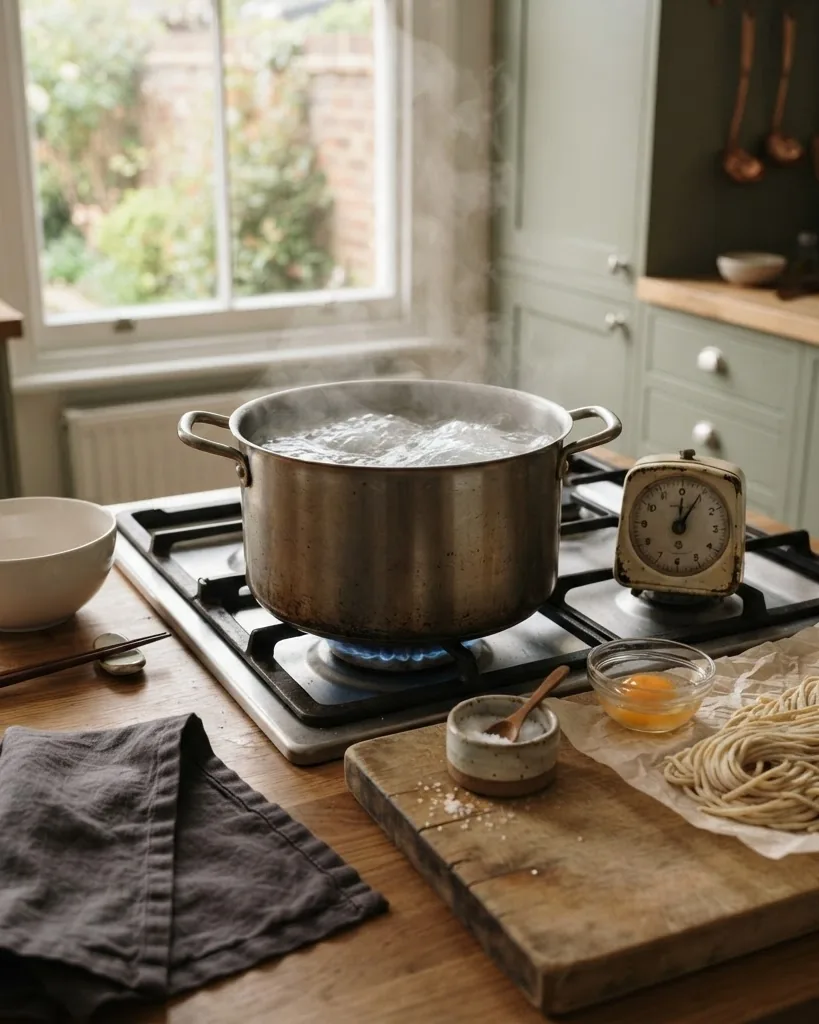
Here is how to cook egg noodles recipe results that stay separate and tender: use a big pot, salt the water aggressively, and pull them early. Fresh egg noodles cook far faster than dried box pasta because they are already hydrated, so you are counting minutes, not fighting a long boil. Bring the water to a rolling boil before the noodles go in, salt it until it tastes like a seasoned broth, and stir the moment they hit the pot so the fresh strands do not clump into a raft. They are done when they float and turn tender but still offer a slight resistance at the center. Overcooked egg noodles go gummy fast, so taste one a full minute before you think they are ready.
Salting the water is not optional seasoning theater. Unsalted pasta water leaves you with bland strands no sauce can rescue after the fact.
- Rolling boil before they enter: a cool pot glues fresh noodles together instantly.
- Salt like broth: the only chance to season the noodle itself, from the inside.
- Stir at the start, taste early: fresh egg ribbons can finish in a fraction of dried-pasta time.
Reserve a cup of the starchy cooking water before you drain. A splash of it loosens and emulsifies a butter or cream sauce the way a plain drizzle of oil never will.
How to Prepare Egg Noodles Recipe for Sauce Without Sogginess
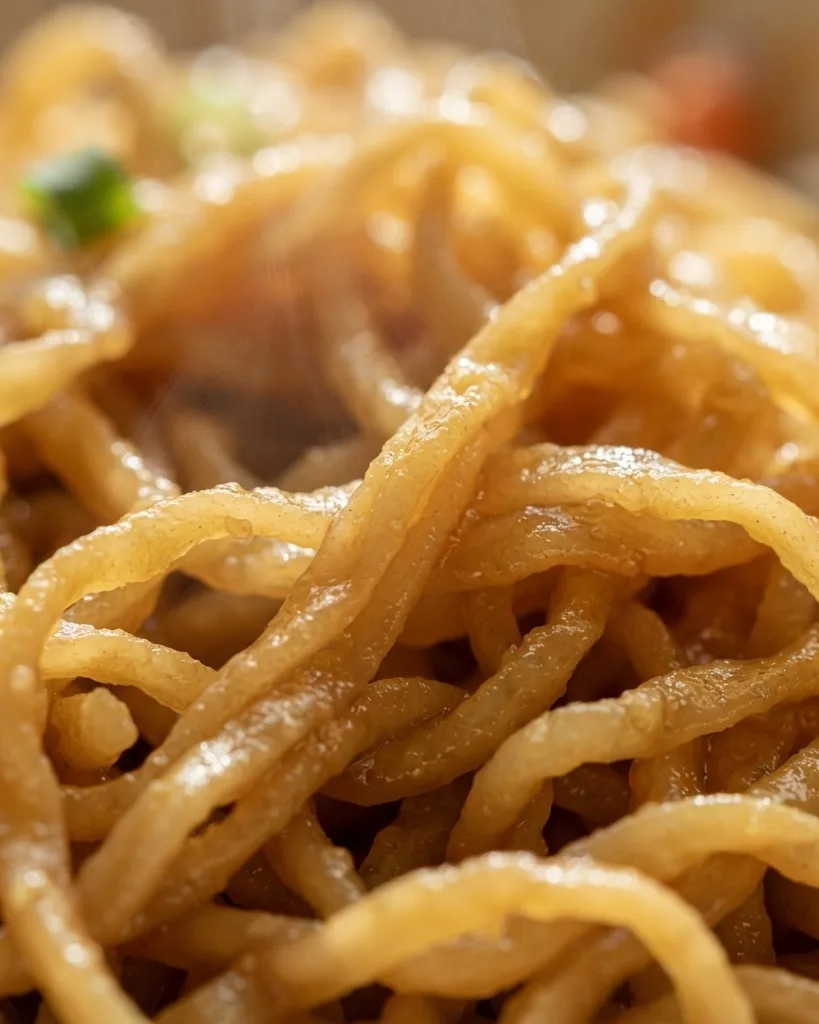
To answer how to prepare egg noodles recipe steps that end with sauce clinging instead of pooling, finish the noodles in the pan, not the colander. Drain them a touch shy of done, then move them straight into your warm butter, cream, or gravy and let them cook the last thirty seconds in the sauce itself. The residual heat finishes the strand while the starch it sheds thickens the liquid and welds coating to noodle. If you dump fully cooked noodles into a static sauce, the two never marry and you get a soupy plate. This pan-finishing move is the single biggest upgrade between a limp side and a glossy one.
Timing the drain is the whole game. Two extra minutes in the water is two minutes you cannot take back.
- Drain early, finish in sauce: the noodle’s own starch does the thickening.
- Keep the sauce warm and loose: add reserved pasta water if it tightens up.
- Toss constantly for the last stretch: even coating beats a heavy pour at the end.
The same starch-and-emulsion logic drives a great cream sauce anywhere, which is why the technique in our creamy Parmesan spaghetti recipe transfers cleanly to a bowl of buttered egg noodles.
Fixing Dough That Is Too Sticky, Too Dry, or Tearing
Egg noodle dough fails in three predictable ways, and each has a one-move fix. Sticky dough that smears on your hands has too much moisture, so work in a tablespoon of flour at a time and keep kneading until it firms to that clay-like feel. Dry dough that crumbles and will not form a cohesive ball is under-hydrated, so wet your fingertips and knead the moisture in a few drops at a time rather than dumping liquid on it. Dough that tears the instant you roll it usually skipped the rest, meaning tense gluten is snapping back, so wrap it and walk away before you touch the pin again.
Diagnose by feel, not by panic. The correct dough is stiff, smooth, and slightly resistant, not tacky and not fragile.
- Too sticky: add flour by the tablespoon; stop when it stops clinging to your palm.
- Too dry and crumbly: add water a few drops at a time, kneaded in, never poured.
- Tears when rolled: the gluten is tight; rest the wrapped ball longer.
- Strands fuse after cutting: not enough dusting flour; toss cut ribbons in flour immediately.
One caution before troubleshooting turns into snacking: this is raw egg dough. Do not taste it to judge seasoning, and wash hands and surfaces that touched it.
Drying and Freezing Egg Noodles Without Growing Bacteria
Raw egg dough is a food-safety problem the moment it leaves the pot’s future, and the top scratch tutorials online almost never say so. Iowa State University Extension and Outreach is direct about the window: fresh homemade egg noodles should never be left to dry at room temperature for longer than 2 hours, because that idle time invites harmful bacteria such as salmonella to multiply on a raw-egg surface. That 2-hour ceiling is the rule that separates a safe batch from a risky one. If you air-dry on a rack, work within it, then get the noodles into cooking or cold storage.
For longer keeping, controlled heat is the safe route. According to Iowa State University Extension and Outreach, a food dehydrator set to 135 degrees Fahrenheit for 2 to 4 hours dries fresh noodles safely, driving off moisture fast enough to stay ahead of bacterial growth. Once the strands are fully dried and snap cleanly, the same source says they hold in an airtight container in the freezer for 3 to 6 months for optimal quality.
- Room-temp air drying: hard cap of 2 hours, no exceptions.
- Dehydrator: 135 degrees Fahrenheit for 2 to 4 hours until they snap.
- Freezer, airtight: 3 to 6 months at best quality.
The broader home-preservation and consumer food-safety guidance from Iowa State University Extension and Outreach backs the same principle: perishable foods left in the temperature danger zone grow bacteria quickly, and a raw-egg dough is squarely perishable.
Chicken and Noodles Recipe Egg Noodles: The 165-Degree Rule
A pot of chicken and noodles recipe egg noodles is the dish most people are chasing when they learn to make the strands, and it carries one non-negotiable number. When you cook chicken and noodles, build a casserole, or reheat the leftovers, the USDA Food Safety and Inspection Service dictates that the internal temperature must reach a safe minimum of 165 degrees Fahrenheit, which is 74 degrees Celsius. That figure applies to the chicken as it cooks and to every reheat afterward, because the danger with a mixed dish is uneven warming that leaves cool pockets. Check the thickest part of the meat and the center of the casserole with a thermometer, not by eye.
The build itself is simple once the safety floor is set. Simmer chicken in seasoned broth, shred it, then add your fresh egg noodles straight into the hot broth so the starch thickens the liquid into something between a soup and a stew.
- Poach and shred: a low simmer keeps the meat tender before it hits 165 degrees Fahrenheit.
- Noodles into the broth: fresh egg ribbons finish in minutes and thicken the pot.
- Rest before serving: the broth keeps thickening off heat as the starch sets.
The FSIS safe-temperature guidance is the same standard that governs any poultry dish, and it is worth reading their safe minimum internal temperature chart once so the 165-degree number sticks. If you want a lighter, vegetable-driven version to feed picky eaters, the approach in our veggie-loaded spaghetti for kids adapts neatly to a noodle bowl.
Buttered Egg Noodles and Stroganoff That Actually Cling
Simple buttered egg noodles are the fastest payoff for a fresh batch, and they live or die on emulsion rather than on butter volume. Drain the noodles a touch early, keep a splash of the salted, starchy cooking water, and toss the hot noodles with butter and a spoonful of that water until the fat and liquid turn glossy and coat every strand. The starch is the binder; without it the butter slides off and pools. Finish with cracked pepper and a handful of parsley or a shower of grated cheese. It reads plain on paper and tastes like a restaurant side when the emulsion sets.
Beef stroganoff runs on the same principle with more moving parts. Sear beef, build a sour-cream and mushroom gravy, and fold the drained noodles into the warm sauce off direct high heat so the dairy does not break.
- Buttered noodles: butter plus reserved starchy water, tossed to a gloss.
- Stroganoff: fold noodles into warm gravy off high heat to protect the sour cream.
- Casserole: combine, top, bake, and confirm the center hits 165 degrees Fahrenheit per USDA FSIS.
For a fully plant-based riff on the creamy-noodle idea, our creamy Tuscan white bean pasta shows how to hit that same glossy coating without dairy.
Egg Noodles vs Standard Pasta: What the Standards Say
People treat egg noodles and pasta as interchangeable, but the federal standards separate them on composition, and the eating experience follows. The distinguishing factor set by the U.S. Food and Drug Administration is that 5.5 percent egg-solids minimum in 21 CFR 139.150, which is why an egg noodle carries fat, color, and a tender-elastic bite that plain wheat pasta lacks. Standard dried pasta relies on durum wheat and water, so it cooks firmer and holds a longer al dente window. That makes pasta the better pick for long boils and heavy tomato braises, and egg noodles the better pick for quick soups, cream sauces, and casseroles where richness and cling matter more than structure.
The practical takeaway is about matching noodle to dish, not declaring a winner.
- Choose egg noodles for: chicken soup, stroganoff, buttered sides, baked casseroles.
- Choose standard pasta for: long-simmered sauces, salads, anything that must hold a firm bite.
A cold pasta salad shows the difference plainly, since it needs a firm strand that survives dressing and chilling, which is where our elote pasta salad recipe leans on standard pasta rather than tender egg ribbons.
Frequently Asked Questions
How do I keep fresh egg noodles from sticking together?
Dust the cut ribbons generously with flour the moment you slice them, and toss to separate before they can fuse. In the pot, wait for a full rolling boil and stir the noodles the instant they enter the water. A big pot with plenty of room lets each strand move freely instead of clumping into a raft.
Can I eat egg noodle dough raw to check the seasoning?
No. The dough contains raw egg, which carries a salmonella risk, and raw flour is not safe to eat either. Iowa State University Extension and Outreach warns against leaving raw-egg dough out past 2 hours for the same bacterial reason. Season by tasting a boiled test noodle instead, and always wash hands and surfaces that touched the raw dough.
What is the safe internal temperature for chicken and noodles?
The USDA Food Safety and Inspection Service sets a safe minimum internal temperature of 165 degrees Fahrenheit, equal to 74 degrees Celsius, for chicken and for any dish combining chicken with noodles. That number applies both when you first cook the dish and every time you reheat leftovers, so check the center with a thermometer rather than judging by color or steam.
How long can I store dried homemade egg noodles?
Once the noodles are fully dried and snap cleanly, Iowa State University Extension and Outreach says they keep in an airtight container in the freezer for 3 to 6 months for optimal quality. Dry them either within the 2-hour room-temperature limit or in a dehydrator set to 135 degrees Fahrenheit for 2 to 4 hours before freezing.
Why are my egg noodles gummy instead of tender?
Gummy noodles are almost always overcooked. Fresh egg noodles are already hydrated, so they finish in a fraction of the time dried pasta needs. Taste one a minute before you think it is done and pull them while they still resist slightly at the center. Finishing them in the warm sauce for the last thirty seconds prevents the soft, pasty texture.
What makes an egg noodle different from regular pasta?
Egg content. By the FDA standard in 21 CFR 139.150, a product needs at least 5.5 percent egg solids by weight to be called an egg noodle. That egg brings fat, golden color, and a tender-elastic bite. Standard pasta uses durum wheat and water, cooks firmer, and holds its shape longer through long simmers and heavy sauces.
[req:8073770]