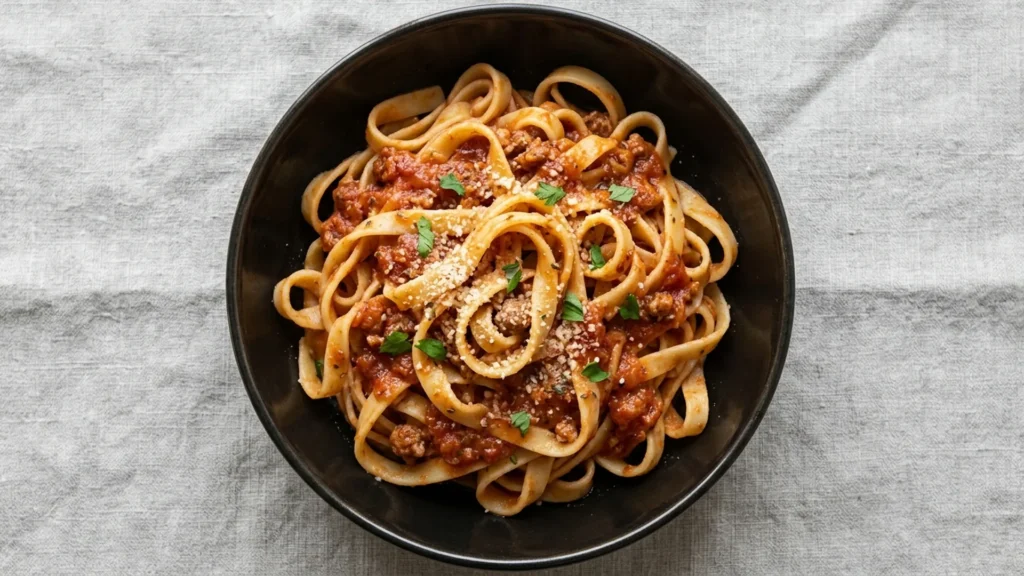
Marzetti frozen pasta is precooked pasta that has been individually quick frozen so a cook can drop it into boiling water for under a minute and serve it, rather than boiling raw pasta for ten. It is made by The Marzetti Company, the same company behind familiar supermarket dressings and dips, and most of the frozen pasta line is built for foodservice kitchens (restaurants, cafeterias, schools) where speed and consistency matter, though the related Reames brand of frozen egg noodles is sold at retail for home cooks. The product solves a specific problem: getting hot, evenly cooked pasta on a plate fast, without a long boil, without overcooking, and with less waste. In this guide I break down exactly what Marzetti frozen pasta is, the shapes it comes in, how the precooked IQF process works, how to reheat it correctly so it does not turn to mush, how it compares to dry pasta, and the company history that explains why this product exists at all.
What Marzetti Frozen Pasta Actually Is
Marzetti frozen pasta is not raw dough that you cook from scratch in the freezer. It is fully cooked pasta that has been frozen at the peak of doneness using IQF technology, which stands for individually quick frozen. The pasta is cooked to a firm, al dente bite, then blasted with cold air so each strand or piece freezes separately rather than fusing into a single block. Because it is already cooked, your only job is to reheat it, which takes a fraction of the time and energy of boiling raw pasta. This is the core appeal: a 30-to-60-second dip in hot water gives you a hot, properly cooked portion, where dry pasta would need a rolling boil and eight to fourteen minutes of attention.
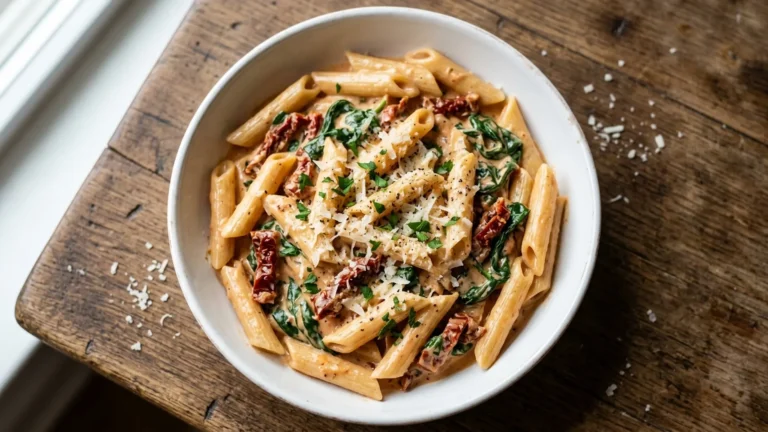
The line spans the same families you would find in a dry-pasta aisle. There are long goods like spaghetti and fettuccine, often sold as nests so a single portion holds together; short goods like penne rigati, rotini, cavatappi, and elbow macaroni; whole grain options like precooked whole grain rotini; filled and specialty items like lasagna cheese rollups and spaetzle dumplings. The shapes mirror the same sauce-pairing logic as any pasta: tubes and spirals for chunky sauces, long strands for smooth sauces. Whole grain rotini also gives the line a higher-fiber option, and the same nutrition logic in our guide to high protein pasta applies to picking a frozen shape with more to offer than plain refined wheat.
How the Precooked IQF Process Works
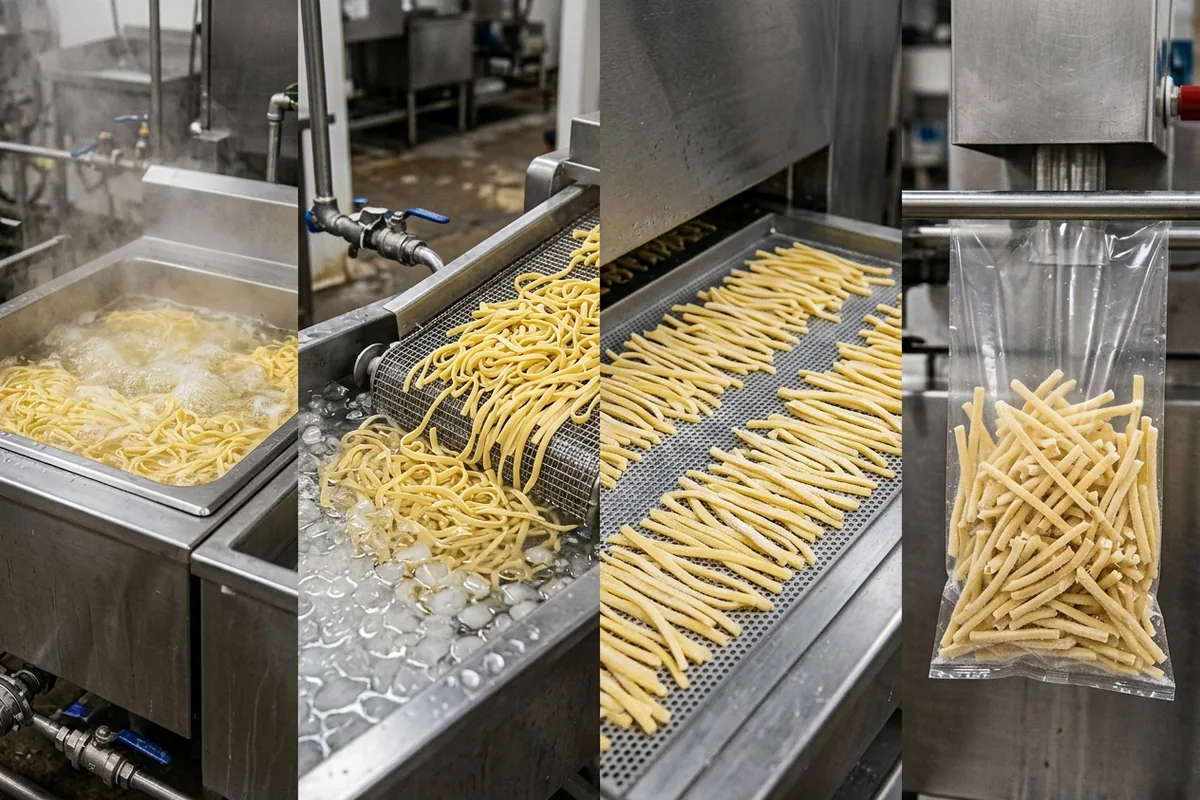
The technology behind Marzetti frozen pasta is what makes it different from a bag of dry pasta or a refrigerated fresh pasta. The pasta is cooked in large batches to a controlled al dente, then drained and often tossed with a light coating of oil to keep pieces from sticking. From there it moves through an IQF tunnel, where very cold air or a cryogenic blast freezes each piece individually in minutes. Freezing this fast forms tiny ice crystals rather than large ones, which is the key to texture: large ice crystals rupture the starch structure and leave thawed pasta mushy, while small crystals preserve the firm bite. The result is a frozen pasta that, when reheated correctly, eats much closer to freshly boiled than you would expect from anything out of a freezer.
Because the pasta is already cooked, the frozen product is also more forgiving and less wasteful than boiling raw pasta to order. A kitchen can reheat exactly the number of portions it needs in seconds, instead of boiling a big pot, draining it, and throwing away what does not sell. The Marzetti Company has described this directly, saying it wanted pasta that was faster, easier, and harder to waste. That waste angle is a big reason foodservice operations buy it: portion control and zero boil-over downtime translate into real labor and food savings in a busy kitchen.
How to Cook Marzetti Frozen Pasta
Reheating precooked frozen pasta is simple, but the method matters because the pasta is already cooked and a long second boil will turn it soft. There are three reliable ways to bring it back to temperature.
Boiling Water (the standard method)
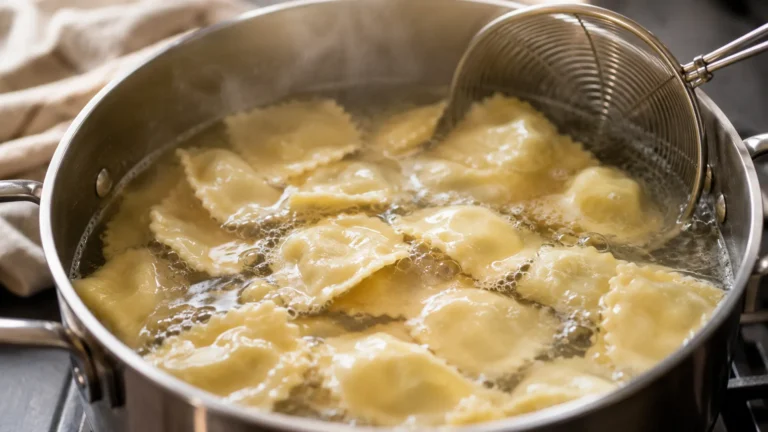
Bring a pot of water to a boil. Drop the frozen pasta in and stir gently with a fork to separate the pieces. Heat for only 30 to 60 seconds, just until the pasta is hot through, then drain immediately. Do not treat it like raw pasta and let it boil for minutes; it is already cooked, and extra time only softens it. For nested portions, the nest will loosen as it heats, so a gentle stir is all it needs.
Hot Tap Water (the no-boil method)
For a single portion or when you do not want to fire up a pot, place the frozen pasta in a colander and run hot tap water over it until it is thawed and warm, stirring to separate. This is fast and gentle and is exactly how many quick-service kitchens reheat a portion before saucing it. It will not get the pasta piping hot on its own, so finish it in the warm sauce on the stove.
Straight Into Hot Sauce (the best-tasting method)
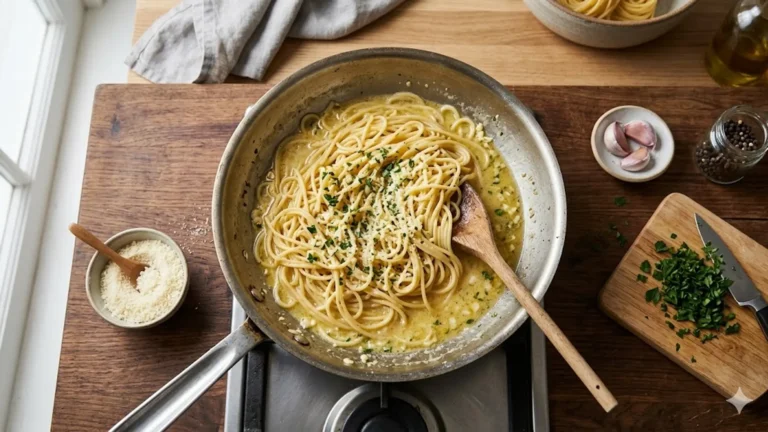
The method that tastes best is to add the frozen pasta directly to a pan of simmering sauce. The sauce thaws and reheats the pasta while coating it, and the pasta soaks up flavor as it warms, which is something dry pasta cannot do as well. Stir over medium heat for a minute or two until the pasta is hot and the sauce clings. A splash of water or stock loosens the sauce if it tightens. This is the approach to use whenever you have a sauce ready, because it skips a step and seasons the pasta from the inside.
Whichever method you use, the rule is the same: it is reheating, not cooking, so keep it short and stop the moment the pasta is hot. Overheating precooked pasta is the one way to ruin it, and the failure looks just like any other overcooked pasta, soft and slack with a blown-out surface. Pull it early and it stays firm.
Marzetti Frozen Pasta vs Dry Pasta
Frozen precooked pasta and dry boxed pasta are aimed at different priorities, and neither is simply better. Here is how they line up on the points that matter.
| Factor | Marzetti frozen (precooked) | Dry boxed pasta |
|---|---|---|
| Prep time | 30-60 seconds to reheat | 8-14 minutes to boil |
| Consistency | Same al dente every time | Depends on the cook and timing |
| Waste | Reheat exact portions, low waste | Cooked in batches, leftovers waste |
| Storage | Freezer, takes freezer space | Shelf-stable, years on the shelf |
| Cost per serving | Higher (you pay for the cooking) | Lower |
| Best for | Busy kitchens, speed, portioning | Home cooking, budget, pantry |
The short version: frozen precooked pasta buys you speed, consistency, and low waste at a higher price and the cost of freezer space, which is exactly the trade a restaurant or cafeteria wants to make. For a home cook with time to boil a pot, dry pasta is cheaper and the result is just as good. The frozen product shines when volume and turnaround matter more than cost per box. America’s Test Kitchen has examined how precooking and freezing affect pasta texture at America’s Test Kitchen, and the takeaway matches the IQF logic: fast freezing protects the bite, slow freezing destroys it.
The Company Behind It: Reames, Warren, and Marzetti
Marzetti frozen pasta has a longer history than the modern brand suggests, and it explains why the line straddles both retail and foodservice. The Marzetti Company acquired Reames in 1989. Reames began in 1949 when Bill and Ethel Reames started selling homestyle frozen egg noodles to local grocery stores in Clive, Iowa, eventually scaling to about 50 tons a day. That Reames brand is the one home cooks still find in supermarket freezers as Reames Homestyle Egg Noodles, the thick, hearty noodles people use in chicken and noodle dishes and casseroles.
In 2003 the company acquired Warren Frozen Foods, maker of Aunt Vi’s Egg Noodles in Altoona, Iowa, which had been Reames’s fiercest competitor since the 1960s. Bringing the two former rivals under one roof gave Marzetti both the retail egg-noodle business and a broad foodservice frozen pasta operation that now makes elbow macaroni, cavatappi, penne rigati, and custom shapes for national accounts. Production stays in Iowa: Clive for the Reames retail noodles, Altoona for the foodservice lines. So when you see Marzetti frozen pasta in a commercial kitchen and Reames egg noodles in your grocery freezer, they trace back to the same family of Iowa noodle makers.
Where to Buy It and Which Version Suits You
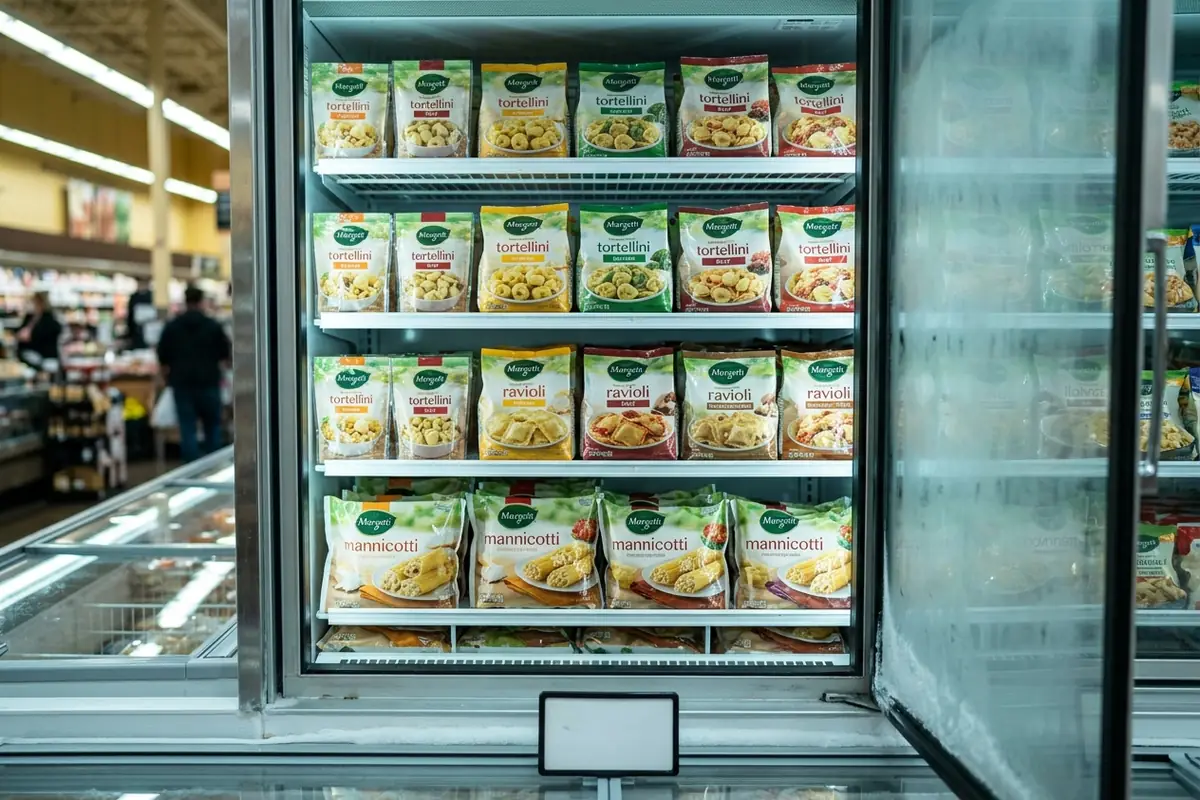
Most of the Marzetti frozen pasta line is distributed through foodservice channels, meaning it reaches restaurants, schools, hospitals, and cafeterias through commercial suppliers rather than the grocery aisle. Cases are large, often packed by the pound in multi-pound bags or cases with dozens of portions, which suits a kitchen feeding many people but is more than a home cook needs. If you operate or supply a foodservice kitchen, you order these through a distributor or the Marzetti foodservice portal.
For home cooks, the retail entry point is Reames Homestyle Egg Noodles in the supermarket freezer section, which is the same company’s frozen pasta in a consumer-sized bag. Some larger retailers and warehouse clubs also carry select Marzetti frozen pasta items, and online grocery listings stock various shapes. If you specifically want the speed of precooked frozen pasta at home, the egg noodles are the easiest to find, and they cook the same way: a short stint in boiling water, not a long one. For a cold dish using these convenient shapes, our guide on what goes into a pasta salad shows which shapes hold dressing best, and if you are weighing pasta against other bases, our comparison of whether rice is better than pasta lays out the tradeoffs.
Storing and Handling Frozen Pasta
Precooked frozen pasta is low maintenance, but a few storage habits protect its texture. Keep it at a steady freezer temperature, ideally zero degrees Fahrenheit or below, and avoid the freezer door where the temperature swings every time it opens, because partial thawing and refreezing is what builds large ice crystals and turns the pasta soft. Seal the bag tightly after taking out a portion, pressing out air to limit freezer burn, which shows up as dry, frosty patches and a stale taste. Used this way, frozen precooked pasta holds its quality for months, well beyond what cooked pasta lasts in the refrigerator.
Once a portion is thawed and reheated, treat it like any cooked pasta: eat it the same day and do not refreeze it, since a second freeze ruins the texture and raises food-safety risk. If you reheat more than you need, refrigerate the extra in a sealed container and use it within three to four days, tossing it with a little oil so it does not clump. The single biggest handling mistake is letting a bag thaw on the counter before cooking; the pieces fuse and go sticky, and you lose the clean separation the IQF process gave you. Pull out only what you will cook, and put the rest back in the freezer right away.
Getting the Best Result From Frozen Pasta
A few habits separate good frozen pasta from disappointing frozen pasta. Keep it frozen until the moment you cook it, because thawed precooked pasta turns sticky and clumps; cook straight from the freezer. Do not oversalt the reheating water, since the pasta was already seasoned during its first cook and you will season again with the sauce. Reheat only what you will serve, because reheated pasta does not refreeze well. Sauce it immediately after reheating so it does not stiffen and stick as it cools. And lean on the sauce-finish method whenever you can, because letting the pasta warm in the sauce both seasons it and avoids a watery second boil. Treat the frozen product as a head start rather than a shortcut to be rushed, and it will plate close to fresh. Bon Appetit has written about reheating and finishing pasta in sauce at Bon Appetit, and the same principle carries over: the sauce does the final cooking, so keep the reheat short and finish in the pan.
FAQ
Is Marzetti frozen pasta already cooked?
Yes. Marzetti frozen pasta is precooked to a firm al dente bite and then individually quick frozen, so your only job is to reheat it. That is why it heats in 30 to 60 seconds rather than the eight to fourteen minutes raw dry pasta needs. Because it is cooked, a long second boil only softens it, so keep the reheat short.
How do you cook Marzetti frozen pasta?
Drop it into boiling water and stir to separate for 30 to 60 seconds, then drain, or run it under hot tap water until thawed and warm. The best-tasting method is to add it straight to simmering sauce for a minute or two, which reheats and flavors it at once. Always cook it from frozen, never thawed.
What shapes does Marzetti frozen pasta come in?
The line covers long goods like spaghetti and fettuccine nests, short goods like penne rigati, rotini, cavatappi, and elbow macaroni, whole grain rotini, and specialty items like lasagna cheese rollups and spaetzle dumplings. The retail side is Reames Homestyle Egg Noodles, the thick frozen egg noodles sold in supermarket freezers.
Is Marzetti frozen pasta for restaurants or home cooks?
Most of the line is a foodservice product sold to restaurants, schools, and cafeterias through commercial distributors in large cases. Home cooks usually buy the related Reames Homestyle Egg Noodles in the supermarket freezer, which is the same company. Some warehouse clubs and online grocers also carry select frozen pasta items.
Is frozen precooked pasta as good as fresh-boiled?
When reheated correctly it comes very close, because the fast IQF freezing protects the firm bite. The main difference is convenience versus cost: frozen precooked pasta is faster, more consistent, and lower waste, but it costs more per serving and takes freezer space. For a home cook with time, boiling dry pasta is cheaper and just as good.
Why is Reames egg noodles the same as Marzetti frozen pasta?
The Marzetti Company acquired Reames in 1989 and Warren Frozen Foods in 2003, uniting Iowa’s two big frozen-noodle rivals. Reames Homestyle Egg Noodles is the retail face of the company’s frozen pasta, while the foodservice line carries the Marzetti name. Both are made in Iowa and share the same precooked frozen heritage.
Bottom Line
Marzetti frozen pasta is precooked, individually quick frozen pasta built to put hot, consistent pasta on a plate in under a minute, which is why it lives mostly in foodservice kitchens where speed and low waste pay off. The fast IQF freeze protects the al dente bite, so reheated correctly it eats close to fresh; the one rule is to reheat briefly and never boil it like raw pasta. Home cooks meet the same company through Reames Homestyle Egg Noodles in the supermarket freezer. Whether you choose frozen for speed or dry for budget, the cooking principle is the same: stop the moment it is hot and finish it in the sauce.